 Preview
 Send
Send Share
Share
 Details

 Download
 Similars
 X-Ray
X-Ray Diaporama
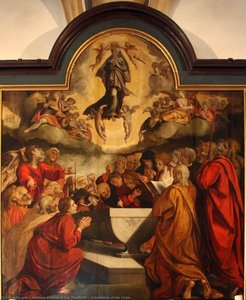
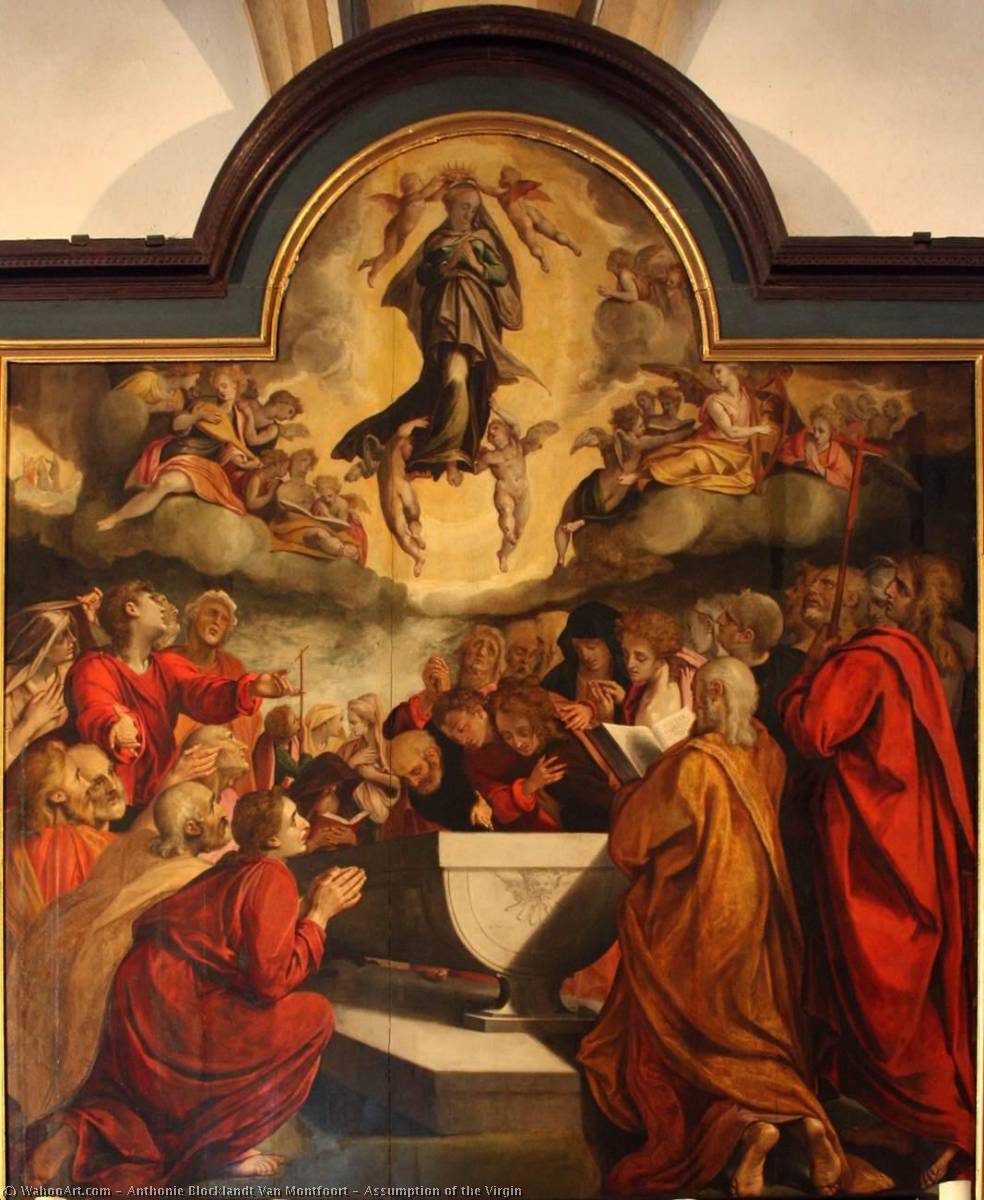
Assumption of the Virgin

 Read More
Hand Made Oil Reproduction
Hand-painted oil on canvas in your size and frame, made to order by our artists. ( Buy Print Buy Image)




































Pick from our preset sizes that match the artwork's original proportions.

You may enter your own dimensions to fit a specific frame or space. If your selected size does not match the original image's proportions, we will either crop the artwork or extend the painting with additional hand-painted elements. A digital mockup will be sent for your approval before production begins.
Please note that the on-screen preview does not reflect the actual cropping or extension. Only the mockup will accurately show the final composition.
While custom sizes are available, we recommend selecting a dimension from the predefined list to preserve the original proportions.
After order, ArtsDot.com team will email client for instructions and provide a mockup preview
Worldwide Delivery () in 3/4 weeks instead of standard 5 weeks. (25 August). No compromise on quality.

Free Worldwide Express Shipping

High-Quality Linen Canvas

Full Shipping Insurance

Customs Tax Refund Guarantee

True Color Matching Guarantee

60-Day Return Policy (Defects Only)

100% Money-Back Guarantee

Bulk Discount Offer
 Glass option is only available in size under 110 CM

Assumption of the Virgin
Reproduction Medium
Reproduction Size
-


Total Price
$ 263
Related Artworks

![Legend Of St Francis - [20] - Death And Ascension Of St Francis — Giotto Di Bondone, Gothic Art](/media/artworks/images-thumb/9f/06/9f06c3a24fd2644cb73ccf76b03d9a70.jpg)
Artist Biography
The Architect of Utrecht Mannerism
In the tapestry of the Northern Renaissance, few threads are as vibrant or as transformative as those woven by Anthonie Blocklandt van Montfoort. Born in the quiet Dutch town of Montfoort around 1533, Blocklandt emerged not merely as a painter, but as a pioneer who bridged the gap between the structured ideals of the Renaissance and the fluid, emotive energy of Mannerism. His early life was shaped by a rigorous pursuit of mastery, beginning under the guidance of Hendrick Sweersz in Delft. This foundational period allowed him to absorb the technical precision required for religious and civic commissions, but it was his subsequent journey to Antwerp that would truly ignite his creative spirit. There, under the mentorship of the legendary Frans Floris, Block t encountered a more muscular, expressive style that would become the hallmark of his developing aesthetic.
The trajectory of Blocklandt’s career was deeply intertwined with the social and religious upheavals of the 16th-century Netherlands. His marriage to Maria van Berckenhorst in 1552 anchored him within the influential circles of Montfoort, yet his professional ambitions led him to the bustling artistic hubs of Delft and later Utrecht. During his time in Delft, he undertook significant commissions for the Oude Kerk and the Nieuwe Kerk—works that stood as testaments to his skill until they were tragically lost during the iconoclasm of the 1560s. This period of destruction, while a profound loss to art history, could not dampen his creative momentum. Instead, it forced a redirection of his talent, leading him toward more enduring spiritual themes and mythological narratives that would eventually define the Utrecht School.
A Journey Through Light and Humanism
A pivotal moment in Blocklandt’s evolution occurred in 1572, when he embarked on a pilgrimage to Italy. This voyage was far more than a mere travelogue; it was an immersion into the heart of the humanist movement and the sophisticated stylistic innovations of Venetian masters. By absorbing the rich color palettes and atmospheric light characteristic of the Italian tradition, Blocklandt returned to the Netherlands with a renewed vision. Upon settling in Utrecht in 1577 and joining the city’s prestigious guild, he began to synthesize these Mediterranean influences with Northern detail. This unique fusion allowed him to create works that possessed both a tactile, physical presence and a dreamlike, Mannerist elegance.
His repertoire was remarkably diverse, showcasing a versatility that commanded respect across different genres:
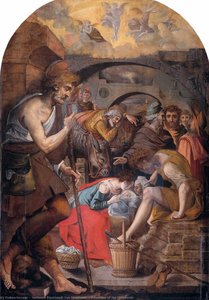
- Biblical Narratives: His religious paintings, such as the Adoration of the Shepherds, utilized dramatic lighting and dynamic compositions to evoke deep spiritual devotion.
- Mythological Subjects: He breathed life into classical legends, using elongated figures and complex poses to demonstrate his mastery of the Mannerist idiom.
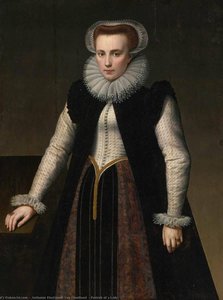
- Portraiture: Blocklandt possessed a keen ability to capture the psychological depth and social standing of his subjects, contributing to the burgeoning tradition of Dutch portrait painting.
Legacy and Historical Significance
The historical weight of Anthonie Blocklandt van Montfoort lies in his role as a foundational figure for the Utrecht School. Alongside contemporaries like Joos de Beer, he helped establish an artistic language that would influence generations of Dutch painters. His ability to navigate the transition from the stability of the Renaissance to the expressive tension of Mannerism provided a blueprint for the next wave of Northern artists. Even his pedagogical influence was profound, as he is credited with teaching Michiel Jansz van Mierevelt, a master who would go on to define the portraiture of the Dutch Golden Age.
Though much of his early work perished in the fires of religious conflict, the surviving fragments of his oeuvre—such as his contributions to the Janskerk in Gouda—remain powerful echoes of a brilliant mind. Blocklandt’s life was a testament to the resilience of the artist in an age of upheaval. He transformed the turbulence of his era into a sophisticated visual language, ensuring that the name of Montfoort would forever be etched into the annals of European art history.
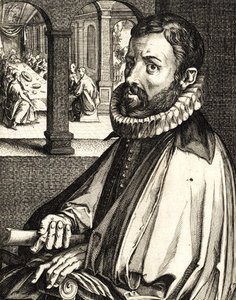
anthonie blocklandt van montfoort
1533 - 1583
Quick Facts
- Artistic Movement Or Style: Mannerism
- Artists Or Movements Influenced By This Artist: ['Utrecht School']
- Artists Who Influenced This Artist:
- Hendrick Sweersz.
- Frans Floris.
- Date Of Birth: 1533
- Date Of Death: 1583
- Full Name: Anthonie Blocklandt van Montfoort
- Nationality: Dutch
- Notable Artworks:
- Adoration of the Shepherds
- Portrait of a Lady
- Place Of Birth: Montfoort, Netherlands