 Preview
 Send
Send Share
Share
 Details

 Download
 Similars
 X-Ray
X-Ray Diaporama
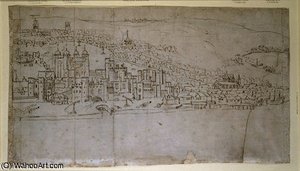
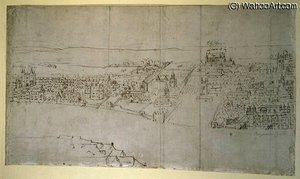
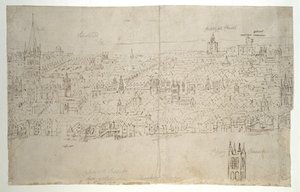
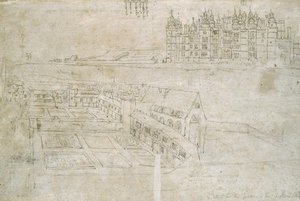
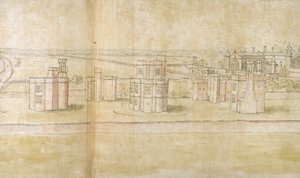
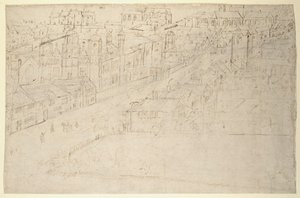
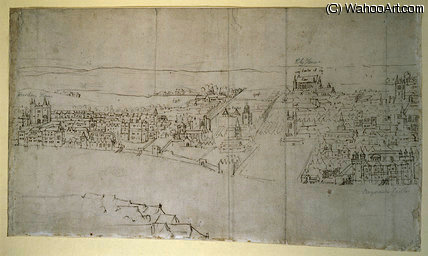
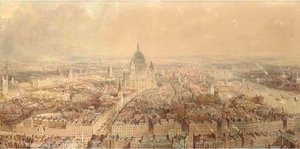
Durham House to Barnard's Castle - from the London Panorama
 Read More
Hand Made Oil Reproduction
Hand-painted oil on canvas in your size and frame, made to order by our artists. ( Buy Print Buy Image)




































Pick from our preset sizes that match the artwork's original proportions.

You may enter your own dimensions to fit a specific frame or space. If your selected size does not match the original image's proportions, we will either crop the artwork or extend the painting with additional hand-painted elements. A digital mockup will be sent for your approval before production begins.
Please note that the on-screen preview does not reflect the actual cropping or extension. Only the mockup will accurately show the final composition.
While custom sizes are available, we recommend selecting a dimension from the predefined list to preserve the original proportions.
After order, ArtsDot.com team will email client for instructions and provide a mockup preview
Worldwide Delivery () in 3/4 weeks instead of standard 5 weeks. (24 August). No compromise on quality.

Free Worldwide Express Shipping

High-Quality Linen Canvas

Full Shipping Insurance

Customs Tax Refund Guarantee

True Color Matching Guarantee

60-Day Return Policy (Defects Only)

100% Money-Back Guarantee

Bulk Discount Offer
 Glass option is only available in size under 110 CM

Durham House to Barnard's Castle - from the London Panorama
Reproduction Medium
Reproduction Size
-


Total Price
$ 263
Related Artworks

Artist Biography
The Cartographer of the Renaissance Soul
Anthonis van den Wyngaerde stands as a singular figure in Flemish art history—a master of topographical drawing who captured the grandeur and complexity of European cities during the High Renaissance with unparalleled precision and artistic vision. Born in Antwerp around 1525, his formative years coincided with an era of immense artistic flourishing, fueled by the patronage of wealthy merchants and noble families. While biographical details of his early life remain somewhat veiled by the turbulent political climate of the sixteenth century, evidence suggests he absorbed the distinctive style of masters like Pieter Bruegel the Elder, inheriting a sense of earthy realism and a keen eye for the intricate details of human existence within a landscape.
Unlike many of his contemporaries who sought to capture the ethereal beauty of mythological narratives or the idealized features of aristocratic portraits, Wyngaerde dedicated his life to documenting the physical realities of the urban world. He was a chronicler of the tangible, producing panoramas that serve as invaluable windows into the social, political, and cultural life of Spain, England, and Italy. His work transcends mere map-making; it is an evocative exploration of how architecture and geography shape the human experience.
A Visionary of the Panoramic Form
The true genius of Wyngaerde lies in his ambitious panoramic sketches, which represent a radical departure from traditional artistic conventions of the time. His most celebrated achievements include monumental works such as “The Tower” depicting London Bridge and his sweeping views of Spanish cities. These canvases, some measuring an astonishing 3.8 by 7 meters, were not merely intended for aesthetic pleasure but functioned as meticulous records of architectural detail, street layouts, and the bustling pulse of human activity. His fame was significantly bolstered by his time in the service of powerful figures; it is suggested that many of his Spanish drawings were created while he traveled within the cortege of Philip II, the King of Spain.
His technique was nothing short of revolutionary for the sixteenth century. Wyngaerde employed a sophisticated, layered approach, masterfully combining delicate watercolor washes with meticulous penwork. This method allowed him to achieve remarkable tonal gradations and textural effects, giving his cityscapes a sense of depth and atmosphere that felt almost three-dimensional. Through this marriage of precision and artistry, he could render the weathered stone of a cathedral or the shimmering reflection of water in a harbor with equal, breathtaking accuracy.
Legacy and Historical Significance
Though his works were dispersed into various collections following his death in 1571, the historical and artistic value of Wyngaerde’s oeuvre has been rediscovered by modern scholars. His drawings, now housed in prestigious institutions such as the British Museum, the Victoria and Albert Museum, and the National Gallery of Art, offer a peerless visual record of a Europe in transition. He captured cities before the scars of war or the transformations of industrialization could alter their fundamental character.
The significance of his contribution to art history can be summarized through several key pillars:
- Topographical Precision: He bridged the gap between scientific cartography and fine art, providing a level of detail that serves as a primary source for historians.
- Cultural Documentation: His panoramas provide a window into the urban fabric of the Southern Netherlands, Northern France, England, Italy, and Spain.
- Artistic Innovation: His use of panoramic scale and mixed media techniques pushed the boundaries of what landscape art could achieve during the Renaissance.
Ultimately, Anthonis van den Wyngaerde was more than a draftsman; he was an observer of the world's changing face. In every stroke of his pen and every wash of color, he preserved the fleeting majesty of the Renaissance city, ensuring that the streets, towers, and harbors of a bygone era would remain eternally etched in the collective memory of humanity.
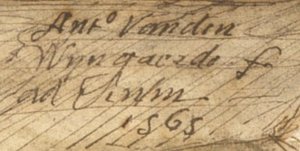
Anthonis van den Wyngaerde
1525 - 1571 , Belgium
Quick Facts
- Artistic Movement Or Style: Topographical drawing
- Date Of Birth: c. 1525
- Date Of Death: 7 May 1571
- Full Name: Anton van den Wyngaerde
- Nationality: Flemish
- Notable Artworks:
- Sketches Of Roman Ruins At Tarragona And Of A Fortress
- The Tower - from the London Panorama
- London Bridge - From The London Panorama
- Place Of Birth: Antwerp, Belgium