 Preview
 Send
Send Share
Share
 Details

 Download
 Similars
 X-Ray
X-Ray Diaporama
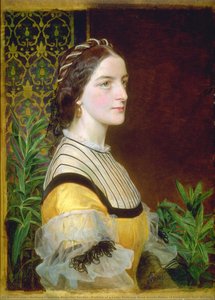
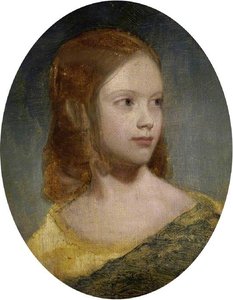
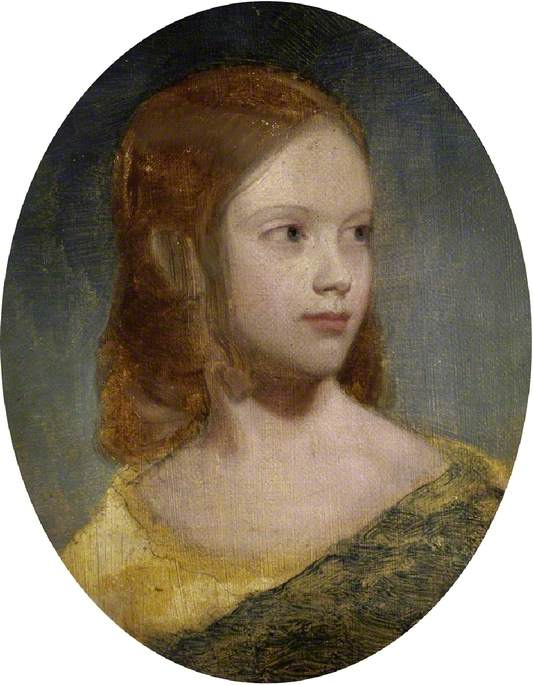
Emma Sandys, the Artist's Sister
 Oil On Canvas
- WallArt
- Pre-Raphaelite
 1855
1855- 19th Century
 24.0 x 19.0 cm
 Fitzwilliam College
 Read More
Hand Made Oil Reproduction
Hand-painted oil on canvas in your size and frame, made to order by our artists. ( Buy Print Buy Image)




P118B $10

P118H $10

P118W $10

P438Z $10

P508JH $12

P508YH $12

P805H $10

P805Z $10

P919BZ $10

P919G $10

P919XJ $10

P959ZH $10

P968JZ $12

W106C $8

W218G $10

W218JH $8

W218Y $10

W307PJ $10

W316G $10

W316PJ $8

W316Y $10

W398PJ $8

W4111J $10

W500HY $15

W500JH $15

W692G $12

W849H $8

W940BG $15

W953PJ $8




Pick from our preset sizes that match the artwork's original proportions.

You may enter your own dimensions to fit a specific frame or space. If your selected size does not match the original image's proportions, we will either crop the artwork or extend the painting with additional hand-painted elements. A digital mockup will be sent for your approval before production begins.
Please note that the on-screen preview does not reflect the actual cropping or extension. Only the mockup will accurately show the final composition.
While custom sizes are available, we recommend selecting a dimension from the predefined list to preserve the original proportions.
After order, ArtsDot.com team will email client for instructions and provide a mockup preview
Worldwide Delivery () in 3/4 weeks instead of standard 5 weeks. (16 August). No compromise on quality.

Free Worldwide Express Shipping

High-Quality Linen Canvas

Full Shipping Insurance

Customs Tax Refund Guarantee

True Color Matching Guarantee

60-Day Return Policy (Defects Only)

100% Money-Back Guarantee

Bulk Discount Offer
 Glass option is only available in size under 110 CM

Emma Sandys, the Artist's Sister
Reproduction Medium
Reproduction Size
-


Total Price
$ 263
Artwork Description
Emma Sandys, the Artist's Sister: A Pre-Raphaelite Reverie
“Emma Sandys, the Artist’s Sister,” painted by Anthony Frederick Augustus Sandys in 1855, stands as a poignant testament to Victorian artistic sensibilities and familial devotion. More than just a portrait, it embodies the ethereal beauty characteristic of the Pre-Raphaelites—a movement that sought to recapture the spirit of art before Raphael—rejecting academic conventions for luminous color palettes and meticulous detail.
The painting depicts Emma Sandys, Frederick’s younger sister, seated in a dimly lit room. Her gaze drifts slightly to her right, conveying a quiet contemplation – perhaps reflecting on the creative process itself or pondering the complexities of human emotion. Sandys skillfully employs oil paint on canvas, layering translucent glazes to achieve an unparalleled level of tonal subtlety and capturing the soft diffused light that defines the Victorian era.
Sandys’s artistic vision was deeply influenced by Dante Gabriel Rossetti and William Holman Hunt, fellow Pre-Raphaelites who championed idealized beauty and moral seriousness. The composition is deliberately restrained, prioritizing atmosphere over dramatic gesture. Notice the muted yellows of Emma's dress—a deliberate choice mirroring the golden hues found in illuminated manuscripts and symbolizing purity and serenity.
- Style: Pre-Raphaelite
- Technique: Oil on Canvas; Glazing Technique
- Dimensions: 24 x 19 cm
- Location: Fitzwilliam Museum, Cambridge, United Kingdom
A Window into Victorian Sentimentality
The painting’s emotional resonance stems from its portrayal of familial affection. Emma's posture and expression suggest a gentle vulnerability—a quiet awareness of her brother’s presence and the shared bond between siblings. Sandys expertly renders textures, capturing the softness of Emma’s hair and clothing with remarkable accuracy.
Beyond mere likeness, “Emma Sandys” speaks to broader themes of femininity and artistic aspiration. It reflects the Victorian preoccupation with portraying women as idealized figures—symbols of virtue and grace—a stylistic convention prevalent throughout the period. The artist's meticulous attention to detail underscores the Pre-Raphaelites’ belief that art should strive for moral upliftment.
Symbolism Illuminated: Color and Light
Sandys’s masterful use of color is crucial to conveying the painting’s mood. The dominant yellow hue—a shade reminiscent of Byzantine icons—represents enlightenment and spiritual contemplation. This deliberate chromatic choice aligns perfectly with the Pre-Raphaelites' fascination for biblical imagery and their desire to evoke profound emotional responses.
Furthermore, the diffused light emanating from the room contributes significantly to the painting’s atmosphere. Light was considered a powerful tool for conveying emotion and illuminating moral truths—a principle championed by Hunt and Rossetti. Sandys skillfully captures this ethereal glow, enhancing Emma's serene countenance and reinforcing the painting’s contemplative spirit.
A Legacy of Delicate Beauty
"Emma Sandys," like many Pre-Raphaelite masterpieces, continues to captivate viewers today with its understated elegance and profound psychological depth. Its enduring appeal lies in its ability to evoke a sense of nostalgia for a bygone era—a time when art prioritized beauty, moral seriousness, and the exploration of human emotion.
Reproductions of this evocative artwork offer collectors and interior designers alike an opportunity to experience Sandys’s artistic vision firsthand. Its luminous palette and tranquil composition serve as a reminder that true artistry resides in capturing fleeting moments of grace—a timeless testament to Victorian aesthetic ideals.
Related Artworks



Artist Biography
A Pre-Raphaelite Dreamer: The Life and Art of Frederick Sandys
Born in Norwich in 1829 as Antonio Frederic Augustus Sands, the artist we know as Frederick Sandys emerged from a nurturing artistic environment. His father, Anthony Sands, instilled in him an early appreciation for drawing and painting, laying the foundation for a career that would blossom within the vibrant world of Victorian art. Young Frederick’s formal training began at the Norwich School of Design in 1846, where he honed his skills through meticulous observation and craftsmanship – principles that became hallmarks of his mature style. Early recognition came swiftly; medals awarded by the Royal Society of Arts in both 1846 and 1847 signaled a promising future for this budding talent. These formative years weren’t merely about technical skill, but about cultivating a sensibility attuned to detail, symbolism, and the emotional currents that would define his artistic vision. He soon adopted the spelling “Sandys,” a subtle shift perhaps mirroring his evolving artistic identity.London Calling: Embracing Pre-Raphaelite Ideals
The year 1851 marked Sandys’s relocation to London, a pivotal moment in his career. Exhibiting at the Royal Academy, he steadily gained recognition for his burgeoning talent, but it was during the 1860s that his artistic trajectory truly aligned with the Pre-Raphaelite Brotherhood. A profound friendship with Dante Gabriel Rossetti proved deeply influential; Sandys even resided with Rossetti for a time, absorbing the artist’s visionary approach to art and life. This period witnessed the creation of The Nightmare (1857), a satirical lithograph that catapulted Sandys into the public eye. A clever parody of John Everett Millais and critic John Ruskin, it showcased not only his exceptional draughtsmanship but also his willingness to engage with contemporary art criticism – a boldness that endeared him to the Pre-Raphaelite circle. Sandys’s style solidified during this time, characterized by vibrant colors, meticulous attention to detail, and a predilection for subjects drawn from mythology and literature, all echoing the core tenets of the movement. However, he wasn't merely replicating; he was interpreting these themes through his own unique lens, imbuing them with a sense of psychological depth and emotional resonance. His work began to explore the complexities of human emotion, often focusing on enigmatic female figures steeped in mystery and melancholy.Masterpieces and Recurring Themes
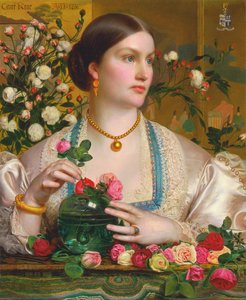
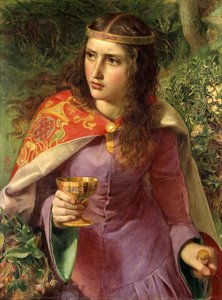
Sandys’s oeuvre is rich with captivating works that demonstrate his mastery of technique and storytelling. Maria Magdalena, housed in the Delaware Art Museum, stands as a poignant portrayal of Mary Magdalene, revealing Sandys's ability to convey profound emotional depth within a religious context. Morgan le Fay, gracing the Birmingham Museum & Art Gallery, is a mesmerizing depiction of the Arthurian sorceress, showcasing his skill in creating compelling female figures imbued with mystery and power. Grace Rose, at the Yale Center for British Art, exemplifies Victorian ideals of beauty and grace through delicate portraiture. Beyond these iconic pieces, works like Autumn – an oil painting capturing a family enjoying nature’s splendor – highlight his talent for portraying everyday scenes with Pre-Raphaelite precision. Recurring themes permeate Sandys's work: mythology, Arthurian legends, portraits of women often possessing a melancholic or enigmatic quality, and depictions of the natural world rendered with breathtaking detail. These motifs weren’t merely aesthetic choices; they were vehicles for exploring deeper questions about love, loss, morality, and the human condition. His wood-engravings, particularly those created for periodicals like Once a Week and Cornhill Magazine, demonstrate his exceptional skill in translating complex designs into intricate engravings, showcasing an attention to detail rivaling that of Albrecht Dürer and Ambrosius Holbein.Challenges, Legacy, and Enduring Influence
Despite his artistic successes, Sandys faced personal hardships later in life, including financial difficulties and periods of bankruptcy. His complex family life, marked by numerous children from relationships with Mary Emma Jones (Miss Clive), added another layer of complexity to his narrative. Yet, he persevered, continuing to paint and draw throughout his career, demonstrating an unwavering commitment to his art. The artistic influence within the Sandys family was further exemplified by his younger sister, Emma Sandys, who also achieved recognition as a painter. Sandys’s legacy rests firmly on his contributions to the Pre-Raphaelite movement, particularly his exceptional draughtsmanship and ability to create evocative portrayals of mythological and literary subjects. His works are now celebrated for their beauty, technical skill, and insightful reflections on Victorian aesthetics. He stands as a testament to the power of artistic vision in the face of adversity, leaving behind a body of work that continues to captivate and inspire audiences today. His influence extended beyond his paintings; he helped shape the visual language of the Victorian era, influencing generations of artists with his meticulous technique and evocative storytelling. The rediscovery and appreciation of Sandys’s work in recent decades underscore his enduring relevance, solidifying his place among the most important British artists of the 19th century.
Anthony Frederick Augustus Sandys
1829 - 1904 , United Kingdom
Quick Facts
- Artistic Movement Or Style: Pre-Raphaelite
- Artists Or Movements Influenced By This Artist: ['Victorian art']
- Artists Who Influenced This Artist: ['Dante Gabriel Rossetti']
- Date Of Birth: 1829
- Date Of Death: 1904
- Full Name: Anthony Frederick Augustus Sandys
- Nationality: British
- Notable Artworks:
- The Nightmare
- Maria Magdalena
- Morgan le Fay
- Grace Rose
- Place Of Birth: Norwich, United Kingdom
Related Articles

Dante Gabriel Rossetti's 25 Masterpieces: A Journey Through Victorian Art & Symbolism | ArtsDot
Explore 25 iconic artworks by Dante Gabriel Rossetti, a leading Pre-Raphaelite artist. Discover the stories behind masterpieces like 'Proserpine' & 'Beata Beatrix'. Find museum-quality art reproductions and elevate your home decor with ArtsDot.com.
Sir John Everett Millais: Pre-Raphaelite Rebellion & Victorian Narrative Detail
Explore the revolutionary art of Sir John Everett Millais & the Pre-Raphaelite Brotherhood. Discover their radical realism, symbolic narratives, and lasting impact on Victorian aesthetics. A deep dive into 19th-century masterpieces.

Giclée Prints: Archival Quality & Aesthetic Nuances for the Discerning Collector
Explore the world of giclée prints with ArtsDot. Learn about archival quality, aesthetic nuances & investment potential. Expert guidance for discerning art collectors seeking museum-quality reproductions and lasting value.

Oil on Canvas: A Historical & Technical Exploration of a Timeless Artistic Medium
Explore the rich history & enduring techniques of oil painting on canvas. Discover the science behind its longevity, conservation practices, and contemporary relevance. Expert insights for art enthusiasts.

The Enduring Legacy of Oil on Canvas: Technique, History & Aesthetic Impact
Explore the rich history & techniques of oil painting – from Renaissance masters to Impressionism. Discover pigments, layering methods, and why this timeless medium endures. Expert insights for artists & art enthusiasts.