

 Preview
 Send
Send Share
Share
 Details

 Download
 Similars
 X-Ray
X-Ray Diaporama
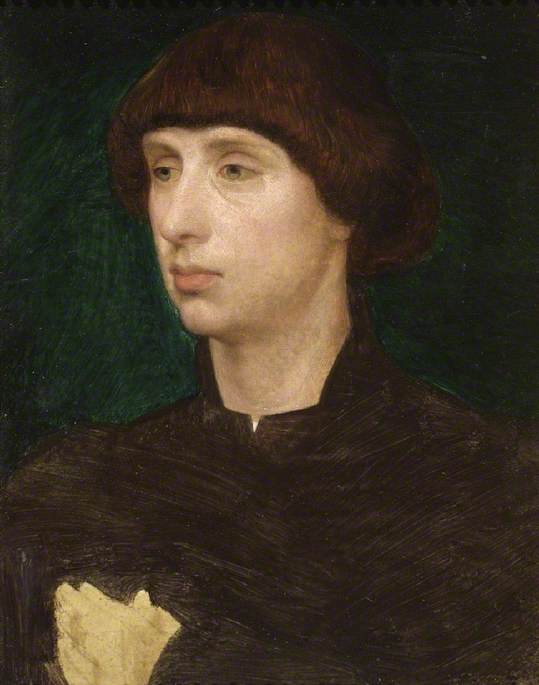
Portrait of a Young Man (copy after Rogier van der Weyden)
 Oil On Canvas
- WallArt
- Pre-Raphaelite
 1850
1850- 19th Century
 21.0 x 17.0 cm
 Fitzwilliam College
 Read More
Purchase a high-resolution, enhanced digital image, far superior to the online preview.
Each file is meticulously prepared by our in-house specialists using advanced tools and expert manual retouching. We ensure every image has exceptional clarity, precise color accuracy, and fine detail.
The final file is delivered via email within 72 hours, optimized for immediate use in professional, editorial, and print environments. This is the same quality trusted by top-tier design studios, publishers, and galleries.
Digital Image
Download a high-resolution file for personal display, printing, and creative projects. ( Buy Print Buy Hand Made Painting)
Included in Every Digital Image Order
Expert Digital Delivery, Guaranteed
When you choose ArtsDot.com, you're not just getting an image - you're receiving a professionally enhanced digital artwork, crafted with precision and backed by a satisfaction guarantee. Here's everything that comes with your order, automatically:

Fast Email Delivery
Your high-resolution digital image file will be emailed to you within 72 hours of ordering - ready for immediate use.

AI-Enhanced Digital File
Your artwork is professionally optimized using advanced AI tools and manual editing, ensuring maximum detail, clarity, and color accuracy.

Free Lifetime Re-Delivery
Accidentally deleted or lost your file? No worries - we'll resend it to you anytime, free of charge.

No Import Fees - Ever
Enjoy your artwork instantly with zero customs, duties, or delivery fees - digital downloads are always tax-free.

Color Accuracy Guarantee
We ensure your digital image reflects the original colors as closely as possible using professional tools and color management.

60-Day Satisfaction Guarantee
If you're not satisfied with your digital image, we'll revise it or refund 100% within 60 days - no questions asked.

100% Money-Back Guarantee
Not satisfied? Get a full refund within 60 days of receiving your digital file - no questions asked.

Bulk Order Discounts
Buy 3 images, save 10% - Buy 5, save 15% - Buy 10+, save 20%. Great for creative projects, galleries, and agencies.
Collectible Description
A Renaissance Reverie: The Soul of a Young Man
In the quiet intimacy of Portrait of a Young Man, we encounter more than just a likeness; we enter a moment of profound, suspended animation. This evocative work, a masterful copy after the legendary Rogier van der Weyden by the Victorian virtuoso Anthony Frederick Augustus Sandys, serves as a bridge between two eras. While painted in the mid-1s century, it breathes the spirit of the Early Netherlandish Renaissance, capturing that singular moment when humanist thought began to illuminate the human face with unprecedented psychological depth. The subject, caught in a state of youthful contemplation, gazes out from a dark, verdant void, inviting the viewer into a shared space of silent introspection and quiet dignity.
The technical prowess on display is nothing short of mesmerizing, making this piece an ideal centerpiece for those who appreciate the tactile beauty of classical oil painting. Sandys employs a meticulous technique that honors his predecessor’s legacy, utilizing oil on canvas to achieve a remarkable textural richness. The visible brushstrokes do not merely define form; they imbue the surface with a palpable materiality, as if the very skin and fabric of the sitter possess weight and warmth. Through a masterful manipulation of light and shadow—a technique known as sculptural modeling—the artist carves the contours of the young man's face from the darkness, creating a luminous effect that draws the eye irresistibly toward his expressive gaze.
Symbolism and the Aesthetic of Introspection
Beyond its striking visual presence, the painting is steeped in the symbolic language of the Renaissance. The choice of a deep, dark green background is far from arbitrary; it acts as a somber, velvet stage that pushes the subject forward, emphasizing his luminosity and isolating him in a realm of pure thought. This stylistic choice echoes the gravity found in van der Weyden’s The Descent from the Cross, suggesting that the young man is not merely a person, but an embodiment of virtue and philosophical engagement. The subtle pinkish hues of the flesh tones against the muted palette of browns and greens create a delicate tension between life and the stillness of the portrait.
For the discerning collector or interior designer, this artwork offers a sophisticated layer of narrative to any space. It is a piece that demands slow looking, rewarding the observer with new details upon every encounter—the soft, diffused light hitting a cheekbone, the intricate folds of clothing, or the heavy atmosphere of the background. Whether placed in a sunlit gallery or a moody, library-inspired study, Portrait of a Young Man brings an air of historical prestige and emotional resonance, making it a timeless acquisition for those seeking to surround themselves with art that speaks of the enduring human spirit.
Related Artworks

Artist Biography
A Pre-Raphaelite Dreamer: The Life and Art of Frederick Sandys
Born in Norwich in 1829 as Antonio Frederic Augustus Sands, the artist we know as Frederick Sandys emerged from a nurturing artistic environment. His father, Anthony Sands, instilled in him an early appreciation for drawing and painting, laying the foundation for a career that would blossom within the vibrant world of Victorian art. Young Frederick’s formal training began at the Norwich School of Design in 1846, where he honed his skills through meticulous observation and craftsmanship – principles that became hallmarks of his mature style. Early recognition came swiftly; medals awarded by the Royal Society of Arts in both 1846 and 1847 signaled a promising future for this budding talent. These formative years weren’t merely about technical skill, but about cultivating a sensibility attuned to detail, symbolism, and the emotional currents that would define his artistic vision. He soon adopted the spelling “Sandys,” a subtle shift perhaps mirroring his evolving artistic identity.London Calling: Embracing Pre-Raphaelite Ideals
The year 1851 marked Sandys’s relocation to London, a pivotal moment in his career. Exhibiting at the Royal Academy, he steadily gained recognition for his burgeoning talent, but it was during the 1860s that his artistic trajectory truly aligned with the Pre-Raphaelite Brotherhood. A profound friendship with Dante Gabriel Rossetti proved deeply influential; Sandys even resided with Rossetti for a time, absorbing the artist’s visionary approach to art and life. This period witnessed the creation of The Nightmare (1857), a satirical lithograph that catapulted Sandys into the public eye. A clever parody of John Everett Millais and critic John Ruskin, it showcased not only his exceptional draughtsmanship but also his willingness to engage with contemporary art criticism – a boldness that endeared him to the Pre-Raphaelite circle. Sandys’s style solidified during this time, characterized by vibrant colors, meticulous attention to detail, and a predilection for subjects drawn from mythology and literature, all echoing the core tenets of the movement. However, he wasn't merely replicating; he was interpreting these themes through his own unique lens, imbuing them with a sense of psychological depth and emotional resonance. His work began to explore the complexities of human emotion, often focusing on enigmatic female figures steeped in mystery and melancholy.Masterpieces and Recurring Themes
Sandys’s oeuvre is rich with captivating works that demonstrate his mastery of technique and storytelling. Maria Magdalena, housed in the Delaware Art Museum, stands as a poignant portrayal of Mary Magdalene, revealing Sandys's ability to convey profound emotional depth within a religious context. Morgan le Fay, gracing the Birmingham Museum & Art Gallery, is a mesmerizing depiction of the Arthurian sorceress, showcasing his skill in creating compelling female figures imbued with mystery and power. Grace Rose, at the Yale Center for British Art, exemplifies Victorian ideals of beauty and grace through delicate portraiture. Beyond these iconic pieces, works like Autumn – an oil painting capturing a family enjoying nature’s splendor – highlight his talent for portraying everyday scenes with Pre-Raphaelite precision. Recurring themes permeate Sandys's work: mythology, Arthurian legends, portraits of women often possessing a melancholic or enigmatic quality, and depictions of the natural world rendered with breathtaking detail. These motifs weren’t merely aesthetic choices; they were vehicles for exploring deeper questions about love, loss, morality, and the human condition. His wood-engravings, particularly those created for periodicals like Once a Week and Cornhill Magazine, demonstrate his exceptional skill in translating complex designs into intricate engravings, showcasing an attention to detail rivaling that of Albrecht Dürer and Ambrosius Holbein.Challenges, Legacy, and Enduring Influence
Despite his artistic successes, Sandys faced personal hardships later in life, including financial difficulties and periods of bankruptcy. His complex family life, marked by numerous children from relationships with Mary Emma Jones (Miss Clive), added another layer of complexity to his narrative. Yet, he persevered, continuing to paint and draw throughout his career, demonstrating an unwavering commitment to his art. The artistic influence within the Sandys family was further exemplified by his younger sister, Emma Sandys, who also achieved recognition as a painter. Sandys’s legacy rests firmly on his contributions to the Pre-Raphaelite movement, particularly his exceptional draughtsmanship and ability to create evocative portrayals of mythological and literary subjects. His works are now celebrated for their beauty, technical skill, and insightful reflections on Victorian aesthetics. He stands as a testament to the power of artistic vision in the face of adversity, leaving behind a body of work that continues to captivate and inspire audiences today. His influence extended beyond his paintings; he helped shape the visual language of the Victorian era, influencing generations of artists with his meticulous technique and evocative storytelling. The rediscovery and appreciation of Sandys’s work in recent decades underscore his enduring relevance, solidifying his place among the most important British artists of the 19th century.
Anthony Frederick Augustus Sandys
1829 - 1904 , United Kingdom
Quick Facts
- Artistic Movement Or Style: Pre-Raphaelite
- Artists Or Movements Influenced By This Artist: ['Victorian art']
- Artists Who Influenced This Artist: ['Dante Gabriel Rossetti']
- Date Of Birth: 1829
- Date Of Death: 1904
- Full Name: Anthony Frederick Augustus Sandys
- Nationality: British
- Notable Artworks:
- The Nightmare
- Maria Magdalena
- Morgan le Fay
- Grace Rose
- Place Of Birth: Norwich, United Kingdom

