

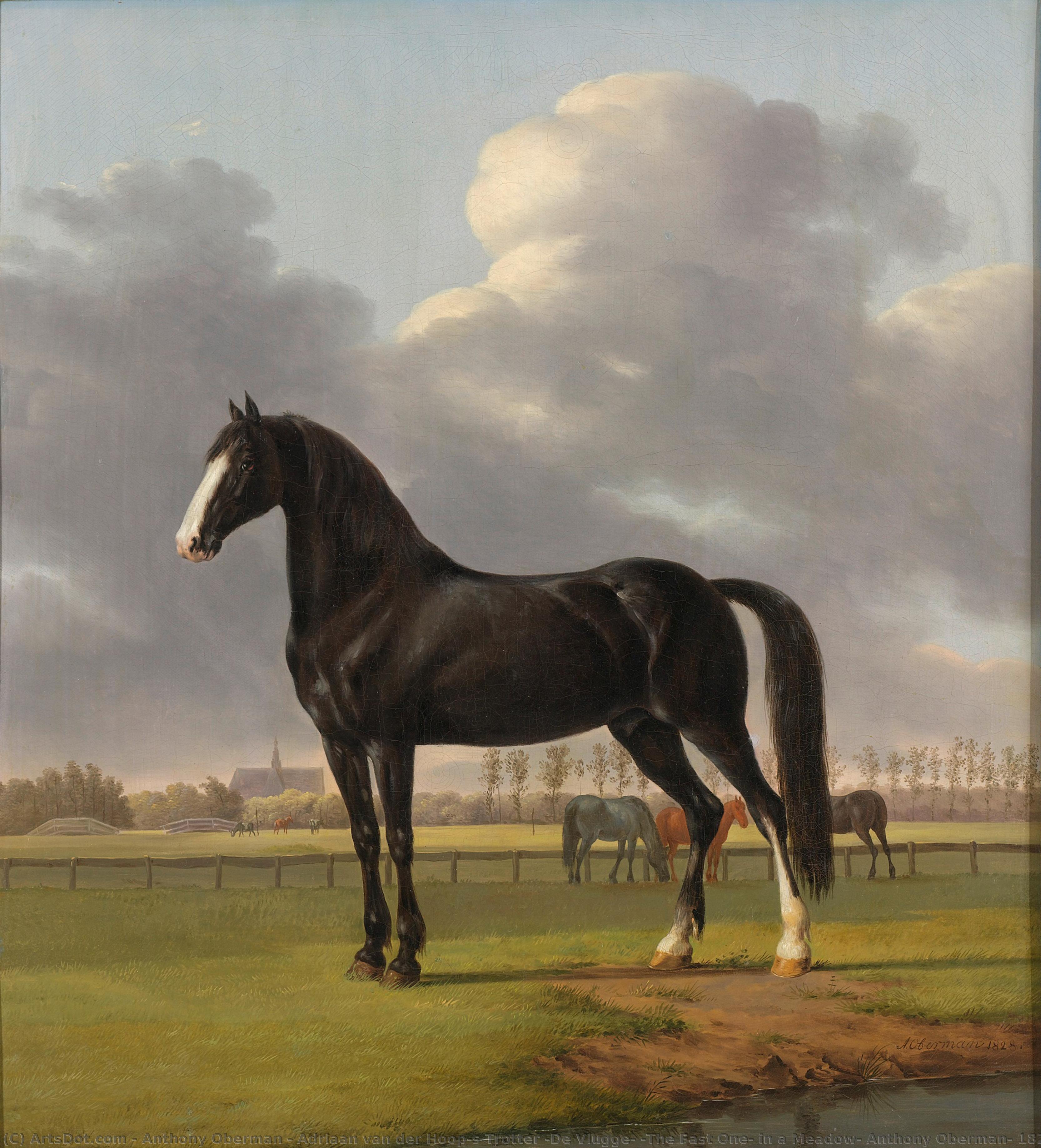
 Preview
 Send
Send Share
Share
 Details

 Download
 Similars
 X-Ray
X-Ray Diaporama
Adriaan van der Hoop’s Trotter ‘De Vlugge’ (The Fast One) in a Meadow, Anthony Oberman, 1828
 1828
1828 60.0 x 54.0 cm
 Read More
Purchase a high-resolution, enhanced digital image, far superior to the online preview.
Each file is meticulously prepared by our in-house specialists using advanced tools and expert manual retouching. We ensure every image has exceptional clarity, precise color accuracy, and fine detail.
The final file is delivered via email within 72 hours, optimized for immediate use in professional, editorial, and print environments. This is the same quality trusted by top-tier design studios, publishers, and galleries.
Digital Image
Download a high-resolution file for personal display, printing, and creative projects. ( Buy Print Buy Hand Made Painting)
Included in Every Digital Image Order
Expert Digital Delivery, Guaranteed
When you choose ArtsDot.com, you're not just getting an image - you're receiving a professionally enhanced digital artwork, crafted with precision and backed by a satisfaction guarantee. Here's everything that comes with your order, automatically:

Fast Email Delivery
Your high-resolution digital image file will be emailed to you within 72 hours of ordering - ready for immediate use.

AI-Enhanced Digital File
Your artwork is professionally optimized using advanced AI tools and manual editing, ensuring maximum detail, clarity, and color accuracy.

Free Lifetime Re-Delivery
Accidentally deleted or lost your file? No worries - we'll resend it to you anytime, free of charge.

No Import Fees - Ever
Enjoy your artwork instantly with zero customs, duties, or delivery fees - digital downloads are always tax-free.

Color Accuracy Guarantee
We ensure your digital image reflects the original colors as closely as possible using professional tools and color management.

60-Day Satisfaction Guarantee
If you're not satisfied with your digital image, we'll revise it or refund 100% within 60 days - no questions asked.

100% Money-Back Guarantee
Not satisfied? Get a full refund within 60 days of receiving your digital file - no questions asked.

Bulk Order Discounts
Buy 3 images, save 10% - Buy 5, save 15% - Buy 10+, save 20%. Great for creative projects, galleries, and agencies.
Collectible Description
Related Artworks








Artist Biography
The Soul of the Dutch Canvas: The Life and Legacy of Anthony Oberman
In the vibrant, shifting landscape of nineteenth-century Amsterdam, a period defined by both the lingering echoes of the Golden Age and the burgeoning spirit of Romanticism, Anthony Oberman emerged as a master of quiet observation. Born in 1781 to Jan Oberman and Grietje ten Cate, his early years were steeped in the cultural richness of the Netherlands. His formal education at the prestigious Stadstekenacademie provided him with more than just technical proficiency; it instilled in him a profound respect for the classical principles of disegno—the art of precise drawing—and the enduring traditions of Haarlem Baroque painting. This foundational training allowed Oberman to navigate the transition between eras, blending a meticulous, almost scientific accuracy with an emerging sensitivity to light and atmosphere.
Oberman’s artistic evolution was marked by a remarkable versatility that saw him masterfully traversing various genres. In the early decades of his career, he gained significant acclaim for his landscapes and animal portraiture. His ability to capture the spirited essence of horses became particularly renowned among Amsterdam’s elite collectors. A notable example of this period is his work for the prominent banker Adriaan van der Hoop, specifically his portraits of the trotters ‘De Vlugge’ and ‘De Rot’. These works do not merely depict animals; they capture movement, muscle, and character, set against the serene backdrops of Dutch meadows near Santpoort. Through these commissions, Oberman established himself as a painter who could find profound dignity in the natural world.
Mastery of Light and the Intimate Studio
As his career matured, Oberman’s focus shifted toward the intimate and the domestic, moving into the realms of genre painting and still life. This transition was not merely a change in subject matter but an expansion of his emotional palette. His later years, particularly from around 1828 onwards, saw him specializing in exquisite flower and fruit pieces, often executed in the elegant Biedermeier style. These still lifes, such as his Still Life with Fruit in a Terracotta Dish, demonstrate a sophisticated command of tonal gradation and texture, where the weight of a piece of fruit or the delicate translucency of a petal is rendered with breathtaking realism.
Perhaps no work encapsulates the intersection of his technical skill and his personal identity better than his 1820 masterpiece, The Artist at His Studio. Housed in the Rijksmuseum, this painting serves as a window into the creative psyche. Within the sun-drenched interior of the studio, surrounded by the tools of his trade—palettes, brushes, and sketches—the artist is depicted in a moment of profound contemplation. The composition, rich with symbolic resonance, speaks to the solitary pursuit of excellence and the quiet sanctity of the artistic process. It is a painting that celebrates the very essence of creation, mirroring Oberman’s own dedication to his craft.
A Lasting Impression on Dutch Art
The historical significance of Anthony Oberman lies in his ability to act as a bridge between the rigid classical traditions of the past and the more emotive, impressionistic tendencies of the future. While he remained anchored in the precision of his training, his work breathed with a modern vitality. His contributions to the Dutch canon are diverse and enduring:
- Genre Painting: His ability to capture the nuances of Dutch domestic life and rural landscapes provided a vital record of 19th-century societal rhythms.
- Animal Portraiture: His specialized skill in depicting horses brought a unique level of anatomical precision and prestige to the Amsterdam art market.
- Still Life Excellence: His later mastery of floral and fruit compositions showcased an advanced understanding of light, texture, and the Biedermeier aesthetic.
- Institutional Legacy: Through works preserved in the Rijksmuseum, his influence continues to inform our understanding of the evolution of Dutch realism.
Though he passed away in 1845, leaving behind a legacy that balances the structured beauty of the old world with the atmospheric depth of the new, Anthony Oberman remains a vital figure for any student of European art. His life’s work stands as a testament to the power of observation and the enduring beauty found in the most intimate corners of existence.
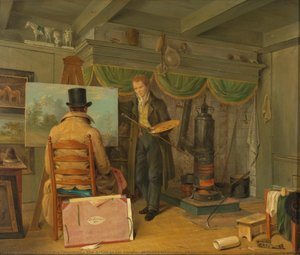
anthony oberman
1781 - 1845 , Netherlands
Quick Facts
- Artistic Movement Or Style: Classical portraiture
- Date Of Birth: Amsterdam, Netherlands (1781)
- Date Of Death: 1845
- Full Name: Anthony Oberman
- Nationality: Dutch
- Notable Artworks: ['The Artist at His Studio']
- Place Of Birth: Amsterdam

