 Preview
 Send
Send Share
Share
 Details

 Download
 Similars
 X-Ray
X-Ray Diaporama
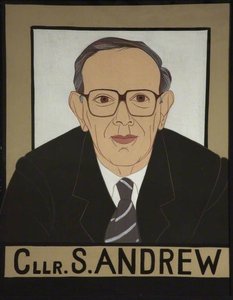
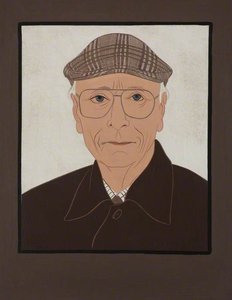
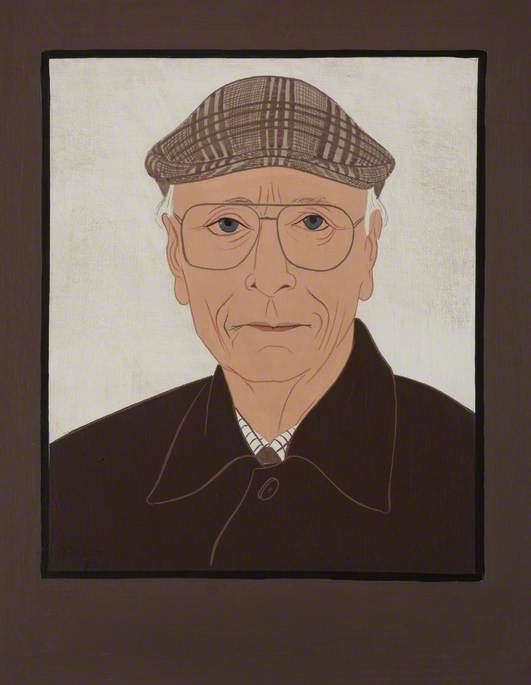
Tony Dowse Brenan (b.1923), JP, First Chairman of Crewkerne Heritage Centre
 2000
2000 48.0 x 38.0 cm
 Read More
Hand Made Oil Reproduction
Hand-painted oil on canvas in your size and frame, made to order by our artists. ( Buy Print Buy Image)




































Pick from our preset sizes that match the artwork's original proportions.

You may enter your own dimensions to fit a specific frame or space. If your selected size does not match the original image's proportions, we will either crop the artwork or extend the painting with additional hand-painted elements. A digital mockup will be sent for your approval before production begins.
Please note that the on-screen preview does not reflect the actual cropping or extension. Only the mockup will accurately show the final composition.
While custom sizes are available, we recommend selecting a dimension from the predefined list to preserve the original proportions.
After order, ArtsDot.com team will email client for instructions and provide a mockup preview
Worldwide Delivery () in 3/4 weeks instead of standard 5 weeks. (5 September). No compromise on quality.

Free Worldwide Express Shipping

High-Quality Linen Canvas

Full Shipping Insurance

Customs Tax Refund Guarantee

True Color Matching Guarantee

60-Day Return Policy (Defects Only)

100% Money-Back Guarantee

Bulk Discount Offer
 Glass option is only available in size under 110 CM

Tony Dowse Brenan (b.1923), JP, First Chairman of Crewkerne Heritage Centre
Reproduction Medium
Reproduction Size
-


Total Price
$ 263
Related Artworks








Artist Biography
The Soul of the Community: The Artistry of Anthony Wilson Piper
Born in 1935 amidst the rolling landscapes of Hertfordshire, Anthony Wilson Piper’s life began on his father’s farm, a setting that likely instilled in him an early appreciation for the organic textures and grounded realities of English life. With a Swiss mother and an English father, Piper’s heritage provided a rich tapestry of influences long before he ever picked up a brush. His formal journey into the world of fine art commenced in 1952 at the Central School of Arts and Crafts in Holborn, where he undertook one of the era's pioneering industrial design courses. This rigorous training culminated in a prestigious diploma in mural painting and design, an achievement that equipped him with a unique perspective on scale, composition, and the integration of art within communal spaces.
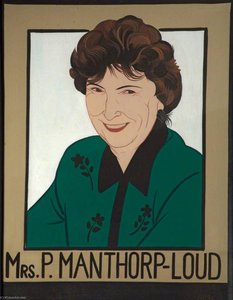
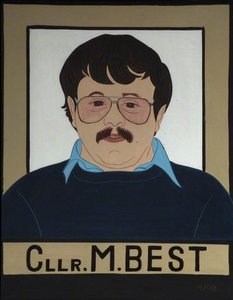
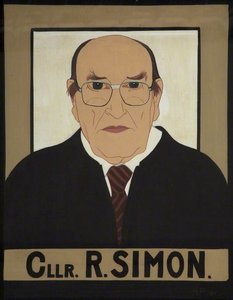
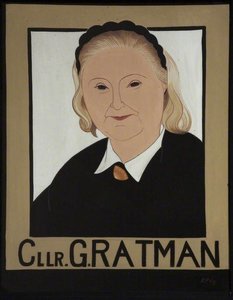
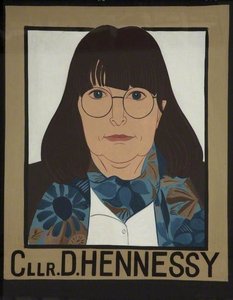
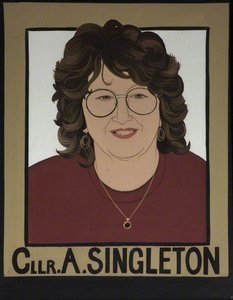
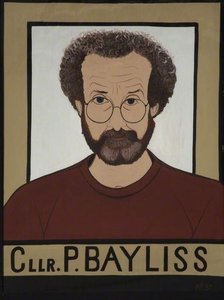
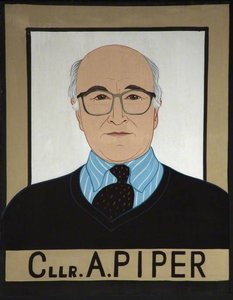
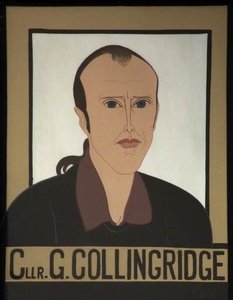
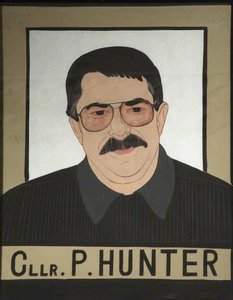
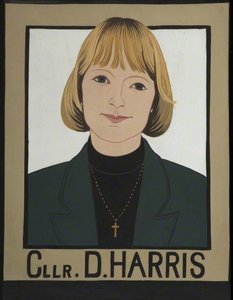
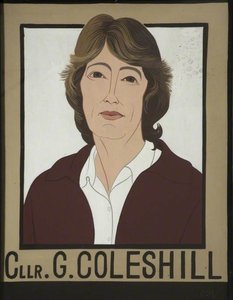
As his career matured, Piper’s focus drifted from the grand architectural ambitions of murals toward the intimate, human-centric realm of portraiture. He became a master of capturing the essence of the individual, particularly those who served as the pillars of local society. His work is celebrated for its meticulous depictions of local councillors and community leaders—figures who might otherwise fade into the background of history. Through his lens, these individuals are transformed into enduring icons of regional identity. Piper’s technique often embraced the luminous qualities of watercolour, a medium that allowed him to navigate subtle tonal variations and breathe a sense of light and vitality into his subjects' features.
A Tapestry of Diverse Influences
The brilliance of Piper’s oeuvre lies in its unexpected intersections. While he is deeply rooted in the traditions of British portraiture, his work vibrates with a highly original energy derived from his eclectic personal interests. He possessed a lifelong fascination with machinery and racing cars, as well as a practical engagement with trades such as plumbing—elements that might seem disparate from the refined world of fine art, yet they all converged to inform his vibrant and colourful style. This fusion of the mechanical and the human, the industrial and the organic, creates a visual language that is uniquely his own.
Furthermore, the aesthetic principles of the Arts & Crafts movement left an indelible mark on his artistic sensibility. The movement’s reverence for handcrafted beauty, meticulous craftsmanship, and a rejection of mass-produced uniformity resonated deeply with Piper’s approach to portraiture. In his hands, a portrait was not merely a likeness but a carefully constructed tribute to the subject's character, rendered with an understated elegance that echoed the organic forms championed by figures like William Morris. This connection to tradition allowed him to bridge the gap between the historical weight of British art and the contemporary pulse of local community life.
Legacy and Continued Vitality
Throughout his prolific career, spanning over six decades, Anthony Wilson Piper has remained a steadfast observer of the human condition. His ability to find profound meaning in the faces of ordinary citizens—the very fabric of everyday life—has secured his place as a significant chronicler of British social history. His portraits serve as windows into the personalities and histories of a generation, capturing the spirit of post-war Britain with an empathetic gaze that seeks to convey both the outward appearance and the inner essence of his subjects.
Even in his later years, Piper’s passion for sharing his vision remains undiminished. His recent emergence from retirement for exhibitions, such as those at the Jacobini Wine Gallery in Henley-on-Thames, has allowed a new generation of art enthusiasts to rediscover his work. To encounter a Piper portrait is to engage with a legacy of dedication—a lifelong commitment to seeing the extraordinary within the ordinary and documenting the quiet dignity of community through the transformative power of paint.
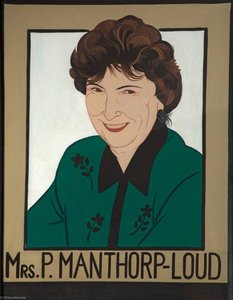
anthony wilson piper
1935 -
Quick Facts
- Artistic Movement Or Style: Arts & Crafts
- Artists Or Movements Influenced By This Artist: ['William Morris']
- Artists Who Influenced This Artist: ['Edward Burne-Jones']
- Full Name: Anthony Wilson Piper
- Nationality: British
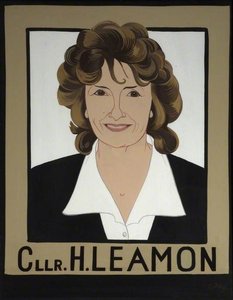
- Notable Artworks: ['Councillor H. Leamon']
- Place Of Birth: Cheltenham, England