 Preview
 Send
Send Share
Share
 Details

 Download
 Similars
 X-Ray
X-Ray Diaporama
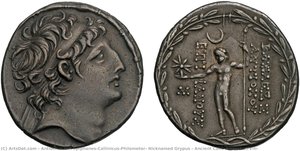
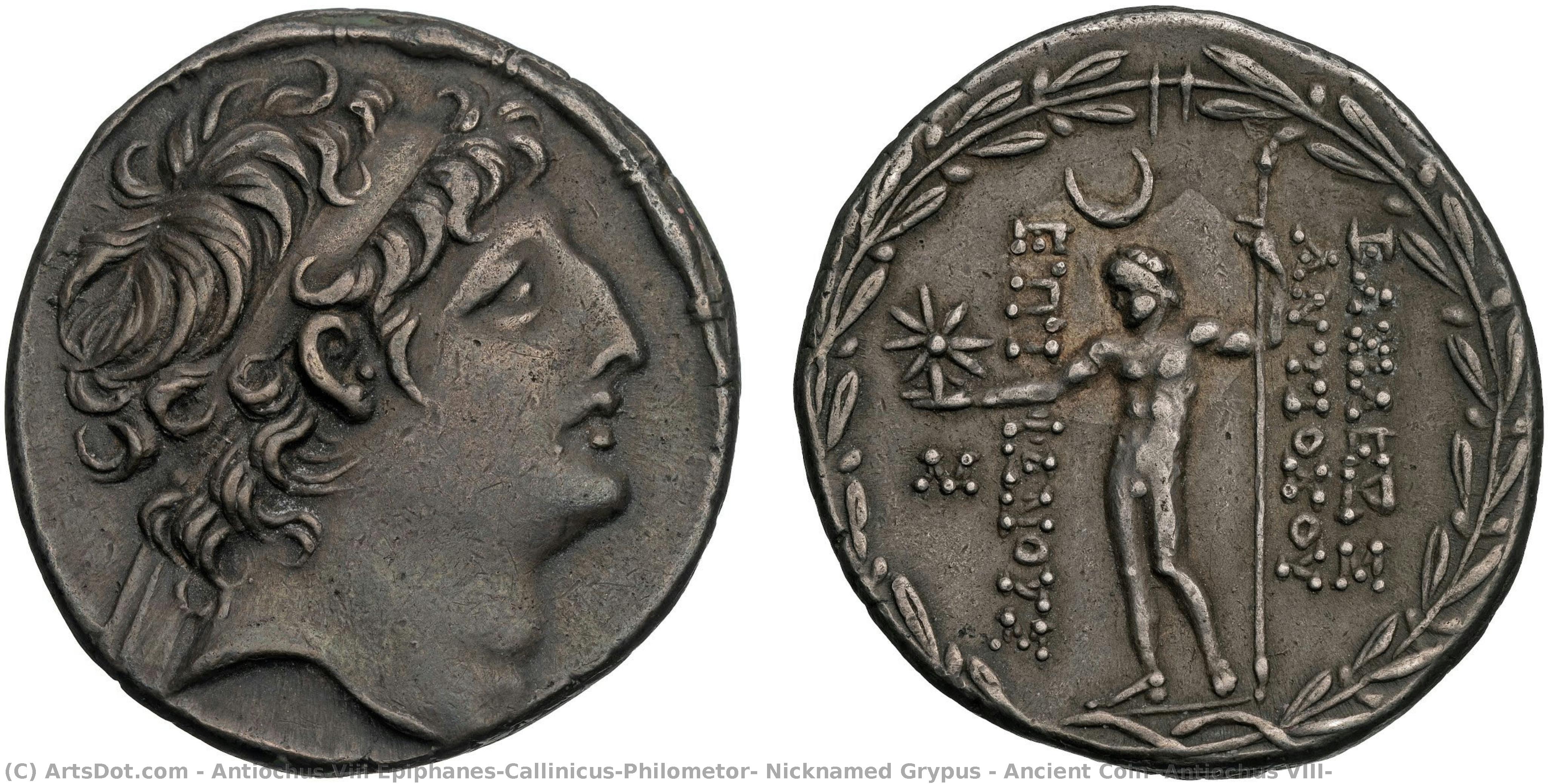
Ancient Coin (Antiochus VIII)
 Read More
Giclée / Art Print
Museum-quality giclée or canvas print with fast production and flexible finish options. ( Buy Hand Made Painting Buy Image)




































Pick from our preset sizes that match the artwork's original proportions.

You may enter your own dimensions to fit a specific frame or space. If your selected size does not match the original image's proportions, we will either crop the artwork or extend the image with a mirrored or solid-fill edge. A digital mockup will be sent for your approval before production begins.
Please note that the on-screen preview does not reflect the actual cropping or extension. Only the mockup will accurately show the final composition.
While custom sizes are available, we recommend selecting a dimension from the predefined list to preserve the original proportions.
Worldwide Delivery () in 2 weeks instead of standard 4/5 weeks. (29 August)

Free Worldwide Express Shipping

High-Quality Linen Canvas

Full Shipping Insurance

Customs Tax Refund Guarantee

True Color Matching Guarantee

60-Day Return Policy (Defects Only)

100% Money-Back Guarantee

Bulk Discount Offer
 Glass option is only available in size under 110 CM

Ancient Coin (Antiochus VIII)
Giclée / Art Print
Reproduction Size
-


Total Price
$ 63
Related Artworks






Artist Biography
Antiochus VIII Grypus: The Hook-Nosed King of Turbulent Syria
Antiochus VIII Epiphanes, often nicknamed “Grypus” – a name derived from his prominent nose – remains one of the most enigmatic and dramatically flawed figures in Hellenistic history. Ruling the Seleucid Empire from 125 to 96 BC, he inherited a kingdom already fractured by internal strife and external pressures, and presided over a period marked by relentless civil war, political intrigue, and shocking violence. More than just a ruler, Antiochus VIII embodies the precariousness of power in a world grappling with the remnants of Alexander’s vast empire, offering a compelling subject for artistic interpretation – a man caught between ambition, paranoia, and ultimately, assassination.
Born in Aleppo, Syria, the son of Demetrius II Nicator and Cleopatra Thea, Antiochus' early life was steeped in political maneuvering. His father’s reign had been characterized by instability, culminating in his own demise, and his brother Seleucus V met a violent end at the hands of his mother. Cleopatra Thea, seizing control, initially ruled jointly with her young son, but quickly recognized the need to eliminate any potential rival. In 121 BC, she orchestrated her own demise, a calculated act that plunged the empire into further chaos.
Antiochus’s rise to power was swift and brutal. He married his cousin, the Ptolemaic princess Tryphaena, a strategic alliance designed to bolster his position. However, this union quickly became entangled in a web of familial rivalries. His half-brother, Antiochus IX Cyzicenus, returned from exile seeking to reclaim his throne, igniting a protracted civil war that consumed much of Syria. This conflict was further complicated by the machinations of Cleopatra III of Egypt, Antiochus VIII’s aunt, who sought to manipulate events and secure her daughter, Cleopatra Selene, as a bride for her son. The violence escalated dramatically when Tryphaena and Cleopatra IX were both murdered – a chilling testament to the ruthless ambition that fueled this era.
A Reign of Intrigue and Violence
Antiochus VIII’s reign was not one of peace or prosperity; it was defined by constant conflict and paranoia. He skillfully navigated treacherous alliances, employing diplomacy alongside military force to maintain control. His court became a hotbed of conspiracies and betrayals, as rival factions vied for influence. The infamous story surrounding his mother's death – allegedly involving an attempted poisoning – speaks volumes about the atmosphere of suspicion that permeated his rule. This fascination with poisons, perhaps stemming from his own interest in their properties, is reflected in some surviving literary fragments attributed to him.
Despite these turbulent circumstances, Antiochus VIII was a popular ruler among his people. Coinage issued during his reign depicts him alongside his wife, Tryphaena, showcasing a carefully constructed image of stability and legitimacy. However, this public persona belied the dark realities of his court – a place where familial bonds were routinely shattered by ambition and violence. The murder of Cleopatra IX, Tryphaena’s sister, served as a brutal warning to any who dared challenge his authority.
Artistic Representations and Historical Context
The historical record surrounding Antiochus VIII is fragmented and often contradictory, making it difficult to paint a definitive portrait of the man. Yet, his image – particularly that depicted on Seleucid coins – offers valuable insights into how he wished to be perceived. The prominent nose, from which his nickname “Grypus” derives, is rendered with a somewhat caricatured quality, suggesting a deliberate attempt to project an image of strength and authority, perhaps even a touch of gruffness.
Artistic interpretations of Antiochus VIII likely drew upon this carefully crafted public persona. Sculptors and painters would have sought to capture the essence of a ruler grappling with immense challenges – a man both powerful and vulnerable, capable of both decisive action and ruthless cruelty. The turbulent backdrop of his reign—civil war, political assassinations, and shifting alliances—provided fertile ground for dramatic compositions exploring themes of power, betrayal, and fate.
Legacy and Historical Significance
Antiochus VIII’s assassination in 96 BC marked a turning point in Seleucid history. His death plunged the empire into further instability, paving the way for renewed civil wars and ultimately contributing to its decline. Despite his turbulent reign and controversial actions, Antiochus VIII remains a significant figure in Hellenistic history – a testament to the challenges of leadership in a fractured world.
His story serves as a cautionary tale about the dangers of unchecked ambition, the corrosive effects of political intrigue, and the devastating consequences of familial rivalries. Furthermore, his life offers a fascinating glimpse into the complex dynamics of the Seleucid Empire—a realm caught between the legacy of Alexander’s grand vision and the realities of power politics in a world perpetually on the brink of collapse.
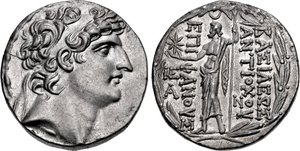
antiochus viii epiphanes/callinicus/philometor, nicknamed grypus
Syrian Arab Republic
Quick Facts
- Artistic Movement Or Style: Hellenistic
- Artists Or Movements Influenced By This Artist: ['Seleucid Dynasty']
- Artists Who Influenced This Artist:
- Demetrius II Nicator
- Cleopatra Thea
- Date Of Birth: 125 BC
- Date Of Death: 96 BC
- Full Name: Antiochus VIII Grypus
- Nationality: Hellenistic Seleucid
- Notable Artworks: ['']
- Place Of Birth: Aleppo, Syria