 Preview
 Send
Send Share
Share
 Details

 Download
 Similars
 X-Ray
X-Ray Diaporama
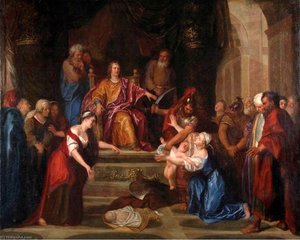
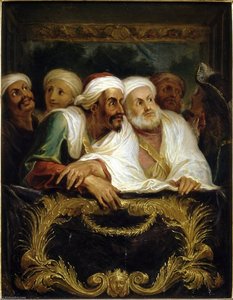
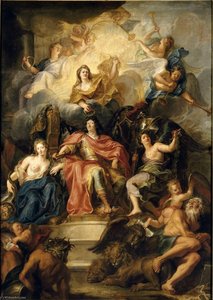
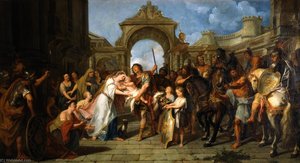
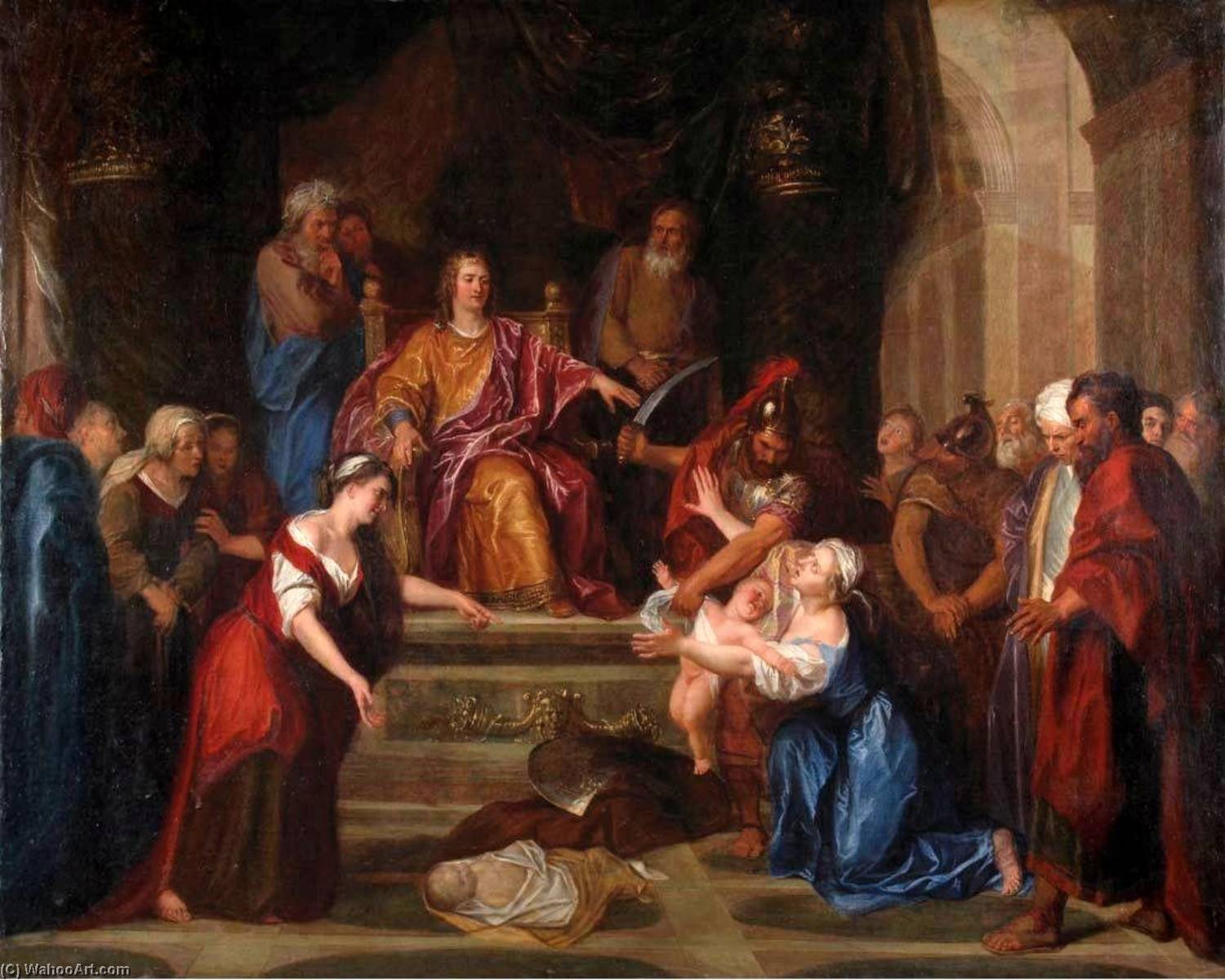
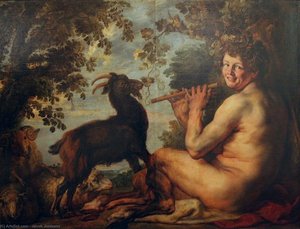
The Judgment of Solomon (small version)

 Read More
Hand Made Oil Reproduction
Hand-painted oil on canvas in your size and frame, made to order by our artists. ( Buy Print Buy Image)




































Pick from our preset sizes that match the artwork's original proportions.

You may enter your own dimensions to fit a specific frame or space. If your selected size does not match the original image's proportions, we will either crop the artwork or extend the painting with additional hand-painted elements. A digital mockup will be sent for your approval before production begins.
Please note that the on-screen preview does not reflect the actual cropping or extension. Only the mockup will accurately show the final composition.
While custom sizes are available, we recommend selecting a dimension from the predefined list to preserve the original proportions.
After order, ArtsDot.com team will email client for instructions and provide a mockup preview
Worldwide Delivery () in 3/4 weeks instead of standard 5 weeks. (17 August). No compromise on quality.

Free Worldwide Express Shipping

High-Quality Linen Canvas

Full Shipping Insurance

Customs Tax Refund Guarantee

True Color Matching Guarantee

60-Day Return Policy (Defects Only)

100% Money-Back Guarantee

Bulk Discount Offer
 Glass option is only available in size under 110 CM

The Judgment of Solomon (small version)
Reproduction Medium
Reproduction Size
-


Total Price
$ 263
Related Artworks
Artist Biography
The Legacy of Antoine Coypel II: A Bridge Between Eras
In the grand tapestry of French art history, few figures embody the delicate transition from the structured majesty of the Baroque to the playful elegance of the Rococo as gracefully as Antoine Coypel II. Born in Paris in 1661 into a lineage of profound artistic prestige, his very existence was intertwined with the pulse of the French Royal Academy. As the son of the celebrated painter Noël Coypel, Antoine did not merely inherit a name; he inherited a visual language of meticulous observation and masterful draughtsmanship. His early life was marked by an immersion in the highest circles of Parisian culture, a period that would lay the foundation for a career defined by both classical restraint and an emerging, spirited dynamism.
The formative years of Coypel II were characterized by a rigorous education that spanned the most significant artistic hubs of Europe. At the age of eleven, he accompanied his father to Italy, a journey that proved transformative. In Rome, the young artist found himself breathing the same air as the remnants of the High Renaissance and the burgeoning Roman Baroque. By studying the works of masters such as Carlo Maratta and witnessing the sculptural genius of Gian Lorenzo Bernini, Coypel developed a profound respect for anatomical precision and classical proportion. This Italian sojourn allowed him to master the art of copying the Antique, an essential practice that instilled in him a lifelong reverence for idealized beauty and balanced composition.
Mastery of Form and the Royal Commission
Upon his return to Paris in 1676, Coypel II completed his training at the Académie Royale, quickly ascending through the ranks of the artistic elite. His talent was such that he achieved official recognition with remarkable speed, earning the title of académicien at a young age. This period of his life saw him navigating the complex waters of royal patronage, securing prestigious commissions that would decorate the most significant architectural wonders of France. From the altarpieces of Notre-Dame in Paris to the grand decorative schemes for the Palais Royal, his brushwork became a tool for storytelling on a monumental scale.
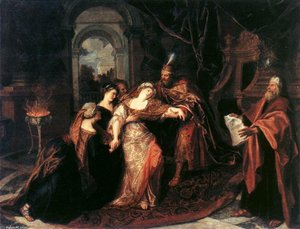
His technical prowess was particularly evident in his ability to blend the heavy, dramatic chiaroscuro of Rubens and Rembrandt with a uniquely French clarity. While he possessed the skill to execute the grand, sweeping gestures required for history paintings, he often favored a certain restrained elegance. This stylistic choice allowed him to capture profound psychological depth within his subjects. In works such as "The Swooning of Esther," commissioned by Louis XIV for the Fontainebleau Palace, one can observe his mastery over luminous palettes and the intricate rendering of drapery, all serving to heighten the emotional intensity of the biblical narrative.
A Pivotal Figure in French Art History
As his career progressed, Coypel II reached the zenith of professional achievement. His appointment as premier peintre du roi (First Painter to the King) and his role as the keeper of the royal collection of drawings solidified his status as a pillar of the French art establishment. He was not merely a painter of scenes but a custodian of the aesthetic values of the age. Even as the artistic climate began to shift toward the more whimsical and lighthearted Rococo style, Coypel II remained a stabilizing force, ensuring that the principles of classical structure were not lost in the pursuit of ornamentation.
The historical significance of Antoine Coypel II lies in his role as a stylistic conduit. His oeuvre serves as a visual record of an era in flux, capturing the moment when the austere grandeur of the 17th century began to soften into the decorative exuberance of the 18th. Though he lived in the shadow of more famous contemporaries and family members, his contribution to the evolution of French painting is undeniable. Through his portraits, mythological scenes, and historical canvases, he left behind a legacy of grace, drama, and an enduring commitment to the beauty of the human form.
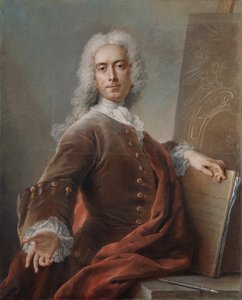
antoine coypel ii
1661 - 1722
Quick Facts
- Artistic Movement Or Style: Baroque
- Artists Who Influenced This Artist:
- Nicolas Frémiet
- Charles Le Brun
- Date Of Birth: 1661
- Date Of Death: 1722
- Full Name: Antoine Coypel II
- Nationality: French
- Notable Artworks:
- The Swooning of Esther
- Europa
- Head of a Woman
- Place Of Birth: Paris, France