

 Preview
 Send
Send Share
Share
 Details

 Download
 Similars
 X-Ray
X-Ray Diaporama
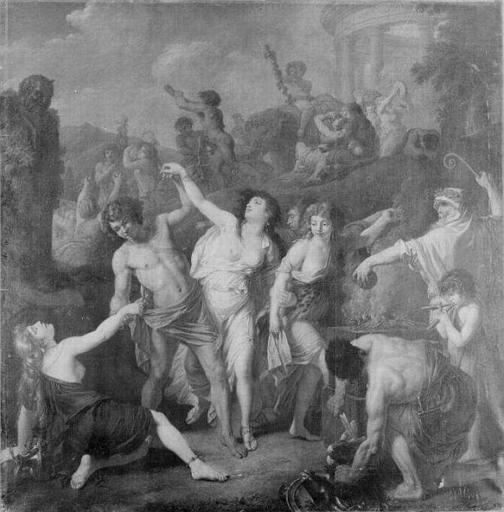
L'AUTOMNE OU LES FETES DE BACCHUS


 Read More
Purchase a high-resolution, enhanced digital image, far superior to the online preview.
Each file is meticulously prepared by our in-house specialists using advanced tools and expert manual retouching. We ensure every image has exceptional clarity, precise color accuracy, and fine detail.
The final file is delivered via email within 72 hours, optimized for immediate use in professional, editorial, and print environments. This is the same quality trusted by top-tier design studios, publishers, and galleries.
Digital Image
Download a high-resolution file for personal display, printing, and creative projects. ( Buy Print Buy Hand Made Painting)
Included in Every Digital Image Order
Expert Digital Delivery, Guaranteed
When you choose ArtsDot.com, you're not just getting an image - you're receiving a professionally enhanced digital artwork, crafted with precision and backed by a satisfaction guarantee. Here's everything that comes with your order, automatically:

Fast Email Delivery
Your high-resolution digital image file will be emailed to you within 72 hours of ordering - ready for immediate use.

AI-Enhanced Digital File
Your artwork is professionally optimized using advanced AI tools and manual editing, ensuring maximum detail, clarity, and color accuracy.

Free Lifetime Re-Delivery
Accidentally deleted or lost your file? No worries - we'll resend it to you anytime, free of charge.

No Import Fees - Ever
Enjoy your artwork instantly with zero customs, duties, or delivery fees - digital downloads are always tax-free.

Color Accuracy Guarantee
We ensure your digital image reflects the original colors as closely as possible using professional tools and color management.

60-Day Satisfaction Guarantee
If you're not satisfied with your digital image, we'll revise it or refund 100% within 60 days - no questions asked.

100% Money-Back Guarantee
Not satisfied? Get a full refund within 60 days of receiving your digital file - no questions asked.

Bulk Order Discounts
Buy 3 images, save 10% - Buy 5, save 15% - Buy 10+, save 20%. Great for creative projects, galleries, and agencies.
The Ecstasy of Bacchic Revelry
To gaze upon L'Automne ou Les fêtes de Bacchus is to be swept away by a tide of joyous abandon. This monumental allegory plunges the viewer into a scene of unrestrained, vibrant celebration—a Dionysian feast where the boundaries between civilization and wild nature dissolve in wine-fueled ecstasy. The composition itself is a masterful vortex of human energy; figures writhe, dance, and interact amidst a lush, rocky landscape. It speaks not merely of a party, but of a primal, exhilarating return to instinct, capturing that fleeting moment when gaiety borders on the sublime.
A Tapestry Woven in Rococo Grandeur
Stylistically, the work resonates deeply with the opulent spirit of the late eighteenth century, blending the decorative flourish of the Rococo period with the emerging grandeur of Neoclassicism. Antoine François Callet, a painter whose career spanned pivotal epochs from the reign of Louis XVI through the Napoleonic era, was perfectly equipped to capture such an atmosphere of imperial splendor and mythological fervor. While the original execution would have burst forth in rich color, the grayscale rendering allows us to appreciate the sheer architectural drama of the composition—the interplay between deep shadow and brilliant highlight that gives the scene a timeless, almost sculptural quality.
Mastery of Movement and Form
Observe how the artist manipulates line and shape to create such palpable motion. The use of strong contours defines every ecstatic gesture, while softer lines suggest the billowing drapery caught in an unseen breeze or the dense foliage framing the revelers. Callet achieves profound depth through overlapping forms and dramatic perspective, drawing the eye inexorably toward the central cluster of activity. It is a study in controlled chaos; the pyramidal structure anchors the wild energy, giving the viewer a sense of both being overwhelmed and safely observing the spectacle from a privileged vantage point.
Symbolism of Indulgence and Liberation
At its heart, this piece is an exploration of human experience—the intoxicating power of pleasure, the release found in art, music, and wine. Bacchus, the god of wine, ecstasy, and ritual madness, serves as the ultimate catalyst for this emotional outpouring. The symbolism suggests a temporary suspension of societal rules; it is a celebration of life at its most exuberant. For collectors and designers alike, owning a reproduction of this work brings into your space not just an image, but a potent evocation of unbridled joy and historical artistic sophistication.
Bringing the Drama Home
Whether intended for a grand salon or a richly decorated study, L'Automne ou Les fêtes de Bacchus commands attention. The dramatic lighting—those stark contrasts between deep shadow and brilliant highlight—ensure that even in reproduction, the piece retains its theatrical punch. It is an artwork that demands to be viewed closely, allowing one to lose oneself within its narrative currents, making it a breathtaking focal point for any discerning interior design scheme.
Related Artworks

Artist Biography
The Painter of Allegory and Imperial Splendor
Antoine François Callet, often known simply as Antoine Callet, remains a luminous figure in the grand tapestry of late 18th-century French art. His life and career unfolded against a backdrop of profound historical transformation, spanning the twilight of the Ancien Régime under Louis XVI and the rising sun of the Napoleonic era. Born in Paris in 1741, Callet emerged as a master of both the intimate portrait and the monumental allegory, a painter capable of capturing the delicate psychological nuances of a monarch while simultaneously orchestrating vast, celestial narratives across the ceilings of France's most prestigious palaces.
Callet’s journey toward artistic mastery was paved with the prestigious accolades of the French academic system. His talent was formally recognized when he won the grand prix de Rome in 1764 with his evocative work, Cléobis et Biton conduisent le char de leur mère au temple de Junon. This triumph granted him the invaluable opportunity to study in Italy, where the shadows of masters like Caravaggio and the dramatic architectural energy of Bernini left an indelible mark on his technique. It was during these formative years in Rome that Callet refined his use of chiaroscuro and learned to infuse classical themes with a sense of theatrical movement, a skill that would later define his most celebrated compositions.
A Master of Royal Portraiture and Grandeur
Upon his return to France, Callet ascended to the highest echelons of the art world, securing a position within the Académie Royale de peinture et de sculpture. His ability to blend the elegance of the Rococo style with the emerging discipline of Neoclassicism made him the preferred choice for the French nobility and royalty. Perhaps his most enduring legacy lies in his role as the official portraitist to Louis XVI. In works such as his 1779 portrait of the King, Callet did more than merely record a likeness; he constructed an icon of sovereignty. Through the meticulous rendering of ermine-lined robes and the strategic placement of the Fleur-de-lis, he utilized the language of symbolism to project stability and divine right during a period of mounting political tension.
Beyond the individual portrait, Callet’s genius flourished in the realm of large-scale decorative painting. He possessed a rare ability to transform architectural spaces into immersive, mythological realms. His contributions to the Galerie d'Apollon at the Louvre, specifically his breathtaking ceiling fresco Le Printemps ou Zéphire et Flore couronnant de fleurs Cybèle, demonstrate his command over color and illusionistic perspective. In these works, the boundaries between the physical room and the painted heavens dissolve, inviting the viewer into a symphony of gold, azure, and eternal spring.
Legacy of an Era in Transition
The significance of Callet’s oeuvre extends far beyond mere decoration; his work serves as a visual chronicle of a world in flux. As France moved from the decadent splendor of the monarchy through the upheaval of the Revolution and into the imperial ambitions of Napoleon, Callet’s brush captured the shifting aesthetic values of the age. His ability to navigate between the Rococo's ornamental grace and the Neoclassical's structured nobility allowed him to remain relevant across decades of intense social change.
To study the works of Antoine François Callet is to witness the heartbeat of French history through paint and pigment. His achievements include:
- Academic Excellence: Winning the prestigious Prix de Rome, which established his foundation in classical antiquity.
- Royal Patronage: Serving as a primary visual architect for the identity of Louis XVI.
- Architectural Transformation: Creating monumental ceiling paintings that redefined the interior grandeur of French palaces like the Palais du Luxembourg.
- Stylistic Synthesis: Successfully bridging the gap between the emotive, flowing lines of the Rococo and the disciplined, heroic themes of Neoclassicism.
Today, Callet’s paintings stand as windows into a lost epoch of elegance, reminding us of a time when art was used to weave together the threads of myth, power, and human emotion into a single, magnificent tapestry.
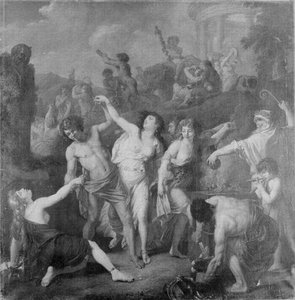
antoine françois callet
1741 - 1823 , France
Quick Facts
- Artistic Movement Or Style: Rococo Style
- Artists Or Movements Influenced By This Artist: ['Louis XVI']
- Artists Who Influenced This Artist: ['Jean-Baptiste Rousseau']
- Date Of Birth: Paris, France (1741)
- Date Of Death: 1823
- Full Name: Antoine François Callet
- Nationality: French
- Notable Artworks:
- L'aurore
- Allegorie du dix-huit brumaire
- Allegorie de la bataille d'Austerlitz
- Place Of Birth: Paris

