

 Preview
 Send
Send Share
Share
 Details

 Download
 Similars
 X-Ray
X-Ray Diaporama
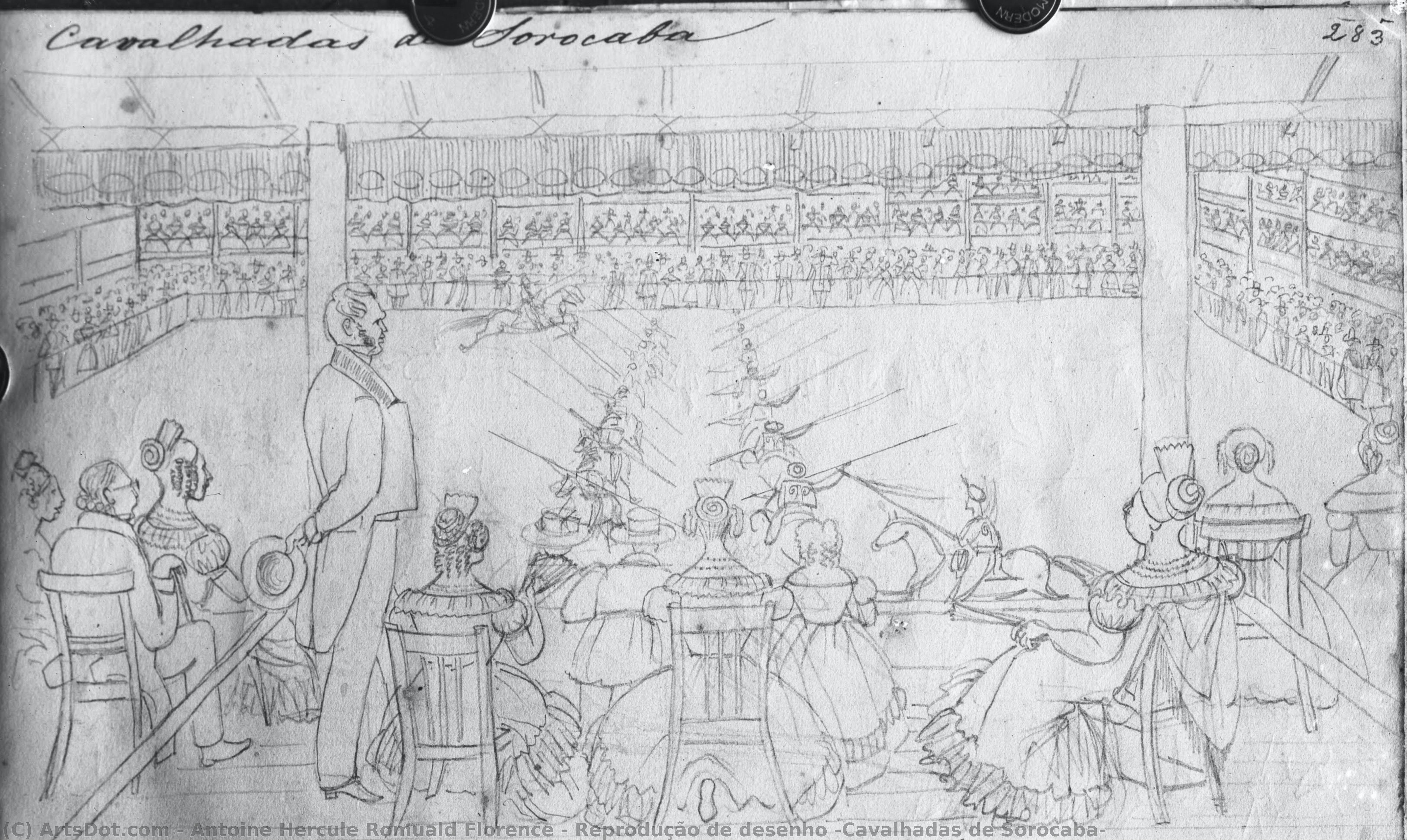
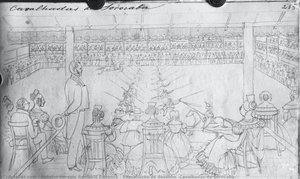
Reprodução de desenho “Cavalhadas de Sorocaba”

 Read More
Giclée / Art Print
Museum-quality giclée or canvas print with fast production and flexible finish options. ( Buy Hand Made Painting Buy Image)




































Pick from our preset sizes that match the artwork's original proportions.

You may enter your own dimensions to fit a specific frame or space. If your selected size does not match the original image's proportions, we will either crop the artwork or extend the image with a mirrored or solid-fill edge. A digital mockup will be sent for your approval before production begins.
Please note that the on-screen preview does not reflect the actual cropping or extension. Only the mockup will accurately show the final composition.
While custom sizes are available, we recommend selecting a dimension from the predefined list to preserve the original proportions.
Worldwide Delivery () in 2 weeks instead of standard 4/5 weeks. (24 August)

Free Worldwide Express Shipping

High-Quality Linen Canvas

Full Shipping Insurance

Customs Tax Refund Guarantee

True Color Matching Guarantee

60-Day Return Policy (Defects Only)

100% Money-Back Guarantee

Bulk Discount Offer
 Glass option is only available in size under 110 CM

Reprodução de desenho “Cavalhadas de Sorocaba”
Giclée / Art Print
Reproduction Size
-


Total Price
$ 63
Related Artworks






Artist Biography
The Visionary Intersection of Light and Land
In the grand tapestry of nineteenth-century art, certain names shine with a brilliance that illuminates entire eras, yet others remain whispered legends, known only to those who seek the profound intersections of science and soul. Antoine Hercule Romuald Florence is precisely such a figure—a polymath whose life bridged the gap between the meticulous precision of a scientist and the emotive depth of a Romantic painter. Born in the coastal charm of Torquay, England, in 1804, his journey was one of constant movement and discovery, eventually leading him to the vibrant landscapes of Brazil, where he would leave an indelible mark on both the canvas and the very way humanity perceives reality through the lens of technology.
Florence’s early years were defined by a dual fascination with the natural world and the mathematical laws that govern it. His studies at Göttingen University in Germany provided him with a rigorous foundation in science, an intellectual toolkit that would later allow him to manipulate light and chemistry with unprecedented skill. This scientific rigor did not stifle his artistic spirit; rather, it acted as a catalyst. When he arrived in Brazil in 1824, he brought with him the eyes of a draftsman and the mind of an explorer, ready to translate the untamed grandeur of the South American continent into visual poetry.
A Pioneer of the Photographic Dawn
Perhaps the most extraordinary chapter of Florence’s legacy lies in his role as a silent architect of photography. Long before the world bowed to the fame of Louis Daguerre, Florence was already experimenting with the transformative power of light. In 1834, he had developed a novel process utilizing matrix negatives and positives—a method that allowed for the reproduction of images through a chemical dance of silver and light. It is a remarkable historical nuance that he referred to this process as photographie years before the term became standardized in the English-speaking world.
This achievement places him at the very vanguard of visual innovation. His work was not merely about capturing a likeness; it was an attempt to freeze time itself, to capture the ephemeral essence of a moment through the scientific mastery of light. This period of his life represents a breathtaking fusion of disciplines, where the boundaries between the laboratory and the studio dissolved, allowing him to pioneer a new way of seeing that would eventually change the course of human history.
Romanticism and the Brazilian Soul
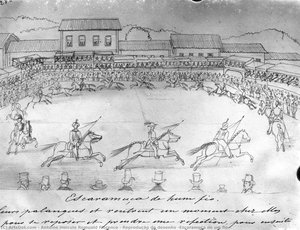
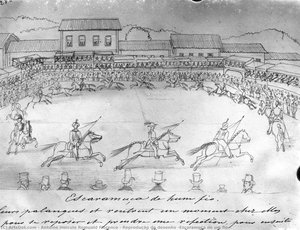
While his scientific contributions were revolutionary, Florence’s paintings remain deeply rooted in the Romantic movement. His canvases are characterized by a palpable sense of atmosphere, where dramatic compositions and emotive brushstrokes breathe life into the landscapes of the São Paulo region. He possessed a rare ability to capture the monumental scale of Brazilian nature while simultaneously conveying its intimate, quiet moments. In works such as “Escaramuça de um fio”, one can feel the movement and texture of the environment, as if the very air of the tropics has been captured within the pigment.
His dedication to portraying the natural world was matched by his ability to document the changing face of Brazil. Through his sketches and paintings, he provided a window into an era of profound transition, capturing everything from the serene beauty of the Camapuam region to the burgeoning urban energy of São Paulo. His art serves as both a historical record and an emotional journey, inviting viewers to experience the majesty of a landscape that was, at the time, still shrouded in much of its mystery.
A Lasting Legacy of Innovation
The significance of Antoine Florence extends far beyond the borders of his era. He remains a symbol of the interdisciplinary spirit—a reminder that true innovation often occurs when we refuse to separate the analytical from the aesthetic. His life’s work continues to inspire a renewed appreciation for the forgotten pioneers who operated on the fringes of established history.
Today, his memory is preserved through institutions like the Instituto Hercule Florence in São Paulo, which honors his dual legacy as an artist and an inventor. To study his life is to encounter a man who saw no boundary between the precision of a chemical reaction and the soft, golden light of a Brazilian sunset. His contributions remain etched into the very foundation of Brazilian art history, standing as a testament to a visionary who dared to capture the world in all its complex, luminous glory.
antoine hercule romuald florence
1804 - 1879 , United Kingdom
Quick Facts
- Artistic Movement Or Style: Romanticism
- Artists Who Influenced This Artist:
- Eugène Delacroix
- William Hayley
- Date Of Birth: 1804
- Full Name: Antoine Hercule Romuald Florence
- Nationality: British
- Notable Artworks:
- Escaramuça de um fio
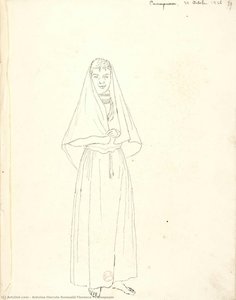
- Camapuam
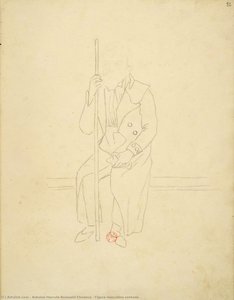
- Figura masculina sentada
- Place Of Birth: Torquay, United Kingdom
![Vieillard de Porto-Feliz, âgé de 107 ans [Desenho do Carnet de dessins]](/media/artworks/images-thumb/77/b7/77b75f7b413456139a19d1df2fc1a1df.jpg)

