

 Send
Send Share
Share
 Details

 Download
 Similars
 Diaporama
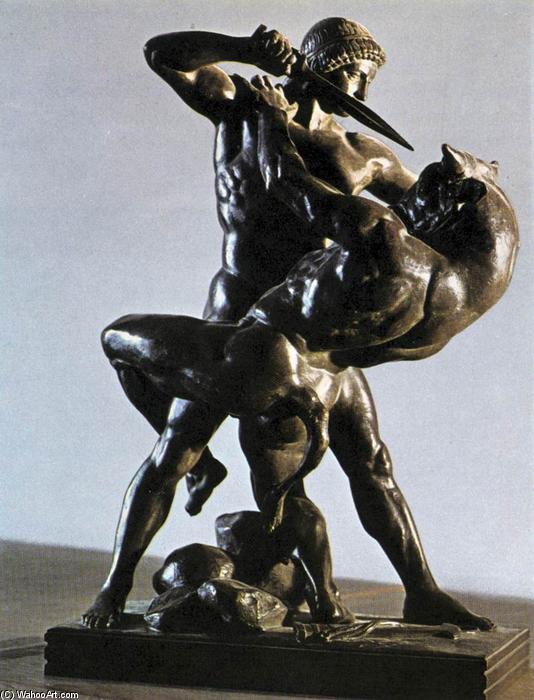
Theseus Slaying the Minotaur


 Read More
Purchase a high-resolution, enhanced digital image, far superior to the online preview.
Each file is meticulously prepared by our in-house specialists using advanced tools and expert manual retouching. We ensure every image has exceptional clarity, precise color accuracy, and fine detail.
The final file is delivered via email within 72 hours, optimized for immediate use in professional, editorial, and print environments. This is the same quality trusted by top-tier design studios, publishers, and galleries.
Digital Image
Download a high-resolution file for personal display, printing, and creative projects. ( Buy Print Buy Hand Made Painting)
Included in Every Digital Image Order
Expert Digital Delivery, Guaranteed
When you choose ArtsDot.com, you're not just getting an image - you're receiving a professionally enhanced digital artwork, crafted with precision and backed by a satisfaction guarantee. Here's everything that comes with your order, automatically:

Fast Email Delivery
Your high-resolution digital image file will be emailed to you within 72 hours of ordering - ready for immediate use.

AI-Enhanced Digital File
Your artwork is professionally optimized using advanced AI tools and manual editing, ensuring maximum detail, clarity, and color accuracy.

Free Lifetime Re-Delivery
Accidentally deleted or lost your file? No worries - we'll resend it to you anytime, free of charge.

No Import Fees - Ever
Enjoy your artwork instantly with zero customs, duties, or delivery fees - digital downloads are always tax-free.

Color Accuracy Guarantee
We ensure your digital image reflects the original colors as closely as possible using professional tools and color management.

60-Day Satisfaction Guarantee
If you're not satisfied with your digital image, we'll revise it or refund 100% within 60 days - no questions asked.

100% Money-Back Guarantee
Not satisfied? Get a full refund within 60 days of receiving your digital file - no questions asked.

Bulk Order Discounts
Buy 3 images, save 10% - Buy 5, save 15% - Buy 10+, save 20%. Great for creative projects, galleries, and agencies.
Collectible Description
The Hero's Struggle: Antoine Barye’s “Theseus Slaying the Minotaur”
Antoine-Louis Barye’s “Theseus Slaying the Minotaur,” completed in 1843, isn’t merely a depiction of a myth; it’s a visceral embodiment of heroic struggle and primal power. This bronze sculpture, now housed within The Metropolitan Museum of Art, transcends its mythological subject matter to become a timeless meditation on conflict, courage, and the relentless pursuit of victory. Barye, a pivotal figure in the burgeoning *animalier* movement – a school dedicated to portraying animals with unprecedented realism and dramatic intensity – masterfully captures the brutal ballet between man and beast, imbuing the scene with an almost palpable sense of urgency.
The sculpture’s genesis lies within the rich tapestry of Greek mythology. The legend of Theseus, son of Aegeus, is a cornerstone of Athenian identity, inextricably linked to the monstrous Minotaur imprisoned within the labyrinth of Crete. Barye doesn't shy away from the violence inherent in this narrative; instead, he amplifies it, presenting a scene of raw, untamed combat. Theseus, clad in armor and wielding his sword with ferocious determination, is locked in a desperate embrace with the Minotaur – a creature simultaneously terrifying and strangely compelling. The Minotaur’s horns curve menacingly, its eyes burn with primal rage, and its muscular form strains against Theseus's grip, creating a dynamic tension that draws the viewer into the heart of the struggle.
A Masterclass in Bronze Technique
Barye’s technical prowess is immediately evident. Executed using the lost-wax casting method – a painstaking process involving intricate molds and multiple castings – the sculpture boasts an astonishing level of detail. The musculature of both figures is rendered with anatomical precision, showcasing Barye's deep understanding of animal anatomy and his commitment to portraying realistic movement. Note the subtle ripple of muscles beneath Theseus’s armor, the strained tendons in the Minotaur’s neck, and the way the bronze captures the texture of fur and skin. The surface isn’t smooth; it’s deliberately textured, reflecting Barye's preference for a robust, tactile quality that emphasizes the weight and physicality of his subjects.
The choice of bronze itself is significant. Bronze lends an inherent sense of permanence and gravitas to the work, aligning perfectly with the heroic narrative. Furthermore, Barye’s masterful manipulation of patination – the process of altering the surface of metal through chemical treatments – contributes significantly to the sculpture's dramatic effect. The deep browns and golds evoke the warmth of fire and the patina of age, suggesting a history steeped in legend and battle. Subtle variations in tone create depth and shadow, highlighting the contours of the figures and intensifying the sense of drama.
Symbolism and Romantic Intensity
Beyond its technical brilliance, “Theseus Slaying the Minotaur” is rich in symbolic meaning. The myth itself represents a triumph over chaos and barbarity – Athens rising to overcome the monstrous threat posed by Crete. Theseus’s victory symbolizes the establishment of order and civilization. The sculpture also taps into the core tenets of Romanticism, emphasizing emotion, individualism, and the sublime power of nature. Barye wasn't simply depicting a battle; he was capturing the *feeling* of struggle – the desperation, the courage, and the raw intensity of human will confronting overwhelming odds.
The composition itself reinforces this symbolism. The diagonal lines created by the figures’ poses and the angle of the sword propel the viewer's eye towards the central conflict, creating a sense of dynamic movement. The low, rocky base littered with the bodies of fallen animals – remnants of previous battles – serves as a stark reminder of the cost of victory. It’s a scene that speaks to the enduring human fascination with heroism, sacrifice, and the eternal struggle between good and evil.
A Timeless Legacy
“Theseus Slaying the Minotaur” remains a powerful testament to Antoine-Louis Barye's artistic vision. It’s a sculpture that continues to resonate with viewers today, not just for its technical mastery but also for its profound exploration of human nature and the timeless themes it embodies. Whether admired as a historical artifact or simply appreciated for its aesthetic beauty, this bronze masterpiece offers a captivating glimpse into the world of Greek mythology and the enduring legacy of one of art history’s most celebrated sculptors.
Related Artworks
Artist Biography
A Pioneer of Animal Sculpture: The Life and Legacy of Antoine-Louis Barye
Antoine-Louis Barye, born in Paris on September 24, 1795, emerged as a pivotal figure in the world of 19th-century sculpture. He wasn’t merely depicting animals; he was imbuing them with a dramatic intensity and anatomical accuracy previously unseen, effectively launching the *animalier* genre – a dedicated focus on animal forms – into the realm of fine art. Barye's journey began not in the studio of a sculptor, but as an apprentice goldsmith following in his father’s footsteps. This early training instilled within him a meticulous attention to detail and a mastery of technique that would prove invaluable throughout his career. He honed these skills further under sculptors like François-Joseph Bosio and Baron Antoine-Jean Gros, absorbing classical principles while simultaneously developing a uniquely Romantic sensibility. His formal education at the École des Beaux-Arts provided a solid foundation, but it was an encounter with the living world – specifically, the animals housed within the Jardin des Plantes in Paris around 1823 – that truly ignited his artistic vision.From Goldsmith to Animalier: The Development of a Unique Style
Barye’s dedication to observing animals was obsessive. He didn't simply glance; he studied, sketched, and meticulously analyzed their anatomy, movements, and behaviors. This commitment to realism wasn’t cold or clinical, however. It was infused with the emotional fervor characteristic of the Romantic movement. Early works like “Milo of Crotana Devoured by a Lion” (1819) and “Hercules with the Erymanthean Boar” (c. 1820), created while still a student, hinted at his emerging talent for dynamic composition and dramatic narrative. But it was with sculptures such as "Tiger Devouring a Gavial Crocodile" (1831) – a monumental plaster that caused a sensation at the Salon – and “Lion Crushing a Serpent” (1832), cast in bronze, that Barye truly established his signature style. These weren’t static representations; they were moments of raw power frozen in time, capturing the brutal beauty of nature's struggle for survival. He moved beyond mere imitation to convey the very essence of animal life – their strength, agility, and untamed spirit. His work resonated with a growing public fascination with the exotic and the wild, reflecting a Romantic yearning for experiences beyond the confines of civilized society.Major Works and Monumental Commissions
Throughout his career, Barye produced an astonishing array of sculptures, each demonstrating his unparalleled skill in capturing animal form and movement. Beyond the iconic “Tiger Devouring a Gavial Crocodile” and “Lion Crushing a Serpent,” masterpieces like "Theseus and the Minotaur" (1843), “Roger and Angelica on the Hippogriff” (1846), “Lapitha and Centaur” (1848) and “Jaguar Devouring a Hare” (1850) showcased his versatility and imaginative power. He wasn’t limited to depictions of predatory encounters; he also explored mythological scenes, imbuing them with the same dynamic energy and anatomical precision that defined his animal studies. His talent extended beyond smaller-scale bronzes as well. Barye received prestigious commissions for monumental works, including the “Lion of the Column of July,” a powerful symbol of French resilience, and sculptures adorning the Tuileries Garden in Paris. These large-scale projects demonstrated his ability to translate his artistic vision into public art, solidifying his reputation as one of France’s leading sculptors.Influences, Struggles, and Lasting Significance
Barye's work was a synthesis of diverse influences. The Romantic emphasis on emotion and individualism is palpable in the dramatic tension of his sculptures. Simultaneously, he drew inspiration from classical art, evident in his attention to anatomical accuracy and idealized forms. However, what truly set him apart was his scientific approach to observation – a direct result of his countless hours spent studying animals at the Jardin des Plantes. Despite achieving critical acclaim, Barye’s life wasn't without hardship. He struggled with financial difficulties throughout much of his career, largely due to poor business acumen. A bankruptcy in 1848 forced him to sell his models and molds, leading to a period where inferior copies flooded the market, damaging his reputation. He found some stability as Professor of Drawings at the Museum of Natural History in 1854, but it was only posthumously that his genius received its full due. Today, Antoine-Louis Barye is recognized as the father of modern animal sculpture. His influence on subsequent generations of artists is undeniable, and his works are celebrated for their power, realism, and enduring beauty. He elevated the *animalier* genre from a niche pursuit to a respected form of artistic expression, leaving an indelible mark on the history of sculpture. His legacy continues to inspire awe and admiration in collectors and museums worldwide.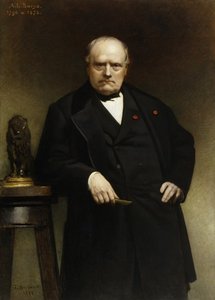
Antoine-Louis Barye
1796 - 1875 , France
Quick Facts
- Artistic Movement Or Style: Romanticism
- Artists Or Movements Influenced By This Artist: ['Animal sculptors']
- Artists Who Influenced This Artist:
- Francois-Joseph Bosio
- Baron Antoine-Jean Gros
- Date Of Birth: September 24, 1795
- Date Of Death: June 25, 1875
- Full Name: Antoine-Louis Barye
- Nationality: French
- Notable Artworks:
- Tiger Devouring a Gavial
- Lion Crushing a Serpent
- Theseus and the Minotaur
- Roger & Angelica
- Lapitha and Centaur
- Jaguar Devouring Hare
- Place Of Birth: Paris, France

