

 Preview
 Send
Send Share
Share
 Details

 Download
 Similars
 X-Ray
X-Ray Diaporama
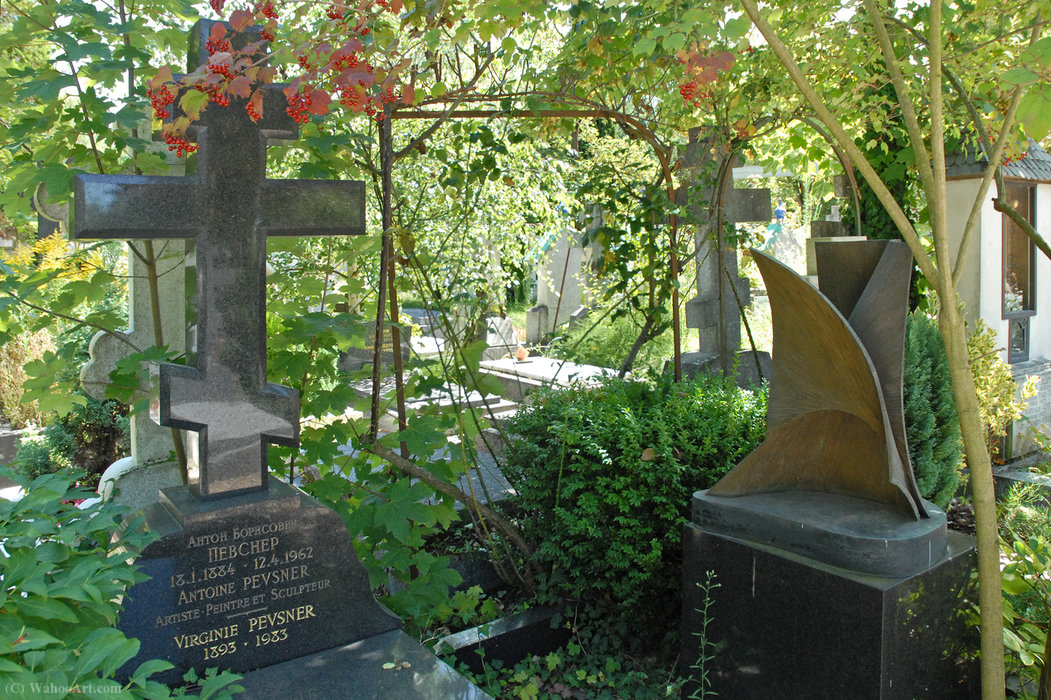
Sa Tombe Le Cimetiere De Sainte-Genevieve-Des-Bois
 Read More
Purchase a high-resolution, enhanced digital image, far superior to the online preview.
Each file is meticulously prepared by our in-house specialists using advanced tools and expert manual retouching. We ensure every image has exceptional clarity, precise color accuracy, and fine detail.
The final file is delivered via email within 72 hours, optimized for immediate use in professional, editorial, and print environments. This is the same quality trusted by top-tier design studios, publishers, and galleries.
Digital Image
Download a high-resolution file for personal display, printing, and creative projects. ( Buy Print Buy Hand Made Painting)
Included in Every Digital Image Order
Expert Digital Delivery, Guaranteed
When you choose ArtsDot.com, you're not just getting an image - you're receiving a professionally enhanced digital artwork, crafted with precision and backed by a satisfaction guarantee. Here's everything that comes with your order, automatically:

Fast Email Delivery
Your high-resolution digital image file will be emailed to you within 72 hours of ordering - ready for immediate use.

AI-Enhanced Digital File
Your artwork is professionally optimized using advanced AI tools and manual editing, ensuring maximum detail, clarity, and color accuracy.

Free Lifetime Re-Delivery
Accidentally deleted or lost your file? No worries - we'll resend it to you anytime, free of charge.

No Import Fees - Ever
Enjoy your artwork instantly with zero customs, duties, or delivery fees - digital downloads are always tax-free.

Color Accuracy Guarantee
We ensure your digital image reflects the original colors as closely as possible using professional tools and color management.

60-Day Satisfaction Guarantee
If you're not satisfied with your digital image, we'll revise it or refund 100% within 60 days - no questions asked.

100% Money-Back Guarantee
Not satisfied? Get a full refund within 60 days of receiving your digital file - no questions asked.

Bulk Order Discounts
Buy 3 images, save 10% - Buy 5, save 15% - Buy 10+, save 20%. Great for creative projects, galleries, and agencies.
Related Artworks










Artist Biography
Early Life and Artistic Beginnings
Antoine Pevsner, born Natan Borisovich Pevzner in 1886 in Oryol, Russian Empire—present-day Belarus—emerged from a Jewish family steeped in intellectual curiosity. His early artistic inclinations weren’t immediately focused on sculpture; he initially pursued architecture and painting, studying at the Imperial Central School of Technical Drawing in St. Petersburg before venturing to Paris in 1908. This period was formative, exposing him to the burgeoning avant-garde movements that would profoundly shape his aesthetic trajectory. Though he engaged with Cubism and Futurism, Pevsner’s artistic voice wasn't simply an echo of these styles but a unique synthesis—a quest for a new visual language rooted in mathematical principles and spatial dynamics. His brother, Alexii Pevsner, and Naum Gabo, would become integral to this exploration, forging a collaborative spirit that defined the early years of Constructivism.The Birth of Constructivism
The Russian Revolution of 1917 served as a catalyst for radical artistic change. Pevsner, alongside his brother Alexii and Naum Gabo, became central figures in the development of Constructivism—an art movement that rejected purely aesthetic concerns in favor of serving social purpose through abstract forms. They believed art should be integrated into the fabric of modern life, reflecting the dynamism and technological advancements of the new era. In 1920, they co-authored the *Realist Manifesto*, a pivotal text outlining their vision for a “new realism” that transcended representational depiction. This manifesto wasn’t about mirroring reality but constructing it—building forms from space and time, utilizing materials like metal and glass to express the underlying structure of the universe. They envisioned art as an engineering project, a precise articulation of spatial relationships rather than emotional expression. Pevsner's early Constructivist sculptures were often small-scale assemblages, meticulously crafted from geometric elements, demonstrating his commitment to this new aesthetic vocabulary.Exile and Parisian Development
The political climate in the Soviet Union grew increasingly restrictive during the 1920s, stifling artistic experimentation. In 1923, Pevsner made the difficult decision to leave Russia for Paris, a move that would profoundly influence his later work. Unlike some of his contemporaries who embraced socialist realism, Pevsner remained steadfast in his commitment to abstraction and mathematical principles. He continued to refine his sculptural language, pioneering the use of welding techniques—particularly the blowtorch—to create open, dynamic forms from metal rods and sheets. These sculptures weren’t static objects but rather explorations of space, light, and movement. He joined the Abstraction-Création group in 1932, further solidifying his position within the international avant-garde. This period saw a shift towards larger-scale works, often characterized by their elegant lines and intricate spatial arrangements.Major Achievements and Artistic Legacy
Throughout his career, Pevsner created a diverse body of work encompassing sculpture, drawings, and paintings. Notable achievements include *Column of Peace* (1954), a monumental steel sculpture embodying the ideals of international harmony, and *The Flight of the Bird*, installed at the General Motors Technical Center in Warren, Michigan—a testament to his belief in art’s ability to inspire technological innovation. He organized the “New Realities” exhibitions from 1946 onwards, providing a platform for abstract artists and fostering dialogue about the future of sculpture. Pevsner's influence extended beyond his own creations; he was a prolific theorist and educator, shaping generations of sculptors with his emphasis on mathematical precision, spatial awareness, and the integration of art and technology.Historical Significance
Antoine Pevsner’s legacy lies in his pioneering role as one of the founders of Constructivism and his unwavering commitment to abstraction throughout his career. He challenged traditional notions of sculpture, transforming it from a representational medium into an exploration of space, time, and mathematical principles. His work bridged the gap between art and engineering, anticipating many of the developments in kinetic art and contemporary sculpture. He demonstrated that art could be both intellectually rigorous and emotionally resonant—a testament to his enduring vision for a new visual language capable of expressing the complexities of the modern world. He remains a pivotal figure in 20th-century art history, inspiring artists to push boundaries and explore the limitless possibilities of form and space.
antoine pevsner
1884 - 1962
Quick Facts
- Artistic Movement Or Style: Constructivism
- Artists Or Movements Influenced By This Artist: ['Cubism']
- Artists Who Influenced This Artist: ['Naum Gabo']
- Date Of Birth: January 30, 1886
- Date Of Death: April 12, 1962
- Full Name: Antoine Pevsner
- Nationality: Russian
- Notable Artworks:
- Column of peace
- Derde en vierde dimensie
- Place Of Birth: Klimavichy, Russian Empire

