

 Preview
 Send
Send Share
Share
 Details

 Download
 Similars
 X-Ray
X-Ray Diaporama
 Stats
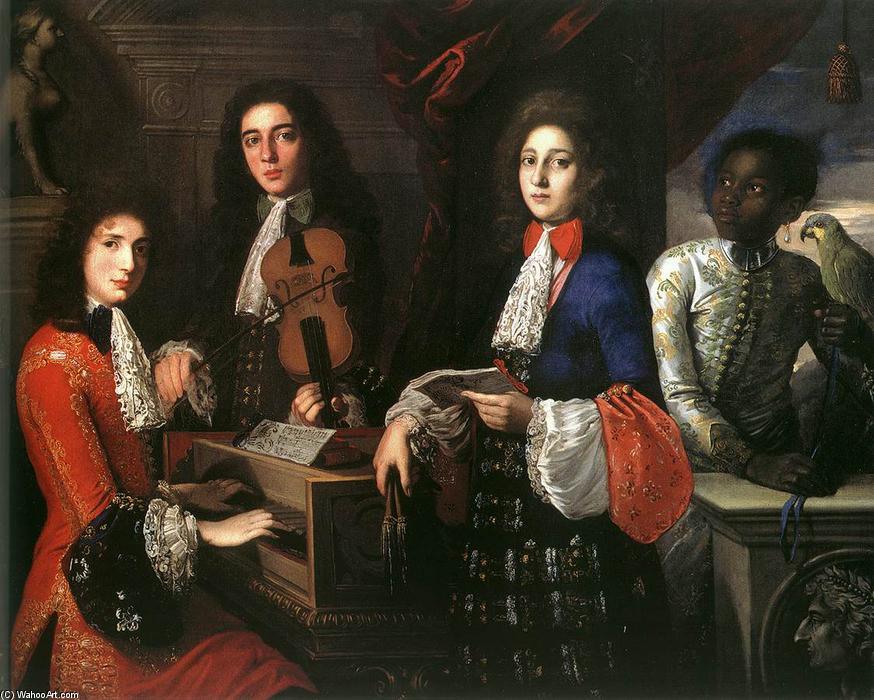
StatsPortrait of Three Musicians of the Medici Court
 Oil On Canvas
- WallArt
- Baroque
 1687
1687- Early Modern
 141.0 x 208.0 cm
 Galleria dell'Accademia
 Read More
Purchase a high-resolution, enhanced digital image, far superior to the online preview.
Each file is meticulously prepared by our in-house specialists using advanced tools and expert manual retouching. We ensure every image has exceptional clarity, precise color accuracy, and fine detail.
The final file is delivered via email within 72 hours, optimized for immediate use in professional, editorial, and print environments. This is the same quality trusted by top-tier design studios, publishers, and galleries.
Digital Image
Download a high-resolution file for personal display, printing, and creative projects. ( Switch to Print Buy Hand Made Painting)
Included in Every Digital Image Order
Expert Digital Delivery, Guaranteed
When you choose ArtsDot.com, you're not just getting an image - you're receiving a professionally enhanced digital artwork, crafted with precision and backed by a satisfaction guarantee. Here's everything that comes with your order, automatically:

Fast Email Delivery
Your high-resolution digital image file will be emailed to you within 72 hours of ordering - ready for immediate use.

AI-Enhanced Digital File
Your artwork is professionally optimized using advanced AI tools and manual editing, ensuring maximum detail, clarity, and color accuracy.

Free Lifetime Re-Delivery
Accidentally deleted or lost your file? No worries - we'll resend it to you anytime, free of charge.

No Import Fees - Ever
Enjoy your artwork instantly with zero customs, duties, or delivery fees - digital downloads are always tax-free.

Color Accuracy Guarantee
We ensure your digital image reflects the original colors as closely as possible using professional tools and color management.

100-Day Satisfaction Guarantee
If you're not satisfied with your digital image, we'll revise it or refund 100% within 100 days - no questions asked.

100% Money-Back Guarantee
Not satisfied? Get a full refund within 100 days of receiving your digital file - no questions asked.

Bulk Order Discounts
Buy 3 images, save 10% - Buy 5, save 15% - Buy 10+, save 20%. Great for creative projects, galleries, and agencies.
A Courtly Symphony in Color: Gabbiani’s “Portrait of Three Musicians”
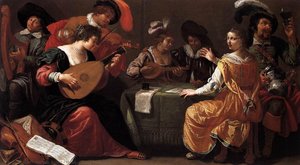
Anton Domenico Gabbiani's "Portrait of Three Musicians of the Medici Court," painted in 1687, is more than just a depiction of musicians; it’s a meticulously crafted window into the opulent world of Florence’s elite. This oil-on-canvas masterpiece, now residing within the Galleria dell’Accademia, offers a captivating glimpse into the refined tastes and artistic patronage that defined the late Baroque period. The painting immediately draws the eye with its rich palette – deep reds, blues, and golds dominate, creating an atmosphere of luxurious warmth and regal authority. Gabbiani masterfully employs chiaroscuro, utilizing dramatic contrasts between light and shadow to sculpt the figures and imbue them with a palpable sense of presence.
The subjects themselves are shrouded in a subtle air of mystery. Three musicians, undoubtedly members of the Medici court’s musical ensemble, occupy the central space. The figure on the left, holding a violin, exudes an air of focused intensity, while his counterpart, playing a cello, appears more relaxed and contemplative. The third musician, positioned to the right, is engaged with an instrument that resembles either a harpsichord or organ – its precise nature remains open to interpretation, adding another layer of intrigue to the composition. Their clothing—flowing robes adorned with intricate embroidery and shimmering fabrics—underscores their elevated status and reflects the prevailing fashion trends of the era. Noticeably, each musician is presented in three-quarter pose, a common convention for portraits during this period, allowing for a detailed observation of their features and attire.
The Symbolism of Birds and Harmony
Beyond the immediate depiction of the musicians, the painting is subtly layered with symbolic meaning. The presence of two birds—one perched near the top left corner and another on the right side—is particularly noteworthy. Birds have long held significance in art as emblems of joy, harmony, and divine inspiration. In this context, they likely represent the musicality itself – the aspiration to capture a perfect melody and evoke a sense of blissful serenity. The placement of these avian figures suggests a connection between the musicians’ performance and the broader realm of artistic expression.
Furthermore, the instruments themselves carry symbolic weight. The violin, often associated with passion and emotion, contrasts with the cello's grounding presence, representing depth and resonance. The harpsichord or organ, frequently linked to religious music, hints at a connection between earthly pleasure and spiritual contemplation – a common theme in Baroque art.
A Window into Florentine Artistic Tradition
Gabbiani’s work is deeply rooted in the artistic traditions of Florence, where he spent much of his career under the patronage of the Medici family. He initially apprenticed with Justus Sustermans, absorbing the meticulous detail and formal elegance characteristic of the courtly portraiture favored by the Medici. However, Gabbiani quickly developed a distinctive style, characterized by a softer touch and a greater emphasis on color and light than his mentor. His Roman studies further broadened his artistic horizons, exposing him to new influences and techniques.
The “Portrait of Three Musicians” exemplifies this evolution. While retaining elements of Florentine realism, Gabbiani infuses the painting with a sense of dynamism and emotional depth that distinguishes it from earlier portraits. The careful attention to detail—from the texture of the fabrics to the subtle expressions on the musicians’ faces—demonstrates his mastery of technique and his commitment to capturing the essence of his subjects.
A Timeless Masterpiece for Collectors and Designers
Reproductions of “Portrait of Three Musicians” offer a remarkable opportunity to bring this captivating work into any setting. The painting's rich colors, dynamic composition, and subtle symbolism continue to resonate with viewers today. Its elegant portrayal of courtly life provides a valuable glimpse into the artistic and cultural landscape of 17th-century Florence. Whether adorning a grand salon or a more intimate space, this masterpiece will undoubtedly serve as a focal point of conversation and admiration—a testament to Gabbiani’s skill and vision.
Related Artworks




Artist Biography
A Life in Late Baroque Florence
Anton Domenico Gabbiani, born in Florence on February 13th, 1652, and passing away there in 1726, stands as a compelling figure within the artistic landscape of late Baroque Italy. His career unfolded almost entirely under the patronage of the Medici court, shaping not only his stylistic development but also the very themes that permeated his work. Gabbiani’s journey began with a solid foundation in Florentine painting traditions; he first apprenticed under Justus Sustermans, a prominent portraitist favored by the Medici family. This early exposure instilled within him an understanding of aristocratic expectations and the formal demands of courtly representation. He continued to refine his skills studying with Vincenzo Dandini, further honing his technical abilities before embarking on a pivotal period in Rome.Roman Studies and the ‘Cortoneschi’
In 1673, Gabbiani journeyed to Rome, immersing himself within the vibrant artistic milieu of the Medici-sponsored Accademia Fiorentina. Here, he came under the tutelage of Ciro Ferri and Ercole Ferrata, masters who profoundly influenced his aesthetic sensibilities. This period proved crucial in aligning him with the “Cortoneschi,” a group of artists deeply inspired by the grand manner of Pietro da Cortona. Cortona’s dynamic compositions, dramatic use of light and shadow, and allegorical narratives became central to Gabbiani's artistic vocabulary. A subsequent sojourn to Venice between 1678 and 1679, working within Sebastiano Bombelli’s studio, broadened his horizons further. The Venetian influence likely contributed to a greater attention to detail and subtle color harmonies that would later characterize his paintings. This period of diverse training laid the groundwork for Gabbiani's emergence as an independent artist upon his return to Florence in 1680.Patronage, Frescoes, and Artistic Flourishing
Back in Florence, Gabbiani quickly established himself, securing patronage from Grand Prince Ferdinando de’ Medici—a relationship that proved instrumental to his artistic growth. Portraiture became a significant aspect of his practice; he possessed an ability to capture not only the likenesses of his subjects but also their status and personality within the Baroque conventions of elegance and grandeur. A notable example is the portrait of Grand Prince Ferdinando surrounded by musicians, now housed in the Pitti Palace, which exemplifies this skill. However, it was Gabbiani’s fresco work that truly showcased his mastery. The *Apotheosis of Cosimo il Vecchio*, adorning the ceiling of the Sala da Pranzo at Villa di Poggio a Caiano, demonstrated his command of large-scale composition and narrative storytelling through painting. Yet, his most celebrated achievement remains the frescoes within the Palazzina Meridiana adjacent to the Pitti Palace and Boboli Gardens.The Palazzina Meridiana: A Synthesis of Art and Science
These complex allegorical scenes, depicting Time raising Arts and Sciences to glory, represent a remarkable synthesis of Baroque theatricality and scientific inquiry. The frescoes are not merely decorative; they reflect the intellectual currents of the time, particularly the Medici family’s continued interest in scientific advancements. Intriguingly, Gabbiani included a portrait resembling Galileo Galilei within this context—a subtle yet powerful gesture acknowledging the legacy of one of Italy's most important scientists and hinting at the artist’s own engagement with contemporary thought. The Palazzina Meridiana frescoes are testament to his ability to create visually compelling narratives that resonated with both artistic and intellectual audiences. Beyond these grand commissions, Gabbiani also produced religious works, including an *Annunciation* for the Pitti Palace and *St. Francis de Sales in Glory* for the church of Santi Apostoli, demonstrating his versatility as a painter.Legacy and Historical Significance
Anton Domenico Gabbiani’s career embodies the flourishing of Baroque art in Florence during the late 17th and early 18th centuries. His success in securing patronage from the powerful Medici family underscores his artistic standing within Florentine society. He trained numerous pupils, including Giovanna Fratellini and Ignazio Enrico Hugford, ensuring the continuation of artistic traditions within Florence. While perhaps not as widely recognized today as some of his contemporaries, Gabbiani remains an important figure in the history of Florentine Baroque art—a skilled artist who seamlessly blended established conventions with emerging intellectual currents, leaving behind a legacy of captivating frescoes and elegant portraits that continue to inspire admiration.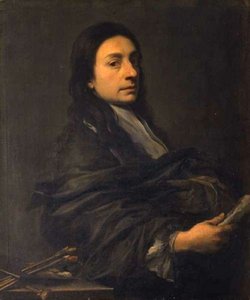
Anton Domenico Gabbiani
1652 - 1726 , Italy
Quick Facts
- Artistic Movement Or Style: Late Baroque
- Artists Or Movements Influenced By This Artist:
- Giovanna Fratellini
- Ignazio Enrico Hugford
- Artists Who Influenced This Artist:
- Pietro da Cortona
- Ciro Ferri
- Ercole Ferrata
- Sebastiano Bombelli
- Date Of Birth: February 13, 1652
- Date Of Death: November 22, 1726
- Full Name: Anton Domenico Gabbiani
- Nationality: Italian
- Notable Artworks:
- Apotheosis of Cosimo il Vecchio
- Palazzina Meridiana Frescoes
- Portrait of Ferdinando de' Medici
- Annunciation
- St. Francis de Sales in Glory
- Place Of Birth: Florence, Italy