

 Preview
 Send
Send Share
Share
 Details

 Download
 Similars
 X-Ray
X-Ray Diaporama
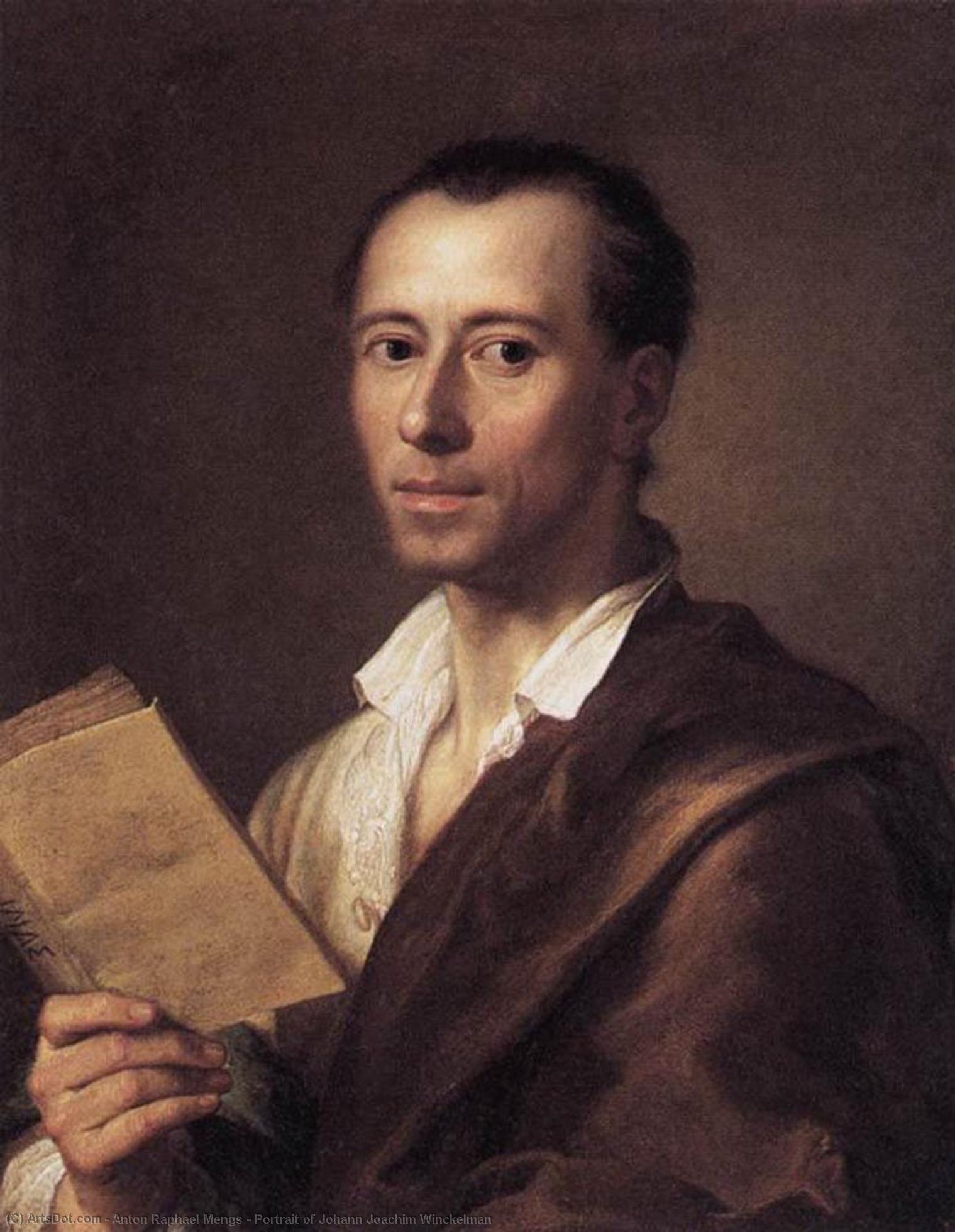
Portrait of Johann Joachim Winckelman
 Oil On Canvas
- WallArt
- Baroque
 1761
1761 64.0 x 49.0 cm
 Metropolitan Museum of Art
 Read More
Purchase a high-resolution, enhanced digital image, far superior to the online preview.
Each file is meticulously prepared by our in-house specialists using advanced tools and expert manual retouching. We ensure every image has exceptional clarity, precise color accuracy, and fine detail.
The final file is delivered via email within 72 hours, optimized for immediate use in professional, editorial, and print environments. This is the same quality trusted by top-tier design studios, publishers, and galleries.
Digital Image
Download a high-resolution file for personal display, printing, and creative projects. ( Buy Print Buy Hand Made Painting)
Included in Every Digital Image Order
Expert Digital Delivery, Guaranteed
When you choose ArtsDot.com, you're not just getting an image - you're receiving a professionally enhanced digital artwork, crafted with precision and backed by a satisfaction guarantee. Here's everything that comes with your order, automatically:

Fast Email Delivery
Your high-resolution digital image file will be emailed to you within 72 hours of ordering - ready for immediate use.

AI-Enhanced Digital File
Your artwork is professionally optimized using advanced AI tools and manual editing, ensuring maximum detail, clarity, and color accuracy.

Free Lifetime Re-Delivery
Accidentally deleted or lost your file? No worries - we'll resend it to you anytime, free of charge.

No Import Fees - Ever
Enjoy your artwork instantly with zero customs, duties, or delivery fees - digital downloads are always tax-free.

Color Accuracy Guarantee
We ensure your digital image reflects the original colors as closely as possible using professional tools and color management.

60-Day Satisfaction Guarantee
If you're not satisfied with your digital image, we'll revise it or refund 100% within 60 days - no questions asked.

100% Money-Back Guarantee
Not satisfied? Get a full refund within 60 days of receiving your digital file - no questions asked.

Bulk Order Discounts
Buy 3 images, save 10% - Buy 5, save 15% - Buy 10+, save 20%. Great for creative projects, galleries, and agencies.
Collectible Description
A Window Into Enlightenment Thought: Mengs' Portrait of Winckelmann
Anton Raphael Mengs’ 1761 portrait of Johann Joachim Winckelmann stands as a testament to the burgeoning artistic and intellectual fervor of the Baroque era transitioning into the neoclassical ideal. More than just a likeness, it embodies the profound influence of Winckelmann’s groundbreaking scholarship on Mengs' own artistic vision—a connection that speaks volumes about the spirit of the time. Executed in oil on canvas, the painting showcases Mengs’ mastery of Baroque realism combined with an understated elegance characteristic of emerging classical sensibilities. The dark background serves to heighten the luminosity of Winckelmann’s face and upper torso, directing the viewer's gaze towards his contemplative expression—a reflection of Winckelmann’s intellectual pursuits and his unwavering belief in the transformative power of Greek art.- Subject Matter: The portrait depicts Johann Joachim Winckelmann, a German archaeologist and art historian who revolutionized the study of ancient sculpture and profoundly shaped Western artistic thought.
- Style: Mengs adheres to Baroque principles—characterized by dramatic lighting, rich textures, and meticulous detail—yet subtly incorporates neoclassical elements that foreshadow the stylistic shift towards clarity and restraint.
- Technique: Mengs employs a masterful oil painting technique, utilizing layering and blending to achieve remarkable realism in Winckelmann’s skin tones and drapery folds. Visible brushstrokes contribute to the artwork's textural depth, conveying both physicality and psychological nuance.
Symbolism & Context: The Book as Emblem of Knowledge
The inclusion of an open book held by Winckelmann is laden with symbolic significance. It represents not merely his profession—Winckelmann was a professor of antiquities at Leipzig—but also embodies the broader humanist ideals championed during the Enlightenment. The Greek ideal, as articulated by Winckelmann himself, served as inspiration for Mengs and countless artists of his generation. Imitating the Greeks wasn’t simply about copying stylistic conventions; it was about striving for moral excellence and intellectual rigor—values that underpinned the pursuit of beauty and truth.- Greek Ideal: Winckelmann's essay, Gedanken über die Nachahmung der griechischen Werke in der Malerei und Bildhauerkunst (1755; Reflections on the Painting and Sculpture of the Greeks), established a paradigm for artistic education and practice.
- Moral Excellence: Mengs’ portrait reflects Winckelmann's conviction that art should elevate the human spirit, fostering contemplation and cultivating virtue—a cornerstone of Enlightenment philosophy.
Emotional Impact & Aesthetic Legacy
Mengs’ portrayal captures Winckelmann’s serene countenance with remarkable sensitivity, conveying a profound sense of intellectual calm and contemplative reflection. The artist skillfully utilizes chiaroscuro – the interplay of light and shadow – to sculpt Winckelmann's face, emphasizing his gaze and lending an air of solemn dignity to the composition. This portrait exemplifies the Baroque tradition’s ability to evoke emotion through visual representation—a skill that anticipates the neoclassical emphasis on rational beauty and harmonious proportion. It remains a captivating example of classical art and continues to inspire admiration for its technical brilliance and intellectual depth.Provenance & Reproduction
Currently housed in The Metropolitan Museum of Art, this masterpiece exemplifies the artistic fervor of its era. High-quality reproductions are available from reputable art dealers offering stunning color prints that faithfully capture Mengs’ original vision. Consider framing it in a neutral tone to complement its timeless elegance and allow its subtle nuances to shine through—a beautiful addition to any discerning collection.Related Artworks



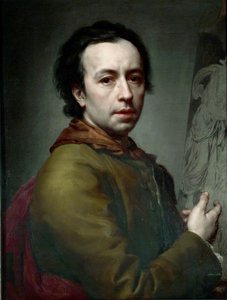
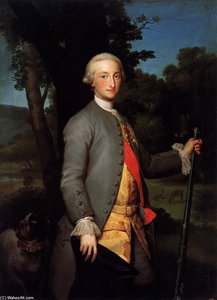
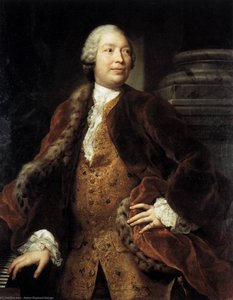
Artist Biography
A Bridge Between Worlds: The Life and Art of Anton Raphael Mengs
Anton Raphael Mengs emerged during a fascinating period in European art, a time when the ornate flourishes of the Rococo were beginning to yield to a renewed appreciation for classical ideals. Born in 1728 in Ústí nad Labem, Bohemia – a region now part of the Czech Republic – his artistic journey was profoundly shaped by both his lineage and the intellectual currents of the Enlightenment. His father, Ismael Mengs, a Danish painter who found patronage at the Dresden court, recognized young Anton’s exceptional talent early on. This recognition led to a pivotal move in 1741: a relocation to Rome, where the budding artist was immersed in the study of ancient masterpieces and the works of Renaissance masters like Raphael. It was this exposure that would indelibly mark his aesthetic sensibilities, instilling within him a deep reverence for classical form, clarity, and composition – qualities that would become hallmarks of his mature style. The early years were dedicated to meticulous copying, not merely as an exercise in technique but as a profound act of artistic pilgrimage, absorbing the essence of Raphael’s genius.From Dresden to Madrid: A Career Across Courts
Mengs' career unfolded across several prominent European courts, each leaving its unique imprint on his artistic development. In 1749, he secured a prestigious position as court painter to Frederick Augustus, Elector of Saxony, a role that provided both financial stability and the freedom to maintain a base in Rome – the epicenter of his artistic inspiration. However, it was his frescoes that truly established his reputation. The *Parnassus* at the Villa Albani in Rome, completed around 1761, became an instant sensation, lauded for its harmonious composition, elegant figures, and subtle yet powerful evocation of classical mythology. This work wasn’t simply a decorative flourish; it was a statement – a deliberate attempt to synthesize Baroque grandeur with emerging Neoclassical principles. Further commissions followed, including the stunning fresco adorning the dome of the Church of Sant'Eusebio in Rome, showcasing his mastery of monumental decoration and spatial illusion. Perhaps his most ambitious undertaking came with an invitation from the Spanish court in 1761. He traveled to Madrid, where he was tasked with decorating several royal palaces, culminating in the magnificent ceiling of the Banqueting Hall of the Royal Palace – a work considered among his finest achievements, demonstrating a remarkable ability to blend Italianate elegance with Spanish sensibilities.The Winckelmann Connection: Shaping Neoclassical Thought
Mengs’ artistic evolution wasn't solely driven by visual study; it was deeply intertwined with intellectual discourse. A crucial turning point came with his close friendship and collaboration with Johann Joachim Winckelmann, the pioneering art historian whose writings would become foundational to the Neoclassical movement. Winckelmann championed a return to the perceived purity and simplicity of ancient Greek art, advocating for an aesthetic based on reason, order, and idealized forms. Mengs wasn’t merely illustrating Winckelmann's theories; he was actively engaged in shaping them, translating abstract concepts into tangible artistic expressions. Together, they believed that true beauty resided not in superficial ornamentation but in the underlying principles of harmony and proportion found in classical antiquity. This partnership extended beyond theoretical discussions; it manifested in Mengs’ paintings themselves, which increasingly reflected Winckelmann's emphasis on noble simplicity and restrained emotion. The influence was reciprocal: Winckelmann’s writings provided a philosophical framework for Mengs’ artistic endeavors, while Mengs’ art served as visual proof of the viability – and beauty – of Neoclassical ideals.Legacy and Influence: A Pioneer of His Time
Anton Raphael Mengs died in Rome in 1779, leaving behind a legacy that extended far beyond his impressive body of work. He was more than just a painter; he was a pivotal figure in the transition from one artistic era to another. While rooted in the Baroque tradition – evident in his dramatic use of light and shadow and his mastery of illusionistic techniques – Mengs courageously embraced the emerging principles of Neoclassicism, paving the way for artists like Jacques-Louis David and Antonio Canova. His emphasis on classical ideals, combined with his technical virtuosity, established him as a leading force in shaping 18th-century art. The School of Athens, painted for the Duke of Northumberland, stands as a testament to his ability to synthesize historical precedent with contemporary artistic sensibilities. Beyond his paintings and frescoes, Mengs’ influence extended to education; he served as director of the Vatican Painting School, nurturing a new generation of artists steeped in classical principles. He was a complex figure – a devout Catholic who also engaged with Enlightenment thought, an artist who balanced tradition with innovation. His life and work represent a fascinating intersection of artistic skill, intellectual curiosity, and historical circumstance, solidifying his place as a true pioneer of Neoclassical art. His impact resonates even today, reminding us of the enduring power of classical ideals to inspire and transform artistic expression.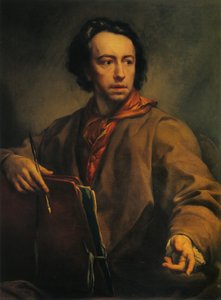
Anton Raphael Mengs
1728 - 1779 , Czech Republic
Quick Facts
- Artistic Movement Or Style: Neoclassical painting
- Artists Or Movements Influenced By This Artist: ['Neoclassicism']
- Artists Who Influenced This Artist:
- Raphael
- Titian
- Correggio
- Date Of Birth: March 22, 1728
- Date Of Death: June 29, 1779
- Full Name: Anton Raphael Mengs
- Nationality: German-Bohemian
- Notable Artworks:
- Parnassus
- School of Athens
- Charles IV as Prince
- Place Of Birth: Ústí nad Labem, Czech Republic

