

 Preview
 Send
Send Share
Share
 Details

 Download
 Similars
 X-Ray
X-Ray Diaporama
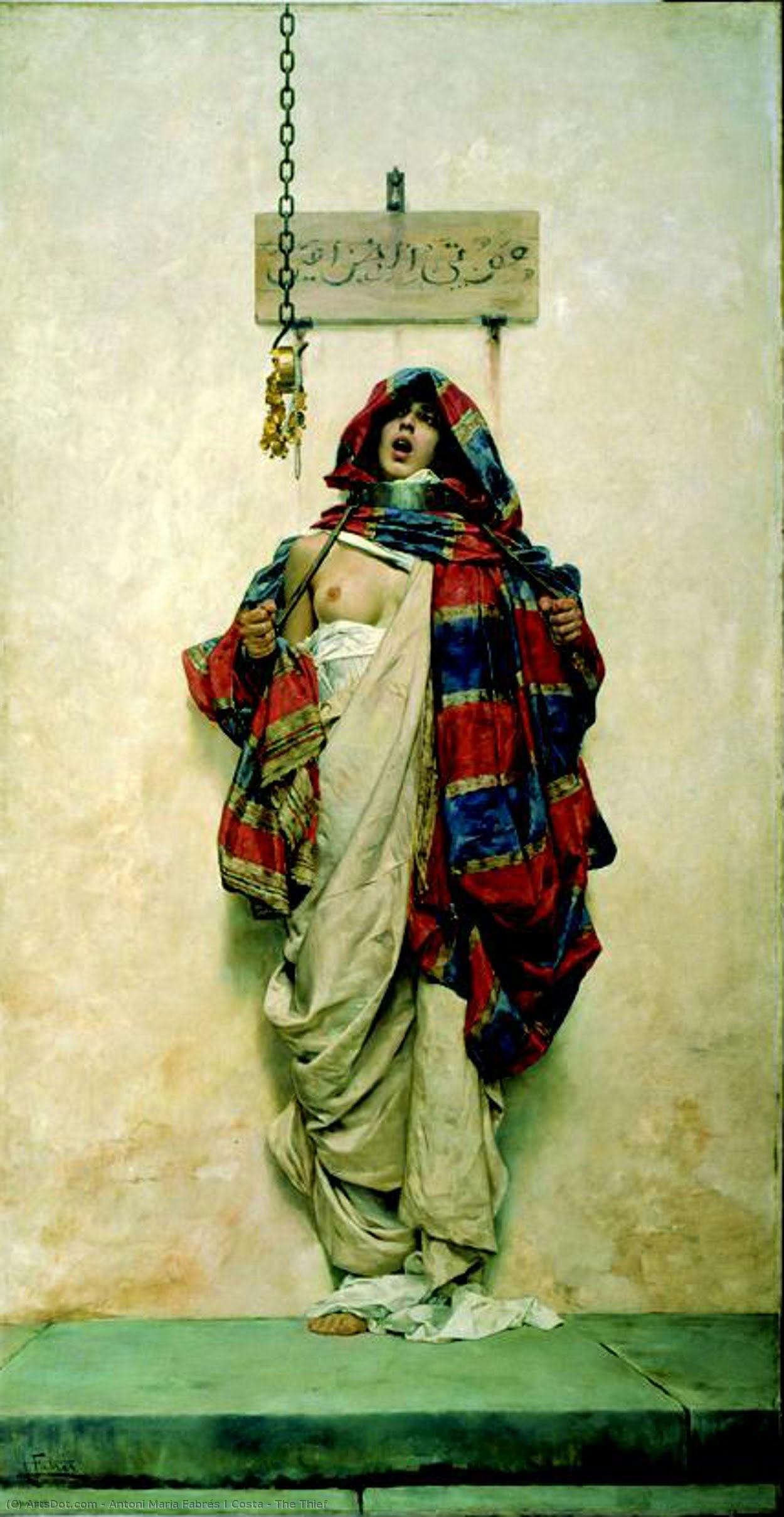
The Thief
 1901
1901 230.0 x 138.0 cm
 Museo Casa de los Tiros de Granada
 Read More
Hand Made Oil Reproduction
Hand-painted oil on canvas in your size and frame, made to order by our artists. ( Buy Print Buy Image)




































Pick from our preset sizes that match the artwork's original proportions.

You may enter your own dimensions to fit a specific frame or space. If your selected size does not match the original image's proportions, we will either crop the artwork or extend the painting with additional hand-painted elements. A digital mockup will be sent for your approval before production begins.
Please note that the on-screen preview does not reflect the actual cropping or extension. Only the mockup will accurately show the final composition.
While custom sizes are available, we recommend selecting a dimension from the predefined list to preserve the original proportions.
After order, ArtsDot.com team will email client for instructions and provide a mockup preview
Worldwide Delivery () in 3/4 weeks instead of standard 5 weeks. (17 August). No compromise on quality.

Free Worldwide Express Shipping

High-Quality Linen Canvas

Full Shipping Insurance

Customs Tax Refund Guarantee

True Color Matching Guarantee

60-Day Return Policy (Defects Only)

100% Money-Back Guarantee

Bulk Discount Offer
 Glass option is only available in size under 110 CM

The Thief
Reproduction Medium
Reproduction Size
-


Total Price
$ 263
Related Artworks
Artist Biography
Antonio Maria Fabrés: A Master of Orientalism and Realism
Antoni Maria Fabrés i Costa (1854 – 1938), born in Barcelona, Spain, was a prolific painter and sculptor whose artistic journey spanned continents and embraced diverse styles—from meticulous realism to the exotic allure of orientalist landscapes. His legacy rests on an unparalleled command of technique and a profound sensitivity to capturing human emotion within meticulously rendered compositions. Fabrés’s life began amidst a family steeped in artistic tradition, fostering an early inclination towards creative pursuits that would define his entire career.Early Life and Artistic Training
Fabrés received his formative education at the Escuela de la Lonja de Barcelona, honing his skills in drawing and sculpture before embarking on a pivotal moment: a scholarship to Rome in 1875. This move proved transformative, exposing him to the burgeoning artistic fervor of Marià Fortuny’s studio—a crucible where he absorbed the stylistic principles of orientalism. Fortuny's influence instilled in Fabrés a fascination with capturing the grandeur and mystery of Eastern cultures, shaping his future artistic endeavors. He quickly abandoned sculpture for painting, recognizing its capacity to convey complex narratives and evoke powerful emotions.The Roman Period: Influence and Style Development
Rome became Fabrés’s creative epicenter during his twelve-year residency. Here, he immersed himself in the prevailing artistic currents of the time—particularly Fortuny's distinctive approach—further refining his technique and establishing a style characterized by meticulous detail and atmospheric perspective. This period witnessed the genesis of many of Fabrés’s most celebrated works, reflecting both his mastery of realism and his burgeoning passion for orientalist themes. The artist’s palette became infused with vibrant hues inspired by the landscapes and cultures of Persia, Egypt, and Morocco.Career Beyond Rome: Parisian Recognition and Artistic Expansion
Fabrés's artistic ambitions extended beyond the confines of Rome when he relocated to Paris in 1892. Immediately embraced by a circle of Spanish artists who had established themselves in the city—a hub of European art—he achieved considerable commercial success thanks to the patronage of Goupil Gallery, which championed Fabrés as Fortuny’s successor. This Parisian chapter propelled him into international acclaim and fueled his artistic experimentation across various genres, including portraiture, landscape painting, and decorative arts. He continued to travel extensively, capturing scenes from Mexico City and revisiting Rome—a testament to his unwavering dedication to artistic exploration.Notable Achievements and Artistic Legacy
Fabrés’s oeuvre encompasses a remarkable range of subjects—from intimate portraits depicting familial bonds to expansive orientalist panoramas celebrating the splendor of distant lands. His paintings are distinguished by their exceptional realism, achieved through painstaking observation and masterful brushwork—a hallmark of his artistic philosophy. Fabrés's contribution to Art Nouveau is equally noteworthy, as he incorporated flowing lines and organic motifs into several decorative projects, demonstrating his versatility as an artist. He was honored with the prestigious title of Academician in 1902, cementing his position among Spain’s leading artists. His final years were marked by a shift towards more contemplative subjects—often portraying scenes of rural life imbued with poignant emotion—reflecting a deepening engagement with human experience and a profound appreciation for the beauty of nature. Fabrés died peacefully in Rome in 1938, leaving behind an enduring artistic legacy that continues to inspire admiration and scholarly study.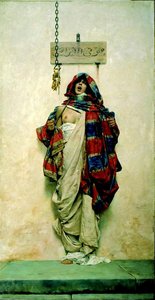
antoni maria fabrés i costa
1854 - 1938 , Spain
Quick Facts
- Artistic Movement Or Style: Orientalism, Realism, Art Nouveau
- Artists Or Movements Influenced By This Artist: ['Oriental']
- Artists Who Influenced This Artist: ['Mariano Fortuny']
- Date Of Birth: Barcelona, Spain (1854)
- Date Of Death: Rome, Italy (1938)
- Full Name: Antonio Maria Fabrés i Costa
- Nationality: Spanish
- Notable Artworks: ['The Thief']
- Place Of Birth: Barcelona

