

 Preview
 Send
Send Share
Share
 Details

 Download
 Similars
 X-Ray
X-Ray Diaporama
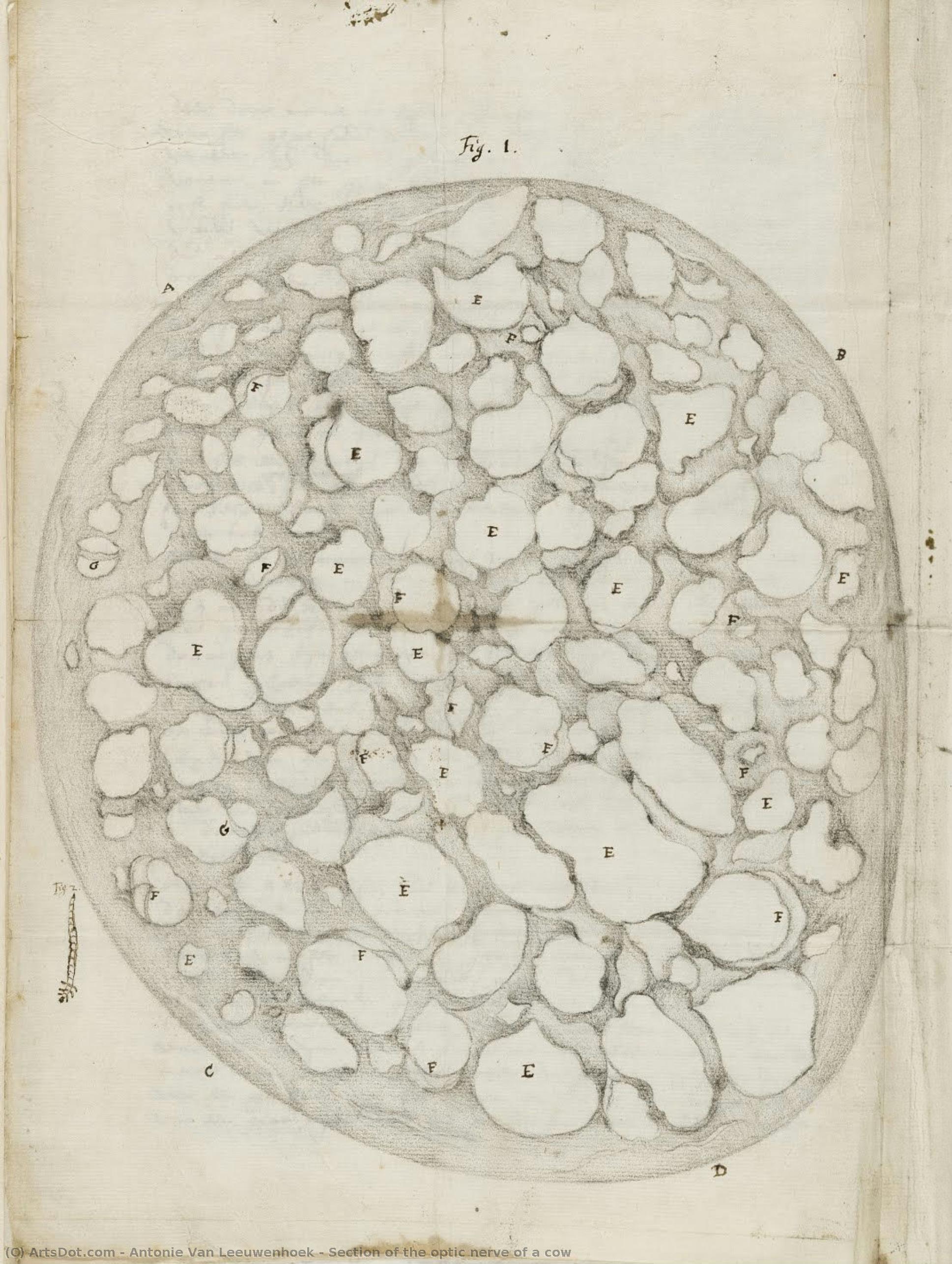
Section of the optic nerve of a cow


 Read More
Purchase a high-resolution, enhanced digital image, far superior to the online preview.
Each file is meticulously prepared by our in-house specialists using advanced tools and expert manual retouching. We ensure every image has exceptional clarity, precise color accuracy, and fine detail.
The final file is delivered via email within 72 hours, optimized for immediate use in professional, editorial, and print environments. This is the same quality trusted by top-tier design studios, publishers, and galleries.
Digital Image
Download a high-resolution file for personal display, printing, and creative projects. ( Buy Print Buy Hand Made Painting)
Included in Every Digital Image Order
Expert Digital Delivery, Guaranteed
When you choose ArtsDot.com, you're not just getting an image - you're receiving a professionally enhanced digital artwork, crafted with precision and backed by a satisfaction guarantee. Here's everything that comes with your order, automatically:

Fast Email Delivery
Your high-resolution digital image file will be emailed to you within 72 hours of ordering - ready for immediate use.

AI-Enhanced Digital File
Your artwork is professionally optimized using advanced AI tools and manual editing, ensuring maximum detail, clarity, and color accuracy.

Free Lifetime Re-Delivery
Accidentally deleted or lost your file? No worries - we'll resend it to you anytime, free of charge.

No Import Fees - Ever
Enjoy your artwork instantly with zero customs, duties, or delivery fees - digital downloads are always tax-free.

Color Accuracy Guarantee
We ensure your digital image reflects the original colors as closely as possible using professional tools and color management.

60-Day Satisfaction Guarantee
If you're not satisfied with your digital image, we'll revise it or refund 100% within 60 days - no questions asked.

100% Money-Back Guarantee
Not satisfied? Get a full refund within 60 days of receiving your digital file - no questions asked.

Bulk Order Discounts
Buy 3 images, save 10% - Buy 5, save 15% - Buy 10+, save 20%. Great for creative projects, galleries, and agencies.
The Curious Observer's Vision: Exploring Antonie van Leeuwenhoek’s Pioneering Artwork
Antonie Philips van Leeuwenhoek, born in Delft in 1632, stands as an anomaly within the annals of scientific history. Unlike his contemporaries who pursued knowledge through established universities and formalized experimentation, Leeuwenhoek forged his own path—a draper by trade—driven by an unparalleled fascination with the intricacies of the natural world. This singular passion culminated in a legacy that would forever alter our understanding of life itself: he is rightfully regarded as the “Father of Microbiology,” a title earned not through academic prestige but through sheer intellectual tenacity.
His groundbreaking work began modestly, fueled by an inquisitive spirit and a meticulous dedication to observation. Following his father’s untimely demise, Leeuwenhoek spent formative years with his uncle in Benthuizen, receiving limited formal schooling before securing an apprenticeship as a bookkeeper in Amsterdam. Yet, it was during this period that the seeds of his extraordinary discoveries were sown—a fascination for detail and precision that would define his entire career.
A Detailed Anatomical Study: Technique and Craftsmanship
The artwork under scrutiny – “Section of the optic nerve of a cow” – exemplifies Leeuwenhoek’s distinctive approach to scientific illustration. Rather than relying on idealized representations or speculative hypotheses, he painstakingly documented reality with remarkable accuracy. The painting itself is rendered in watercolor, a medium favored by artists of his era for its ability to capture subtle tonal variations and textural nuances. Leeuwenhoek employed a technique known as “grisaille,” applying thin layers of monochrome pigment—typically white lead mixed with linseed oil—to build up the underlying structure of the optic nerve.
- Layered Pigment Application: Grisaille allowed for precise delineation of anatomical features, prioritizing accuracy over artistic embellishment.
- Watercolor Overlay: Subsequent washes of watercolor added color and depth to the illustration, enhancing its visual impact without obscuring the foundational grisaille layer.
- Detailed Measurement Marks: Scattered numbers across the canvas indicate meticulous measurements taken by Leeuwenhoek himself—a testament to his commitment to empirical observation.
Historical Context: The Dawn of Microbial Vision
Created in 1674, during the zenith of the Dutch Golden Age, “Section of the optic nerve” reflects the intellectual ferment of its time. Scientific inquiry was experiencing a renaissance, driven by humanist ideals and propelled forward by advancements in optics and microscopy. Leeuwenhoek’s work coincided with the burgeoning interest in exploring the microscopic realm—a realm previously invisible to human eyes.
Prior to Leeuwenhoek's investigations, scientists largely accepted the prevailing Aristotelian worldview, which posited a hierarchical order of nature governed by immutable principles. Leeuwenhoek challenged this dogma by demonstrating that organisms existed beyond the macroscopic level—revealing a hidden universe teeming with life forms previously unknown.
Symbolism and Emotional Resonance: Beyond Anatomical Precision
While undeniably a masterful anatomical study, “Section of the optic nerve” transcends mere scientific documentation. The artist’s deliberate choice to depict this specific tissue – the optic nerve – speaks to a deeper symbolic concern. It represents not only the physical pathway for visual information but also embodies the pursuit of knowledge itself—the unwavering desire to penetrate the veil of obscurity and perceive what lies beneath.
The painting's subdued palette and meticulous detail convey a sense of quiet contemplation, mirroring Leeuwenhoek’s own methodical approach. It invites viewers to consider the profound implications of observation—to recognize that true understanding emerges not from conjecture but from patient inquiry and unwavering attention to the intricacies of the natural world.
Related Artworks




Artist Biography
A Curious Mind: The Life and Legacy of Antonie van Leeuwenhoek
Antonie Philips van Leeuwenhoek, born in Delft, Netherlands in 1632, was a figure who defied easy categorization. He wasn’t a formally trained scientist, nor did he hail from the established academic circles of his time. Instead, he emerged as a pioneering observer and meticulous craftsman – a draper by trade, yet destined to become known as the “Father of Microbiology.” His story is one of relentless curiosity, self-education, and an unwavering dedication to unraveling the hidden wonders of the natural world. The Dutch Golden Age provided a fertile ground for intellectual exploration, but Leeuwenhoek’s contributions were uniquely his own, born not from institutional support but from an innate drive to understand the unseen realms around him. Following his father's early death, young Antonie spent time with his uncle in Benthuizen, receiving limited formal schooling before being apprenticed as a bookkeeper in Amsterdam at the age of sixteen. He returned to Delft in 1654, establishing himself as a draper and becoming involved in civic life – roles that seemingly offered little indication of the scientific revolution he was about to ignite.The Art of Seeing: Microscopy and Discovery
Leeuwenhoek’s true calling wasn't found in commerce or public service, but in the meticulous art of lens grinding. Driven by a desire for better magnification, he embarked on a journey of self-taught optics, crafting over 500 single-lens microscopes – instruments far surpassing those available at the time. These weren’t complex compound microscopes like those being developed elsewhere; rather, they were remarkably refined simple microscopes, achieving magnifications up to 270x through sheer skill and dedication. It was through these lenses that Leeuwenhoek opened a window onto a previously invisible universe. He began observing everything around him – rainwater, pepper infusions, even scrapings from his own teeth – and what he found revolutionized our understanding of life itself. He meticulously documented the “animalcules” – single-celled organisms we now know as bacteria and protozoa – detailing their shapes, movements, and abundance with astonishing precision. He was the first to observe blood cells, sperm cells, muscle fibers, and even the flow of blood in capillaries, confirming William Harvey’s earlier theories on circulation. His observations weren't merely descriptive; they were quantitative, carefully recorded and illustrated, laying the groundwork for modern microbiology.Communication and Recognition: Sharing a New World
Leeuwenhoek understood the importance of sharing his discoveries, but faced initial skepticism from the scientific community. Lacking formal credentials, he struggled to gain acceptance among established scholars. He overcame this hurdle through a series of letters written to the Royal Society of London, detailing his observations with painstaking accuracy and clarity. These weren’t dry scientific reports; they were engaging narratives filled with wonder and meticulous detail. The Royal Society, initially hesitant, gradually recognized the significance of his work, publishing translations of his letters and bringing his discoveries to a wider audience. These communications eventually formed the basis for *Micrographia curiosa* (1760-1761), a compilation of his observations that cemented his legacy. His detailed documentation wasn’t just about presenting findings; it was about demonstrating the power of observation, meticulous record-keeping, and empirical evidence – principles central to the developing scientific method.A Lasting Impact: The Father of Microbiology
Antonie van Leeuwenhoek's contributions extended far beyond simply identifying microorganisms. His work challenged the prevailing theory of spontaneous generation – the belief that life could arise from non-living matter – providing evidence that life originates from pre-existing life. This was a pivotal moment in biological thought, paving the way for germ theory and our understanding of disease. His discoveries laid the foundation for modern microbiology, immunology, and pathology, profoundly impacting medicine and public health. The scientific community’s recognition grew over time; the *Antonie van Leeuwenhoek* journal, established in 1934, stands as a testament to his enduring influence, while the Leeuwenhoek Medal awarded by the Royal Netherlands Academy of Arts and Sciences honors significant contributions to the field he pioneered. Beyond his scientific achievements, Leeuwenhoek’s story is a powerful reminder that groundbreaking discoveries can come from unexpected places, driven by curiosity, perseverance, and a willingness to challenge conventional wisdom. He continued his civic duties in Delft throughout his life, eventually passing away at the age of 90 in 1723, leaving behind a legacy that continues to inspire scientists today. His work wasn’t just about seeing the small; it was about fundamentally changing how we see the world.Connections and Context: A Delft Citizen
While primarily known for his scientific pursuits, Leeuwenhoek was deeply embedded in the social fabric of Delft. He maintained a network of acquaintances and participated actively in civic life. Perhaps one of the most intriguing connections was his association with Johannes Vermeer, the renowned Dutch painter. Leeuwenhoek served as a trustee in Vermeer’s estate following the artist's untimely death, suggesting a level of personal acquaintance and mutual respect. This connection highlights the intellectual ferment of Delft during the Golden Age – a city where art and science flourished side-by-side. Although not an artist himself, Leeuwenhoek’s work profoundly impacted scientific illustration, providing detailed visual information that fueled further exploration and understanding. His meticulous observations demanded accurate representation, influencing the development of techniques for depicting the microscopic world. Leeuwenhoek's legacy extends beyond his direct discoveries; it lies in the spirit of inquiry he embodied – a relentless pursuit of knowledge driven by curiosity and a commitment to empirical observation. He demonstrated that profound insights can emerge from simple tools and unwavering dedication, forever changing our understanding of life itself.
Antonie van Leeuwenhoek
1632 - 1723 , Netherlands
Quick Facts
- Artistic Movement Or Style: Scientific Illustration
- Artists Or Movements Influenced By This Artist:
- Microbiology
- Scientific Method
- Date Of Birth: October 24, 1632
- Date Of Death: August 26, 1723
- Full Name: Antonie Philips van Leeuwenhoek
- Nationality: Dutch
- Notable Artworks: ['Vessels in male sperm']
- Place Of Birth: Delft, Netherlands

