

 Preview
 Send
Send Share
Share
 Details

 Download
 Similars
 X-Ray
X-Ray Diaporama
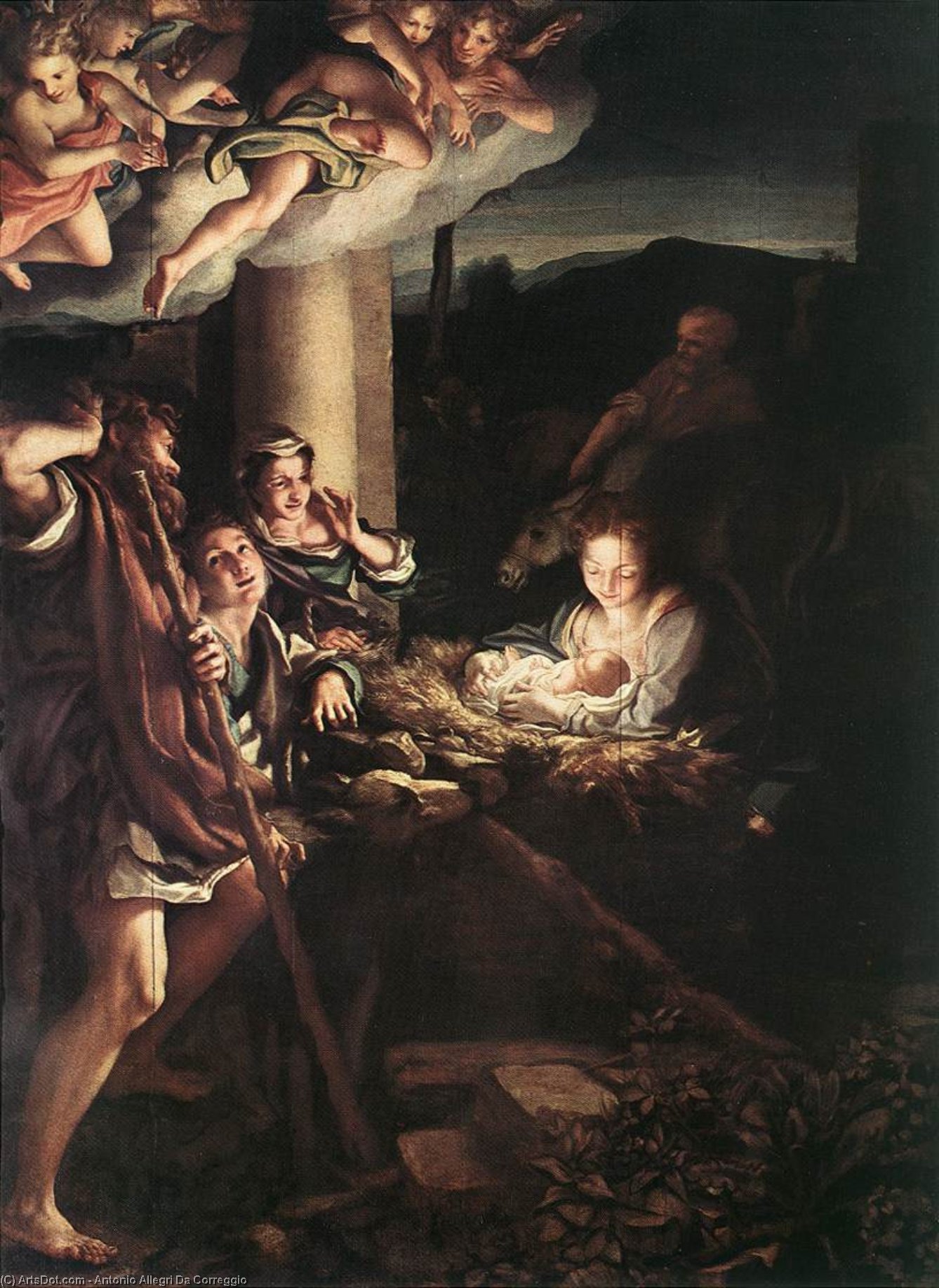
Nativity (Holy Night)
 Acrylic On Canvas
- WallArt
- High Renaissance
 1528
1528 256.0 x 188.0 cm
 Gemäldegalerie
 Read More
Purchase a high-resolution, enhanced digital image, far superior to the online preview.
Each file is meticulously prepared by our in-house specialists using advanced tools and expert manual retouching. We ensure every image has exceptional clarity, precise color accuracy, and fine detail.
The final file is delivered via email within 72 hours, optimized for immediate use in professional, editorial, and print environments. This is the same quality trusted by top-tier design studios, publishers, and galleries.
Digital Image
Download a high-resolution file for personal display, printing, and creative projects. ( Buy Print Buy Hand Made Painting)
Included in Every Digital Image Order
Expert Digital Delivery, Guaranteed
When you choose ArtsDot.com, you're not just getting an image - you're receiving a professionally enhanced digital artwork, crafted with precision and backed by a satisfaction guarantee. Here's everything that comes with your order, automatically:

Fast Email Delivery
Your high-resolution digital image file will be emailed to you within 72 hours of ordering - ready for immediate use.

AI-Enhanced Digital File
Your artwork is professionally optimized using advanced AI tools and manual editing, ensuring maximum detail, clarity, and color accuracy.

Free Lifetime Re-Delivery
Accidentally deleted or lost your file? No worries - we'll resend it to you anytime, free of charge.

No Import Fees - Ever
Enjoy your artwork instantly with zero customs, duties, or delivery fees - digital downloads are always tax-free.

Color Accuracy Guarantee
We ensure your digital image reflects the original colors as closely as possible using professional tools and color management.

60-Day Satisfaction Guarantee
If you're not satisfied with your digital image, we'll revise it or refund 100% within 60 days - no questions asked.

100% Money-Back Guarantee
Not satisfied? Get a full refund within 60 days of receiving your digital file - no questions asked.

Bulk Order Discounts
Buy 3 images, save 10% - Buy 5, save 15% - Buy 10+, save 20%. Great for creative projects, galleries, and agencies.
Collectible Description
A Divine Tableau: Unveiling Correggio's "Nativity"
Antonio Allegri da Correggio’s “Nativity (Holy Night),” painted in 1528, isn’t merely a depiction of the birth of Christ; it’s an immersive experience, a carefully constructed stage for a profound theological drama. Emerging from the vibrant artistic milieu of Renaissance Parma, Correggio masterfully blends classical influences with a burgeoning dynamism that foreshadowed the Baroque era. This painting transcends simple narrative, offering a glimpse into the artist's innovative approach to perspective and his ability to evoke a deeply emotional response in the viewer.
The scene unfolds within a richly detailed, yet subtly illusionistic space – a testament to Correggio’s pioneering use of *sotto in su*, or “under-over” perspective. Rather than presenting a straightforward, frontal view, he employs a complex system of receding planes and converging lines that draw the eye into the heart of the composition: Mary cradling the infant Jesus amidst a throng of angels and shepherds. The mountainous backdrop, rendered with atmospheric depth, isn’t merely decorative; it anchors the scene in a sense of timeless grandeur and spiritual significance. Notice how Correggio subtly integrates architectural elements – arches and columns – into the landscape, blurring the boundaries between reality and illusion.
The Artist and His Time
Born in 1489 in Correggio, Italy, Antonio Allegri da Correggio’s life was tragically short, ending in 1534. Despite his brief career, he left an indelible mark on the artistic landscape of Northern Italy. Trained initially by his uncle, Lorenzo Allegri, he quickly surpassed his mentor, developing a distinctive style characterized by dramatic lighting, dynamic compositions, and a masterful manipulation of perspective. Correggio’s work reflects the humanist ideals of the Renaissance while simultaneously anticipating the emotional intensity and theatricality that would define the Baroque period. He was deeply influenced by the works of Raphael and Michelangelo, yet he forged his own path, prioritizing movement, color, and a heightened sense of drama.
The painting’s creation coincided with a period of intense religious fervor in Italy, fueled by the ongoing Reformation and the Counter-Reformation. Correggio's work served as a powerful visual testament to Catholic faith, employing rich colors, intricate detail, and emotionally charged figures to convey the profound significance of the Nativity story. The meticulous attention to detail – from the folds of Mary’s garments to the expressions on the faces of the angels – speaks volumes about the artist’s commitment to realism and his desire to create a truly immersive experience for the viewer.
Symbolism and Spiritual Resonance
Beyond its technical brilliance, “Nativity (Holy Night)” is laden with symbolic meaning. Mary's serene expression embodies humility and grace, while the infant Jesus represents divine love and redemption. The angels, depicted in a variety of poses and gestures, convey a sense of joyous anticipation and reverence. The shepherds, representing the humble and overlooked, underscore the universality of Christ’s message. Note the carefully arranged groupings of figures – each contributing to the overall narrative and reinforcing the central theme of divine grace.
The use of light is particularly significant. Correggio employs *chiaroscuro*—the dramatic contrast between light and shadow—to create a sense of depth, volume, and emotional intensity. The soft glow emanating from the infant Jesus draws the viewer’s eye to this central figure, while the darker shadows heighten the drama and underscore the sacredness of the event. The overall effect is one of profound spiritual resonance, inviting contemplation and reflection.
A Legacy in Reproduction
Today, “Nativity (Holy Night)” stands as a testament to Correggio’s artistic genius. Reproductions capture much of the original's power, offering an accessible way to experience this masterpiece for those who cannot visit it in person. When selecting a reproduction, consider the quality of materials and printing techniques – aiming for a faithful representation of the painting’s rich colors, intricate details, and dynamic composition. This iconic image continues to inspire awe and wonder, reminding us of the enduring power of art to convey profound spiritual truths.
Related Artworks
Artist Biography
A Parma Master: The Life and Legacy of Antonio da Correggio
Antonio Allegri da Correggio, a name that resonates with the very essence of High Renaissance artistry, emerged from the small Italian city bearing his adopted moniker in 1489. His life, though tragically curtailed at just forty-four years old, left an indelible mark on the artistic landscape, bridging the classical ideals of Raphael and Michelangelo with the dramatic dynamism that would foreshadow the Baroque era. Details surrounding Correggio’s early life remain somewhat elusive; however, it is believed he received initial training from his uncle, Lorenzo Allegri, a local painter, before venturing to Modena and then Mantua in pursuit of artistic refinement. These formative experiences exposed him to the influences of artists like Andrea Mantegna, whose mastery of perspective and classical themes resonated deeply within Correggio’s developing style. He absorbed these lessons, yet quickly began forging his own path—one characterized by a uniquely graceful lyricism and an innovative approach to illusionistic space. Correggio wasn't merely replicating beauty; he was transforming it through a lens of profound emotional depth and technical brilliance.Innovation in Paint: Style and Technique
Correggio’s artistic genius lay not simply in replication, but in transformation. His paintings are immediately recognizable for their vibrant color palettes, often employing rich reds, blues, and golds to create an atmosphere of both earthly delight and divine transcendence. He was a master of chiaroscuro, the dramatic interplay of light and shadow, using it not simply to model form but to evoke mood and heighten emotional impact. This technique is particularly evident in his mythological scenes, where figures emerge from darkness as if illuminated by an inner radiance. Beyond color and light, Correggio’s mastery of perspective was revolutionary. He didn't just create the illusion of depth; he manipulated it to draw the viewer into the scene, blurring the boundaries between reality and representation. This is spectacularly demonstrated in his frescoes for the dome of Parma Cathedral, where the swirling figures seem to ascend towards heaven, creating a breathtaking sense of spatial expansion. His use of di sotto in su, or “from below,” foreshortening—a technique that presents objects as if viewed from directly beneath—further enhanced this illusionistic effect, anticipating the theatricality of Baroque ceiling paintings. He possessed an uncanny ability to imbue his figures with a sense of movement and life, making them appear almost tangible despite being rendered on a flat surface.Myth and Devotion: Key Works and Themes
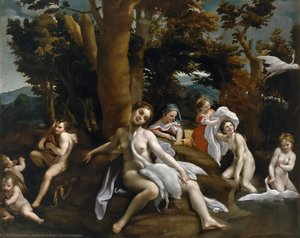
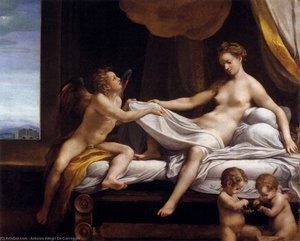
The breadth of Correggio’s oeuvre encompasses both religious and mythological subjects, each treated with equal sensitivity and innovation. His altarpieces, such as The Adoration of the Shepherds (known as “The Night”), are imbued with a tender piety and a remarkable naturalism that invites contemplation. The figures aren't idealized saints but rather relatable human beings experiencing moments of profound spiritual connection. However, it is perhaps in his mythological paintings that Correggio’s sensuality truly blossoms. Leda and the Swan, now housed in Berlin, exemplifies this perfectly—a depiction of the classical myth rendered with an exquisite delicacy and a subtle eroticism that was both daring and captivating for its time. Similarly, Jupiter and Io showcases his ability to portray complex narratives with grace and fluidity, while Danaë, residing in Rome’s Borghese Gallery, is a testament to his mastery of depicting the human form bathed in ethereal light. These works weren't simply illustrations of ancient tales; they were explorations of love, desire, and the power of myth itself. He seamlessly blended pagan mythology with Christian iconography, creating a unique artistic language that reflected the intellectual ferment of the Renaissance.A Lasting Influence: Correggio’s Legacy
Despite his relatively short career, Antonio da Correggio exerted a profound influence on subsequent generations of artists. His innovative use of perspective, dramatic lighting, and sensuous forms paved the way for the Baroque masters—artists like Peter Paul Rubens and Giovanni Battista Tiepolo—who embraced his theatricality and emotional intensity. He also anticipated elements of Rococo art, with its emphasis on grace, elegance, and playful eroticism. Correggio’s impact wasn't limited to painting; his frescoes inspired architects and decorators to create increasingly elaborate and illusionistic interiors. The Parma school, which he founded, continued to flourish for decades after his death, perpetuating his artistic principles and techniques. Even today, Correggio remains a celebrated figure in art history—a testament to the enduring power of his vision and the timeless beauty of his creations. His work serves as a reminder that true artistry lies not just in technical skill but in the ability to evoke emotion, inspire wonder, and connect with the deepest aspects of the human experience. His influence can be seen in countless works throughout European art history, solidifying his place as a pivotal figure in the transition from Renaissance to Baroque aesthetics.Notable Works
- Leda and the Swan – Staatliche Museen of Berlin
- Jupiter and Io – Kunsthistorisches Museum, Vienna
- Danaë – Borghese Gallery, Rome
- The Assumption of the Virgin - Parma Cathedral
- The Adoration of the Shepherds (The Night) – Gemäldegalerie Dresden
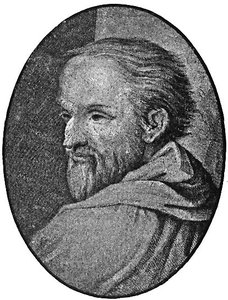
Antonio Allegri da Correggio
1489 - 1534 , Italy
Quick Facts
- Artistic Movement Or Style: High Renaissance
- Artists Or Movements Influenced By This Artist:
- Rubens
- Tiepolo
- Baroque art
- Artists Who Influenced This Artist:
- Mantegna
- Raphael
- Michelangelo
- Date Of Birth: 1489
- Date Of Death: 1534
- Full Name: Antonio Allegri da Correggio
- Nationality: Italian
- Notable Artworks:
- Leda and the Swan
- Jupiter and Io
- Danaë
- The Night
- Place Of Birth: Correggio, Italy

