

 Preview
 Send
Send Share
Share
 Details

 Download
 Similars
 X-Ray
X-Ray Diaporama
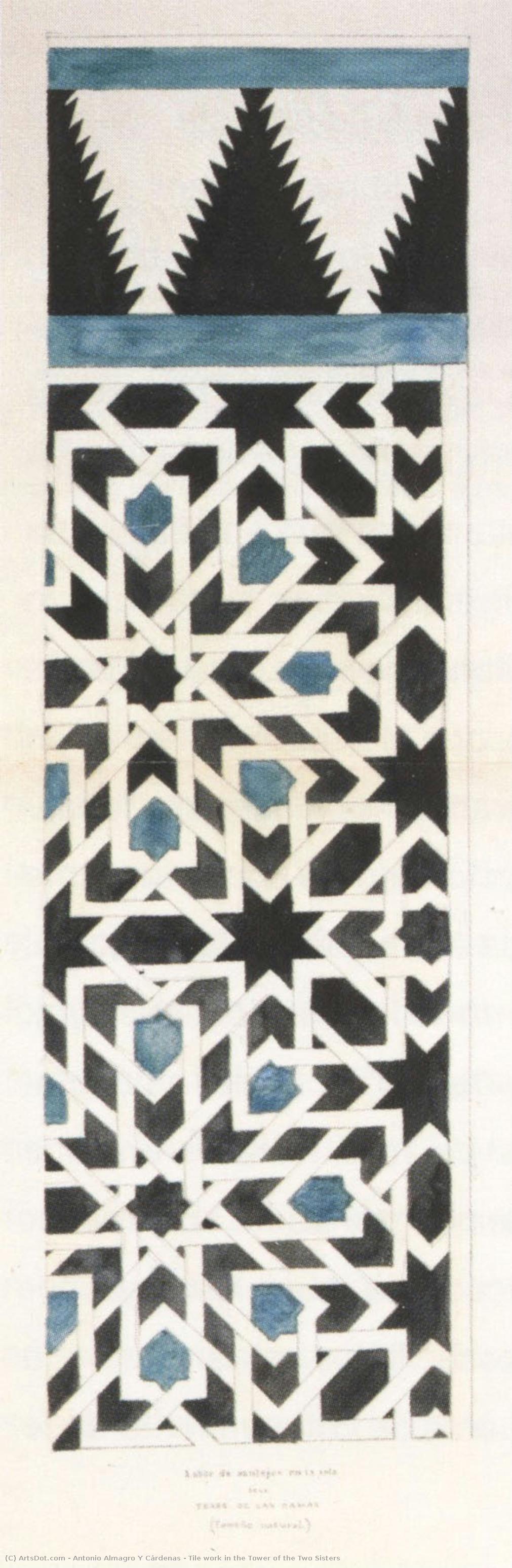
Tile work in the Tower of the Two Sisters
 1866
1866 43.0 x 93.0 cm
 Museo Casa de los Tiros de Granada
 Read More
Purchase a high-resolution, enhanced digital image, far superior to the online preview.
Each file is meticulously prepared by our in-house specialists using advanced tools and expert manual retouching. We ensure every image has exceptional clarity, precise color accuracy, and fine detail.
The final file is delivered via email within 72 hours, optimized for immediate use in professional, editorial, and print environments. This is the same quality trusted by top-tier design studios, publishers, and galleries.
Digital Image
Download a high-resolution file for personal display, printing, and creative projects. ( Buy Print Buy Hand Made Painting)
Included in Every Digital Image Order
Expert Digital Delivery, Guaranteed
When you choose ArtsDot.com, you're not just getting an image - you're receiving a professionally enhanced digital artwork, crafted with precision and backed by a satisfaction guarantee. Here's everything that comes with your order, automatically:

Fast Email Delivery
Your high-resolution digital image file will be emailed to you within 72 hours of ordering - ready for immediate use.

AI-Enhanced Digital File
Your artwork is professionally optimized using advanced AI tools and manual editing, ensuring maximum detail, clarity, and color accuracy.

Free Lifetime Re-Delivery
Accidentally deleted or lost your file? No worries - we'll resend it to you anytime, free of charge.

No Import Fees - Ever
Enjoy your artwork instantly with zero customs, duties, or delivery fees - digital downloads are always tax-free.

Color Accuracy Guarantee
We ensure your digital image reflects the original colors as closely as possible using professional tools and color management.

60-Day Satisfaction Guarantee
If you're not satisfied with your digital image, we'll revise it or refund 100% within 60 days - no questions asked.

100% Money-Back Guarantee
Not satisfied? Get a full refund within 60 days of receiving your digital file - no questions asked.

Bulk Order Discounts
Buy 3 images, save 10% - Buy 5, save 15% - Buy 10+, save 20%. Great for creative projects, galleries, and agencies.
Related Artworks








Artist Biography
A Scholar’s Brush: The Life and Art of Antonio Almagro y Cárdenas
Antonio Almagro y Cárdenas, born in Granada, Spain, in 1856, was a figure whose life transcended the boundaries of a single artistic discipline. While celebrated today for his exquisite tile designs and contributions to Orientalist aesthetics, Almagro y Cárdenas’s initial calling lay not within the realm of visual art but in the meticulous study of languages, cultures, and history. He embarked on an academic journey at the University of Granada, delving into philosophy and letters before dedicating himself to the complex worlds of Arabic, Hebrew, and Oriental studies. This foundation would prove pivotal, shaping his artistic vision and imbuing his work with a profound sense of cultural understanding and historical depth. His career path led him through professorships at esteemed universities – Seville, Granada again, Barcelona, and finally Salamanca – where he shared his knowledge and fostered a new generation of scholars. However, it was his deep engagement with North African culture that would ultimately ignite his passion for artistic expression, specifically in the intricate art of tilework.The Arabist’s Eye: Influences and Artistic Development
Almagro y Cárdenas wasn't merely an observer of Arabic culture; he immersed himself within it. His travels and research across North Africa exposed him to a rich tapestry of artistic traditions, particularly the mesmerizing patterns and symbolic language embedded in Islamic tilework. He became captivated by the geometric precision, vibrant colors, and spiritual resonance found in these designs. This fascination was deeply influenced by his mentor, Francisco Javier Simonet, whose own scholarship on Arabic art and history provided Almagro y Cárdenas with a crucial framework for understanding its significance. Simonet also penned Almagro’s biography later in life, highlighting the enduring impact of their intellectual connection. The artist's academic background instilled in him a unique approach to his craft; he didn’t simply replicate patterns but sought to understand the underlying principles and historical context that gave them meaning. This scholarly rigor translated into an artistic style characterized by meticulous detail, harmonious compositions, and a deep respect for the traditions he emulated. He moved beyond mere imitation, infusing traditional motifs with his own sensibilities and creating works that were both authentic and uniquely personal.Tilework as Testimony: Major Achievements and Artistic Style
Almagro y Cárdenas’s most enduring legacy lies in his tile designs, particularly those found within the Alhambra palace complex in Granada. Commissioned for restoration work, these tiles weren't simply decorative elements but rather acts of cultural preservation. He approached each piece as a historical document, meticulously researching original patterns and techniques to ensure authenticity. His work on the Tower of the Two Sisters stands as a testament to his skill and dedication. The intricate tilework he restored and recreated breathed new life into this iconic structure, showcasing the splendor of Moorish artistry. Beyond restoration, Almagro y Cárdenas also created original designs inspired by Islamic aesthetics, often incorporating complex geometric patterns, floral motifs, and calligraphic elements. His palette favored rich blues, greens, ochres, and reds – colors deeply associated with Arabic art and culture. His style is characterized by a harmonious balance between precision and fluidity, creating surfaces that are both visually stunning and intellectually stimulating.A Bridge Between Cultures: Historical Significance and Legacy
Antonio Almagro y Cárdenas occupied a unique position in the late 19th-century art world. He was not simply an artist but also a scholar, historian, and cultural ambassador. His work played a crucial role in fostering a greater appreciation for Arabic art and culture within Spain and beyond. He helped to challenge prevailing Orientalist stereotypes, presenting a nuanced and respectful portrayal of Islamic aesthetics. By meticulously researching and preserving the artistic heritage of Al-Andalus (Islamic Spain), he contributed significantly to the understanding of Spanish history and its complex cultural influences. His influence extended beyond his immediate circle, inspiring generations of artists and scholars to explore the rich traditions of Arabic art and culture. Today, his tilework continues to captivate visitors to the Alhambra, serving as a powerful reminder of the enduring beauty and historical significance of Islamic artistry.Beyond the Tile: A Life Dedicated to Knowledge
While Almagro y Cárdenas is primarily remembered for his artistic contributions, it’s important to acknowledge the breadth of his intellectual pursuits. He was a prolific writer and published numerous works on Arabic language, culture, and history. His research extended beyond Spain, encompassing North Africa and the broader Islamic world.- He actively engaged in public discourse
- contributing articles to various journals and newspapers.
- His work as an africanist broadened his understanding of cultural exchange
- and informed his artistic vision.

antonio almagro y cárdenas
1856 - 1919 , Spain
Quick Facts
- Artistic Movement Or Style: Arabist, Orientalist
- Artists Who Influenced This Artist: ['Francisco Javier Simonet']
- Date Of Birth: 1856
- Date Of Death: 1919
- Full Name: Antonio Almagro y Cárdenas
- Nationality: Spanish
- Notable Artworks: ['Tile work in the Tower…']
- Place Of Birth: Granada, Spain

