

 Preview
 Send
Send Share
Share
 Details

 Download
 Similars
 X-Ray
X-Ray Diaporama
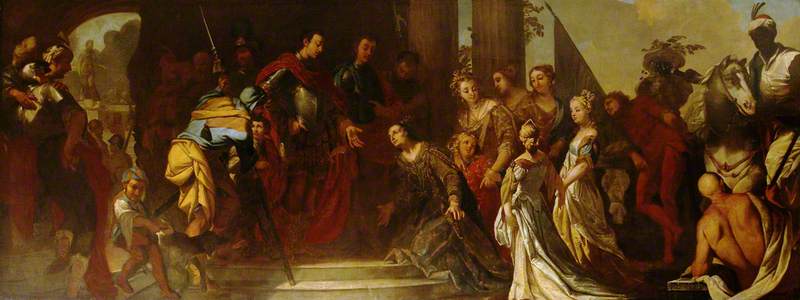
The Family of Darius before Alexander the Great
 Oil On Canvas
- WallArt
- Baroque
 213.0 x 564.0 cm
 The Ashmolean Museum of Art And Archaeology
 Read More
Purchase a high-resolution, enhanced digital image, far superior to the online preview.
Each file is meticulously prepared by our in-house specialists using advanced tools and expert manual retouching. We ensure every image has exceptional clarity, precise color accuracy, and fine detail.
The final file is delivered via email within 72 hours, optimized for immediate use in professional, editorial, and print environments. This is the same quality trusted by top-tier design studios, publishers, and galleries.
Digital Image
Download a high-resolution file for personal display, printing, and creative projects. ( Buy Print Buy Hand Made Painting)
Included in Every Digital Image Order
Expert Digital Delivery, Guaranteed
When you choose ArtsDot.com, you're not just getting an image - you're receiving a professionally enhanced digital artwork, crafted with precision and backed by a satisfaction guarantee. Here's everything that comes with your order, automatically:

Fast Email Delivery
Your high-resolution digital image file will be emailed to you within 72 hours of ordering - ready for immediate use.

AI-Enhanced Digital File
Your artwork is professionally optimized using advanced AI tools and manual editing, ensuring maximum detail, clarity, and color accuracy.

Free Lifetime Re-Delivery
Accidentally deleted or lost your file? No worries - we'll resend it to you anytime, free of charge.

No Import Fees - Ever
Enjoy your artwork instantly with zero customs, duties, or delivery fees - digital downloads are always tax-free.

Color Accuracy Guarantee
We ensure your digital image reflects the original colors as closely as possible using professional tools and color management.

60-Day Satisfaction Guarantee
If you're not satisfied with your digital image, we'll revise it or refund 100% within 60 days - no questions asked.

100% Money-Back Guarantee
Not satisfied? Get a full refund within 60 days of receiving your digital file - no questions asked.

Bulk Order Discounts
Buy 3 images, save 10% - Buy 5, save 15% - Buy 10+, save 20%. Great for creative projects, galleries, and agencies.
Collectible Description
The Family of Darius Before Alexander the Great: A Baroque Triumph of Narrative and Symbol
Paolo Veronese’s “The Family of Darius Before Alexander,” housed in the Ashmolean Museum, Oxford, stands as a monumental achievement of Venetian Baroque painting—a visual drama steeped in classical allusion and imbued with profound psychological insight. Completed around 1565-1570 for Francesco Pisani’s palazzo in Venice, this colossal canvas transcends mere depiction; it aspires to convey an epic tale of diplomacy, humiliation, and ultimately, magnanimity.
- Subject Matter: The painting portrays Alexander the Great confronting Darius III, the last king of Persia, following their decisive victory at Issus. It’s not simply a historical record but a carefully crafted narrative exploring themes of power, vulnerability, and reconciliation—a cornerstone of Veronese's artistic vision.
- Style: Veronese embodies the Venetian Grand Manner style, prioritizing theatrical grandeur and meticulous detail over purely decorative considerations. The composition is deliberately complex, employing a stage-like arrangement to heighten dramatic impact and immersing viewers in an opulent setting reminiscent of ancient Greece.
- Technique: Executed with oil on canvas, Veronese’s masterful brushwork demonstrates unparalleled control over texture and color. Layers upon layers of pigment create a luminous surface that captures the brilliance of gold leaf—a hallmark of Venetian aristocratic patronage—and imbues the figures with palpable warmth and vitality.
- Historical Context: The painting reflects the intellectual fervor of its time, fueled by humanist scholarship and revived interest in classical antiquity. Veronese skillfully integrates references to Greek mythology and iconography, subtly reinforcing the narrative’s moral dimension.
- Symbolism: Beyond its historical accuracy, “The Family of Darius Before Alexander” is laden with symbolic significance. The kneeling Sisygambis—Darius's mother—represents humility and supplication before divine judgment, while Alexander’s gesture embodies regal composure and forgiveness—a deliberate contrast to the perceived barbarity of Persian rule.
The painting’s visual impact is undeniable. Veronese’s masterful use of perspective creates a shallow depth of field that draws attention to the central group of figures, emphasizing their expressions and gestures. Dramatic lighting casts highlights on key characters—particularly Alexander—enhancing their prominence and conveying an aura of authority. The vibrant color palette—dominated by golds and ochres—contrasts sharply with darker hues, amplifying the theatrical atmosphere.
More than just a beautiful image, “The Family of Darius Before Alexander” is a testament to Veronese’s artistic genius—a captivating portrayal of human psychology interwoven with historical grandeur. Its enduring appeal lies in its ability to inspire contemplation on themes of leadership, compassion, and the complexities of intercultural relations.
Related Artworks



Artist Biography
The Grandeur of the Venetian Spirit
Antonio Bellucci stands as a luminous figure within the Venetian artistic tradition, a master whose brush captured the transition from the dramatic intensity of the Baroque to the airy elegance of the Rococo. Born in 1654 in Pieve di Soligo, Italy, Bellucci’s early training under Domenico Difnico in Sebénico provided him with a rigorous foundation in classical principles. However, it was his arrival in Venice that truly ignited his creative spirit. By 1675, he was already making significant contributions to the city's sacred spaces, most notably through his monumental frescoes for San Pietro di Castello. In these works, depicting Saint Lorenzo Giustiniani’s fervent prayers during the plague of 1447, Bellucci demonstrated an extraordinary ability to weave together religious devotion and human emotion, creating a sense of divine drama that resonated deeply with the Venetian public.
His talent was not confined to the spiritual realm; Bellucci possessed a versatile mastery over various genres, from the intimate tenderness of nativity scenes for the church of Ascension to the sweeping narratives of classical mythology. A defining characteristic of his development was his collaborative spirit. He worked in close harmony with the landscape painter Antonio Tempesta, where Bellucci’s skill in rendering human figures breathed life and narrative complexity into Tempesta's expansive vistas. This synergy between figure and landscape became a hallmark of his maturing style, blending movement and grace with structural depth.
A Courtly Ascent and European Legacy
As his reputation grew, Bellucci’s ambitions carried him far beyond the borders of the Venetian Republic, leading him to the heart of European power. His periods in Vienna during the late seventeenth and early eighteenth centuries marked a pinnacle in his career, as he secured the prestigious patronage of the Habsburg court. Under the gaze of Emperor Charles VI, Bellucci undertook monumental projects that showcased his technical prowess on an imperial scale. The four altarpieces he created for Klosterneuburg serve as enduring testaments to his ability to command large-scale religious compositions with both majesty and clarity.
The zenith of his architectural painting is perhaps best exemplified by the breathtaking ceiling frescoes at Palais Liechtenstein. In depicting the Triumph of Hercules, Bellucci utilized the grand manner to create an immersive experience, where mythological heroism meets the sophisticated aesthetics of the burgeoning Rococo era. This ability to synthesize classical grandeur with a lighter, more decorative touch allowed him to navigate the changing tastes of the European aristocracy with ease.
Beyond his individual achievements, Bellucci’s historical significance is cemented by his role as a mentor and an influential force in the lineage of Italian art. Through his instruction of talented students such as Antonio Balestra and potentially Jacopo Amigoni, he ensured that the sophisticated techniques of the Venetian school would endure and evolve. His legacy remains etched in the ceilings of palaces and the altars of cathedrals, representing a period of unparalleled artistic splendor where light, movement, and myth converged to celebrate the human and the divine.
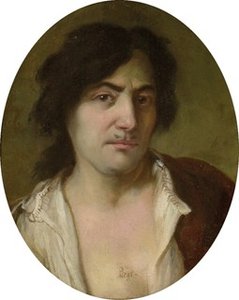
Antonio Bellucci
1654 - 1726 , Italy
Quick Facts
- Artistic Movement Or Style: Rococo
- Artists Or Movements Influenced By This Artist: ['Venetian Art']
- Artists Who Influenced This Artist: ['Domenico Difnico']
- Date Of Birth: 1654
- Date Of Death: 1726
- Full Name: Antonio Bellucci
- Nationality: Italian
- Notable Artworks:
- St Lorenzo Giustiniani Praying
- Nativity
- Hercules Triumph
- Place Of Birth: Pieve di Soligo, Italy

