

 Preview
 Send
Send Share
Share
 Details

 Download
 Similars
 X-Ray
X-Ray Diaporama
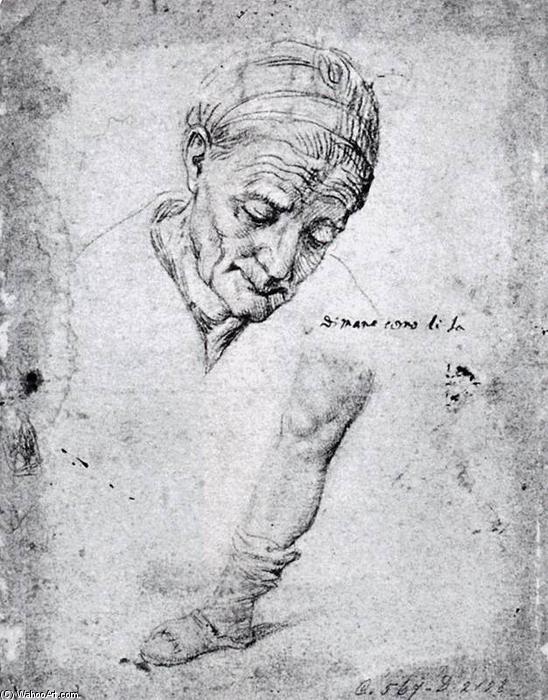
Studies of an Old Woman's Face and a Leg
 Acrylic On Canvas
- WallArt
- Renaissance
 1569
1569 265.0 x 200.0 cm
 Galleria degli Uffizi
 Read More
Purchase a high-resolution, enhanced digital image, far superior to the online preview.
Each file is meticulously prepared by our in-house specialists using advanced tools and expert manual retouching. We ensure every image has exceptional clarity, precise color accuracy, and fine detail.
The final file is delivered via email within 72 hours, optimized for immediate use in professional, editorial, and print environments. This is the same quality trusted by top-tier design studios, publishers, and galleries.
Digital Image
Download a high-resolution file for personal display, printing, and creative projects. ( Buy Print Buy Hand Made Painting)
Included in Every Digital Image Order
Expert Digital Delivery, Guaranteed
When you choose ArtsDot.com, you're not just getting an image - you're receiving a professionally enhanced digital artwork, crafted with precision and backed by a satisfaction guarantee. Here's everything that comes with your order, automatically:

Fast Email Delivery
Your high-resolution digital image file will be emailed to you within 72 hours of ordering - ready for immediate use.

AI-Enhanced Digital File
Your artwork is professionally optimized using advanced AI tools and manual editing, ensuring maximum detail, clarity, and color accuracy.

Free Lifetime Re-Delivery
Accidentally deleted or lost your file? No worries - we'll resend it to you anytime, free of charge.

No Import Fees - Ever
Enjoy your artwork instantly with zero customs, duties, or delivery fees - digital downloads are always tax-free.

Color Accuracy Guarantee
We ensure your digital image reflects the original colors as closely as possible using professional tools and color management.

60-Day Satisfaction Guarantee
If you're not satisfied with your digital image, we'll revise it or refund 100% within 60 days - no questions asked.

100% Money-Back Guarantee
Not satisfied? Get a full refund within 60 days of receiving your digital file - no questions asked.

Bulk Order Discounts
Buy 3 images, save 10% - Buy 5, save 15% - Buy 10+, save 20%. Great for creative projects, galleries, and agencies.
Antonio Campi’s “Studies of an Old Woman’s Face and a Leg” – A Window into Renaissance Anatomy
The charcoal sketch before you, “Studies of an Old Woman’s Face and a Leg,” offers more than just a meticulously rendered anatomical study; it's a poignant glimpse into the artistic mind of Antonio Campi, a pivotal figure in the Cremonese School of painting during the late 16th century. Born in Cremona, Italy, around 1524, Campi’s work stands as a bridge between the meticulous realism of the early Renaissance and the burgeoning Mannerist style that would dominate the following decades. This particular piece, executed circa 1569, isn't merely a technical exercise; it’s imbued with a quiet dignity and an almost unsettling intimacy, inviting us to contemplate the passage of time and the beauty inherent in decay.
Campi’s artistic lineage is deeply rooted in Cremona. He was part of a family dynasty of painters – Giulio, Antonio, and Vincenzo Campi – who established a distinct regional school characterized by its focus on detailed observation and a refined understanding of human anatomy. Unlike the grand narratives often depicted in Florentine painting, the Cremonese School favored intimate studies of individual figures, frequently drawing inspiration from classical sculpture and emphasizing the subtle nuances of form and texture. This sketch exemplifies that approach perfectly, revealing Campi’s dedication to capturing not just the outward appearance but also the very essence of his subjects.
A Study in Detail: Technique and Materials
The artwork's power lies largely in its remarkable level of detail achieved through a deceptively simple technique. Campi masterfully employs hatching, cross-hatching, and shading to build up tones and textures with astonishing precision. The pencil strokes are not merely lines; they’re carefully layered to create the illusion of volume and depth, particularly evident in the wrinkled skin of the old woman's face and the subtle contours of the leg. The grayscale palette—ranging from deep blacks to delicate grays—further enhances this sense of realism, mimicking the effects of natural light and shadow.
Notice how Campi renders the texture of the paper itself – a deliberate choice that adds another layer of tactile interest to the image. The slight roughness of the surface is subtly captured, grounding the study in a tangible reality. The use of charcoal, combined with pencil, allowed for both the sharp precision required for anatomical accuracy and the softer gradations necessary to convey the subject’s age and vulnerability.
Symbolism and Emotional Resonance
Beyond its technical merits, “Studies of an Old Woman’s Face and a Leg” carries significant symbolic weight. The inclusion of the aged woman's face immediately evokes themes of mortality, wisdom, and the enduring nature of human experience. Her gaze, though unseen, seems to hold a profound understanding of life’s complexities. The leg, rendered with equally meticulous detail, represents not just physical form but also vulnerability and the inevitable decline associated with aging.
Interestingly, a handwritten inscription near the leg suggests this was likely a preparatory study for a larger work – perhaps a portrait or a scene depicting a more elaborate narrative. This hints at Campi’s artistic process: starting with fundamental studies of individual elements before building them into a cohesive whole. The sketch's quiet contemplation invites viewers to reflect on their own relationship with time, aging, and the beauty found in imperfection.
A Legacy of Anatomical Precision
Antonio Campi’s “Studies of an Old Woman’s Face and a Leg” stands as a testament to his exceptional skill and artistic vision. It's a poignant reminder that even seemingly simple studies can reveal profound insights into the human condition. The work’s influence extends beyond its immediate aesthetic qualities, contributing significantly to the legacy of the Cremonese School and shaping the course of Renaissance art. Reproductions of this piece offer a unique opportunity to appreciate Campi’s meticulous approach and his ability to imbue even anatomical studies with emotional depth.
Related Artworks


Artist Biography
The Cremonese Master: Antonio Campi and the Flourishing of a Family School
Antonio Campi, born in Cremona around 1523 and passing away in his native city in 1587, stands as a pivotal figure within the Italian Renaissance. He wasn’t merely an artist; he was the cornerstone of a vibrant family workshop that profoundly shaped the artistic landscape of Cremona and its surrounding regions. His name is synonymous with a unique blend of Lombard realism and the elegant stylization of Mannerism, creating works imbued with both earthly detail and spiritual grace. The Campi family—Galeazzo, Giulio, Antonio himself, and Vincenzo—operated as a collective force, their collaborative spirit and individual talents establishing what became known as the Cremonese school of painting.Early Life and Formation: A Family Legacy
The story of Antonio Campi is inextricably linked to that of his family. His father, Galeazzo Campi, initiated the artistic tradition, laying the groundwork for a dynasty of painters. While details surrounding Antonio’s earliest training remain somewhat elusive, it's clear he absorbed the foundational principles from his father and brother, Giulio. The influence of Boccaccio Boccaccini is also noted in Galeazzo’s work, suggesting an early exposure to diverse artistic currents. The north Italian context was crucial; unlike Florence or Rome, Cremona benefited from a confluence of influences—Venetian colorism, Flemish precision, and the burgeoning Mannerist aesthetic—all of which found expression within the Campi workshop. This environment fostered a distinctive style characterized by robust figures, meticulous observation of everyday life, and an increasing sophistication in composition. Antonio’s initial works closely mirrored those of his brother Giulio, demonstrating a shared artistic vocabulary rooted in realism but gradually evolving towards more individualized expressions.A Style Defined: Lombard Realism Meets Mannerist Elegance
Antonio Campi's mature style is marked by a compelling synthesis of seemingly disparate elements. He inherited the Lombard tradition’s commitment to depicting tangible reality—the textures of fabrics, the weight of bodies, the play of light on surfaces—but infused it with the refined elegance and compositional complexity characteristic of Mannerism. His paintings are not simply representations; they are carefully constructed narratives that engage the viewer both intellectually and emotionally. A key aspect of his work is the dynamic interplay between figures and space. He masterfully employed dramatic lighting, often highlighting focal points and creating a sense of theatricality. Religious subjects dominate his oeuvre, but even these works are imbued with a humanistic sensibility, portraying saints and biblical figures as relatable individuals rather than distant icons. His palette, while rooted in the rich colors of Venetian painting, is tempered by a more restrained approach, emphasizing clarity and balance.Major Achievements and Artistic Contributions
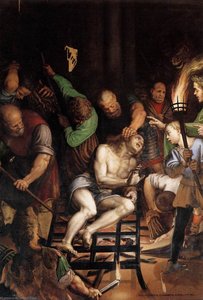
Throughout his career, Antonio Campi produced an impressive body of work that includes altarpieces, frescoes, and easel paintings. The “Martyrdom of Saint Lawrence” (1581) stands as a testament to his mastery of dramatic composition and emotional intensity. The painting’s intricate details, dynamic figures, and powerful use of light create a compelling visual narrative. Equally significant is the "Virgin and Child with Saints" (1587), a Baroque masterpiece showcasing rich detail and symbolic religious art. Beyond these iconic works, Campi's numerous altarpieces for churches in and around Cremona demonstrate his prolific output and enduring popularity. He wasn’t solely focused on grand-scale compositions; his smaller devotional paintings reveal a sensitivity to intimate moments of faith and human connection. Importantly, Antonio was also an accomplished draftsman, leaving behind a wealth of studies that offer insights into his artistic process and meticulous attention to anatomical detail.Legacy and Historical Significance
Antonio Campi’s influence extended far beyond the confines of his workshop. He trained numerous pupils—including Galeazzo Ghidoni, Ippolito Storto, Giovanni Battista Belliboni, and Giovanni Paolo Fondulo—who carried on the Cremonese tradition, disseminating his style throughout Lombardy and beyond. The Campi family’s collective achievements established Cremona as a significant artistic center during the Renaissance. His work represents a fascinating intersection of artistic currents, bridging the gap between the robust realism of the earlier Lombard school and the more refined elegance of Mannerism. He successfully integrated these seemingly contrasting styles, creating a unique visual language that resonated with his contemporaries and continues to captivate audiences today. While perhaps not as widely celebrated as some of his Florentine or Roman counterparts, Antonio Campi’s contribution to Italian Renaissance art is undeniable—a testament to the power of family collaboration, artistic innovation, and a deep commitment to both technical skill and emotional expression.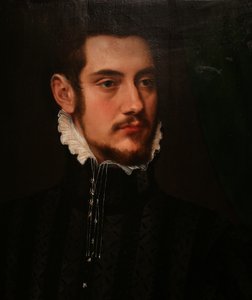
Antonio Campi
1524 - 1587 , Italy
Quick Facts
- Artistic Movement Or Style: Renaissance; Lombard & Mannerist
- Artists Or Movements Influenced By This Artist:
- Ghidoni
- Storto
- Belliboni
- Fondulo
- Artists Who Influenced This Artist:
- Giulio Campi
- Bernardino Campi
- Correggio
- Parmigianino
- Romano
- Date Of Birth: 1524
- Date Of Death: 1587
- Full Name: Antonio Campi
- Nationality: Italian
- Notable Artworks:
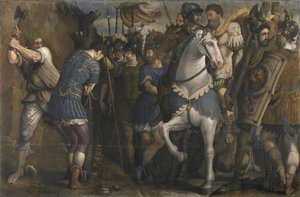
- Titus Manlius Torquatus
- The Martyrdom of St Lawrence
- Virgin and Child with Saints
- Place Of Birth: Cremona, Italy

