 Preview
 Send
Send Share
Share
 Details

 Download
 Similars
 X-Ray
X-Ray Diaporama
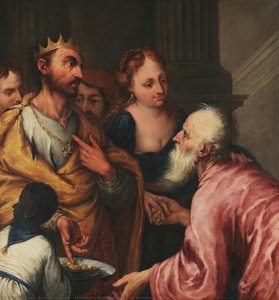
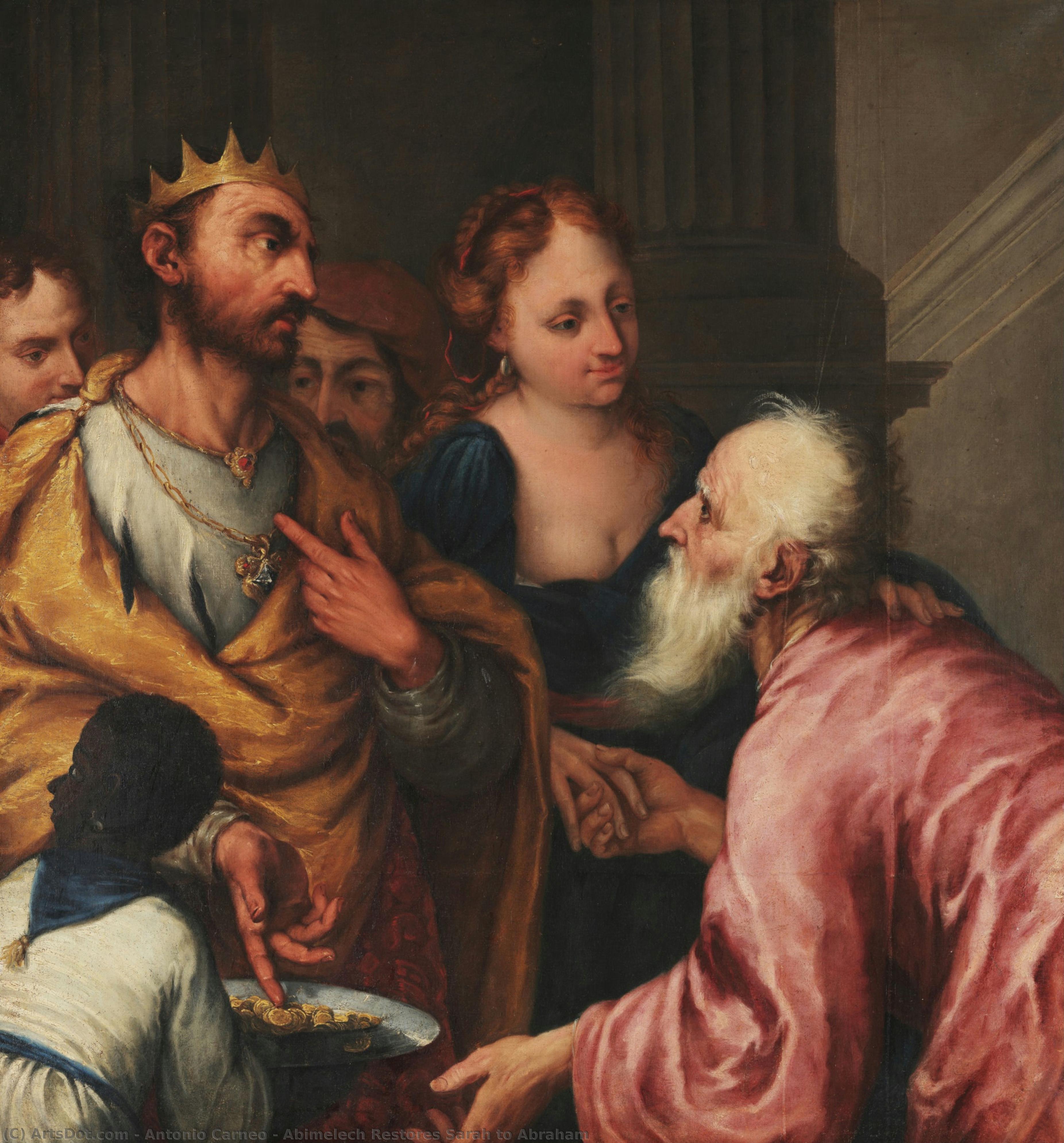
Abimelech Restores Sarah to Abraham

 Read More
Giclée / Art Print
Museum-quality giclée or canvas print with fast production and flexible finish options. ( Buy Hand Made Painting Buy Image)




































Pick from our preset sizes that match the artwork's original proportions.

You may enter your own dimensions to fit a specific frame or space. If your selected size does not match the original image's proportions, we will either crop the artwork or extend the image with a mirrored or solid-fill edge. A digital mockup will be sent for your approval before production begins.
Please note that the on-screen preview does not reflect the actual cropping or extension. Only the mockup will accurately show the final composition.
While custom sizes are available, we recommend selecting a dimension from the predefined list to preserve the original proportions.
Worldwide Delivery () in 2 weeks instead of standard 4/5 weeks. (25 August)

Free Worldwide Express Shipping

High-Quality Linen Canvas

Full Shipping Insurance

Customs Tax Refund Guarantee

True Color Matching Guarantee

60-Day Return Policy (Defects Only)

100% Money-Back Guarantee

Bulk Discount Offer
 Glass option is only available in size under 110 CM

Abimelech Restores Sarah to Abraham
Giclée / Art Print
Reproduction Size
-


Total Price
$ 63
Collectible Description
Related Artworks









Artist Biography
The Radiant Legacy of Antonio Carneo
In the golden age of the Venetian Baroque, few artists captured the intersection of divine grace and human drama as poignantly as Antonio Carneo. Born in 1637 in the serene landscape of Concordia Sagittaria, Carneo emerged from a tradition deeply rooted in the mastery of light and color. While the biographical shadows of his early life remain somewhat obscured by the passage of centuries, his artistic lineage is clear; trained initially under the watchful eye of his father, he later refined his brushwork under the guidance of masters such as Giovanni Giuseppe Cosattini in Udine. This foundational period allowed him to absorb the very essence of the Venetian school, breathing life into canvases that would eventually grace the most sacred spaces of Friuli and Venice.
Carneo’s artistic soul was profoundly shaped by the giants of the sixteenth century. One can trace the dramatic chiaroscuro and the sweeping, theatrical compositions of Tintoretto within his work, paired with the luminous palette and grand pageantry characteristic of Paolo Veronese. This synthesis of styles allowed Carneo to move beyond mere representation, creating works that functioned as spiritual windows. His ability to manipulate light—allowing it to pierce through deep shadows to illuminate a saint’s countenance or a celestial vision—imbued his religious and mythological subjects with an almost palpable energy, making the divine feel immediate and intensely human.
A Journey Through Faith and Canvas
The career of Antonio Carneo was defined by a series of monumental commissions that transformed the architectural landscapes of Northern Italy. Between 1658 and 1667, his presence was particularly felt in Portogruaro and Cordovado, where he undertook works of immense theological significance. One of his most celebrated achievements remains the Charity of St Thomas of Villanova for the church of Santa Lucia, a piece that exemplifies his talent for narrative storytelling and emotional depth. In this work, the artist does not merely depict an act of benevolence but captures the very heartbeat of compassion through dynamic movement and rich, emotive textures.
His devotion to the sacred extended into the castle chapels and convents of the region, where he populated ceilings and altars with a celestial hierarchy. His repertoire was remarkably diverse, ranging from:
- Sacred Altarpieces: Including profound depictions of St Peter Martyr and the Last Supper for local convents.
- Marian Devotions: A series of breathtaking panels for the Sanctuary of the Madonna delle Grazie, depicting the Apparition of the Virgin to various figures, showcasing his ability to blend the miraculous with the earthly.
- Portraiture and Allegory: Demonstrating a technical virtuosity that could capture both the dignity of individual donors and the complex symbolism of mythological tales.
Beyond the local churches, Carneo’s reputation reached far beyond the borders of Friuli. The presence of his masterpieces in prestigious institutions like the Castelvecchio Museum in Verona and the Staatsgalerie Stuttgart serves as a testament to his enduring historical significance. Even today, when we gaze upon his work, we are not merely looking at 17th-century paint on canvas; we are witnessing a masterwork of the Baroque spirit—a period where color, light, and faith converged to create an unforgettable visual symphony.
Antonio Carneo
1637 - 1692 , Italy
Quick Facts
- Artistic Movement Or Style: Baroque
- Artists Or Movements Influenced By This Artist: ['Caravaggio']
- Artists Who Influenced This Artist:
- Tintoretto
- Paolo Veronese
- Date Of Birth: 1637 Concordia Sagittaria Italy
- Date Of Death: 1692 Portogruaro Italy
- Full Name: Antonio Carneo
- Nationality: Italian
- Notable Artworks:
- La buona ventura (La seduzione)
- Il Redentore
- Cristo e l’adultera
- Miracle of the Virgin of the Snows
- Place Of Birth: Concordia Sagittaria Italy