 Preview
 Send
Send Share
Share
 Details

 Download
 Similars
 X-Ray
X-Ray Diaporama
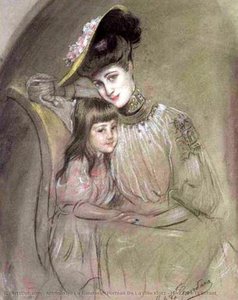
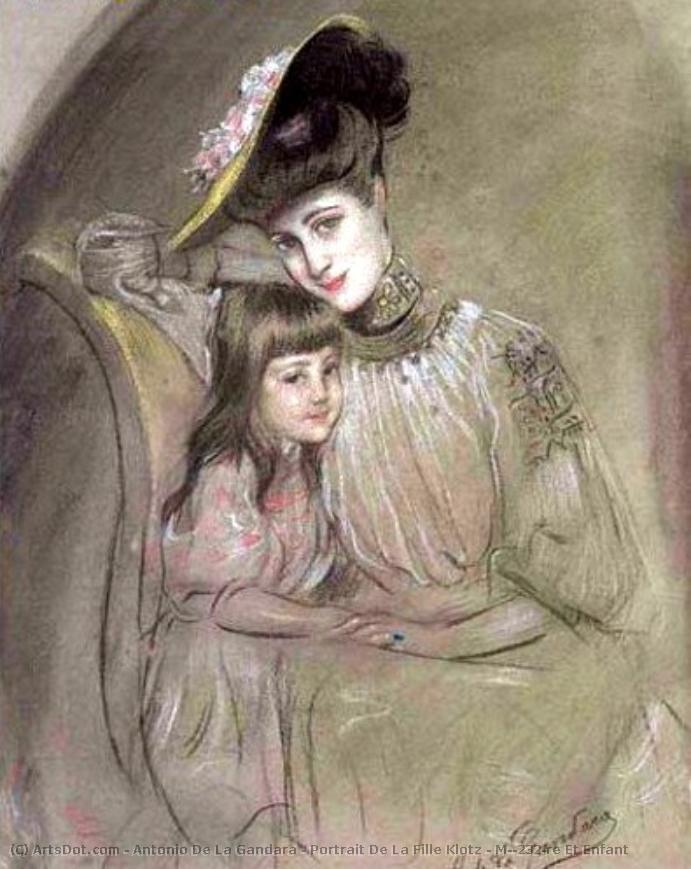
Portrait De La Fille Klotz – Mère Et Enfant

 Read More
Giclée / Art Print
Museum-quality giclée or canvas print with fast production and flexible finish options. ( Buy Hand Made Painting Buy Image)




































Pick from our preset sizes that match the artwork's original proportions.

You may enter your own dimensions to fit a specific frame or space. If your selected size does not match the original image's proportions, we will either crop the artwork or extend the image with a mirrored or solid-fill edge. A digital mockup will be sent for your approval before production begins.
Please note that the on-screen preview does not reflect the actual cropping or extension. Only the mockup will accurately show the final composition.
While custom sizes are available, we recommend selecting a dimension from the predefined list to preserve the original proportions.
Worldwide Delivery () in 2 weeks instead of standard 4/5 weeks. (6 September)

Free Worldwide Express Shipping

High-Quality Linen Canvas

Full Shipping Insurance

Customs Tax Refund Guarantee

True Color Matching Guarantee

100-Day Return Policy (Defects Only)

100% Money-Back Guarantee

Bulk Discount Offer
 Glass option is only available in size under 110 CM

Portrait De La Fille Klotz – Mère Et Enfant
Giclée / Art Print
Reproduction Size
-


Total Price
$ 63
Related Artworks




Artist Biography
Frederic Remington: A Chronicle of the American West
Born in Canton, New York, in 1861, Frederic Sackrider Remington’s life and art were inextricably linked to the vast, rapidly changing landscape of the American West. His early years, shaped by his father's service as a Union Army colonel and his family’s connection to the hardware business, instilled within him a deep fascination with frontier life – a fascination that would become the defining characteristic of his artistic legacy. Remington wasn’t formally trained in art; instead, he honed his skills through observation, sketching soldiers during the Civil War, and later, by immersing himself in the very environment he sought to depict. This hands-on approach, combined with an innate understanding of storytelling, set him apart from many of his contemporaries.
Early Years and Artistic Development
Remington’s journey began not with a polished academic education but with a practical apprenticeship in the world of journalism and illustration. He worked as a clerk for state agencies in Albany, gaining valuable experience in capturing scenes and narratives for publication. It was during this period that his illustrations first appeared in *Harper's Weekly*, marking the beginning of his rise to prominence. Crucially, Remington’s early work was heavily influenced by French academic painters like Ernest Meissonier and Édouard Detaille, whose dramatic realism and attention to detail provided a foundation for his own style. However, he quickly developed a distinctive voice, blending these influences with his own unique perspective on the American West – a perspective that often romanticized but never shied away from portraying the realities of life on the frontier.
The Cowboy and the Frontier
Remington’s artistic focus quickly settled on the themes of cowboys, Native Americans, and cavalrymen. He wasn't simply documenting these subjects; he was actively shaping their image in the public consciousness. His illustrations for *Harper’s Weekly* became immensely popular, capturing the spirit of the West with a blend of romanticism and gritty realism. Works like “The Bronco Buster” (1889) – now housed at the Amon Carter Museum of American Art – exemplify this style: dynamic compositions, dramatic lighting, and meticulously rendered details that conveyed both the heroism and the hardship of frontier life. Remington’s depictions weren't always entirely accurate, often imbued with a nostalgic vision of a bygone era, but they undeniably captured the imagination of a nation eager to define its identity.
Sculpture and Beyond
While he initially gained fame as an illustrator, Remington never abandoned his ambition to be recognized as a painter. He began exhibiting paintings at the National Academy of Design in 1887, steadily developing his own distinctive style. Around the same time, he turned his attention to sculpture, mastering the lost wax method and creating powerful bronze figures that echoed the dynamism of his paintings. His sculptures, like “The Lumberjack” (1902), demonstrated a remarkable ability to capture movement and emotion – qualities that were equally evident in his illustrations. Beyond painting and sculpture, Remington also wrote extensively, producing short stories, articles, and even two novels, further cementing his place as a multifaceted artist and storyteller.
Legacy and Historical Significance
Frederic Remington died in 1909 at the relatively young age of forty-eight, leaving behind an extraordinary body of work that profoundly shaped the visual representation of the American West. His illustrations helped to popularize the cowboy myth, while his depictions of Native Americans offered a complex and often controversial portrayal of a culture facing displacement and assimilation. Remington’s art continues to resonate today, serving as a powerful reminder of a pivotal period in American history – a time of expansion, conflict, and transformation. His influence can be seen not only in the works of later Western artists but also in popular culture, most famously through John Ford's film *She Wore a Yellow Ribbon*, which was directly inspired by one of Remington’s illustrations. He remains an iconic figure, embodying the spirit of adventure, resilience, and the enduring allure of the American frontier.
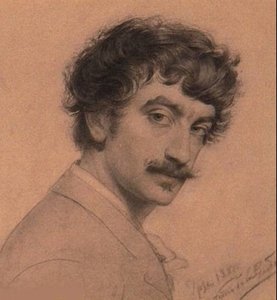
antonio de la gandara
1861 - 1917
Quick Facts
- Artistic Movement Or Style: Western American Art
- Artists Or Movements Influenced By This Artist:
- George Catlin
- Impressionism
- Artists Who Influenced This Artist:
- Ernest Meissonier
- Édouard Detaille
- Date Of Birth: October 4, 1861
- Date Of Death: December 26, 1909
- Full Name: Frederic Sackrider Remington
- Nationality: American
- Notable Artworks:
- A Dash for the Timber
- The Bronco Buster
- Plainsmen
- Place Of Birth: Canton, New York, USA