

 Preview
 Send
Send Share
Share
 Details

 Download
 Similars
 X-Ray
X-Ray Diaporama
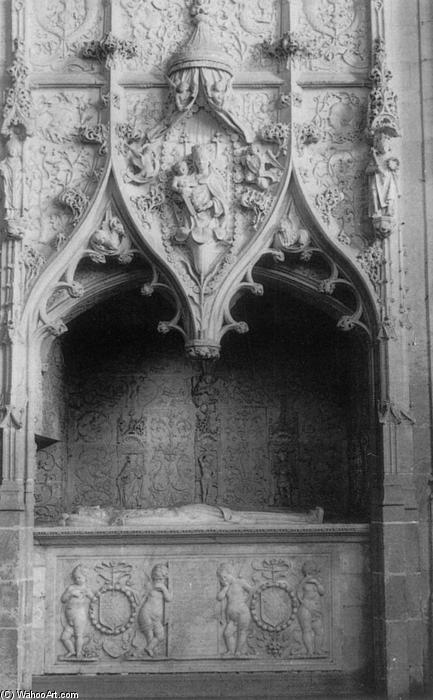
Tomb of Raoul de Lannoy

 Read More
Purchase a high-resolution, enhanced digital image, far superior to the online preview.
Each file is meticulously prepared by our in-house specialists using advanced tools and expert manual retouching. We ensure every image has exceptional clarity, precise color accuracy, and fine detail.
The final file is delivered via email within 72 hours, optimized for immediate use in professional, editorial, and print environments. This is the same quality trusted by top-tier design studios, publishers, and galleries.
Digital Image
Download a high-resolution file for personal display, printing, and creative projects. ( Buy Print Buy Hand Made Painting)
Included in Every Digital Image Order
Expert Digital Delivery, Guaranteed
When you choose ArtsDot.com, you're not just getting an image - you're receiving a professionally enhanced digital artwork, crafted with precision and backed by a satisfaction guarantee. Here's everything that comes with your order, automatically:

Fast Email Delivery
Your high-resolution digital image file will be emailed to you within 72 hours of ordering - ready for immediate use.

AI-Enhanced Digital File
Your artwork is professionally optimized using advanced AI tools and manual editing, ensuring maximum detail, clarity, and color accuracy.

Free Lifetime Re-Delivery
Accidentally deleted or lost your file? No worries - we'll resend it to you anytime, free of charge.

No Import Fees - Ever
Enjoy your artwork instantly with zero customs, duties, or delivery fees - digital downloads are always tax-free.

Color Accuracy Guarantee
We ensure your digital image reflects the original colors as closely as possible using professional tools and color management.

60-Day Satisfaction Guarantee
If you're not satisfied with your digital image, we'll revise it or refund 100% within 60 days - no questions asked.

100% Money-Back Guarantee
Not satisfied? Get a full refund within 60 days of receiving your digital file - no questions asked.

Bulk Order Discounts
Buy 3 images, save 10% - Buy 5, save 15% - Buy 10+, save 20%. Great for creative projects, galleries, and agencies.
Related Artworks





Artist Biography
A Sculptor of Angels: The Life and Legacy of Antonio della Porta
Antonio della Porta, known also as Tamagnino, remains a somewhat enigmatic figure within the vibrant landscape of the Italian Renaissance. Born in Porlezza, Italy, in 1471, his life unfolded during a period of immense artistic ferment, yet details surrounding his personal experiences are scarce. What *is* abundantly clear is his profound talent for sculpture, particularly his ability to imbue stone with an ethereal grace that captured the spiritual fervor of the age. He died in 1520, leaving behind a body of work concentrated primarily around Brescia and Pavia, works which speak volumes despite the silence surrounding his biography. His nickname, Tamagnino, likely refers to his origins or family ties within the region, adding a touch of local color to an artist whose influence extended beyond his immediate surroundings.Early Training and Influences
The specifics of Antonio della Porta’s early training are lost to time, but it is reasonable to assume he apprenticed with a local master sculptor in the region surrounding Lake Lugano. The artistic climate of Lombardy during the late 15th century was heavily influenced by the Gothic tradition, blended with emerging Renaissance ideals flowing from Florence and Venice. Early exposure to these diverse styles likely shaped his initial approach. However, it’s Brescia that truly became the crucible for his developing style. The city boasted a rich sculptural heritage, and della Porta quickly absorbed its lessons, moving beyond purely decorative forms towards a more naturalistic representation of the human figure. The influence of artists like Giovanni Antonio Amadeo, active in Brescia during this period, is palpable in della Porta’s early works – particularly in his attention to detail and dynamic compositions. He wasn't simply copying; he was synthesizing these influences into something uniquely his own.The Certosa di Pavia: A Defining Commission
Antonio della Porta’s most significant contribution, and the work for which he is best remembered today, lies within the magnificent *Certosa di Pavia*, a Carthusian monastery just north of Milan. He received commissions to create numerous sculptures for the monastery's chapel dedicated to Saint Catherine of Alexandria, beginning around 1498. This was not a solitary undertaking; he collaborated with other sculptors including Giovanni Antonio Amadeo and Cristoforo Rocchi. However, della Porta’s contribution is particularly striking in its consistent quality and distinctive style. Here, he truly blossomed as an artist. He sculpted angelic figures that are renowned for their delicate beauty, expressive faces, and flowing drapery. These weren't static representations of heavenly beings; they possessed a palpable sense of movement and emotion, conveying both piety and grace. The angels seem to float rather than stand, embodying the spiritual aspirations inherent in the Certosa’s design. The commission at Pavia cemented his reputation as a master sculptor capable of handling complex narratives and large-scale projects.Style and Technique: Capturing Divine Essence
Della Porta's style is characterized by a remarkable blend of realism and idealism. He possessed a keen understanding of human anatomy, evident in the naturalistic forms of his figures. Yet, he wasn’t interested in mere anatomical accuracy; he sought to elevate these forms, imbuing them with a spiritual quality that transcended earthly concerns. His technique was masterful. He worked primarily in marble, skillfully exploiting its inherent qualities to create textures and effects that enhanced the emotional impact of his sculptures. The delicate carving of drapery is particularly noteworthy – it’s not simply rendered as fabric but appears almost weightless, contributing to the ethereal quality of his angels. His ability to convey emotion through subtle facial expressions and body language sets him apart from many of his contemporaries. He understood that sculpture wasn't just about representing form; it was about communicating a feeling, an idea, a spiritual truth.Historical Significance and Enduring Legacy
Antonio della Porta’s work represents a crucial transition within Italian Renaissance sculpture. He bridged the gap between the late Gothic tradition and the High Renaissance emphasis on classical ideals. While he embraced naturalism, he never abandoned the emotional intensity and spiritual depth that characterized earlier styles. His sculptures at the Certosa di Pavia served as an inspiration for generations of artists who followed. Although his personal life remains shrouded in mystery, his artistic legacy is undeniable. He demonstrated a profound ability to capture the divine essence through stone, creating works that continue to inspire awe and reverence today.- His angelic figures became archetypes for Renaissance sculpture.
- He contributed significantly to the artistic flourishing of Brescia and Lombardy.
- His work exemplifies the blending of Gothic and Renaissance styles.
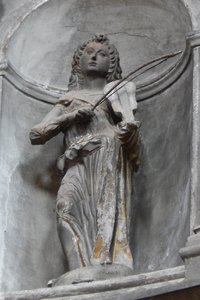
antonio della porta
1471 - 1520 , Italy
Quick Facts
- Artistic Movement Or Style: Renaissance
- Artists Or Movements Influenced By This Artist: ['Luca della Robbia']
- Artists Who Influenced This Artist: ['Giacomo della Porta']
- Date Of Birth: c. 1471
- Date Of Death: c. 1520
- Full Name: Antonio della Porta
- Nationality: Italian
- Notable Artworks:
- Angels (Certosa di Pavia)
- Tomb of Raoul de Lannoy
- Place Of Birth: Porlezza, Italy

