 Preview
 Send
Send Share
Share
 Details

 Download
 Similars
 X-Ray
X-Ray Diaporama
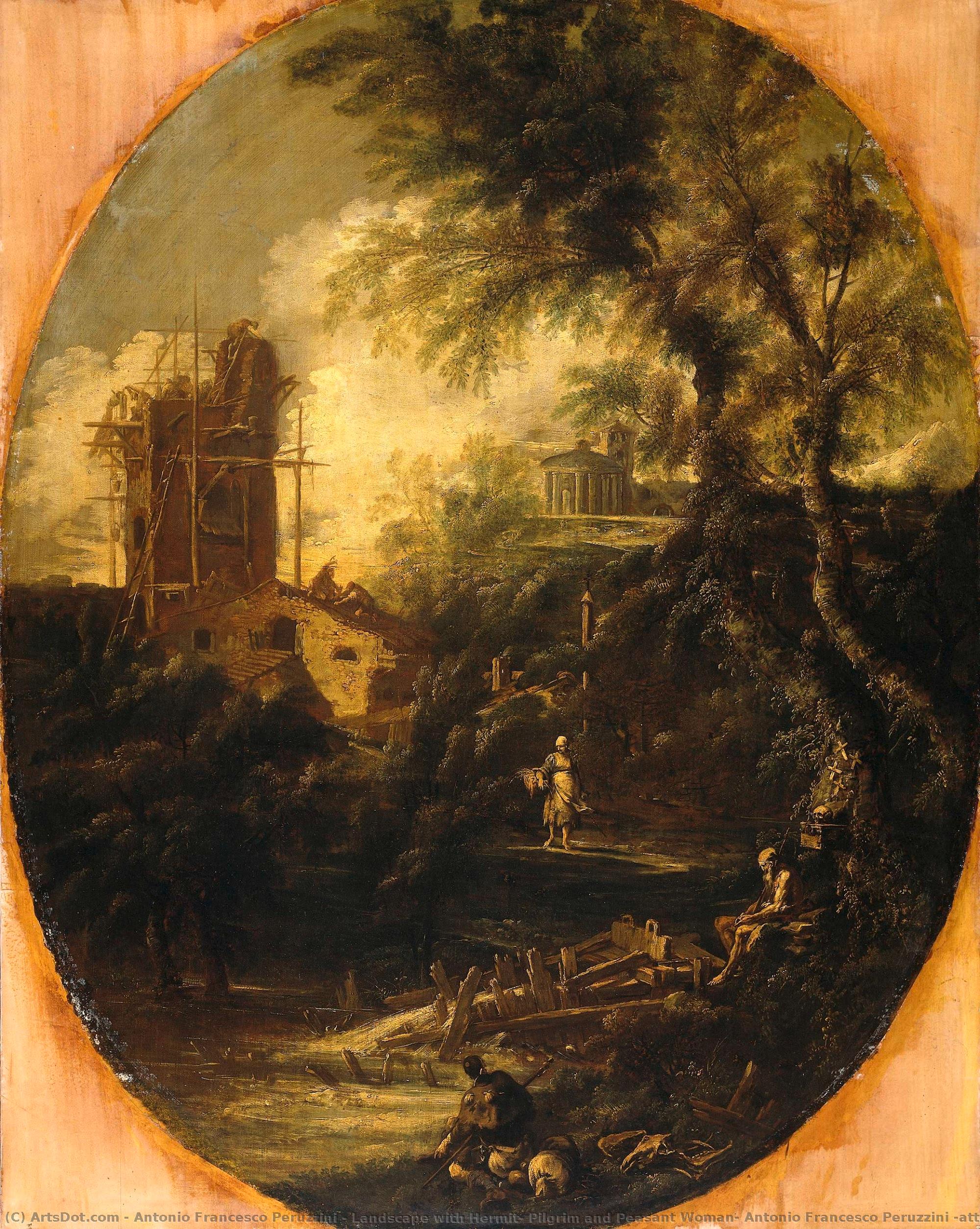
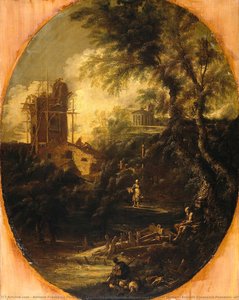
Landscape with Hermit, Pilgrim and Peasant Woman, Antonio Francesco Peruzzini (attributed to), 1690 - 1740
 1740
1740 139.0 x 110.0 cm
 Read More
Giclée / Art Print
Museum-quality giclée or canvas print with fast production and flexible finish options. ( Buy Hand Made Painting Buy Image)




































Pick from our preset sizes that match the artwork's original proportions.

You may enter your own dimensions to fit a specific frame or space. If your selected size does not match the original image's proportions, we will either crop the artwork or extend the image with a mirrored or solid-fill edge. A digital mockup will be sent for your approval before production begins.
Please note that the on-screen preview does not reflect the actual cropping or extension. Only the mockup will accurately show the final composition.
While custom sizes are available, we recommend selecting a dimension from the predefined list to preserve the original proportions.
Worldwide Delivery () in 2 weeks instead of standard 4/5 weeks. (22 August)

Free Worldwide Express Shipping

High-Quality Linen Canvas

Full Shipping Insurance

Customs Tax Refund Guarantee

True Color Matching Guarantee

60-Day Return Policy (Defects Only)

100% Money-Back Guarantee

Bulk Discount Offer
 Glass option is only available in size under 110 CM

Landscape with Hermit, Pilgrim and Peasant Woman, Antonio Francesco Peruzzini (attributed to), 1690 - 1740
Giclée / Art Print
Reproduction Size
-


Total Price
$ 63
Collectible Description
Related Artworks

Artist Biography
Antonio Francesco Peruzzini: Master of Italian Capriccio
Antonio Francesco Peruzzini (c. 1643 – August 20, 1724) stands as a pivotal figure in the late Baroque landscape tradition of Italy, particularly renowned for his captivating capricci—scenes of imagined or fleeting moments imbued with a profound sense of atmosphere and psychological depth. Born in Ancona, Peruzzini’s artistic journey was marked by a restless spirit of travel and collaboration, absorbing influences from both established masters like Salvatore Rosa and the burgeoning realism of Dutch landscape painting while forging a distinctly personal style.
Peruzzini's early life remains somewhat shrouded in mystery. He apprenticed under his father, Domenico, a painter in Ancona, gaining foundational skills before embarking on a period of extensive travel throughout Italy. This itinerant existence proved crucial to the development of his artistic vision. From 1682 to 1686, he resided in Bologna, where he found himself working alongside the celebrated Sebastiano Ricci and Giovanni Antonio Burrini – artists known for their dramatic compositions and vibrant color palettes. These collaborations exposed Peruzzini to innovative techniques and broadened his understanding of Baroque aesthetics. Notably, he contributed significantly to works like “Temptations of St. Anthony” and “Landscape with Wood-cutter,” demonstrating a growing mastery of composition and the skillful rendering of natural elements.
The Influence of Dutch Masters and Salvator Rosa
A defining characteristic of Peruzzini’s work is his deliberate engagement with the principles of Dutch landscape painting, which had gained considerable popularity in Italy during the 17th and early 18th centuries. Artists like Plattenberg and Mulier, known for their meticulous detail, atmospheric perspective, and subtle tonal variations, profoundly influenced Peruzzini's approach to depicting nature. He adopted their techniques of layering colors to create a sense of depth and utilizing broken brushstrokes to suggest texture and movement. However, Peruzzini didn’t simply mimic Dutch styles; he synthesized these influences with the expressive qualities of Salvatore Rosa, a key figure in Italian Baroque painting. Rosa's emphasis on capturing fleeting moments, his use of dramatic lighting, and his ability to infuse landscapes with psychological resonance served as a crucial foundation for Peruzzini’s own artistic language.
The resulting style is characterized by an almost dreamlike quality—a sense that the scenes depicted are not entirely rooted in reality but rather emerge from the artist's imagination. His capricci often feature solitary figures – shepherds, travelers, hermits – set against dramatic landscapes of rolling hills, dense forests, and turbulent skies. These compositions are imbued with a quiet melancholy or a profound sense of solitude, inviting viewers to contemplate the human condition within the vastness of nature.
Key Works and Collaborations
Peruzzini’s career spanned several decades and involved numerous collaborations. He spent time in Florence, where he worked alongside Alessandro Magnasco, creating landscapes for the painter known for his small figures. Together, they produced “Landscape with Frati Penitenti di Stockholm” (now in the Uffizi), a masterpiece showcasing Peruzzini's ability to capture atmospheric effects and create a sense of spatial depth. Later, he moved to Milan in 1712-13, continuing his collaborations with Magnasco until 1720-25.
Among his most celebrated works are “Landscape with Two Praying Monks” (circa 1690s), a poignant depiction of religious devotion set against a dramatic backdrop, and “San Francesco,” a captivating portrayal of the saint in contemplation within a serene landscape. His work also includes numerous smaller paintings depicting scenes of rural life, architectural details, and evocative landscapes—each imbued with his distinctive style and emotional depth.
Legacy and Historical Significance
Antonio Francesco Peruzzini’s contribution to Italian Baroque painting lies not merely in his technical skill but in his ability to elevate the landscape genre beyond mere representation. He transformed it into a vehicle for exploring themes of solitude, contemplation, and the relationship between humanity and nature. His capricci—scenes of imagined or fleeting moments—became highly influential, inspiring generations of artists who sought to capture the beauty and mystery of the natural world. While his work was often attributed to Magnasco during his lifetime, modern scholarship has firmly established Peruzzini as a distinct and significant artist in his own right, deserving recognition for his unique vision and enduring legacy.
Peruzzini’s paintings continue to be exhibited and studied today, testament to the lasting power of his artistic vision. His landscapes offer viewers a glimpse into a bygone era—a time when art was seen as a means of exploring the depths of human experience and celebrating the sublime beauty of the natural world.
Quick Facts
- Artistic Movement Or Style: Baroque
- Artists Or Movements Influenced By This Artist: ['Marco Ricci']
- Artists Who Influenced This Artist:
- Salvatore Rosa
- Dutch landscape artists
- Date Of Birth: c. 1643/1646
- Date Of Death: 1724
- Full Name: Antonio Francesco Peruzzini
- Nationality: Italian
- Notable Artworks:
- Landscape with Hermit
- Landscape with Monks
- Place Of Birth: Ancona, Italy