

 Preview
 Send
Send Share
Share
 Details

 Download
 Similars
 X-Ray
X-Ray Diaporama
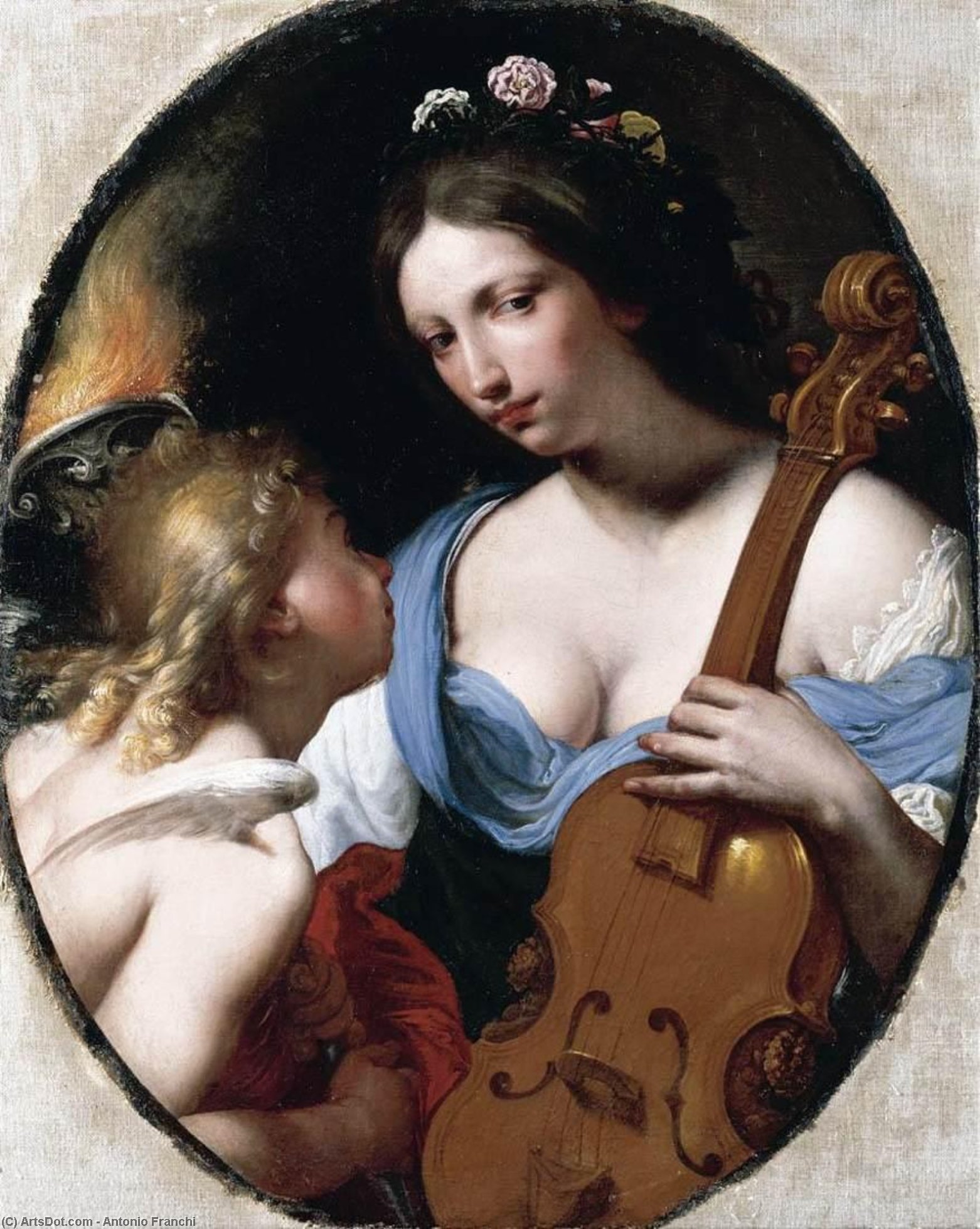
Personification of Music (St Cecilia)
 1650
1650 87.0 x 67.0 cm
 Read More
Giclée / Art Print
Museum-quality giclée or canvas print with fast production and flexible finish options. ( Buy Hand Made Painting Buy Image)




































Pick from our preset sizes that match the artwork's original proportions.

You may enter your own dimensions to fit a specific frame or space. If your selected size does not match the original image's proportions, we will either crop the artwork or extend the image with a mirrored or solid-fill edge. A digital mockup will be sent for your approval before production begins.
Please note that the on-screen preview does not reflect the actual cropping or extension. Only the mockup will accurately show the final composition.
While custom sizes are available, we recommend selecting a dimension from the predefined list to preserve the original proportions.
Worldwide Delivery () in 2 weeks instead of standard 4/5 weeks. (31 August)

Free Worldwide Express Shipping

High-Quality Linen Canvas

Full Shipping Insurance

Customs Tax Refund Guarantee

True Color Matching Guarantee

60-Day Return Policy (Defects Only)

100% Money-Back Guarantee

Bulk Discount Offer
 Glass option is only available in size under 110 CM

Personification of Music (St Cecilia)
Giclée / Art Print
Reproduction Size
-


Total Price
$ 63
Related Artworks
Artist Biography
The Porcelain Precision of Antonio Franchi
In the vibrant, sun-drenched landscape of the seventeenth century, few artists captured the delicate intersection of Baroque drama and Neoclassical clarity as masterfully as Antonio Franchi. Known to his contemporaries as Il Lucchese, Franchi was a painter whose brushwork possessed a singular, luminous quality—a phenomenon so striking that the esteemed Carlo Dolci famously remarked upon its "porcelain crispness." Born in 1638 in Villa Basilica, his journey from the provincial traditions of Lucca to the prestigious courts of Florence represents a quintessential narrative of Italian artistic evolution, where technical rigor met an almost ethereal grace.
Franchi’s early years were shaped by the intimate atmosphere of the Lucchese school. Under the tutelage of Domenico Ferrucci, he developed a foundational mastery of form and light, a skill set further enriched by his father, a militia captain with a profound passion for the visual arts. However, it was his migration to Florence between 1655 and 1667 that truly ignited his genius. Immersed in one of Europe’s most sophisticated intellectual hubs, he entered into vital collaborations with masters such as Felice Ficherelli and Baldassare Franceschini. These encounters allowed him to absorb the sweeping, theatrical energy of the Baroque while simultaneously refining a sense of compositional elegance that would become his hallmark.
A Synthesis of Grandeur and Grace
The true brilliance of Franchi’s oeuvre lies in its remarkable stylistic synthesis. He did not merely imitate the giants of his era; he distilled their essence into a new, cohesive language. His work reflects a deep, scholarly devotion to the masters of the previous century, drawing upon the emotive intensity of Guido Rationale, the grand theatricality of Pietro da Cortona, and the robust, fleshy vitality of Peter Paul Rubens. This fusion allowed him to navigate between disparate worlds: he could command the monumental scale of mythological allegories while maintaining a meticulous, almost tactile precision in the rendering of fabrics, skin, and light.
This technical dexterity found its greatest expression through his varied subject matter:
- Religious Devotion: His sacred compositions are imbued with an expressive power that captures the profound depths of human emotion, making the divine feel tangibly present.
- Mythological Allegory: Inspired by Cortona’s romantic vision of antiquity, works such as The Temple of Love and The Sacrifice showcase his ability to weave complex narratives within a framework of classical beauty.
- Court Portraiture: As the official portrait painter for Grand Duchess Vittoria della Rovere, Franchi revolutionized the genre by introducing a sense of informality and psychological sharpness that departed from the rigid traditions of his predecessors.
Legacy and Historical Eminence
Franchi’s ascent within the Florentine hierarchy was nothing short of meteoric. His admission to the Accademia del Disegno in 1683 served as a formal recognition of his status among the elite, while his patronage by the Medici family—specifically Ferdinando de' Medici—cemented his role as a central figure in the Tuscan artistic landscape. Whether painting intimate portraits of the nobility, such as the series of Anna Maria Luisa de' Medici, or grand biblical scenes for the halls of power, his hand remained unmistakable: a blend of structural strength and delicate, luminous finish.
Though he eventually returned to Lucca, the impact of his Florentine years remained etched in every canvas. Antonio Franchi stands today not merely as a chronicler of 17th-century life, but as an art theorist and painter who bridged the gap between eras. His ability to marry the muscularity of the Baroque with a refined, crystalline clarity ensures his place in history as a master who could capture both the thunder of human passion and the quiet, porcelain perfection of a single, fleeting moment.
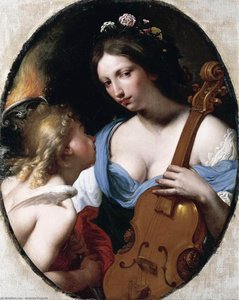
Antonio Franchi
1638 - 1709 , Italy
Quick Facts
- Artistic Movement Or Style: Baroque
- Artists Or Movements Influenced By This Artist: ['Carlo Dolci']
- Artists Who Influenced This Artist:
- Guido Reni
- Peter Paul Rubens
- Date Of Birth: Lucca, Italy (1638)
- Date Of Death: Florence (1709)
- Full Name: Antonio Franchi
- Nationality: Italian
- Notable Artworks:
- San Giovanni gualberto in prayer
- Madonna and bambino
- Place Of Birth: Villa Basilica

