 Preview
 Send
Send Share
Share
 Details

 Download
 Similars
 X-Ray
X-Ray Diaporama
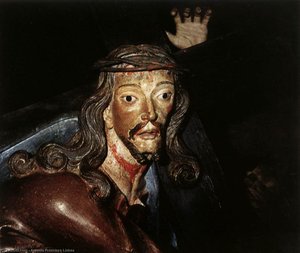
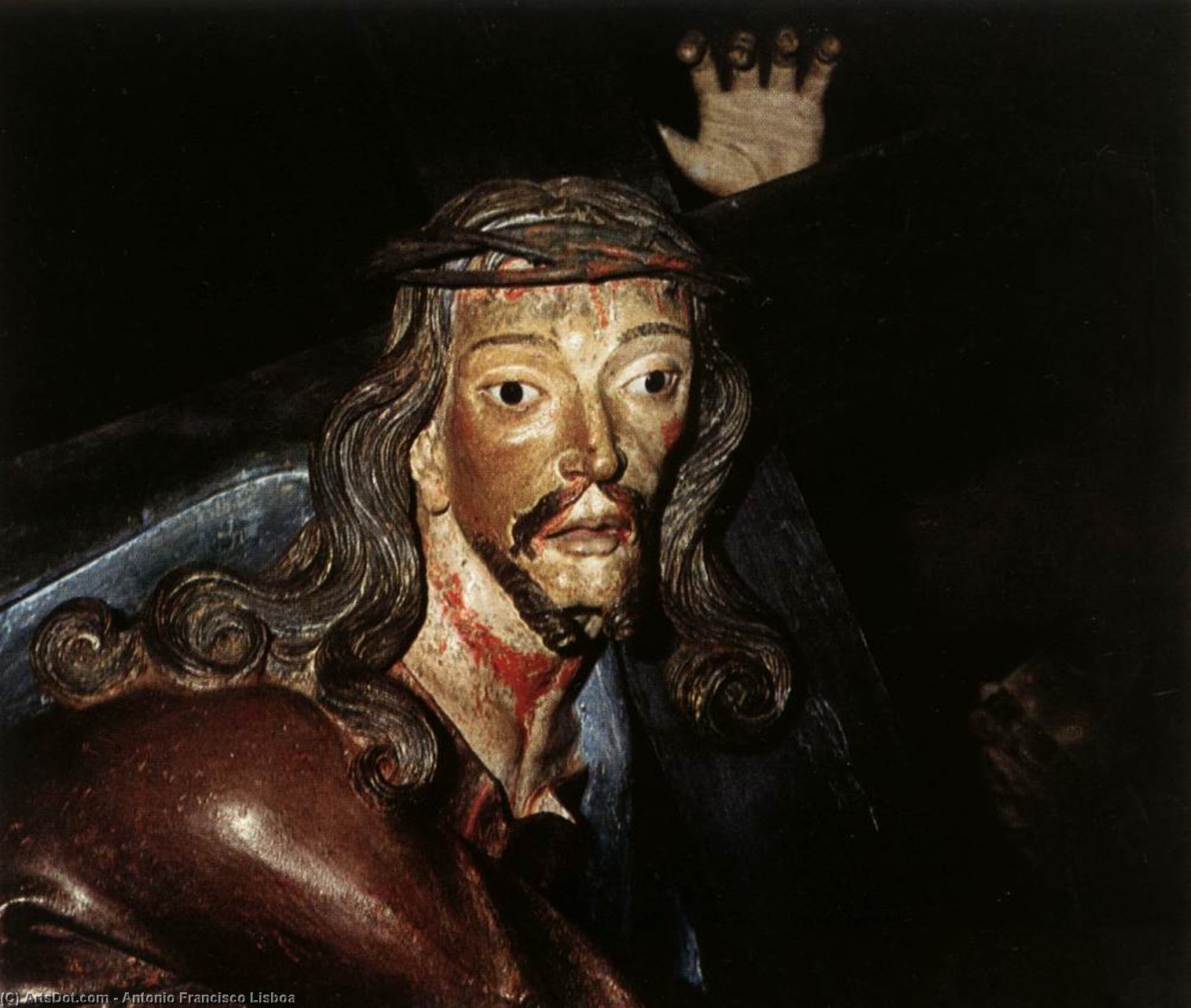
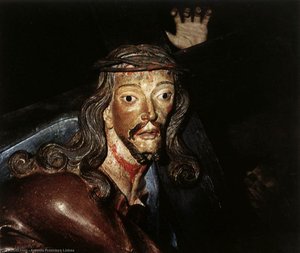
Christ Carrying the Cross

 Read More
Hand Made Oil Reproduction
Hand-painted oil on canvas in your size and frame, made to order by our artists. ( Buy Print Buy Image)




































Pick from our preset sizes that match the artwork's original proportions.

You may enter your own dimensions to fit a specific frame or space. If your selected size does not match the original image's proportions, we will either crop the artwork or extend the painting with additional hand-painted elements. A digital mockup will be sent for your approval before production begins.
Please note that the on-screen preview does not reflect the actual cropping or extension. Only the mockup will accurately show the final composition.
While custom sizes are available, we recommend selecting a dimension from the predefined list to preserve the original proportions.
After order, ArtsDot.com team will email client for instructions and provide a mockup preview
Worldwide Delivery () in 3/4 weeks instead of standard 5 weeks. (24 August). No compromise on quality.

Free Worldwide Express Shipping

High-Quality Linen Canvas

Full Shipping Insurance

Customs Tax Refund Guarantee

True Color Matching Guarantee

60-Day Return Policy (Defects Only)

100% Money-Back Guarantee

Bulk Discount Offer
 Glass option is only available in size under 110 CM

Christ Carrying the Cross
Reproduction Medium
Reproduction Size
-


Total Price
$ 263
Artwork Description
The Artist and His Style
Antonio Francisco Lisboa was a renowned sculptor, carver, and architect of Colonial Brazil. Despite suffering from a disease that caused the shriveling of his hands and feet, he continued to create exquisite works of art, earning him the nickname "o Aleijadinho" or "the little cripple". His style is characterized by dramatic use of light and shadow, as well as realistic portrayals of human emotion and physicality.The Painting
The Christ Carrying the Cross painting is a polychromed wood masterpiece that measures 1796-99. It is part of the Sanctuary of Congonhas do Campo collection in Brazil, a UNESCO World Heritage Site since 1985. The painting depicts Jesus Christ carrying the cross, with a crown of thorns on his head and a look of pain and suffering on his face. The level of detail and realism in this painting is remarkable, making it a standout piece in the world of art. Key Features:- Polychromed wood
- Measures 1796-99
- Part of the Sanctuary of Congonhas do Campo collection
- Depicts Jesus Christ carrying the cross
To explore more artworks by Antonio Francisco Lisboa, check out /art/list/?Filter=8XZPUT-Antonio-Francisco-Lisboa-Christ-Carrying-the-Cross.
Related Artworks
Artist Biography
The Soul of the Brazilian Baroque: The Life and Legacy of Aleijadinho
In the heart of colonial Brazil, amidst the gold-rich mountains of Minas Gerais, lived a man whose hands were ravaged by disease but whose spirit sculpted the very identity of a nation. Antonio Francisco Lisboa, known to history by the poignant moniker Aleijadinho—the little cripple—was far more than a mere craftsman; he was a visionary who breathed life into stone and wood. Born in Vila Rica around 1738, Lisboa emerged from a complex social reality, the son of a Portuguese architect and an enslaved African woman. This intersection of cultures and classes would later manifest in his art, creating a unique aesthetic that blended European Baroque traditions with a profound, localized emotional intensity that felt uniquely Brazilian.
The early years of Lisboa’s life were defined by apprenticeship and the heavy influence of his father, Manuel Francisco Lisboa. Under his father's tutelage, the young artist mastered the intricate techniques of carving and architecture, learning to manipulate materials to serve the grand religious narratives of the era. However, his journey was marked by a profound physical tragedy. Around 1777, a debilitating disease began to wither his hands and feet, a condition that would eventually strip him of much of his manual dexterity. Yet, in a testament to the indomitable human will, Aleijadinho did not succumb to silence. Legend and history both recount how he adapted his tools, perhaps even having them strapped to his hands, to continue his prolific output, transforming his physical suffering into a source of spiritual depth that permeated every chisel mark.
A Masterpiece of Devotion and Drama
The work of Lisboa is characterized by a breathtaking synthesis of Baroque theatricality and Rochoco elegance. His artistry was never merely decorative; it was an instrument of faith designed to evoke awe, terror, and compassion in the faithful. In his sculptures and architectural designs, one finds a dramatic use of light and shadow, where the contours of stone seem to pulse with life. His ability to render human emotion—the agony of Christ, the serenity of saints, and the raw physicality of suffering—set him apart from his contemporaries. This is perhaps most evident in his monumental contributions to the pilgrimage complex at Congonhas do Campo, a UNESCO World Heritage site, where his works stand as eternal sentinels of devotion.
His repertoire was remarkably diverse, spanning various mediums and scales:
- Polychromed Wood Carvings: His ability to use color and texture to enhance the realism of religious figures, such as in the evocative Christ Carrying the Cross.
- Architectural Innovation: The design and ornamentation of churches like the Church of Saint Francis of Assisi in Ouro Preto, which showcase his mastery of space and movement.
- Narrative Sculpture: The creation of complex sculptural groups that tell biblical stories with a sense of kinetic energy and profound psychological depth.
An Enduring Monument to Brazilian Identity
The historical significance of Antonio Francisco Lisboa cannot be overstated. He did not simply replicate European styles; he localized them, creating what is now recognized as the Mineiro Baroque. This movement was a cultural rebellion in its own right, asserting a distinct Brazilian voice during the twilight of Portuguese colonial rule. Through his work, the rugged landscape of Minas Gerais became a canvas for a sophisticated, emotive, and deeply spiritual art form that transcended the boundaries of race and social standing.
Though he passed away in 1814, leaving behind a legacy often marked by the struggle of his final years, his impact remains indelible. Aleijadinho transformed the colonial landscape into a sacred theater, ensuring that the triumphs and tribulations of the human condition would be etched forever into the heart of Brazil. Today, he is celebrated not as a victim of his affliction, but as the architect of a national soul, a master who proved that even through broken hands, one can shape the eternal.
antonio francisco lisboa
1738 - 1814 , Brazil
Quick Facts
- Artistic Movement Or Style: Baroque
- Date Of Birth: 1738 Vila Rica Brazil
- Date Of Death: 1814
- Full Name: Antonio Francisco Lisboa
- Nationality: Brazilian
- Notable Artworks:
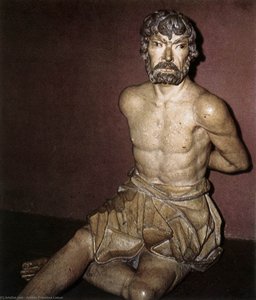
- The Bad Thief
- Christ Carrying the Cross
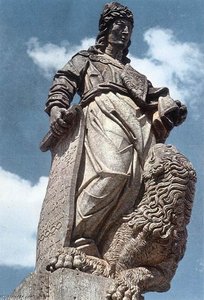
- The Prophet Daniel
- Place Of Birth: Brazil Vila Rica