 Preview
 Send
Send Share
Share
 Details

 Download
 Similars
 X-Ray
X-Ray Diaporama
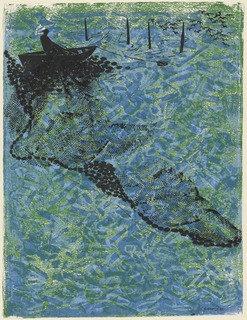
Sardine Fisherman I
 Abstract Expressionism
 1955
1955 67.0 x 51.0 cm
 Read More
Giclée / Art Print
Museum-quality giclée or canvas print with fast production and flexible finish options. ( Buy Hand Made Painting Buy Image)




































Pick from our preset sizes that match the artwork's original proportions.

You may enter your own dimensions to fit a specific frame or space. If your selected size does not match the original image's proportions, we will either crop the artwork or extend the image with a mirrored or solid-fill edge. A digital mockup will be sent for your approval before production begins.
Please note that the on-screen preview does not reflect the actual cropping or extension. Only the mockup will accurately show the final composition.
While custom sizes are available, we recommend selecting a dimension from the predefined list to preserve the original proportions.
Worldwide Delivery () in 2 weeks instead of standard 4/5 weeks. (21 August)

Free Worldwide Express Shipping

High-Quality Linen Canvas

Full Shipping Insurance

Customs Tax Refund Guarantee

True Color Matching Guarantee

60-Day Return Policy (Defects Only)

100% Money-Back Guarantee

Bulk Discount Offer
 Glass option is only available in size under 110 CM

Sardine Fisherman I
Giclée / Art Print
Reproduction Size
-


Total Price
$ 63
Collectible Description
A Dynamic Depiction of Maritime Life: Antonio Frasconi's "Sardine Fisherman I"
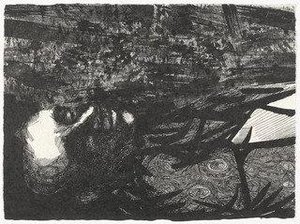
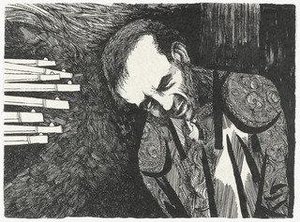
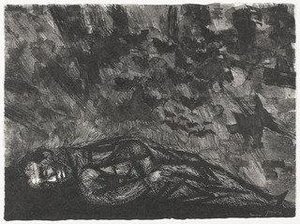
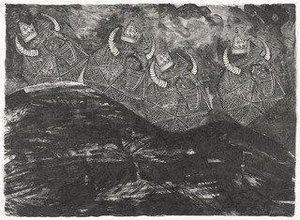
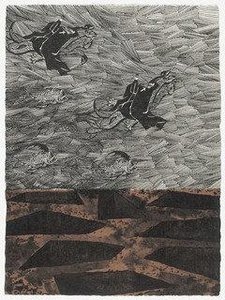
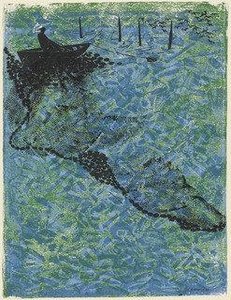
"Sardine Fisherman I," created in 1955 by Uruguayan-American artist Antonio Frasconi, is a captivating work that transcends simple representation to evoke the raw energy and inherent drama of life at sea. This piece isn’t about photographic realism; instead, it's an expressive exploration of feeling and atmosphere centered around a lone boat navigating turbulent waters. The artwork presents a textured and somewhat abstract depiction of a boat on water, dominated by swirling blues and greens that create a sense of movement and depth. A dark silhouette of the boat occupies the upper portion of the image, partially obscured by the chaotic water, while vertical elements resembling posts or poles are scattered throughout, adding to the scene's dynamic feel.Style & Technique: Gestural Expressionism
Frasconi’s style in "Sardine Fisherman I" leans heavily into gestural expressionism. The visible brushstrokes and layering of paint—an impasto effect—create a tactile quality, inviting the viewer to almost feel the texture of the water and the weathered wood of the boat. Lines are loose and flowing, contributing to the dynamic composition, while amorphous shapes suggest water and shadow rather than defined forms. The technique appears to be primarily brushwork, likely applied in layers to build up texture and color. The materials used are likely oil paints or a similar medium based on the visible impasto effect. This approach moves away from traditional perspective, flattening the image and focusing instead on creating a vibrant visual field of color and texture. While Frasconi is best known for his woodcuts, this painting demonstrates his versatility and ability to convey emotion through different mediums.Symbolism & Context: Journey and Isolation
The subject matter—a solitary boat at sea—is rich with symbolic potential. The boat itself can be interpreted as representing a journey, navigation, or even isolation. The turbulent waters suggest the challenges and uncertainties inherent in life's voyage. Created in 1955, the artwork reflects a post-war era marked by both optimism and anxiety. Frasconi, having immigrated to the United States from Uruguay in 1945, likely drew upon his own experiences of displacement and adaptation when creating this piece. The muted tone and somewhat melancholic atmosphere contribute to a sense of introspection, prompting viewers to contemplate themes of resilience and perseverance in the face of adversity.Emotional Impact & Artistic Legacy
"Sardine Fisherman I" is not merely a depiction of a boat; it's an emotional landscape. The swirling colors and dynamic brushwork create a palpable sense of movement and energy, while the overall composition evokes a feeling of both awe and vulnerability. The painting’s strength lies in its ability to convey mood and atmosphere rather than precise detail. It invites viewers to engage with their own interpretations of the scene, fostering a personal connection with the artwork. As an artist celebrated for his poignant social commentary and multilingual books reflecting his diverse experiences, Frasconi's "Sardine Fisherman I" stands as a testament to his ability to capture the essence of human experience through evocative imagery.Related Artworks
Artist Biography
A Voice of Witness Through Woodcuts
Antonio Frasconi stands as a singular figure in the tapestry of Uruguayan and American art history, a master of the woodcut print whose work serves as a profound medium for social commentary. Born on April 28th, 1919, amidst the rhythmic motion of a vessel traversing the waters between Argentina and Uruguay, Frasconi’s very origin was one of transition and movement. Raised in the vibrant cultural landscape of Montevideo, his formative years were deeply colored by his family's Italian heritage and the resilience required of those navigating the shifts of the early twentieth century. His parents, who had emigrated to South America during the upheaval of World War I, instilled in him a perspective on life shaped by displacement and the strength found in cultural identity.
The seeds of his artistic devotion were sown much earlier than his formal training. Frasconi often recalled the transcendent view held by his mother, a restaurant proprietor and seamstress, who spoke of art not as a mere human endeavor but as something akin to divine creation. This spiritual reverence for the creative act fueled a lifelong fascination with expression that transcended the boundaries of simple decoration. While he briefly explored the traditional paths of the Beaux Arts, Frasconi found his true calling in the tactile, demanding world of printmaking. He honed his craft at the Círculo de Bellas Artes in Montevideo, where he began to develop a visual language informed by the dramatic storytelling of masters like Gustave Doré and Francisco Goya.
The Evolution of an Expressive Vision
As the shadows of the Second World War reshaped the global landscape, so too did they expand Frasconi’s artistic horizons. An encounter with exhibitions showcasing Impressionism and Post-Impressionism ignited a new imaginative fire, introducing him to the emotive power of Vincent van Gogh and the structural brilliance of Paul Cézanness. Yet, it was the woodcuts of Paul Gauguin that left an indelible mark on his soul, providing a blueprint for how texture and bold form could communicate deep-seated human truths. This period of discovery also saw him delving into the expansive poetic vision of Walt Whitman, finding in American literature a mirror for his own explorations of identity and cultural exchange.
In 1945, Frasconi’s journey took a definitive turn with his move to the United States. His early years in America were marked by a period of diverse labor, working as a gardener and a museum guard, roles that allowed him to observe the world through a quiet, attentive lens. This observational period enriched his work, allowing him to weave complex, multilingual narratives into his prints. His technique became a bridge between worlds; while he is celebrated for the stark, powerful lines of his woodcuts and linocuts, his ability to manipulate medium—as seen in the gestural expressionism of works like Sardine Fisherman I—demonstrates a versatility that captures both the raw energy of maritime life and the heavy atmosphere of political struggle.
Legacy of Social Commentary and Symbolism
The true significance of Antonio Frasconi lies in his role as an artist-witness. His work frequently grappled with the weight of history, using the stark contrasts of printmaking to address themes of injustice, dictatorship, and the human condition. Whether through the surreal, symbolic detail of his monochrome drawings or the biting social critiques found in his series of prints, Frasconi utilized the graphic nature of the woodcut to ensure his message was both visible and visceral. His art was never static; it was a dynamic dialogue between the personal and the political, often reflecting the tensions of the civic-military dictatorships that haunted the Southern Cone.
Throughout his long and prolific career, Frasconi achieved a rare synthesis of technical mastery and intellectual depth. His ability to integrate literary themes with visual motifs created a body of work that remains as relevant today as when it was first carved into wood. He leaves behind a legacy defined by:
- Mastery of Printmaking: A profound command over woodcut, linocut, and etching that utilized texture and line to evoke emotion.
- Social Advocacy: The use of art as a tool for political commentary and the documentation of historical struggle.
- Cultural Synthesis: An artistic identity that seamlessly blended his Uruguayan roots with his American experiences through multilingual narratives.
- Narrative Depth: A lifelong commitment to exploring complex themes of displacement, resilience, and the human spirit.
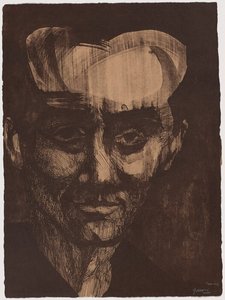
Antonio Frasconi
1919 - 2013 , Argentina
Quick Facts
- Artistic Movement Or Style: Woodcut Art
- Artists Or Movements Influenced By This Artist: ['Impressionism']
- Artists Who Influenced This Artist:
- Gustave Doré
- Paul Gauguin
- Date Of Birth: 28 April 1919
- Date Of Death: 8 January 2013
- Full Name: Antonio Rudolfo Frasconi
- Nationality: Uruguayan-American
- Notable Artworks:
- Summer
- Alhambra VII
- Sardine Fisherman I
- Place Of Birth: Montevideo, Uruguay
Related Articles
Abstract Expressionism's 10 Defining Masterpieces |
Explore 10 defining Abstract Expressionism masterpieces by Pollock, Rothko & de Kooning. Discover the stories behind these iconic paintings and find museum-quality art reproductions to elevate your home decor on .
Kandinsky's Masterpieces: 25 Paintings That Define Abstract Art | ArtsDot
Journey through Wassily Kandinsky's 25 most iconic abstract paintings. Explore his revolutionary use of color, form & spiritual expressionism. Find museum-quality Kandinsky reproductions and elevate your home decor with ArtsDot.com. Discover all masterpieces on ArtsDot.com!

Geometric Abstraction's 10 Defining Masterpieces | Art for Your Home - ArtsDot
Explore 10 defining masterpieces of Geometric Abstraction! Discover Kandinsky, Mondrian & Malevich’s iconic works. Find museum-quality art reproductions and curated decor ideas to elevate your home at ArtsDot.com.
Beyond Representation: Exploring Gesturality, Emotion, and Philosophical Underpinnings of Contemporary Abstract Painting
Explore the evolution of abstract painting with ArtsDot. Discover key artists, historical context & investment insights. Find museum-quality reproductions and expert appraisal services.

The Enduring Legacy of Oil on Canvas: Technique, History & Aesthetic Impact
Explore the rich history & techniques of oil painting – from Renaissance masters to Impressionism. Discover pigments, layering methods, and why this timeless medium endures. Expert insights for artists & art enthusiasts.