 Preview
 Send
Send Share
Share
 Details

 Download
 Similars
 X-Ray
X-Ray Diaporama
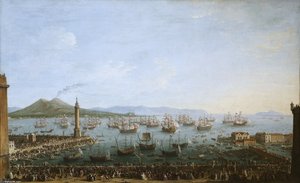
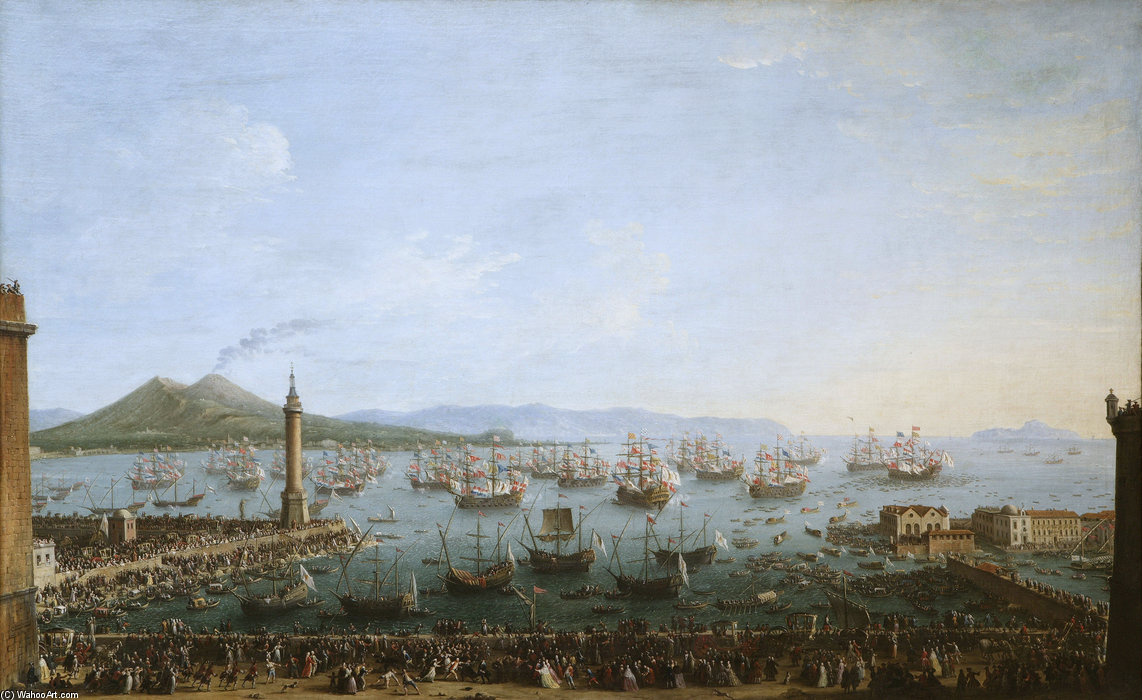
Arrival of Charles III in Naples
 Oil On Canvas
- WallArt
- Baroque
 1759
1759- Early Modern
 128.0 x 205.0 cm
 Museo del Prado
 Read More
Giclée / Art Print
Museum-quality giclée or canvas print with fast production and flexible finish options. ( Buy Hand Made Painting Buy Image)




P118B $10

P118H $10

P118W $10

P438Z $10

P508JH $12

P508YH $12

P805H $10

P805Z $10

P919BZ $10

P919G $10

P919XJ $10

P959ZH $10

P968JZ $12

W106C $8

W218G $10

W218JH $8

W218Y $10

W307PJ $10

W316G $10

W316PJ $8

W316Y $10

W398PJ $8

W4111J $10

W500HY $15

W500JH $15

W692G $12

W849H $8

W940BG $15

W953PJ $8




Pick from our preset sizes that match the artwork's original proportions.

You may enter your own dimensions to fit a specific frame or space. If your selected size does not match the original image's proportions, we will either crop the artwork or extend the image with a mirrored or solid-fill edge. A digital mockup will be sent for your approval before production begins.
Please note that the on-screen preview does not reflect the actual cropping or extension. Only the mockup will accurately show the final composition.
While custom sizes are available, we recommend selecting a dimension from the predefined list to preserve the original proportions.
Worldwide Delivery () in 2 weeks instead of standard 4/5 weeks. (25 August)

Free Worldwide Express Shipping

High-Quality Linen Canvas

Full Shipping Insurance

Customs Tax Refund Guarantee

True Color Matching Guarantee

60-Day Return Policy (Defects Only)

100% Money-Back Guarantee

Bulk Discount Offer
 Glass option is only available in size under 110 CM

Arrival of Charles III in Naples
Giclée / Art Print
Reproduction Size
-


Total Price
$ 63
Collectible Description
A Grand Spectacle of Maritime Majesty
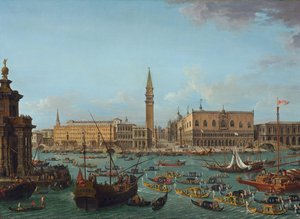
In the sweeping expanse of Antonio Joli’s Arrival of Charles III in Naples, the viewer is not merely an observer but a participant in a moment of profound historical theater. Painted in 1759, this magnificent oil on canvas captures the electric atmosphere of a Mediterranean port transformed by royal expectation. The scene unfolds across a vast harbor, where the sea itself seems to pulse with the movement of countless vessels—from towering, majestic ships with billowing sails to humble, agile boats navigating the coastal waters. Joli masterfully orchestrates a sense of organized chaos, layering the composition with a multitude of figures that populate the shoreline, their collective gaze directed toward the approaching sovereign. The distant silhouette of a mountain rises against the horizon, providing a stoic, eternal backdrop to the fleeting, high-stakes drama unfolding in the bay.
The technique employed by Joli is a testament to his mastery of the veduta tradition, a style dedicated to the meticulous and often idealized depiction of cityscapes. Through delicate brushwork and a sophisticated command of light, he breathes life into the textures of wood, canvas, and salt spray. The artist utilizes a luminous palette to evoke the shimmering Mediterranean sun, creating a play of light and shadow that lends a three-dimensional depth to the crowded harbor. Each stroke contributes to a sense of atmospheric perspective, where the clarity of the foreground figures gradually softens into the hazy, blue-toned majesty of the distant landscape, inviting the eye to wander through the layers of this maritime epic.
The Intersection of History and Artistry
Beyond its visual splendor, the painting serves as a vital historical document, immortalizing the political transition of Naples under the Bourbon dynasty. As Charles III arrived to claim his kingdom, the painting captured the very essence of 18th-century civic pride and the theatricality of monarchical power. Joli, a Venetian visionary trained in the prestigious Bolognese and Roman schools, brings a sense of classical grandeur to this contemporary event. His ability to blend the documentary precision of a landscape artist with the emotional resonance of a history painter allows the work to transcend simple reportage. There is an undeniable sense of anticipation woven into the fabric of the canvas; one can almost hear the cries of the sailors and the rhythmic lapping of waves against the docks.
For the discerning collector or interior designer, this reproduction offers more than just a window into the past; it provides a commanding focal point for any sophisticated space. The sheer scale and narrative complexity of the piece make it an ideal centerpiece for grand halls, libraries, or formal dining rooms where conversation and elegance are paramount. To hang such a work is to invite the spirit of the Enlightenment into a room—a celebration of discovery, maritime strength, and the enduring allure of the Italian coast. It is a masterpiece that speaks of legacy, capturing a singular moment in time with an everlasting, breathtaking brilliance.
Related Artworks






Artist Biography
The Theatrical Genesis of a Visionary
Born in the elegant surroundings of Modena in 1700, Antonio Francesco Lodovico Joli began his artistic journey not with the vastness of the horizon, but through the intimate mastery of perspective. Under the watchful eye of his tutor, Raffaello Rinaldi, Joli developed a foundational command of form that would later allow him to breathe life into sprawling urban vistas. His pursuit of excellence led him to the heart of Rome, where he studied under the legendary Giovanni Paolo Panini. It was here that the seeds of the vedutista tradition were sown, as Panini’s idealized landscapes and fascination with classical ruins began to merge with Joli's burgeoning talent.Yet, perhaps most defining of his early years was his immersion in the world of the stage. Studying within the studios of the Galli da Bibbiena family, Joli learned the art of scene-painting, a discipline that would forever haunt his canvases. This period as a stage designer for opera productions in Venice, Dresden, and London instilled in him a unique ability to orchestrate visual drama, teaching him how to manipulate light and architectural scale to create immersive, theatrical environments.
A Grand Tour of Light and Stone
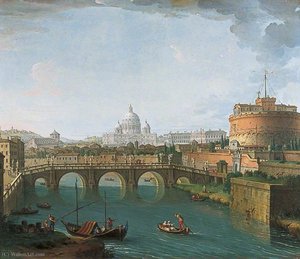
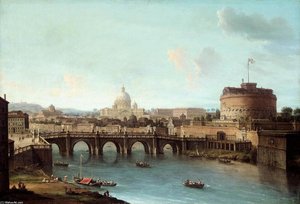
As Joli’s reputation ascended, his canvas became a stage for the great cities of Europe. His travels were more than mere migrations; they were expeditions into the very soul of the 18th-century landscape. In Venice, he solidified his place among the artistic elite, becoming a founding member of the Galleria Accademia di Belle Arti di Venezia in 1754. His work during this era transitioned seamlessly between two distinct modes:- Vedute: Meticulous, realistic depictions of urban life and architectural grandeur, such as his breathtaking views of the Tiber in Rome.
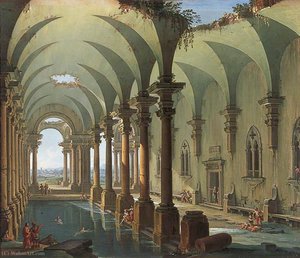
- Capricci: Imaginative compositions where he would playfully rearrange historical landmarks into fantastical, dreamlike settings.
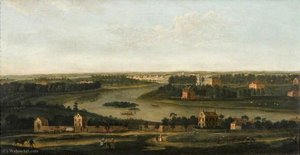
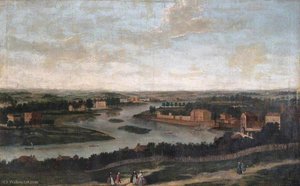
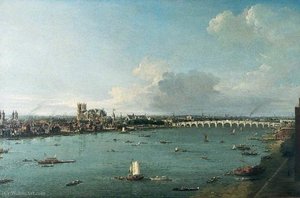
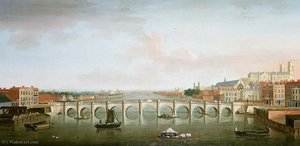
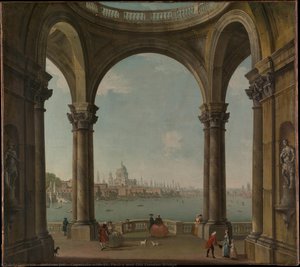
Whether capturing the majestic Tiber River, anchored by the formidable Castel Sant'Angelo, or portraying the bustling maritime energy of Naples during the arrival of Charles III, Joli possessed a singular gift for capturing atmosphere. His time in London allowed him to document the architectural grandeur of the English landscape, such as the serene views of Westminster, through a lens that was simultaneously precise and dreamlike.
The Legacy of the Baroque Eye
The enduring significance of Antonio Joli lies in his ability to harmonize the rigorous precision of an architect with the emotive power of a dramatist. His paintings are characterized by a luminous quality, where the warm Roman light or the misty London air seems to vibrate upon the canvas. By blending the clarity of Enlightenment aesthetics with the opulent embellishments of the Baroque, he created works that were both documents of history and triumphs of imagination.His meticulous attention to detail—the way small boats dot a river or how sunlight strikes a stone monument—reflects a profound commitment to realism, yet it is always tempered by a sense of theatrical wonder. Joli did not merely paint cities; he staged them, inviting the viewer to step into a world where every street corner and harbor vista was a carefully composed masterpiece of light, shadow, and architectural splendor.
Antonio Joli
1700 - 1777 , Italy
Quick Facts
- Artistic Movement Or Style: Vedute & Capricci Baroque
- Artists Who Influenced This Artist:
- Raffaello Rinaldi
- Giovanni Paolo Panini
- Date Of Birth: 1700 Modena Italy
- Date Of Death: 1777
- Full Name: Antonio Francesco Lodovico Joli
- Nationality: Italian
- Notable Artworks:
- View on the Tiber
- Westminster from the River
- Capriccio with St. Paul's and Old London Bridge
- Place Of Birth: Modena Italy
Related Articles

Baroque Drama: Bringing Opulence & Emotion into Contemporary Interiors
Explore the opulent world of Baroque interior design! Discover key elements, modern applications & how to bring dramatic elegance into your home with 's authentic reproductions.

The Dramatic Flourish: Exploring the Baroque Movement's Enduring Legacy in Art History
Explore the dramatic world of Baroque art! Discover iconic artists like Caravaggio & Rubens, defining techniques, and its lasting impact on art history. Expert insights for collectors & enthusiasts at ArtsDot.

Baroque Masterpieces: 10 Paintings That Defined an Era |
Journey through the drama & grandeur of Baroque art! Explore 10 masterpieces by Caravaggio, Rembrandt, Rubens & more. Discover stunning oil paintings, rich colors & timeless stories. Find museum-quality reproductions at .

Jacopo Tintoretto's Masterpieces: 25 Paintings That Define Venetian Drama | ArtsDot
Explore 25 breathtaking masterpieces by Jacopo Tintoretto, the Venetian master of drama and light. Discover the stories behind iconic Renaissance paintings & find museum-quality art reproductions to elevate your home decor on ArtsDot.com.

The Visceral Stage: Exploring Dramatic Narratives & Emotional Intensity in Baroque Art
Explore the dramatic world of Baroque art! Discover iconic masters like Caravaggio & Rembrandt, their techniques, and the movement's lasting impact. Expert insights for collectors & enthusiasts at ArtsDot.