

 Preview
 Send
Send Share
Share
 Details

 Download
 Similars
 X-Ray
X-Ray Diaporama
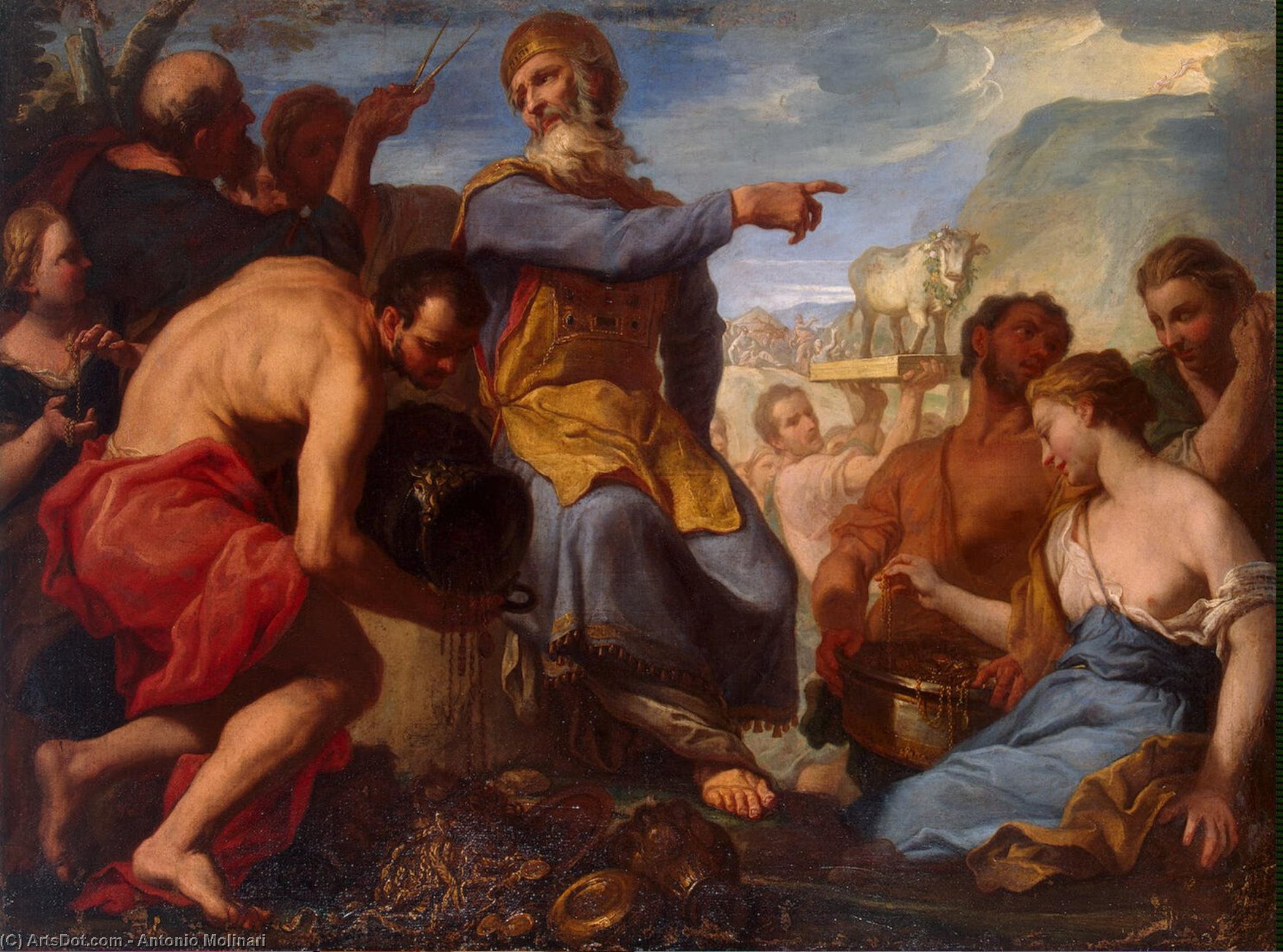
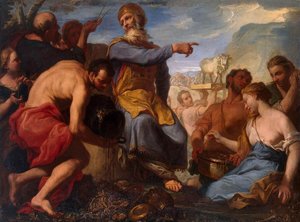
Adoration of the Golden Calf
 Oil On Canvas
- WallArt
- Baroque
 1700
1700- Early Modern
 163.0 x 217.0 cm
 Hermitage Museum
 Read More
Purchase a high-resolution, enhanced digital image, far superior to the online preview.
Each file is meticulously prepared by our in-house specialists using advanced tools and expert manual retouching. We ensure every image has exceptional clarity, precise color accuracy, and fine detail.
The final file is delivered via email within 72 hours, optimized for immediate use in professional, editorial, and print environments. This is the same quality trusted by top-tier design studios, publishers, and galleries.
Digital Image
Download a high-resolution file for personal display, printing, and creative projects. ( Buy Print Buy Hand Made Painting)
Included in Every Digital Image Order
Expert Digital Delivery, Guaranteed
When you choose ArtsDot.com, you're not just getting an image - you're receiving a professionally enhanced digital artwork, crafted with precision and backed by a satisfaction guarantee. Here's everything that comes with your order, automatically:

Fast Email Delivery
Your high-resolution digital image file will be emailed to you within 72 hours of ordering - ready for immediate use.

AI-Enhanced Digital File
Your artwork is professionally optimized using advanced AI tools and manual editing, ensuring maximum detail, clarity, and color accuracy.

Free Lifetime Re-Delivery
Accidentally deleted or lost your file? No worries - we'll resend it to you anytime, free of charge.

No Import Fees - Ever
Enjoy your artwork instantly with zero customs, duties, or delivery fees - digital downloads are always tax-free.

Color Accuracy Guarantee
We ensure your digital image reflects the original colors as closely as possible using professional tools and color management.

60-Day Satisfaction Guarantee
If you're not satisfied with your digital image, we'll revise it or refund 100% within 60 days - no questions asked.

100% Money-Back Guarantee
Not satisfied? Get a full refund within 60 days of receiving your digital file - no questions asked.

Bulk Order Discounts
Buy 3 images, save 10% - Buy 5, save 15% - Buy 10+, save 20%. Great for creative projects, galleries, and agencies.
Antonio Molinari’s “The Adoration of the Golden Calf”: A Venetian Baroque Masterpiece
Antonio Molinari, known affectionately as “il Caraccino” – “the little crayfish” – stands as a pivotal figure in Venetian Baroque painting. Active between 1655 and 1704, his oeuvre embodies the dynamism and theatrical grandeur characteristic of the period, reflecting the fervent religious fervor that gripped Europe during the seventeenth century.
Subject Matter and Narrative Complexity
"The Adoration of the Golden Calf," completed around 1700-02, depicts a dramatic biblical scene: the Israelites’ worship of a golden calf fashioned by Aaron in defiance of God's commandment. This narrative transcends mere illustration; Molinari meticulously crafts a tableau brimming with psychological depth and visual splendor. The composition centers on Moses, portrayed as a stern patriarch confronting his people’s idolatry, while figures surrounding him express awe and reverence – a palpable tension between divine law and human desire.
Stylistic Influences: Giordano's Energetic Vision
Molinari’s artistic sensibilities were profoundly shaped by Luca Giordano, a Neapolitan painter who championed a bold and expressive style marked by dramatic chiaroscuro—the interplay of light and shadow. Like Giordano, Molinari employed tenebrism to heighten the emotional impact of his paintings, guiding the viewer's gaze toward key elements within the scene. The artist’s brushstrokes are loose and energetic, conveying movement and immediacy, mirroring the turbulent emotions depicted.
Technique: Oil on Canvas – A Legacy of Brilliance
Executed in oil paint on canvas—a technique favored by Venetian artists—Molinari achieved remarkable luminosity and textural richness. The meticulous layering of pigments allowed him to capture subtle nuances of color and form, creating a surface that appears both polished and imbued with palpable warmth. Detailed observation of drapery folds and facial expressions underscores Molinari’s commitment to realism within the framework of Baroque idealism.
Symbolism and Emotional Resonance
"The Adoration of the Golden Calf" operates on multiple symbolic levels. The golden calf itself represents idolatry—a rejection of divine worship in favor of earthly idols—serving as a potent reminder of humanity’s susceptibility to temptation. Furthermore, Molinari's masterful depiction captures the profound spiritual struggle inherent in faith: the confrontation between obedience and passion, piety and desire. The painting evokes feelings of solemn contemplation and moral judgment, prompting viewers to consider the consequences of straying from God’s path.
Historical Context – Turin and Beyond
Commissioned by Amadeo dal Pozzo, Marchese di Voghera, a prominent patron in Turin, “The Adoration of the Golden Calf” was part of a pair intended for display alongside "The Crossing of the Red Sea." This ambitious project reflects the artistic ambitions of the era and underscores Molinari’s position as one of Venice's most celebrated painters. Today, the artwork resides in the Hermitage Museum in St. Petersburg, where it continues to inspire admiration for its masterful execution and enduring symbolic power.
Related Artworks



Artist Biography
Antonio Molinari: A Venetian Baroque Painter
- Born: January 21, 1655, Venice, Italy
- Died: February 3, 1704, Venice, Italy
Early Life and Training
Antonio Molinari, often referred to as "il Caraccino," was a prominent Italian painter of the Baroque era, active in Venice from 1655 until his death in 1704. He hailed from a family with artistic ties, as his father was also a painter. Molinari's formal training began under the tutelage of Antonio Zanchi, a well-regarded Venetian artist known for his dramatic and tenebristic style. This apprenticeship proved crucial in shaping Molinari’s early development, laying the foundation for his future artistic endeavors.
Artistic Style and Influences
Molinari's artistic style was significantly influenced by the vigorous and athletic approach of Neapolitan painters, most notably Luca Giordano. This influence is readily apparent in his large-scale narrative paintings depicting scenes from mythology and religion. His work is characterized by:
- Dynamic Compositions: Molinari excelled at creating tumultuous and energetic compositions filled with movement and drama.
- Athletic Figures: He depicted figures with a strong sense of physicality, reflecting the Neapolitan influence.
- Rich Color Palette: His paintings are known for their vibrant and deep colors.
- Grand Manner Style: Molinari embraced a grand manner style, emphasizing scale and dramatic effect.
Despite these influences, Molinari developed his own distinct voice within the Venetian Baroque tradition.
Notable Works and Artistic Development
Throughout his career, Molinari produced a range of significant works that showcase his artistic development. Some of his most notable pieces include:
- The Boy Moses Stepping on Pharaoh’s Crown (c. 1690s–1704): This work, housed in the Museum Kunstpalast in Düsseldorf, exemplifies his dramatic narrative style and attention to detail.
- Madonna and Child with Saint Mauritius (also known as Madonna dell'orto)
- Darius and His Family Before Alexander (1690): Demonstrates his skill in depicting historical narratives on a large scale.
- Adoration of the Golden Calf (1700–1702): Located at The Hermitage Museum, this painting showcases his mastery of composition and color.
- Adam and Eve (1701–1704): Found in the David Owsley Museum of Art, it highlights his ability to portray classical themes with emotional depth.
Molinari’s drawings are also a valuable resource for understanding his artistic process. Numerous preliminary sketches and studies survive, revealing his meticulous approach to composition and figure development.
Legacy and Influence
Antonio Molinari holds an important place in the history of Venetian Baroque art. While he didn't have numerous direct followers, his influence extended to subsequent generations of artists. Most notably, Giovanni Battista Piazzetta, a renowned painter himself, apprenticed under Molinari from 1697 to 1703. Piazzetta absorbed elements of Molinari’s style, contributing to the evolution of Venetian art in the early 18th century.
Molinari's works can be found in various museums and collections, including the Seminario Patriarcale in Venice, Italy, offering continued opportunities for study and appreciation. His paintings provide a valuable glimpse into the rich cultural heritage of Venice during the Baroque era.
Antonio Molinari
1655 - 1704 , Italy
Quick Facts
- Artistic Movement Or Style: Baroque
- Artists Or Movements Influenced By This Artist: ['Giovanni Battista Piazzetta']
- Artists Who Influenced This Artist:
- Antonio Zanchi
- Luca Giordano
- Date Of Birth: January 21, 1655
- Date Of Death: February 3, 1704
- Full Name: Antonio Molinari
- Nationality: Italian
- Notable Artworks:
- The Boy Moses stepping on Pharaoh’s Crown
- Madonna and Child with Saint maurus
- David and Abigail
- Darius and his family before Alexander
- Adoration of the Golden Calf
- Place Of Birth: Venice, Italy

