

 Preview
 Send
Send Share
Share
 Details

 Download
 Similars
 X-Ray
X-Ray Diaporama
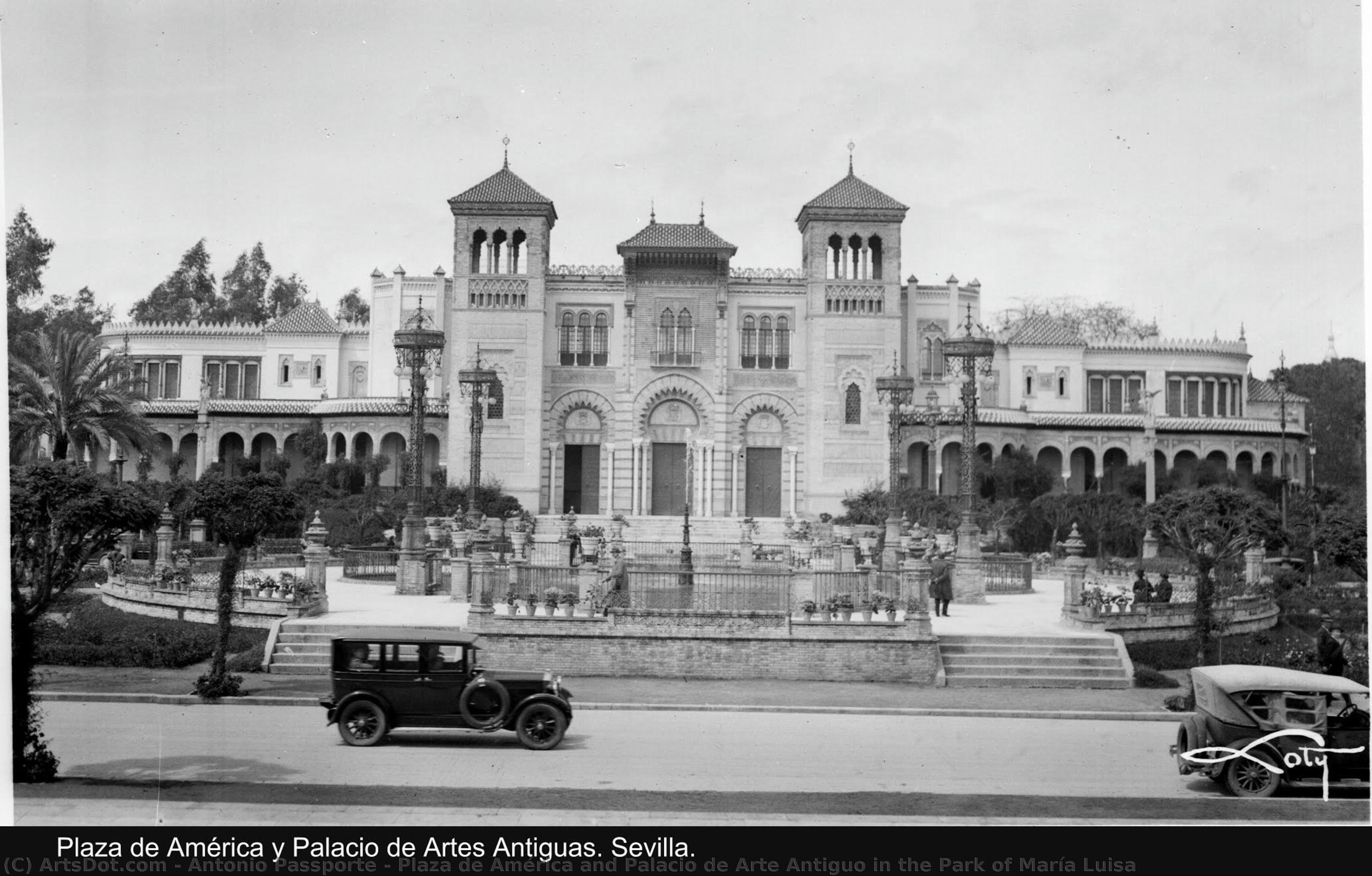
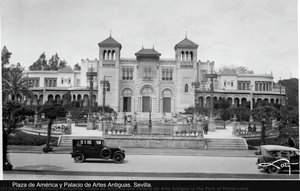
Plaza de América and Palacio de Arte Antiguo in the Park of María Luisa
 1928
1928 10.0 x 15.0 cm
 Museum of Arts and Popular Customs of Seville
 Read More
Giclée / Art Print
Museum-quality giclée or canvas print with fast production and flexible finish options. ( Buy Hand Made Painting Buy Image)




































Pick from our preset sizes that match the artwork's original proportions.

You may enter your own dimensions to fit a specific frame or space. If your selected size does not match the original image's proportions, we will either crop the artwork or extend the image with a mirrored or solid-fill edge. A digital mockup will be sent for your approval before production begins.
Please note that the on-screen preview does not reflect the actual cropping or extension. Only the mockup will accurately show the final composition.
While custom sizes are available, we recommend selecting a dimension from the predefined list to preserve the original proportions.
Worldwide Delivery () in 2 weeks instead of standard 4/5 weeks. (30 August)

Free Worldwide Express Shipping

High-Quality Linen Canvas

Full Shipping Insurance

Customs Tax Refund Guarantee

True Color Matching Guarantee

60-Day Return Policy (Defects Only)

100% Money-Back Guarantee

Bulk Discount Offer
 Glass option is only available in size under 110 CM

Plaza de América and Palacio de Arte Antiguo in the Park of María Luisa
Giclée / Art Print
Reproduction Size
-


Total Price
$ 63
Related Artworks






Artist Biography
The Visionary Lens of Antonio Passporte
In the golden era of early 20th-century Spanish photography, few names resonate with the same historical weight as Antonio Passporte. Born in Madrid in 1901, Passporte did not merely observe the world; he curated its visual memory. His life’s work, often inextricably linked with the Loty Collections, serves as a profound photographic testament to an era of transition. Through his lens, the architectural grandeur and the sweeping landscapes of Spain were transformed from mere scenery into enduring icons of national identity. His approach was characterized by a meticulous devotion to light and atmosphere, capturing the ephemeral essence of Madrid’s soul with a precision that bridged the gap between commercial documentation and fine art.
The trajectory of Passporte’s career was fundamentally shaped by his collaboration with the pioneers of the photographic industry. In 1926, he joined forces with Charles Alberty Jeanneret and Concepción López to establish the Loty Collections, a venture that would revolutionize the way the public consumed visual imagery. This period marked the birth of a new kind of visual storytelling through the medium of high-quality postcards. Passporte became more than just a photographer; he was a chronicler of the everyday and the extraordinary alike. His work during this era focused on capturing the monumental, such as the Plaza de América and the Palacio de Arte Antiguo in the Park of María Luisa, creating a portable gallery that allowed both locals and travelers to carry pieces of Spanish heritage in their hands.
A Legacy of Royal Portraits and Architectural Grandeur
Beyond the commercial success of postcards and religious prints, Passporte’s artistry reached the highest echelons of Spanish society. His reputation for capturing the subtle nuances of light and character earned him the prestigious opportunity to photograph members of the Spanish Royal Family. These portraits are far more than mere likenesses; they are intimate windows into the visual culture of the Habsburg dynasty, offering a rare glimpse into the dignity and atmosphere of the royal court. This ability to pivot from the wide-angle majesty of architectural landscapes to the delicate, focused intensity of royal portraiture demonstrates a remarkable technical versatility.
The significance of his contribution extends far beyond his personal stylistic achievements. Through his work with the Archivo Fotográfico Universal, S.A. (AFUSA), Passporte participated in an ambitious project to create a universal bank of images spanning Spain, Portugal, and Latin America. This endeavor was not merely about business; it was about the creation of a shared visual language for the Spanish-speaking world. His travels allowed him to document:
- The intricate street scenes and bustling workshops of Andalusia.
- The serene landscapes and historical landmarks of Gibraltar and North Africa.
- The evolving urban fabric of Madrid during a period of immense social change.
Historical Significance and the Enduring Archive
The life of Antonio Passporte was shadowed by the turbulent shifts of 20th-century history, including the profound impact of the Spanish Civil War. Yet, despite the political upheavals that reshaped the nation, his photographic archive remained a steadfast repository of truth. The sheer volume of his work—comprising thousands of glass plates—ensures that his vision remains accessible to modern historians and art enthusiasts alike. In 1995, the acquisition of the Loty photographic archive by the Regional Ministry of Culture ensured that Passporte’s meticulous observations would be preserved for future generations.
Today, we look back at the work of Antonio Passporte not just as a collection of vintage images, but as a vital piece of European art history. He possessed the rare ability to marry the commercial necessity of his era with an artistic soul that sought to immortalize the fleeting beauty of his homeland. His legacy lives on in every captured shadow and every sun-drenched monument, reminding us that photography, at its best, is the art of making time stand still.
antonio passporte
1901 - 1983 , Spain
Quick Facts
- Artistic Movement Or Style: Photography
- Date Of Birth: 1901
- Full Name: Antonio Passporte
- Nationality: Portuguese
- Notable Artworks: ['Plaza de América & Palacio de Arte Antiguo']
- Place Of Birth: Madrid, Spain

