 Preview
 Send
Send Share
Share
 Details

 Download
 Similars
 X-Ray
X-Ray Diaporama
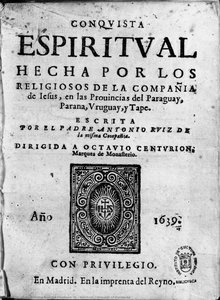
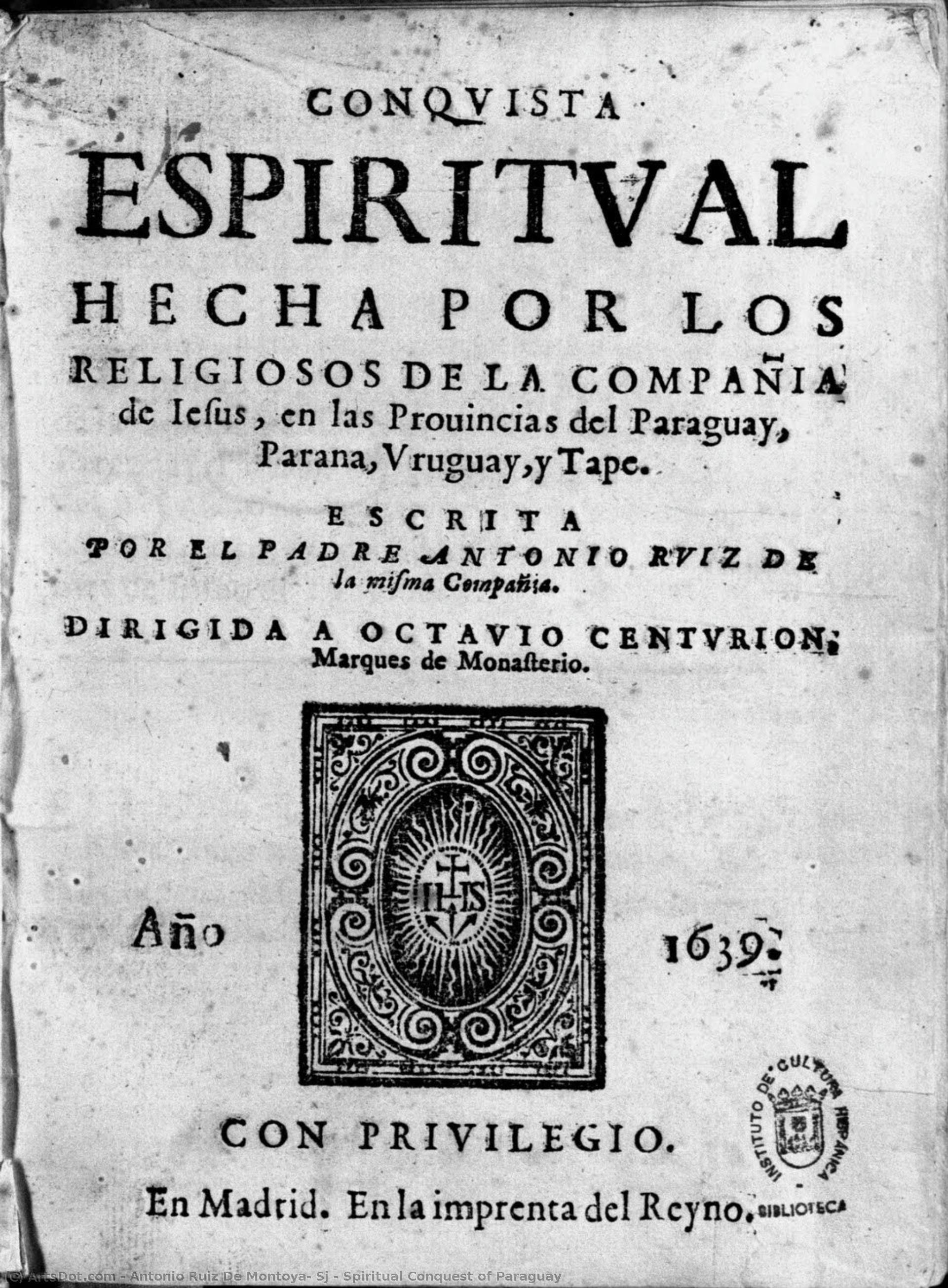
Spiritual Conquest of Paraguay

 Read More
Giclée / Art Print
Museum-quality giclée or canvas print with fast production and flexible finish options. ( Buy Hand Made Painting Buy Image)




































Pick from our preset sizes that match the artwork's original proportions.

You may enter your own dimensions to fit a specific frame or space. If your selected size does not match the original image's proportions, we will either crop the artwork or extend the image with a mirrored or solid-fill edge. A digital mockup will be sent for your approval before production begins.
Please note that the on-screen preview does not reflect the actual cropping or extension. Only the mockup will accurately show the final composition.
While custom sizes are available, we recommend selecting a dimension from the predefined list to preserve the original proportions.
Worldwide Delivery () in 2 weeks instead of standard 4/5 weeks. (3 September)

Free Worldwide Express Shipping

High-Quality Linen Canvas

Full Shipping Insurance

Customs Tax Refund Guarantee

True Color Matching Guarantee

60-Day Return Policy (Defects Only)

100% Money-Back Guarantee

Bulk Discount Offer
 Glass option is only available in size under 110 CM

Spiritual Conquest of Paraguay
Giclée / Art Print
Reproduction Size
-


Total Price
$ 63
Related Artworks





![Los Trabajos De Persiles Y Sigismunda (trans. The Trials Of Persiles And Sigismunda) (biblioteca Nacional De España)\n\n[2] — Cervantes Saavedra, Miguel, Baroque](/media/artworks/images-thumb/24/0d/240dd607a1820db624a8917b792ba42c.jpg)
Artist Biography
The Sacred Brush of the Jesuit Frontier
In the grand tapestry of colonial South American history, few figures loom as large or as multifaceted as Antonio Ruiz de Montoya, SJ. Born in the vibrant city of Lima, Peru, in 1585, Montoya was far more than a mere chronicler of souls; he was a man whose very existence bridged the gap between the intellectual rigor of European Jesuit tradition and the untamed spiritual landscape of the New World. His life was a profound odyssey of faith, where the boundaries between theological mission and artistic expression became beautifully blurred. Trained within the disciplined halls of Loyola University, Montoya developed a mind capable of navigating complex linguistic structures and a spirit attuned to the divine through the medium of visual and written beauty.
His journey into the heart of the Americas in 1606 was not merely a relocation but a transformative mission. Alongside fellow Jesuits, he ventured into the rugged territories of what would become Paraguay, embarking on what historians call the Spiritual Conquest. This was no simple endeavor of conversion; it was an architectural feat of culture and community. Montoya became a central architect of the "Reductions"—meticulously planned settlements designed to protect indigenous populations from the predations of slave traders while fostering a new, Christianized way of life. Through these missions, he sought to weave the Guarani people into the fabric of the Catholic Church, not through erasure, but through a delicate synthesis of faith and local identity.
A Legacy Written in Language and Light
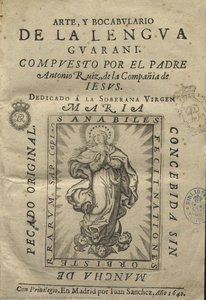
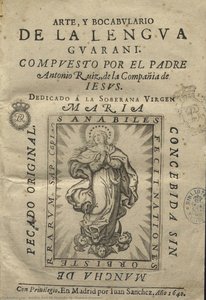
While history often remembers him as a missionary who personally baptized an estimated 100,000 indigenous people, Montoya’s true genius lay in his ability to translate the divine into the vernacular. He was a scholar of unparalleled dedication, mastering the Guarani language to such a degree that he produced foundational linguistic works. His Tesoro de la lingua guaraní stands as a testament to his belief that for faith to truly take root, it must speak the mother tongue of the people. This linguistic mastery was an extension of his artistic sensibility—a way of creating a shared symbolic language that could bridge two vastly different worlds.
The artistry of Montoya was not confined to canvas alone; it lived in the very structure of the communities he built and the literature he penned. His work embodied the Jesuit tradition of using aesthetics to elevate religious devotion, seeking to inspire awe through both the written word and the visual iconography that adorned the missions. The scale of his achievements is staggering:
- The Expansion of the Reductions: He was instrumental in managing and expanding the mission networks along the Paraná, Uruguay, and Tape Rivers, adding numerous settlements to the existing frontier.
- Linguistic Preservation: By codifying the Guarani language, he ensured its survival and integration into the colonial religious framework.
- Protector of the People: He famously petitioned King Philip IV of Spain to secure legal protections and privileges for the indigenous populations against the encroaching threats of Portuguese slave hunters.
Ultimately, the life of Antonio Ruiz de Montoya was a testament to the power of creative evangelization. He did not merely impose a new faith; he cultivated a landscape where art, language, and spirituality could flourish in unison. His death in Lima in 1652 marked the end of an era, yet his influence remains etched in the cultural DNA of Paraguay and Peru, reminding us that the most enduring conquests are those achieved through understanding, empathy, and the profound beauty of shared expression.
antonio ruiz de montoya, sj
1585 - 1652 , Peru
Quick Facts
- Artistic Movement Or Style: Jesuit Art
- Artists Or Movements Influenced By This Artist: ['Catholic Iconography']
- Artists Who Influenced This Artist: ['Diego Torres']
- Date Of Birth: June 13, 1585
- Date Of Death: April 11, 1652
- Full Name: Antonio Ruiz de Montoya SJ
- Nationality: Spanish
- Notable Artworks:
- Guarani Grammar
- Spiritual Conquest of Paraguay
- Place Of Birth: Lima, Peru