

 Preview
 Send
Send Share
Share
 Details

 Download
 Similars
 X-Ray
X-Ray Diaporama
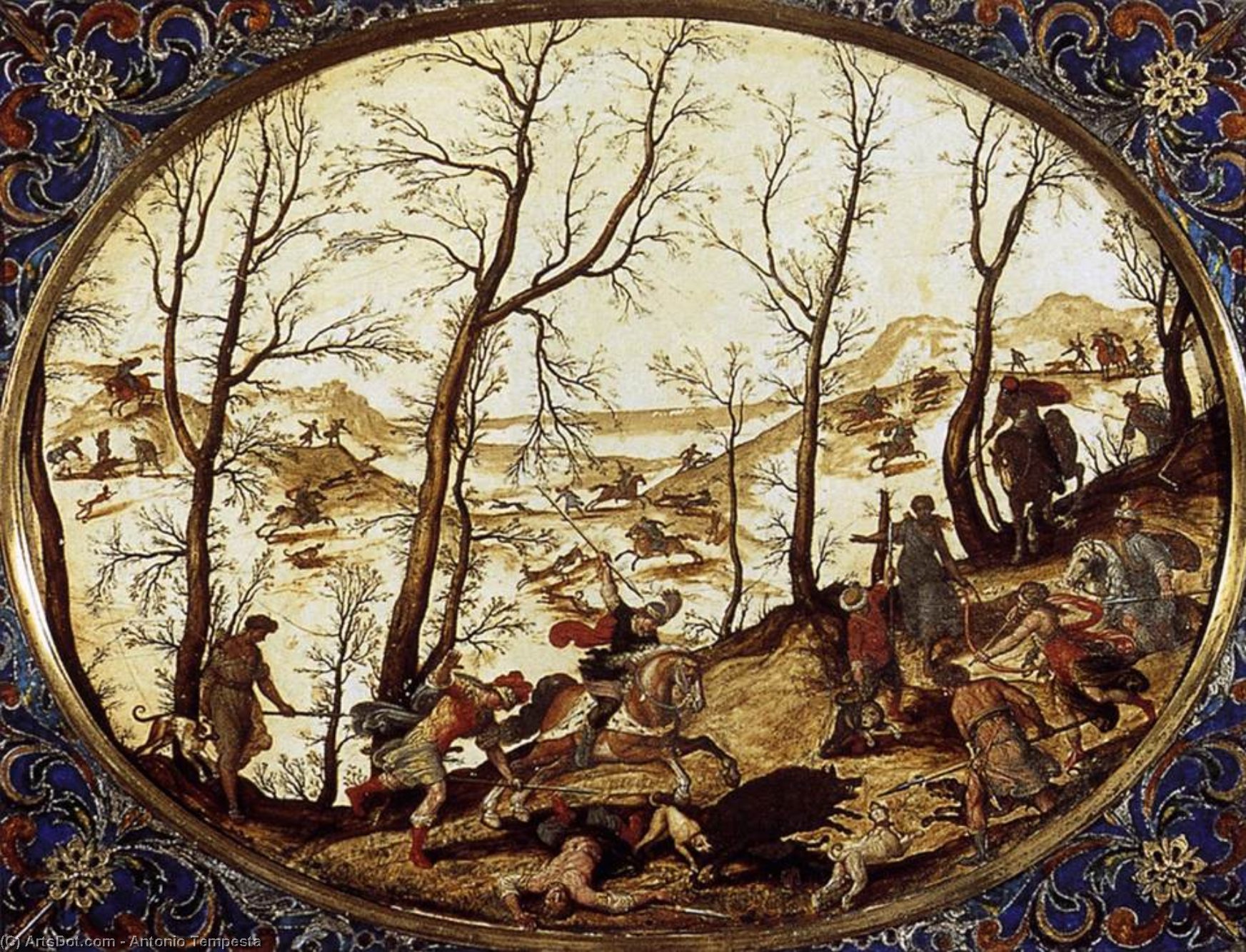
The Death of Adonis
 Oil On Canvas
- WallArt
- Baroque
 1593
1593- Early Modern
 27.0 x 36.0 cm
 Galleria Sabauda
 Read More
Purchase a high-resolution, enhanced digital image, far superior to the online preview.
Each file is meticulously prepared by our in-house specialists using advanced tools and expert manual retouching. We ensure every image has exceptional clarity, precise color accuracy, and fine detail.
The final file is delivered via email within 72 hours, optimized for immediate use in professional, editorial, and print environments. This is the same quality trusted by top-tier design studios, publishers, and galleries.
Digital Image
Download a high-resolution file for personal display, printing, and creative projects. ( Buy Print Buy Hand Made Painting)
Included in Every Digital Image Order
Expert Digital Delivery, Guaranteed
When you choose ArtsDot.com, you're not just getting an image - you're receiving a professionally enhanced digital artwork, crafted with precision and backed by a satisfaction guarantee. Here's everything that comes with your order, automatically:

Fast Email Delivery
Your high-resolution digital image file will be emailed to you within 72 hours of ordering - ready for immediate use.

AI-Enhanced Digital File
Your artwork is professionally optimized using advanced AI tools and manual editing, ensuring maximum detail, clarity, and color accuracy.

Free Lifetime Re-Delivery
Accidentally deleted or lost your file? No worries - we'll resend it to you anytime, free of charge.

No Import Fees - Ever
Enjoy your artwork instantly with zero customs, duties, or delivery fees - digital downloads are always tax-free.

Color Accuracy Guarantee
We ensure your digital image reflects the original colors as closely as possible using professional tools and color management.

60-Day Satisfaction Guarantee
If you're not satisfied with your digital image, we'll revise it or refund 100% within 60 days - no questions asked.

100% Money-Back Guarantee
Not satisfied? Get a full refund within 60 days of receiving your digital file - no questions asked.

Bulk Order Discounts
Buy 3 images, save 10% - Buy 5, save 15% - Buy 10+, save 20%. Great for creative projects, galleries, and agencies.
Collectible Description
A Lament in Pigment: Contemplating The Death of Adonis
To stand before The Death of Adonis is to be enveloped by a profound stillness, the kind that follows a sudden, tragic rupture. Antonio Tempesta’s masterful composition does not merely depict an event; it captures the very moment when beauty confronts mortality. The scene is richly populated, teeming with figures whose gestures—the outstretched hand, the bowed head, the concerned gaze—weave a complex tapestry of grief and devotion. One feels the weight of history pressing down upon this intimate tableau, drawing the viewer into the circle of sorrow surrounding the fallen Adonis. Tempesta, ever the skilled chronicler of human emotion, uses every element—from the languid repose of the central figure to the watchful presence of the horse on the periphery—to build an atmosphere thick with pathos.
Baroque Drama and Mythic Echoes
Painted in 1593, this work sits squarely within the vibrant currents of late Mannerism transitioning into the full bloom of the Baroque era. Tempesta’s genius lies in his ability to bridge these stylistic epochs; there is a lingering elegance reminiscent of Florentine disegno, yet infused with the dramatic energy and emotional immediacy that would define the coming Baroque period. The composition itself is intricate, demanding the eye wander across its many participants—the assembled mourners, the symbolic birds fluttering near the corners, all contributing to a narrative density. It speaks to an era fascinated by classical mythology as a vehicle for exploring profound human experience.
Symbolism and the Cycle of Life
The subject matter itself, the demise of Adonis, is steeped in rich symbolism. Mythologically, this story touches upon themes of ephemeral beauty, cyclical renewal, and inevitable loss—concerns that have echoed through art for millennia. The presence of nature, suggested by the birds and the implied setting, contrasts sharply with the stillness of death, creating a visual tension between life’s vibrancy and its sudden cessation. For the collector or decorator, this piece offers more than mere decoration; it is a meditation on transience, an object that invites quiet contemplation regarding beauty's fleeting nature.
Technique and Emotional Resonance for Your Space
Considering the detailed execution characteristic of Tempesta’s hand, any reproduction captures not just the image, but the very *craft* behind it. The interplay between the figures’ drapery, rendered with careful attention to texture, and the subtle modeling of flesh tones speaks to a high level of technical mastery. When considering this piece for your interior design, imagine its dramatic narrative unfolding against a backdrop of refined taste. It possesses an inherent gravitas, lending any room—be it a formal drawing-room or a private study—an immediate depth of cultural weight and emotional resonance.
Related Artworks

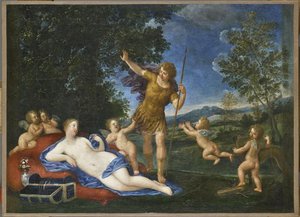
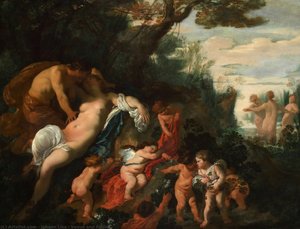
Artist Biography
The Florentine Master of Motion and Drama
Antonio Tempesta stands as a pivotal figure in the artistic landscape of the late sixteenth and early seventeenth centuries, embodying the complex interplay between Mannerist aesthetics and Baroque innovation. Born in Florence in 1555, during a period marked by intense intellectual ferment and artistic experimentation, Tempesta’s career unfolded across the prestigious corridors of Italy and the vibrant art markets of Flanders. He was far more than a mere painter; he acted as a vital conduit for stylistic ideas, skillfully blending the rigorous disegno of his Florentine training with the expressive power and dynamic energy found in Antwerp’s burgeoning art scene.
His formative years were shaped by the prestigious Accademia delle Arti del Disegno, where he enrolled in 1576. This institution instilled in him a profound understanding of anatomical accuracy and compositional balance, hallmarks of the Mannerist tradition. Under the guidance of masters such as Santi di Tito, Tempesta mastered the classical ideals and humanist scholarship essential to the era. However, it was the influence of the Flemish painter Giovanni Stradanus that introduced him to a more dramatic use of color and light—elements that would eventually define his mature style. His early participation in the ambitious decoration projects for the Palazzo Vecchio under Giorgio Vasari further immersed him in the grandeur and scale required by the era's most significant patrons.
A Versatile Visionary: From Frescoes to Engravings
Tempesta’s artistic output was remarkably diverse, spanning a breadth of mediums that allowed him to leave his mark on both monumental architecture and intimate prints. As a fresco painter, he contributed significantly to some of the most celebrated decorative programs of the age, including works for Villa Lante and Palazzo Farnese. His collaborative spirit was evident in his work with artists like Paul Brill, creating large-scale narratives that showcased the dramatic tension of the period. One of his most poignant achievements can be seen in the Church of Santo Stefano Rotondo in Rome, where his fresco depicting the martyrdom of Saint Primus utilizes a rich color palette and intense emotionality to capture a scene of profound grief and loss.
Beyond the walls of Roman churches and Florentine palaces, Tempesta found immense success as an engraver. This medium allowed him to disseminate his vision of battle scenes and sweeping landscapes across Europe, bridging the gap between Italian composition and Northern European detail. His engravings often featured:
- Dynamic Battle Scenes: Capturing the chaotic energy and heroic scale of historical conflicts.
- Expansive Landscapes: Blending classical structure with atmospheric depth.
- Narrative Allegories: Utilizing complex symbolism to communicate religious and political themes, such as in his evocative work The Expulsion of Heliodorus from the Temple.
Legacy and Historical Significance
The historical significance of Antonio Tempesta lies in his ability to navigate the transition between two eras. While his roots remained firmly planted in the disciplined Mannerism of Florence, his work anticipated the emotional intensity and theatricality of the Baroque. By integrating the structural precision of Italian disegno with the atmospheric richness of the Flemish tradition, he helped create a visual language that was both intellectually rigorous and emotionally accessible.
Though his life ended in 1630, his influence endured through the widespread circulation of his prints and the lasting impact of his monumental frescoes. He remains a testament to the interconnectedness of the European art world during the Renaissance and Baroque periods, serving as a bridge between the classical traditions of Italy and the burgeoning artistic spirit of the North.
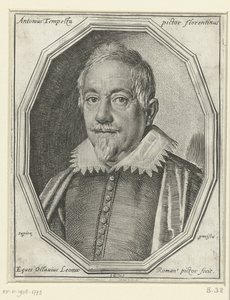
Antonio Tempesta
1555 - 1630 , Italy
Quick Facts
- Artistic Movement Or Style: Mannerism
- Artists Or Movements Influenced By This Artist: ['Baroque Rome']
- Artists Who Influenced This Artist:
- Joannes Stradanus
- Santi di Tito
- Date Of Birth: Florence, Italy (1555)
- Date Of Death: 1630
- Full Name: Antonio Tempesta
- Nationality: Italian
- Notable Artworks:
- Fresco of the martyrdom of Saint Primus
- Paysage Pastoral
- Place Of Birth: Florence

