 Preview
 Send
Send Share
Share
 Details

 Download
 Similars
 X-Ray
X-Ray Diaporama
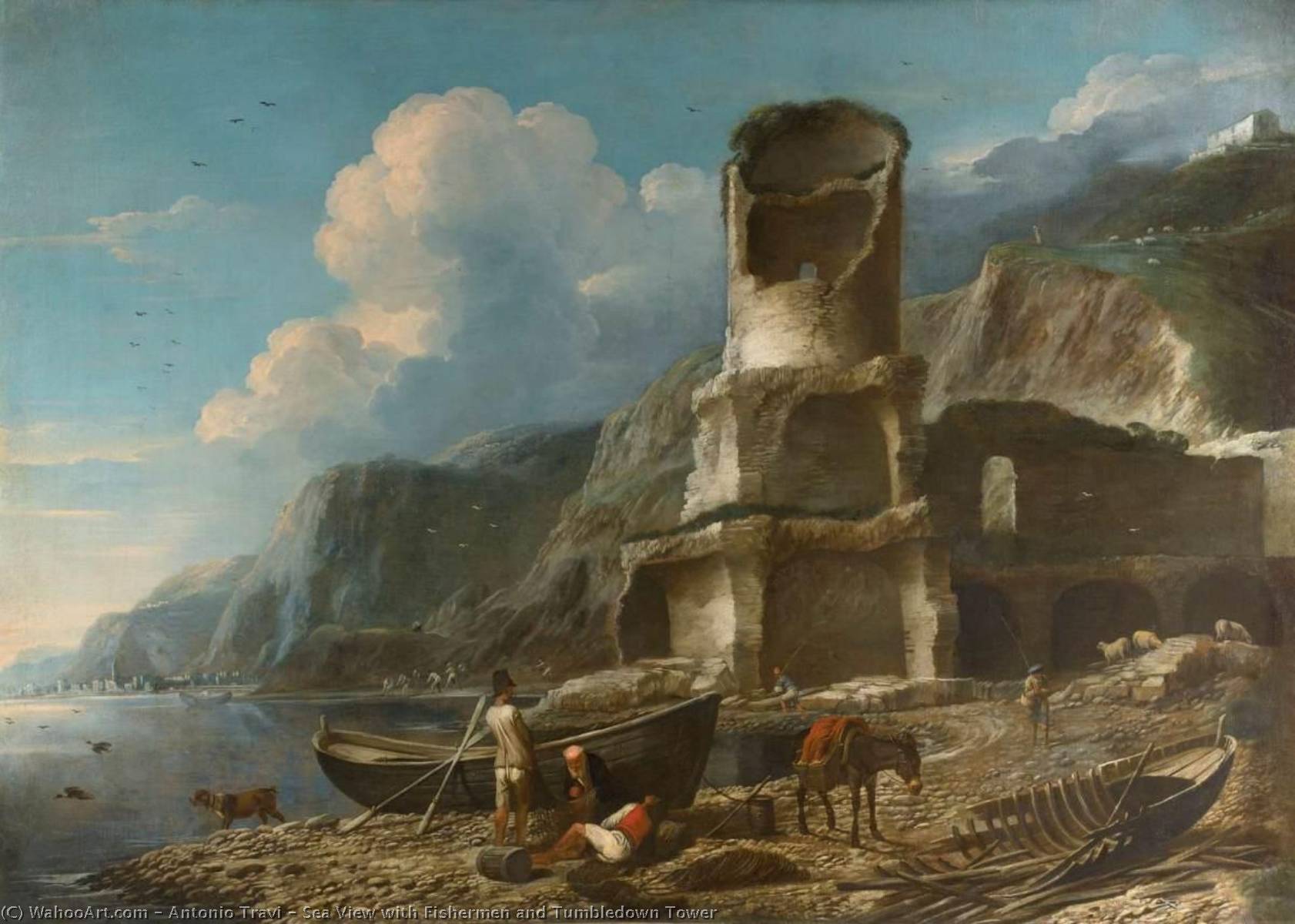
Sea View with Fishermen and Tumbledown Tower
 125.0 x 177.0 cm
 Read More
Giclée / Art Print
Museum-quality giclée or canvas print with fast production and flexible finish options. ( Buy Hand Made Painting Buy Image)




































Pick from our preset sizes that match the artwork's original proportions.

You may enter your own dimensions to fit a specific frame or space. If your selected size does not match the original image's proportions, we will either crop the artwork or extend the image with a mirrored or solid-fill edge. A digital mockup will be sent for your approval before production begins.
Please note that the on-screen preview does not reflect the actual cropping or extension. Only the mockup will accurately show the final composition.
While custom sizes are available, we recommend selecting a dimension from the predefined list to preserve the original proportions.
Worldwide Delivery () in 2 weeks instead of standard 4/5 weeks. (6 September)

Free Worldwide Express Shipping

High-Quality Linen Canvas

Full Shipping Insurance

Customs Tax Refund Guarantee

True Color Matching Guarantee

100-Day Return Policy (Defects Only)

100% Money-Back Guarantee

Bulk Discount Offer
 Glass option is only available in size under 110 CM

Sea View with Fishermen and Tumbledown Tower
Giclée / Art Print
Reproduction Size
-


Total Price
$ 63
Related Artworks










Artist Biography
Antonio Travi: A Vision of the Coastal Soul
Antonio Travi (1609-1665) remains a captivating figure in the history of Italian Baroque painting, particularly renowned for his evocative depictions of coastal landscapes and seascapes. Born in Sestri, near Genoa, Italy, during a period of significant artistic transition, Travi’s work reflects both the grandeur of the Venetian School and a deeply personal connection to the rugged beauty of the Ligurian coast. His life was marked by a profound sensory experience – he suffered from deafness at a young age, yet this limitation heightened his visual perception, fostering an acute awareness of light, shadow, and texture in the natural world. This unique perspective profoundly shaped his artistic vision, imbuing his paintings with a serene stillness and a palpable sense of atmosphere. Travi’s early life is shrouded in some mystery, but it's known that he began his artistic training under Bernardo Strozzi, a prominent Venetian colorist who instilled in him the fundamentals of composition, perspective, and the skillful manipulation of light. Strozzi’s influence is evident in Travi’s early works, characterized by rich pigments and dramatic contrasts. However, it was during his time in Genoa that Travi truly established his distinctive style – a masterful blend of realism and poetic abstraction. He eschewed the overly theatrical compositions favored by some of his contemporaries, instead opting for scenes of quiet contemplation, often featuring solitary fishermen, crumbling ruins, and vast stretches of sea. These weren’t merely landscapes; they were imbued with a sense of melancholy beauty, reflecting perhaps Travi's own experience of isolation and heightened sensory awareness. Travi’s artistic development can be traced through his evolving subject matter and technique. Initially influenced by Strozzi’s coloristic approach, he gradually developed a more subtle palette, favoring muted earth tones and delicate washes of blue and grey to capture the atmospheric effects of the sea and sky. His compositions became increasingly simplified, focusing on essential elements – the curve of a coastline, the silhouette of a tower against the horizon, the rhythmic movement of waves. A key element in his work is the use of *chiaroscuro*, employing dramatic contrasts between light and shadow to create depth and volume. This technique, combined with his masterful rendering of texture—the rough stone of ancient ruins, the weathered wood of fishing boats, the shimmering surface of the water—gave his paintings a remarkable sense of realism. His depictions of fishermen were particularly striking, capturing their stoic dignity and conveying a deep respect for their livelihood and connection to the sea. Among Travi’s most celebrated works are “Sea View with Fishermen and Tumbledown Tower” and “Coastal Landscape with Fishermen.” These paintings exemplify his signature style: vast, open vistas dominated by the sea, punctuated by small human figures engaged in humble activities. The "Sea View" is particularly notable for its atmospheric perspective—the distant elements appear paler and less distinct, creating a sense of depth and distance. The “Coastal Landscape” showcases his ability to capture the subtle nuances of light and shadow, transforming a simple coastal scene into a profound meditation on nature’s beauty and the passage of time. His work also includes several paintings featuring biblical scenes set in evocative landscapes, demonstrating his willingness to explore themes of faith and spirituality through the lens of his unique artistic vision. Antonio Travi's legacy extends beyond his individual works. He represents a pivotal figure in the transition from Venetian colorism to the more introspective and emotionally resonant styles that would characterize later Baroque painters. His emphasis on atmospheric perspective, subtle color palettes, and evocative compositions profoundly influenced subsequent generations of artists. While he may not be as widely recognized as some of his contemporaries—such as Titian or Veronese—Travi’s paintings continue to resonate with viewers today, offering a glimpse into the soul of a man who found beauty and meaning in the quiet contemplation of the natural world. His work stands as a testament to the power of art to transcend limitations and capture the essence of human experience.Key Characteristics & Artistic Style
- Subject Matter: Primarily coastal landscapes, seascapes, and scenes featuring fishermen and ancient ruins.
- Color Palette: Muted earth tones (browns, greys, ochres) with delicate washes of blue and grey. He avoided bright, saturated colors.
- Technique: Masterful use of *chiaroscuro* – dramatic contrasts between light and shadow to create depth and volume. Skilled rendering of texture, capturing the roughness of stone, the weathered wood of boats, and the shimmering surface of water.
- Composition: Simplified compositions focusing on essential elements—the curve of a coastline, the silhouette of a tower, the movement of waves. Often featuring solitary figures in vast landscapes.
- Atmospheric Perspective: Employed to create a sense of depth and distance, with distant elements appearing paler and less distinct.
Notable Works
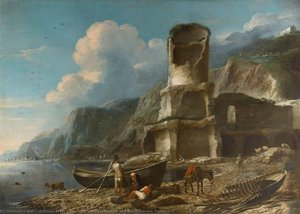
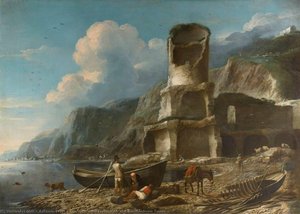
- Sea View with Fishermen and Tumbledown Tower (ARD36K-en): A quintessential example of Travi’s style, capturing the atmospheric beauty of the Ligurian coast. The composition is dominated by a vast expanse of sea and sky, punctuated by a crumbling tower and a small fishing village.
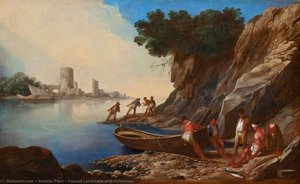
- Coastal Landscape with Fishermen (ARD36H-en): Demonstrates Travi’s ability to convey a sense of solitude and contemplation through the depiction of a simple coastal scene. The painting is characterized by its subtle color palette, atmospheric perspective, and masterful rendering of texture.
- Landscape with Ruins and Washerwomen (ARD36J-en): A more complex composition featuring ancient ruins and figures engaged in daily life, reflecting Travi’s interest in exploring themes of history and memory.
Historical Context & Influences
- Venetian School: Initially influenced by the coloristic approach of Bernardo Strozzi, a prominent Venetian painter. However, he moved beyond mere imitation to develop his own distinctive style.
- Baroque Period: Travi’s work falls within the broader context of the Baroque period, characterized by dramatic lighting, dynamic compositions, and emotional intensity.
- Sensory Experience (Deafness): His deafness profoundly shaped his artistic vision, fostering an acute awareness of light, shadow, and texture in the natural world.
Legacy & Significance
- Transition to Introspection: Travi’s work represents a pivotal transition from Venetian colorism to the more introspective and emotionally resonant styles that would characterize later Baroque painters.
- Atmospheric Perspective Pioneer: His innovative use of atmospheric perspective influenced subsequent generations of landscape artists.
- Quiet Beauty: Travi’s paintings continue to resonate with viewers today, offering a glimpse into the soul of a man who found beauty and meaning in the quiet contemplation of the natural world.
antonio travi
1609 - 1665
Quick Facts
- Artistic Movement Or Style: Baroque
- Artists Or Movements Influenced By This Artist: ['Italian Baroque painting']
- Artists Who Influenced This Artist: ['Bernardo Strozzi']
- Date Of Birth: 1609
- Date Of Death: 1665
- Full Name: Antonio Travi
- Nationality: Italian
- Notable Artworks:
- Sea View with Fishermen
- Coastal Landscape
- Pastoral landscape
- Place Of Birth: Sestri, Genoa, Italy