

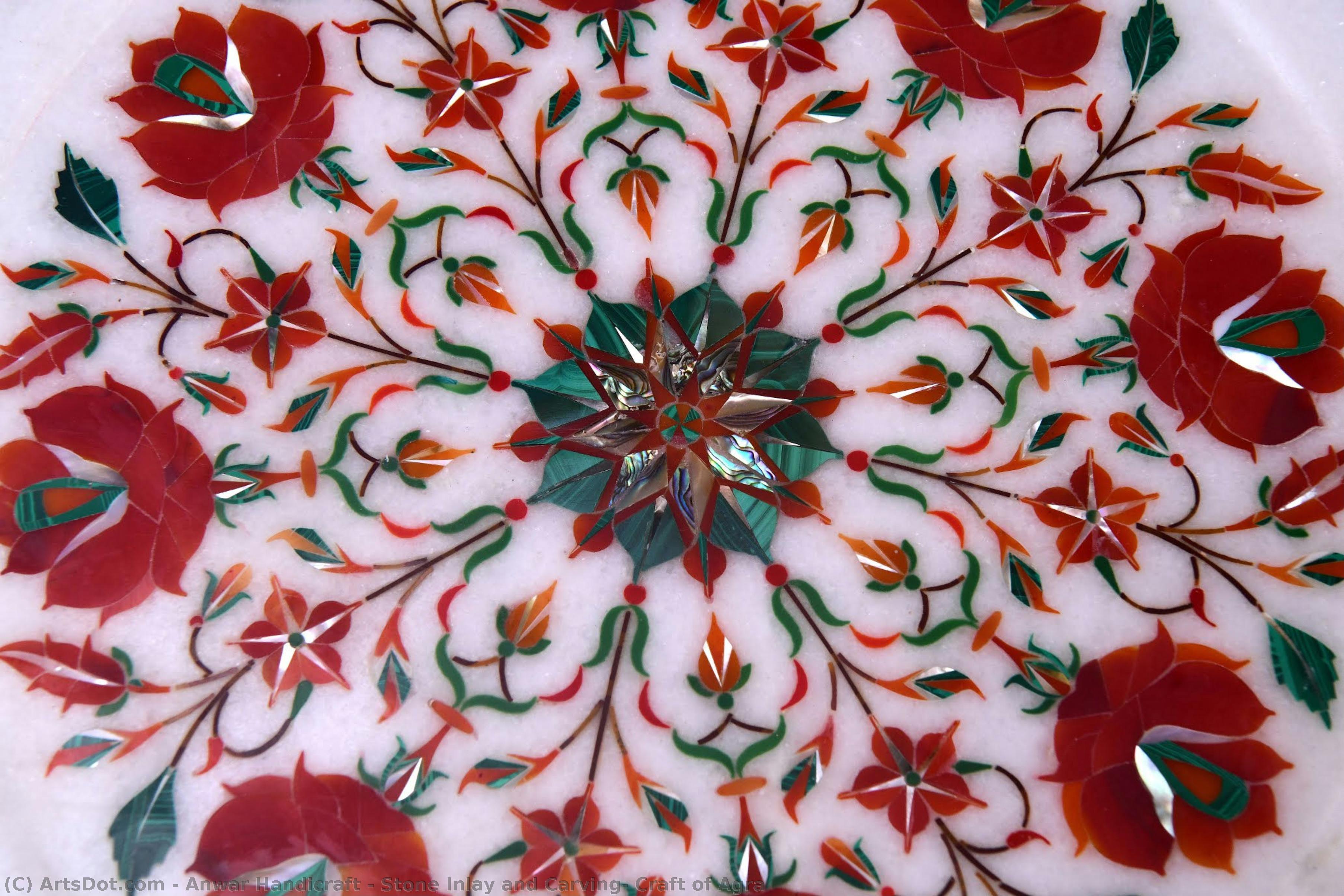
 Preview
 Send
Send Share
Share
 Details

 Download
 Similars
 X-Ray
X-Ray Diaporama
Stone Inlay and Carving: Craft of Agra


 Read More
Purchase a high-resolution, enhanced digital image, far superior to the online preview.
Each file is meticulously prepared by our in-house specialists using advanced tools and expert manual retouching. We ensure every image has exceptional clarity, precise color accuracy, and fine detail.
The final file is delivered via email within 72 hours, optimized for immediate use in professional, editorial, and print environments. This is the same quality trusted by top-tier design studios, publishers, and galleries.
Digital Image
Download a high-resolution file for personal display, printing, and creative projects. ( Buy Print Buy Hand Made Painting)
Included in Every Digital Image Order
Expert Digital Delivery, Guaranteed
When you choose ArtsDot.com, you're not just getting an image - you're receiving a professionally enhanced digital artwork, crafted with precision and backed by a satisfaction guarantee. Here's everything that comes with your order, automatically:

Fast Email Delivery
Your high-resolution digital image file will be emailed to you within 72 hours of ordering - ready for immediate use.

AI-Enhanced Digital File
Your artwork is professionally optimized using advanced AI tools and manual editing, ensuring maximum detail, clarity, and color accuracy.

Free Lifetime Re-Delivery
Accidentally deleted or lost your file? No worries - we'll resend it to you anytime, free of charge.

No Import Fees - Ever
Enjoy your artwork instantly with zero customs, duties, or delivery fees - digital downloads are always tax-free.

Color Accuracy Guarantee
We ensure your digital image reflects the original colors as closely as possible using professional tools and color management.

60-Day Satisfaction Guarantee
If you're not satisfied with your digital image, we'll revise it or refund 100% within 60 days - no questions asked.

100% Money-Back Guarantee
Not satisfied? Get a full refund within 60 days of receiving your digital file - no questions asked.

Bulk Order Discounts
Buy 3 images, save 10% - Buy 5, save 15% - Buy 10+, save 20%. Great for creative projects, galleries, and agencies.
Related Artworks








Artist Biography
Anwar Chitrakar: Weaver of Bengal’s Stories
Born in 1964 within the vibrant, oral tradition of Naya Pingla village in West Bengal's Midnapore district, Anwar Chitrakar is more than just an artist; he’s a custodian of a living heritage. His life and work are inextricably linked to the Patachitra – the ancient art of cloth painting practiced by generations of the Chitrakar family. This isn’t merely a craft; it's a storytelling tradition, where intricate narratives unfold across long scrolls, accompanied by songs that breathe life into each scene. The village itself is a microcosm of this artistic lineage, with walls adorned with Patachitra paintings and nearly every resident bearing the surname Chitrakar – a testament to the family’s deep roots in this unique art form.
Anwar's early years were shaped by a confluence of factors. Initially apprenticed under his father, Amar Chitrakar, he learned the foundational techniques of Patachitra, meticulously replicating existing designs and mastering the delicate application of natural pigments. However, a pivotal moment arrived during his adolescence – a realization that fulfilling his artistic potential required more than simply echoing tradition. Witnessing the challenges faced by his family and recognizing a desire for personal expression, Anwar transitioned to tailoring, a profession he pursued diligently for ten years. This period wasn’t a departure from his artistic aspirations but rather a strategic pause, allowing him to observe the evolving landscape of the art world and refine his own vision.
The Return to Patachitra and the Echoes of Tragedy
It was during this time of reflection that Anwar made a conscious decision to return to Patachitra – not as a mere continuation of established practices, but as an artist seeking to imbue the tradition with his own distinct voice. This shift coincided with a period of significant social upheaval in India, most notably the devastating Bhopal gas tragedy of 1984. The event profoundly impacted Anwar, prompting him to channel his emotions and anxieties into his art. His subsequent works became imbued with a palpable sense of unease and sorrow, reflecting the collective trauma experienced by the nation.
This period marked a significant evolution in his style. He began experimenting with bolder color palettes and more expressive compositions, moving away from the purely representational approach favored by earlier Patuas. The traditional cloth scroll was gradually replaced by newer surfaces – canvas, British paper, and Italian paper – allowing for greater flexibility and experimentation. Crucially, Anwar also broke with a longstanding tradition by signing his own works, a practice previously unheard of within the Chitrakar family. This act symbolized his assertion as an individual artist, firmly rooted in the lineage but forging his own unique path.
Technique and Materials: A Deep Connection to Tradition
Anwar’s artistic process is deeply intertwined with traditional methods and a profound respect for natural materials. He meticulously grinds his own pigments – turmeric for yellows, marigold for oranges, mud for whites, and lamp soot for blacks – ensuring the colors resonate authentically with the spirit of Patachitra. This commitment to sourcing raw materials directly from the surrounding environment underscores his connection to the land and a rejection of mass-produced alternatives. His use of dry pastels to build layers of opaque color creates a tactile quality, reminiscent of ancient techniques while simultaneously offering a contemporary aesthetic.
The layering technique is particularly noteworthy. He often employs a distinct vertical division within each painting, creating a visual contrast that draws the eye and emphasizes the narrative elements. He frequently incorporates woven or pasted materials into his compositions, adding texture and depth to the surface. This meticulous attention to detail – from pigment preparation to material integration – distinguishes Anwar’s work as both deeply rooted in tradition and remarkably innovative.
Recognition and Legacy: A Voice for a Forgotten Art
Anwar Chitrakar's artistic journey has been marked by consistent recognition and acclaim. He has participated in numerous group exhibitions, both within India and internationally, including showcases in Berlin and Japan. His work has garnered prestigious awards, including the State Award from West Bengal (2002) and the National Award from Lalit Kala Akademi (1995). His paintings have been collected by discerning art enthusiasts and institutions worldwide, demonstrating a growing appreciation for his unique artistic vision.
Perhaps most significantly, Anwar’s work has played a crucial role in raising awareness of Patachitra – an art form that had begun to fade into obscurity. Through his exhibitions, publications, and online presence, he has brought this ancient tradition back into the spotlight, ensuring its survival for future generations. His commitment to preserving and evolving Patachitra while simultaneously asserting his own artistic identity solidifies Anwar Chitrakar’s position as a vital voice in contemporary Indian art – a weaver of Bengal's stories, both poignant and enduring.
anwar handicraft
India
Quick Facts
- Artistic Movement Or Style: Patachitra, Kalighat Patua
- Artists Or Movements Influenced By This Artist: ['Patua tradition']
- Artists Who Influenced This Artist: ['Amar Chitrakar']
- Date Of Birth: 1964
- Full Name: Anwar Chitrakar
- Nationality: Indian
- Notable Artworks:
- Tales of our Times
- Goddess Durga
- Place Of Birth: Amjha, Madhya Pradesh, India

