 Preview
 Send
Send Share
Share
 Details

 Download
 Similars
 X-Ray
X-Ray Diaporama
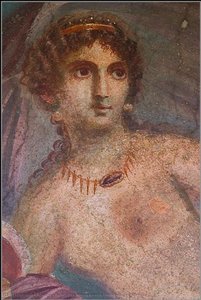
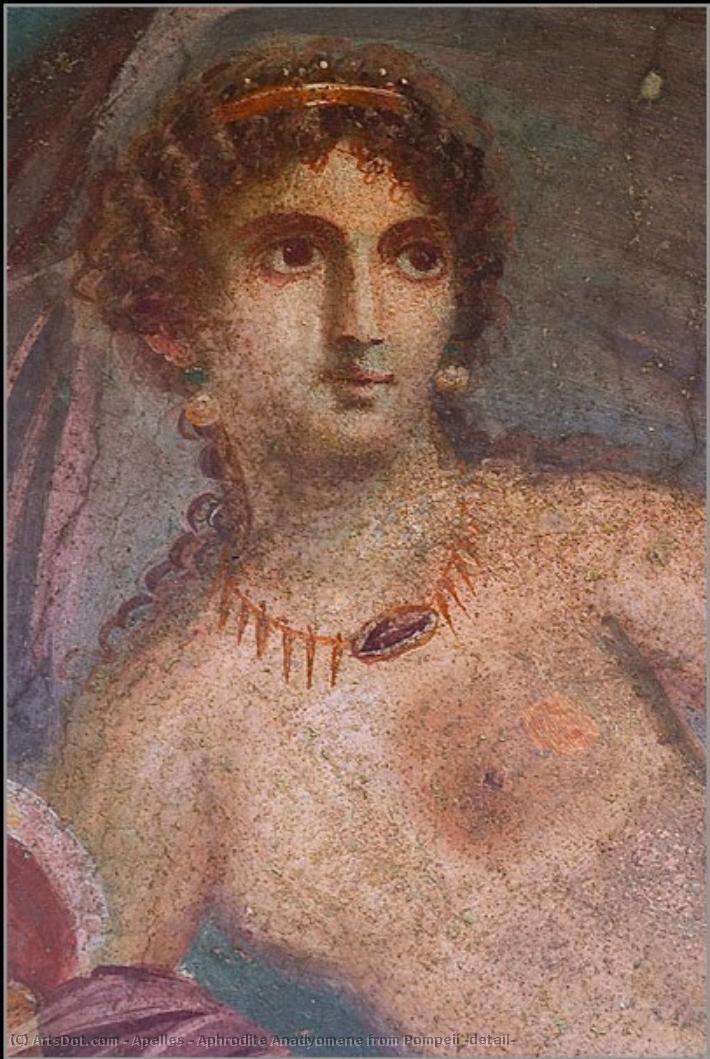
Aphrodite Anadyomene from Pompeii (detail)

 Read More
Giclée / Art Print
Museum-quality giclée or canvas print with fast production and flexible finish options. ( Buy Hand Made Painting Buy Image)




































Pick from our preset sizes that match the artwork's original proportions.

You may enter your own dimensions to fit a specific frame or space. If your selected size does not match the original image's proportions, we will either crop the artwork or extend the image with a mirrored or solid-fill edge. A digital mockup will be sent for your approval before production begins.
Please note that the on-screen preview does not reflect the actual cropping or extension. Only the mockup will accurately show the final composition.
While custom sizes are available, we recommend selecting a dimension from the predefined list to preserve the original proportions.
Worldwide Delivery () in 2 weeks instead of standard 4/5 weeks. (24 August)

Free Worldwide Express Shipping

High-Quality Linen Canvas

Full Shipping Insurance

Customs Tax Refund Guarantee

True Color Matching Guarantee

60-Day Return Policy (Defects Only)

100% Money-Back Guarantee

Bulk Discount Offer
 Glass option is only available in size under 110 CM

Aphrodite Anadyomene from Pompeii (detail)
Giclée / Art Print
Reproduction Size
-


Total Price
$ 63
Related Artworks







Artist Biography
The Genesis of a Master: From Colophon to the Great Masters
In the sun-drenched landscapes of Colophon, Ionia, a legend was quietly forged within a lineage of intellect and prestige. Apelles, born into a family connected to the sacred Oracle of Delphi, did not merely inherit status; he inherited a profound curiosity that would eventually redefine the boundaries of visual truth. His early education was a masterclass in the dualities of Greek aesthetics. Under the tutored guidance of Ephorus of Ephesus, he mastered the rigorous, structural discipline of Doric sculpture, learning to respect the anatomical integrity and idealized forms that defined the classical era.
Yet, his spirit sought more than mere stone-like precision. Seeking the fluid grace of the Ionic style, he journeyed to Sicyon to study under Pamphilus, where he learned to breathe life into drapery and capture the subtle, ephemeral modeling of light and shadow. This synthesis of strength and softness became the hallmark of a genius who would soon command the attention of empires.
The Painter of Kings and the Macedonian Court
As the tides of history shifted toward the rise of Macedonia, Apelles found himself at the very heart of power. His talent acted as a beacon, drawing the gaze of Philip II and, most significantly, the legendary Alexander the Great. To be a court painter to such a conqueror was to hold a mirror to greatness itself. Apelles possessed an almost supernatural ability to render the human likeness, capturing not just the physical features of Alexander or the sculptor Lysippus, but the very essence of their character.
Contemporary accounts, most notably those of Pliny the Elder, recount a level of realism so profound it seemed to transcend the medium of paint. He did not merely depict faces; he captured the spark of divinity and the weight of command. His work, though much of it lost to the ravages of time, served as the visual standard for an era, establishing a benchmark of portraiture that subsequent generations would strive—and often fail—to reach.
A Legacy Etched in Memory and Reimagined
Though the physical canvases of Apelles have vanished into the mists of antiquity, his influence remains an indelible part of the Western artistic consciousness. He exists today as a phantom presence, a master known through the reverently written accounts of ancient historians and the inspired recreations of Renaissance masters.
When we look upon the allegorical complexities of Sandro Botticelli’s The Calumny of Apelles, we are witnessing a profound dialogue with a lost ancestor. The echoes of his skill resonate in every attempt to capture the sublime through realism. His life serves as a testament to the power of art to endure even when its physical forms perish. Through the descriptions of his mastery over light, color, and form, Apelles remains not just a figure of the past, but a permanent architect of the artistic imagination, reminding us that true genius is never truly lost; it is merely waiting to be rediscovered in the shadows of history.
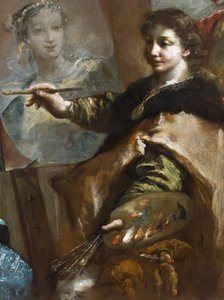
Apelles
Greece
Quick Facts
- Artistic Movement Or Style: Ancient Greek Painting
- Artists Or Movements Influenced By This Artist: ['Lysippus']
- Artists Who Influenced This Artist:
- Ephorus of Ephesus
- Pamphilus
- Full Name: Apelles of Kos
- Nationality: Greek
- Notable Artworks:
- Alexander Holding Thunderbolt
- Portrait of Alexander the Great
- Place Of Birth: Colophon, Greece