 Preview
 Send
Send Share
Share
 Details

 Download
 Similars
 X-Ray
X-Ray Diaporama
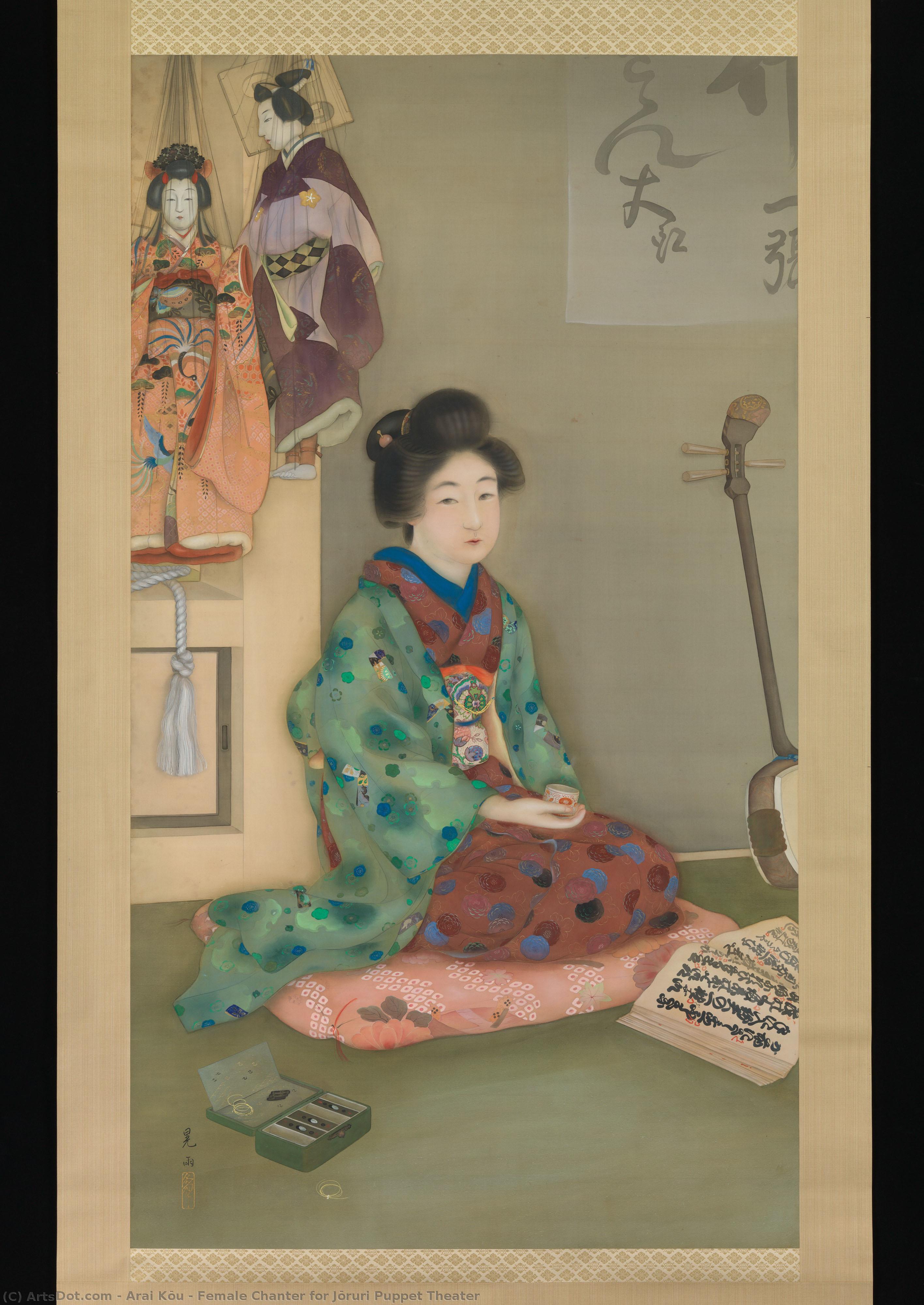
Female Chanter for Jōruri Puppet Theater
 1920
1920 192.0 x 108.0 cm
 Read More
Giclée / Art Print
Museum-quality giclée or canvas print with fast production and flexible finish options. ( Buy Hand Made Painting Buy Image)




































Pick from our preset sizes that match the artwork's original proportions.

You may enter your own dimensions to fit a specific frame or space. If your selected size does not match the original image's proportions, we will either crop the artwork or extend the image with a mirrored or solid-fill edge. A digital mockup will be sent for your approval before production begins.
Please note that the on-screen preview does not reflect the actual cropping or extension. Only the mockup will accurately show the final composition.
While custom sizes are available, we recommend selecting a dimension from the predefined list to preserve the original proportions.
Worldwide Delivery () in 2 weeks instead of standard 4/5 weeks. (27 August)

Free Worldwide Express Shipping

High-Quality Linen Canvas

Full Shipping Insurance

Customs Tax Refund Guarantee

True Color Matching Guarantee

60-Day Return Policy (Defects Only)

100% Money-Back Guarantee

Bulk Discount Offer
 Glass option is only available in size under 110 CM

Female Chanter for Jōruri Puppet Theater
Giclée / Art Print
Reproduction Size
-


Total Price
$ 63
Collectible Description
Related Artworks










Artist Biography
Arai Kōu: Echoes of Tradition in the Quietude of Performance
In the vibrant, transformative landscape of early twentieth-century Japan, specifically during the evocative Taishō Period (1912-1926), Arai Kōu emerged as a master of capturing the ephemeral. While the biographical details of his life remain somewhat shrouded in the mists of history, his artistic legacy is vibrantly preserved through his profound dedication to the world of Jōruri. Unlike many of his contemporaries who sought grandeur in sweeping landscapes or epic historical chronicles, Kōu turned his gaze inward, finding profound beauty in the intimate, quiet moments that precede and follow the theatrical spectacle. His work serves as a bridge between the ritualistic weight of Japanese tradition and a burgeoning modern sensibility.
Kōu’s artistic foundation was deeply rooted in the Nihonga tradition, a style of Japanese painting that seeks to harmonize traditional aesthetics with subtle Western influences. Though his early training remains elusive, one can discern the fingerprints of masters such as Hiroshi Yoshida and Yokoyama Taikan within his brushwork. From these luminaries, he inherited a sophisticated ability to blend sumi-e ink wash techniques with a more luminous, impressionistic approach to light and color. This synthesis allowed him to move beyond mere documentation, instead imbuing his subjects with a psychological depth and a palpable sense of atmosphere.
The Intimacy of the Jōruri Stage
The heart of Kōu’s oeuvre lies in his singular devotion to Jōruri—the traditional puppet theater that weaves together music, puppetry, chanting, and narration into a seamless tapestry of storytelling. Kōu was not merely interested in the performance itself, but in the sacred stillness of the backstage world. He possessed a rare talent for portraying performers in states of repose, capturing the heavy silence of a dressing room or the focused preparation of a musician. Through these scenes, he conveyed the subtle emotional nuances and the spiritual gravity inherent in the theatrical ritual.
His most celebrated masterpiece, 'Female Chanter for Jōruri Puppet Theater' (1920), stands as a testament to this mastery. In this work, we find a chanter caught in a private moment of reflection, sipping tea amidst the tools of her craft. The painting is a marvel of meticulous detail; Kōu renders the dense, bold script of a woodblock-printed libretto with such precision that viewers can identify the specific revenge story being practiced—Mirror Mountain: Brocade Pictures of Our Hometown. Every element, from the shamisen leaning against the wall to the small marionettes hanging in the background, contributes to a narrative of quiet anticipation and professional devotion.
Technique, Symbolism, and Lasting Legacy
Kōu’s technical execution was as deliberate as his subject matter. He predominantly utilized silk canvases, a medium that lends a soft, organic texture to his compositions. His palette was often characterized by a striking use of reds and golds, applied with an unwavering commitment to traditional methods. The application of gold leaf, in particular, was not merely decorative; it served a symbolic purpose, representing prosperity and imbuing the ritualistic scenes with a divine, luminous quality. This careful balance of vibrant color and delicate ink wash allowed him to create works that felt both grounded in reality and elevated by myth.
The historical significance of Arai Kōu lies in his ability to preserve the soul of a vanishing era. By focusing on the human element within the Jōruri tradition, he ensured that the emotional resonance of these ancient practices would endure. His work remains a vital contribution to Japanese visual culture, offering a window into the Taishō Period's unique blend of tradition and modernity. Through his eyes, we do not just see a performance; we feel the breath, the tension, and the profound dignity of the artists who keep Japan's cultural heartbeat alive.
arai kōu
Japan
Quick Facts
- Artistic Movement Or Style: Ink, color & gold on silk
- Full Name: arai kōu
- Nationality: Japanese
- Notable Artworks: ['Female Chanter for Jōruri Puppet Theater']
- Place Of Birth: Tokyo, Japan