 Preview
 Send
Send Share
Share
 Details

 Download
 Similars
 X-Ray
X-Ray Diaporama
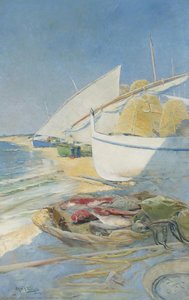
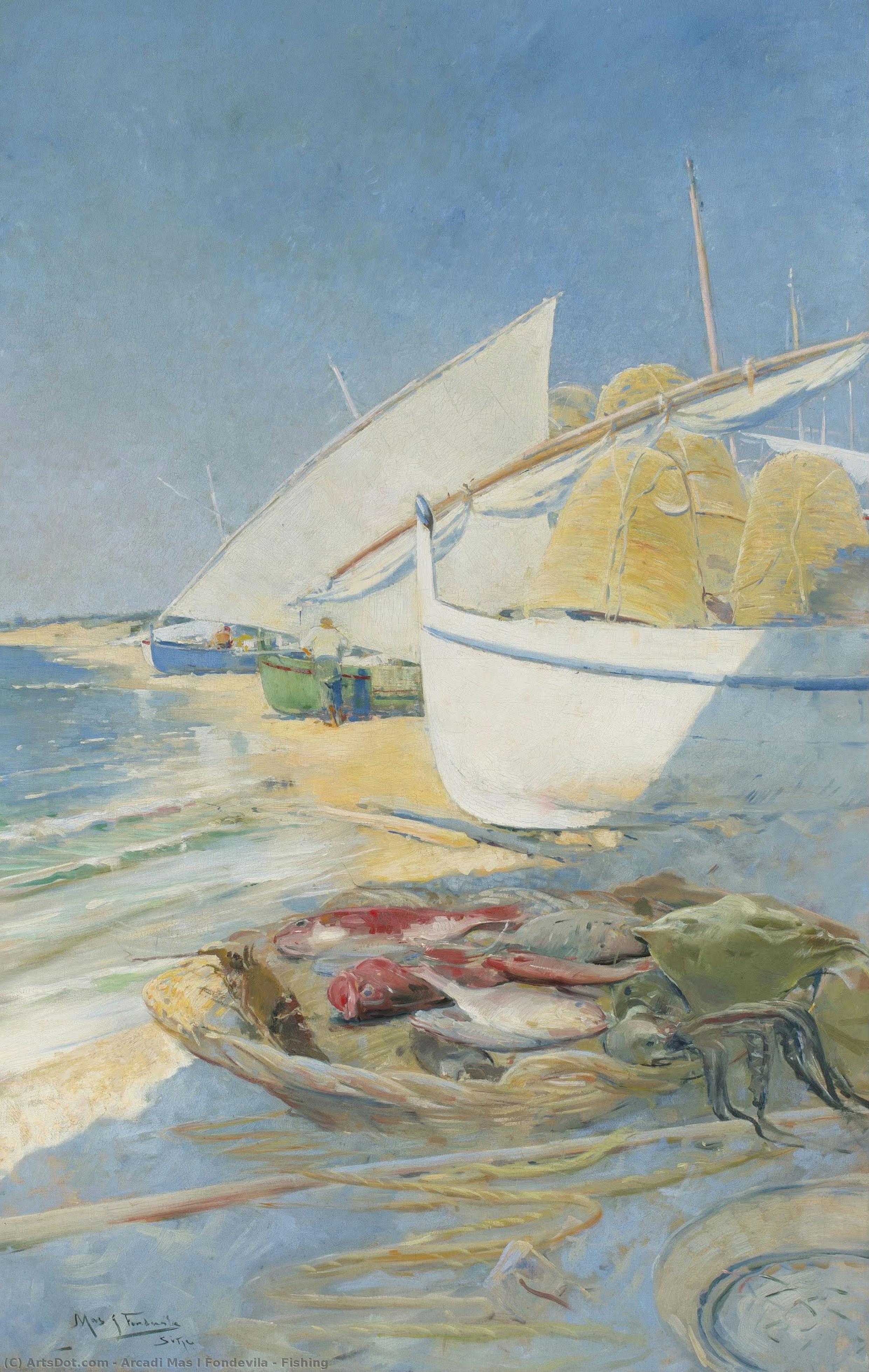
Fishing
 Oil
Oil- WallArt
- Catalan Modernisme
 1895
1895- 19th Century
 175.0 x 112.0 cm
 Maricel Museum
 Read More
Hand Made Oil Reproduction
Hand-painted oil on canvas in your size and frame, made to order by our artists. ( Buy Print Buy Image)




P118B $10

P118H $10

P118W $10

P438Z $10

P508JH $12

P508YH $12

P805H $10

P805Z $10

P919BZ $10

P919G $10

P919XJ $10

P959ZH $10

P968JZ $12

W106C $8

W218G $10

W218JH $8

W218Y $10

W307PJ $10

W316G $10

W316PJ $8

W316Y $10

W398PJ $8

W4111J $10

W500HY $15

W500JH $15

W692G $12

W849H $8

W940BG $15

W953PJ $8




Pick from our preset sizes that match the artwork's original proportions.

You may enter your own dimensions to fit a specific frame or space. If your selected size does not match the original image's proportions, we will either crop the artwork or extend the painting with additional hand-painted elements. A digital mockup will be sent for your approval before production begins.
Please note that the on-screen preview does not reflect the actual cropping or extension. Only the mockup will accurately show the final composition.
While custom sizes are available, we recommend selecting a dimension from the predefined list to preserve the original proportions.
After order, ArtsDot.com team will email client for instructions and provide a mockup preview
Worldwide Delivery () in 3/4 weeks instead of standard 5 weeks. (21 August). No compromise on quality.

Free Worldwide Express Shipping

High-Quality Linen Canvas

Full Shipping Insurance

Customs Tax Refund Guarantee

True Color Matching Guarantee

60-Day Return Policy (Defects Only)

100% Money-Back Guarantee

Bulk Discount Offer
 Glass option is only available in size under 110 CM

Fishing
Reproduction Medium
Reproduction Size
-


Total Price
$ 263
Related Artworks
Artist Biography
The Luminous Legacy of Arcadi Mas i Fondevila
Arcadi Mas i Fondevila stands as a cornerstone of Catalan Modernisme, an artistic movement that sought to revitalize Catalan culture and identity through avant-garde aesthetics. Born in Barcelona in 1852, he emerged during a period of fervent intellectual and artistic experimentation, inheriting the legacy of Impressionism while forging a distinctive visual language deeply rooted in the serene beauty of Catalonia’s countryside and coastal towns. His canvases capture not merely scenes but emotions—a palpable sense of tranquility and nostalgia for a disappearing rural world. The son of a tailor, Mas i Fondevila possessed an innate talent that was recognized early by his father, leading him to the prestigious Escola de la Llotja. Under the mentorship of masters such as Claudi Lorenzale and Antoni Caba, he developed a meticulous attention to detail and a profound understanding of color theory, elements that would later become essential in achieving the luminous quality characteristic of his landscapes.A Journey Through Light and Tradition
The trajectory of Mas i Fondevila’s career was profoundly shaped by his travels and the prestigious accolades he received during his formative years. In 1875, he was awarded the first Fortuny Scholarship, a pivotal moment that enabled him to spend a decade immersed in the art centers of Italy. This period of wandering through Rome, Venice, Naples, and Capri allowed him to absorb the ornamental brilliance of Giandomenico Tiepolo and the vibrant energy of Mariano Fortuny. These Italian influences breathed a new vitality into his work, infusing it with a light-drenched quality that would define his later mastery. His early successes were already making waves in Spain; notably, his 1873 work Pel juny la falç al puny (In June with Sickle in Hand) caught the eye of King Alfonso XII, who purchased the painting, signaling the arrival of a significant new talent on the national stage.The Luminist School and the Spirit of Sitges
Upon returning to Catalonia, Mas i Fondevila found a new spiritual home in Sitges, a move prompted by his friend Joan Roig i Soler. It was here, alongside luminaries like Santiago Rusiñol, that he became a foundational figure of the Escola Luminista (Luminist School). This movement prioritized the study of light and its interaction with the atmosphere, moving away from rigid academic realism toward a more spontaneous, en plein air approach. His technique epitomized the core tenets of Catalan Modernisme, employing expressive color palettes and loose brushstrokes to capture fleeting moments of natural beauty. He skillfully utilized glazing techniques—applying thin layers of translucent paint—to create a shimmering depth that mirrored the sun-drenched fields and the rhythmic surfaces of the Mediterranean seascapes.Artistic Significance and Enduring Impression
The historical significance of Arcadi Mas i Fondevila lies in his ability to bridge the gap between traditional genre painting and the modern, light-focused sensibilities of the late 19th century. His work serves as a vital record of the Catalan landscape and the rhythmic pulse of rural life before the rapid onset of industrialization. Whether depicting the bustling architecture of Granada or the tranquil sailboats of a coastal harbor, his art remains an invitation to experience a sense of timelessness. Through his contributions to the Primera Festa Modernista and his regular exhibitions at the Sala Parés, he helped cement the cultural renaissance of Catalonia. Today, his legacy persists through works that continue to evoke a profound sense of peace, reminding viewers of the enduring elegance found in the quiet corners of the natural world.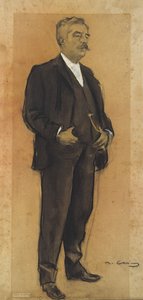
arcadi mas i fondevila
1852 - 1934 , Spain
Quick Facts
- Artistic Movement Or Style: Modernisme
- Artists Who Influenced This Artist:
- Impressionism
- Post-Impressionism
- Date Of Birth: November 12, 1852
- Date Of Death: January 31, 1934
- Full Name: Arcadi Mas i Fondevila
- Nationality: Catalan
- Notable Artworks:
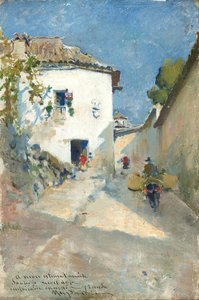
- Landscape of Granada
- Fishing
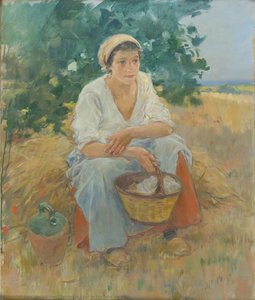
- Girl in the field (back)
- Place Of Birth: Barcelona, Spain
Related Articles
Fluid Reflections: Exploring Water's Symbolism in Art History – From Myth to Impressionism
Explore the rich symbolism of water in art history – from ancient myths to Impressionism's fleeting beauty. Discover masterpieces & find your perfect serene artwork with ArtsDot.com.

Josep Mompou Dencausse: Exploring Intimacy & Catalan Identity Through Minimalist Expression
Explore the captivating world of Josep Mompou Dencausse, a master of Post-Impressionism whose intimate paintings reflect Catalan identity and minimalist beauty. Discover his life, style & legacy.
Joaquim Mir: A Catalan Visionary – Exploring Symbolism, Landscape & Modernist Aesthetic
Explore the captivating world of Joaquim Mir, a pivotal Catalan Modernisme painter. Discover his vibrant landscapes, symbolic depth & lasting influence on Spanish art history. Learn more at ArtsDot.
Monet's Masterpieces: 25 Iconic Artworks to Transform Your Home
Journey through 25 iconic Claude Monet masterpieces! Explore Impressionism’s beauty, from Water Lilies to Rouen Cathedral. Discover stunning art reproductions & curated decor ideas – explore the full collection online at ArtsDot.com.
Josep Cusachs i: Exploring Catalan Modernism Through Social Commentary & Artistic Innovation
Explore the captivating world of Josep Cusachs i, a key figure in Catalan Modernism. Discover his realist paintings, social commentary, and influence on 19th-century Spanish art. Hand-painted reproductions available at ArtsDot.