

 Preview
 Send
Send Share
Share
 Details

 Download
 Similars
 X-Ray
X-Ray Diaporama
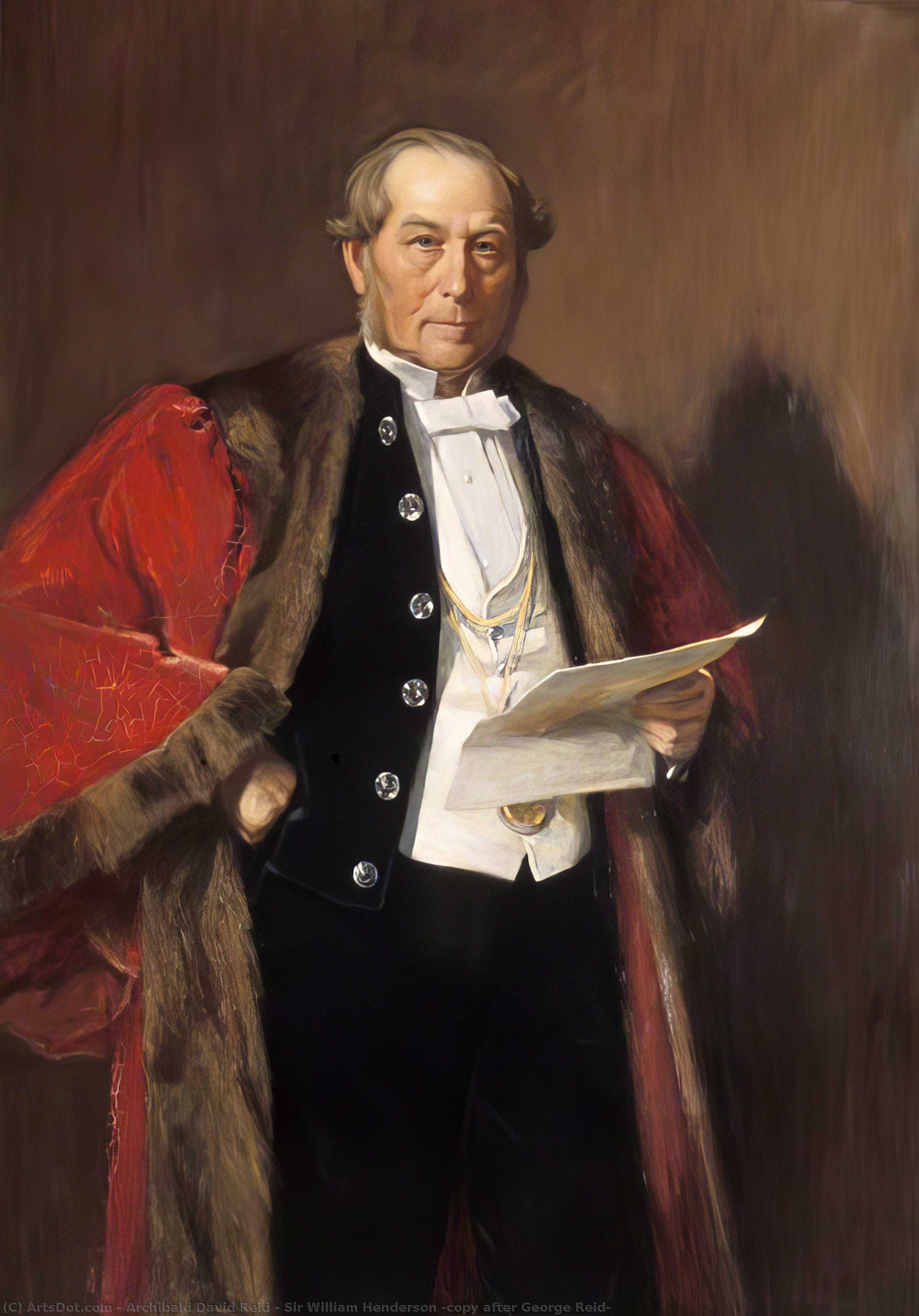
Sir William Henderson (copy after George Reid)
 1889
1889 141.0 x 99.0 cm
 Read More
Purchase a high-resolution, enhanced digital image, far superior to the online preview.
Each file is meticulously prepared by our in-house specialists using advanced tools and expert manual retouching. We ensure every image has exceptional clarity, precise color accuracy, and fine detail.
The final file is delivered via email within 72 hours, optimized for immediate use in professional, editorial, and print environments. This is the same quality trusted by top-tier design studios, publishers, and galleries.
Digital Image
Download a high-resolution file for personal display, printing, and creative projects. ( Buy Print Buy Hand Made Painting)
Included in Every Digital Image Order
Expert Digital Delivery, Guaranteed
When you choose ArtsDot.com, you're not just getting an image - you're receiving a professionally enhanced digital artwork, crafted with precision and backed by a satisfaction guarantee. Here's everything that comes with your order, automatically:

Fast Email Delivery
Your high-resolution digital image file will be emailed to you within 72 hours of ordering - ready for immediate use.

AI-Enhanced Digital File
Your artwork is professionally optimized using advanced AI tools and manual editing, ensuring maximum detail, clarity, and color accuracy.

Free Lifetime Re-Delivery
Accidentally deleted or lost your file? No worries - we'll resend it to you anytime, free of charge.

No Import Fees - Ever
Enjoy your artwork instantly with zero customs, duties, or delivery fees - digital downloads are always tax-free.

Color Accuracy Guarantee
We ensure your digital image reflects the original colors as closely as possible using professional tools and color management.

60-Day Satisfaction Guarantee
If you're not satisfied with your digital image, we'll revise it or refund 100% within 60 days - no questions asked.

100% Money-Back Guarantee
Not satisfied? Get a full refund within 60 days of receiving your digital file - no questions asked.

Bulk Order Discounts
Buy 3 images, save 10% - Buy 5, save 15% - Buy 10+, save 20%. Great for creative projects, galleries, and agencies.
Related Artworks









Artist Biography
Early Life and Artistic Beginnings
Archibald David Reid, a name synonymous with evocative Scottish landscapes and the subtle influence of Dutch artistic traditions, was born in Aberdeen on June 8th, 1844. His origins were firmly rooted in the city’s industrial heartland – his father, George Reid, managed the Aberdeen Copper Company, a position that shaped the family's trajectory and instilled a pragmatic sensibility. Yet, from a young age, Archibald demonstrated an inclination far removed from commerce; he possessed a keen eye for detail and a deep appreciation for the natural world, qualities nurtured by his artistic siblings, particularly his brother Sir George Reid, who would later become President of the Royal Scottish Academy. Reid’s early education was somewhat unconventional, beginning at Robert Gordon's Hospital – now Gordon’s College – but he quickly transitioned to a mercantile career before being drawn back to art by the gentle guidance of John F. White, a miller whose counting-house provided a supportive and stimulating environment for his nascent artistic pursuits. The absence of dedicated studios in Aberdeen during this period meant that Reid's initial training was received at the venerable old Mechanics’ Institute, laying the groundwork for his future development.Influences and Early Training
Reid’s artistic journey wasn’t a solitary one; it was profoundly shaped by the individuals who surrounded him. The influence of his brother George, an accomplished artist himself, proved particularly significant, providing both inspiration and a framework for understanding the principles of art. Furthermore, the example of John F. White, whose appreciation for observation and careful rendering undoubtedly contributed to Reid’s meticulous approach. A pivotal moment in Reid's artistic development occurred at the age of ten when he entered Robert Gordon’s Hospital, but left at fourteen to pursue a mercantile career. However, his innate artistic inclinations soon reasserted themselves, drawing him back towards painting under the encouraging influence of White and his brother George. His early training was supplemented by lessons from William Niddrie, an itinerant portrait painter who had studied under James Giles, R.S.A., exposing Reid to a wider range of techniques and styles. A crucial formative experience came with his relocation to Utrecht in 1865, where he studied under Alexander Mollinger, whose emphasis on tonal harmony profoundly impacted Reid’s approach to landscape painting – a shift away from the direct representation of nature towards a more nuanced and atmospheric style. Later, he sought further refinement in Paris, working alongside Adolphe Yvon, and later with Jozef Israëls in The Hague, absorbing diverse artistic perspectives that would ultimately coalesce into his distinctive voice.A Distinctive Style: Dutch Influence and Scottish Landscapes
Reid’s artistic style is immediately recognizable as a unique synthesis of influences. While firmly rooted in the traditions of the Royal Scottish Academy, his work bears a striking resemblance to the Dutch Masters – particularly their mastery of light, shadow, and atmospheric perspective. His travels to the Netherlands left an indelible mark on his art, evident in the muted tones, subtle gradations of color, and the emphasis on capturing the mood and atmosphere of a scene rather than its literal details. This influence is most apparent in works such as “A Court in the Alhambra,” which showcases a sophisticated understanding of light and shadow reminiscent of Rembrandt, and "Auxerre, France," where the artist skillfully evokes the misty charm of the French countryside. However, Reid’s artistic vision was never solely defined by his Dutch influences. He possessed an intimate knowledge of the Scottish landscape – its rugged coastlines, rolling hills, and dramatic skies – and he translated this understanding into paintings that are both deeply evocative and remarkably precise. His depictions of Aberdeen, particularly the coastal scenes around Blakeney, Norfolk, reveal a keen eye for detail and a sensitivity to the changing light conditions.Later Years and Legacy
Reid’s career spanned several decades, during which he exhibited his work consistently at the Royal Scottish Academy and occasionally at the Royal Academy in London. He was elected Associate of the Royal Scottish Academy in 1892 and later became a member of the Royal Institute of Painters in Oils, though he soon resigned from this body. Despite rarely exhibiting in major London galleries, Reid’s work gained recognition throughout Scotland and beyond. His paintings were frequently reproduced in publications such as *The Studio*, demonstrating his growing popularity and critical acclaim. He maintained a close connection to Aberdeen throughout his life, establishing a studio there and continuing to capture the beauty of his native city on canvas. Archibald David Reid died suddenly in Wareham, Dorsetshire, in September 1908, leaving behind a significant body of work that continues to be admired for its quiet elegance, atmospheric depth, and subtle mastery of color. His legacy endures as one of Scotland’s most accomplished landscape painters, a testament to the power of observation, dedication, and artistic vision.Notable Works
- Blakeney, Norfolk (1908): A stunning landscape painting in a Dutch-inspired style, capturing the atmospheric beauty of the North Norfolk coast.
- A Court in the Alhambra (1881): Demonstrates Reid’s ability to emulate the techniques of the Dutch Masters, particularly in his use of light and shadow.
- The Scotch House, Campvere, Holland (1894): A quintessential example of Reid's Dutch-influenced style, evoking the misty charm of a riverside scene.
- Auxerre, France (1896): Showcases his skill in capturing the subtle nuances of light and atmosphere, creating a sense of quiet contemplation.
Archibald David Reid
1844 - 1908
Quick Facts
- Artistic Movement Or Style: Dutch-inspired landscapes
- Artists Or Movements Influenced By This Artist:
- Dutch Art
- Royal Scottish Academy
- Artists Who Influenced This Artist:
- John F. White
- George Reid
- Date Of Birth: June 8, 1844
- Date Of Death: September 30, 1908
- Full Name: Archibald David Reid
- Nationality: Scottish
- Notable Artworks:
- On the Giadecca, Venice
- A Court in the Alhambra
- Scotch House, Campvere
- Place Of Birth: Aberdeen, Scotland

