 Preview
 Send
Send Share
Share
 Details

 Download
 Similars
 X-Ray
X-Ray Diaporama
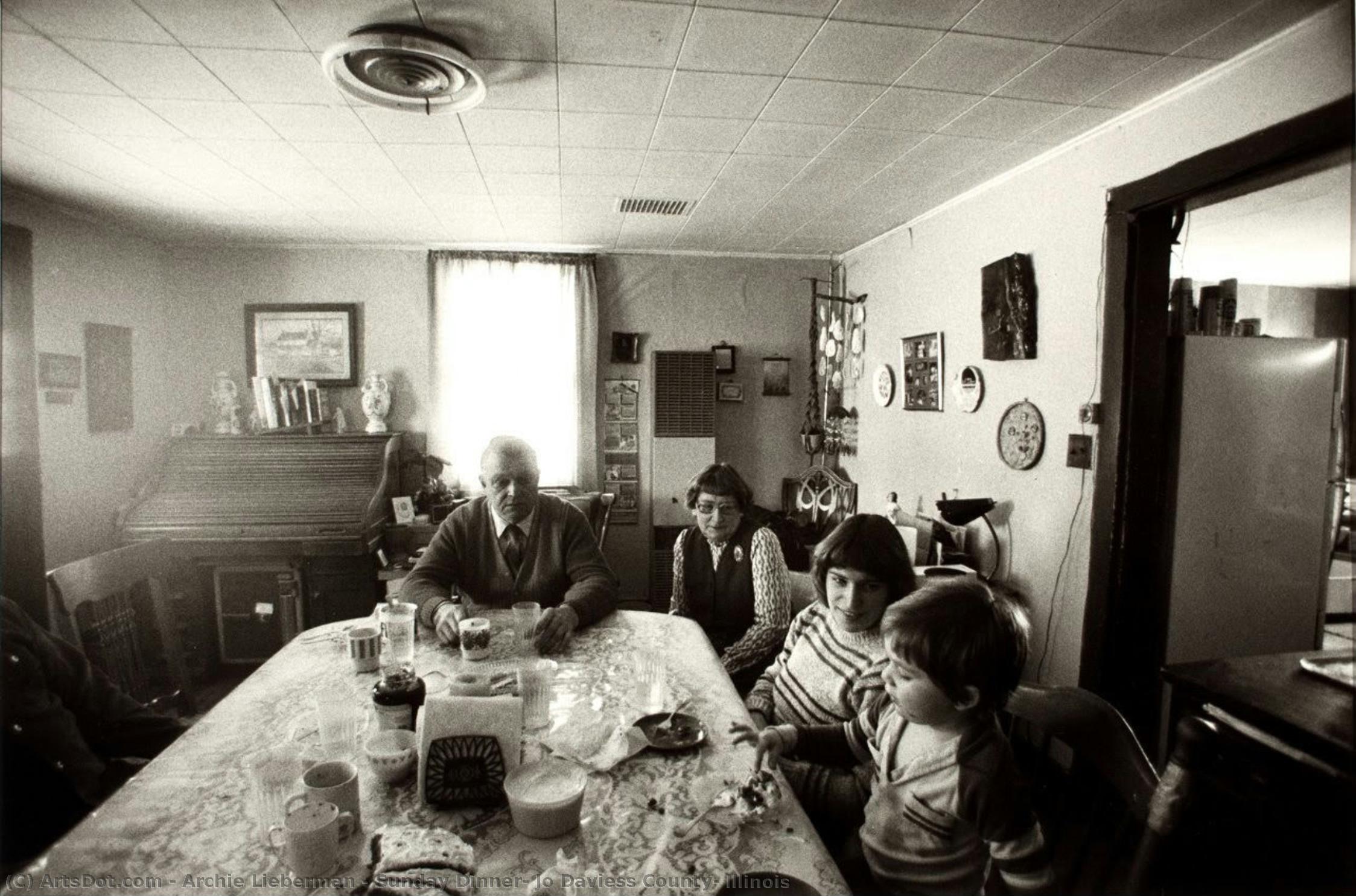
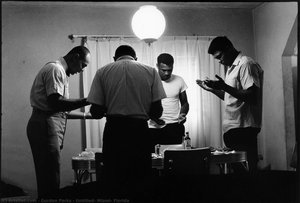
Sunday Dinner, Jo Daviess County, Illinois


 Read More
Hand Made Oil Reproduction
Hand-painted oil on canvas in your size and frame, made to order by our artists. ( Buy Print Buy Image)




































Pick from our preset sizes that match the artwork's original proportions.

You may enter your own dimensions to fit a specific frame or space. If your selected size does not match the original image's proportions, we will either crop the artwork or extend the painting with additional hand-painted elements. A digital mockup will be sent for your approval before production begins.
Please note that the on-screen preview does not reflect the actual cropping or extension. Only the mockup will accurately show the final composition.
While custom sizes are available, we recommend selecting a dimension from the predefined list to preserve the original proportions.
After order, ArtsDot.com team will email client for instructions and provide a mockup preview
Worldwide Delivery () in 3/4 weeks instead of standard 5 weeks. (27 August). No compromise on quality.

Free Worldwide Express Shipping

High-Quality Linen Canvas

Full Shipping Insurance

Customs Tax Refund Guarantee

True Color Matching Guarantee

60-Day Return Policy (Defects Only)

100% Money-Back Guarantee

Bulk Discount Offer
 Glass option is only available in size under 110 CM

Sunday Dinner, Jo Daviess County, Illinois
Reproduction Medium
Reproduction Size
-


Total Price
$ 263
Related Artworks





Artist Biography
Mary Stevenson Cassatt: A Pioneer of Modern Portraiture
Born in Allegheny City, Pennsylvania – now part of Pittsburgh – in 1844, Mary Stevenson Cassatt was a remarkably independent and influential figure in the late 19th-century art world. Her life story is one of transatlantic journeys, artistic mentorships, and a profound dedication to capturing the intimate realities of women’s lives, particularly within the context of family and domesticity. Unlike many female artists of her era, Cassatt forged her own path, largely independent of prevailing academic traditions, and became a significant voice within the burgeoning Impressionist movement, though she maintained a distinct artistic identity.
Cassatt's early life was marked by privilege and exposure to art. Her father, Robert Simpson Cassat, was a successful stockbroker and land speculator, and her mother, Katherine Kelso Johnston, came from a banking family – a lineage that afforded her access to education and cultural experiences uncommon for women at the time. She initially studied at the Pennsylvania Academy of the Fine Arts in Philadelphia, but quickly found herself dissatisfied with the rigid academic approach. Seeking a more liberating artistic environment, she moved to Paris in 1865, a pivotal decision that would shape the trajectory of her career. There, she enrolled in private lessons with Jean-Léon Gérôme, a prominent historical painter, and began to immerse herself in the vibrant Parisian art scene.
Her early artistic explorations were heavily influenced by the academic tradition, but it was her encounters with Eugène Boudin, a key figure in the development of Impressionism, that proved transformative. Boudin introduced her to the concept of *plein air* painting – working outdoors directly from nature – and encouraged her to observe light and color with fresh eyes. This marked a crucial shift away from studio-based techniques and towards a more direct engagement with the natural world. She also benefited greatly from the guidance of Edgar Degas, who became a close friend and mentor, offering invaluable advice on composition, technique, and artistic vision. Cassatt’s relationship with Degas was particularly significant as she was one of the few women associated with his circle of independent artists.
The Impressionist Aesthetic and Subject Matter
Cassatt's artistic style evolved significantly throughout her career, reflecting both her engagement with Impressionism and her own unique sensibilities. Initially, her work displayed a certain formality, influenced by academic traditions. However, under the influence of Degas and other Impressionists, she began to experiment with looser brushstrokes, brighter colors, and a greater emphasis on capturing fleeting moments of light and atmosphere. She was particularly adept at depicting scenes of domestic life – mothers and children interacting, women engaged in everyday activities, and intimate family relationships.
Unlike many of her male contemporaries who often focused on grand historical or mythological subjects, Cassatt deliberately chose to portray the lives of ordinary women. Her paintings are characterized by a remarkable sensitivity to detail and an ability to convey subtle emotions and psychological nuances. She wasn’t interested in romanticizing motherhood; instead, she presented it as a complex and often challenging experience, capturing both its joys and its burdens. Her depictions of children were particularly notable for their realism and tenderness, offering a refreshing counterpoint to the idealized portrayals common at the time.
Cassatt’s approach extended beyond painting; she was also a skilled printmaker, creating drypoints and etchings that explored similar themes with remarkable precision and emotional depth. Her prints often served as independent works of art, showcasing her mastery of line and tone.
Key Works and Artistic Development
Several key works exemplify Cassatt’s artistic development and the evolution of her style. *The Child's Bath* (1876-7), a pastel depicting a young girl bathing, is considered one of her most iconic paintings. It showcases her ability to capture a fleeting moment of intimacy and tenderness with remarkable sensitivity. Similarly, *Little Girl in a Blue Armchair* (1880-82) exemplifies her interest in portraying the quiet moments of domestic life. Her series of prints depicting the Parisian ballet dancers, commissioned by Degas, are also significant achievements, demonstrating her technical skill and her ability to capture the energy and movement of the stage.
As Cassatt matured as an artist, she continued to refine her technique and explore new subjects. Her later works often featured a more subdued palette and a greater emphasis on composition and form. She remained committed to portraying the lives of women, but her approach became increasingly nuanced and introspective.
Legacy and Historical Significance
Mary Stevenson Cassatt’s contribution to the art world is profound. As one of the few American artists associated with the Impressionist movement, she challenged conventional notions of artistic representation and paved the way for future generations of female painters. Her focus on depicting the lives of women – particularly mothers and children – offered a fresh perspective on domestic life and contributed to a broader understanding of the role of women in society.
Despite facing significant challenges as a woman artist in a male-dominated field, Cassatt persevered with unwavering determination and artistic integrity. Her work continues to resonate today, offering viewers a glimpse into the intimate realities of women’s lives and reminding us of the enduring power of art to capture human emotion and experience. She died in 1926 at the age of 81, leaving behind a remarkable body of work that stands as a testament to her artistic vision and her pioneering spirit.
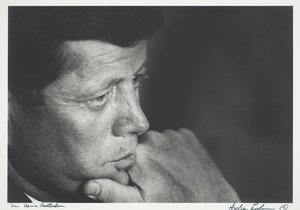
archie lieberman
1926 - 2008 , United States of America
Quick Facts
- Artistic Movement Or Style: Impressionism
- Artists Or Movements Influenced By This Artist:
- Degas
- Manet
- Artists Who Influenced This Artist:
- Eugène Boudin
- Mary Cassatt
- Date Of Birth: May 22, 1844
- Date Of Death: June 14, 1926
- Full Name: Mary Stevenson Cassatt
- Nationality: American
- Notable Artworks:
- The Mandolin Player
- Little Girl in a Blue Armchair
- Born to Sing
- Place Of Birth: Allegheny City, PA