 Preview
 Send
Send Share
Share
 Details

 Download
 Similars
 X-Ray
X-Ray Diaporama
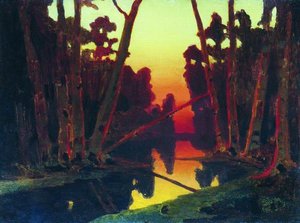
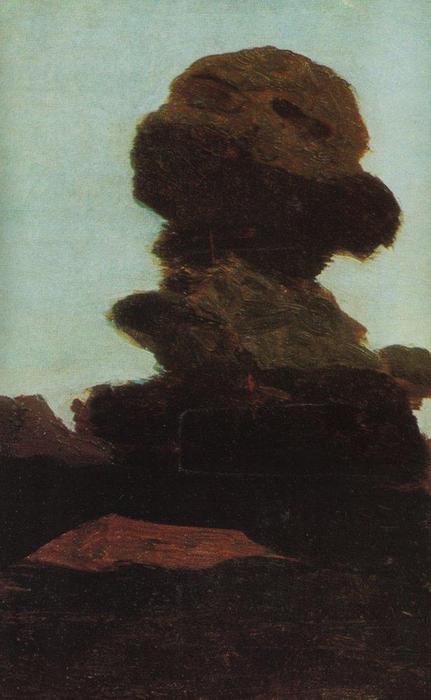
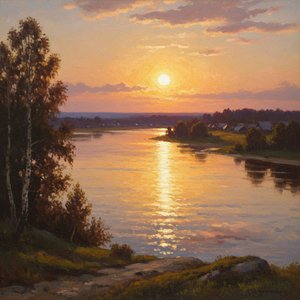
Tree against the evening sky


 Read More
Hand Made Oil Reproduction
Hand-painted oil on canvas in your size and frame, made to order by our artists. ( Buy Print Buy Image)




































Pick from our preset sizes that match the artwork's original proportions.

You may enter your own dimensions to fit a specific frame or space. If your selected size does not match the original image's proportions, we will either crop the artwork or extend the painting with additional hand-painted elements. A digital mockup will be sent for your approval before production begins.
Please note that the on-screen preview does not reflect the actual cropping or extension. Only the mockup will accurately show the final composition.
While custom sizes are available, we recommend selecting a dimension from the predefined list to preserve the original proportions.
After order, ArtsDot.com team will email client for instructions and provide a mockup preview
Worldwide Delivery () in 3/4 weeks instead of standard 5 weeks. (17 August). No compromise on quality.

Free Worldwide Express Shipping

High-Quality Linen Canvas

Full Shipping Insurance

Customs Tax Refund Guarantee

True Color Matching Guarantee

60-Day Return Policy (Defects Only)

100% Money-Back Guarantee

Bulk Discount Offer
 Glass option is only available in size under 110 CM

Tree against the evening sky
Reproduction Medium
Reproduction Size
-


Total Price
$ 263
Artwork Description
A Vision of Desert Dusk: Arkhip Kuindzhi's "Tree against the Evening Sky"
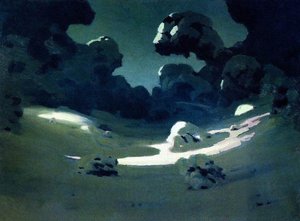
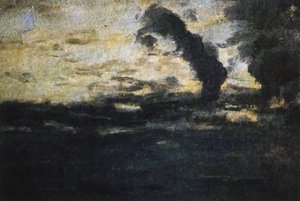
Arkhip Kuindzhi’s “Tree against the Evening Sky,” painted in 1895, offers a captivating glimpse into a stark yet beautiful desert landscape. The painting depicts a monumental rock formation crowned with a boulder, dominating the scene. A solitary tree stands resiliently near the base of this geological giant, its form silhouetted against an expansive evening sky. While seemingly simple in subject matter – rocks, a tree, and sky – Kuindzhi elevates these elements into a powerful study of light, atmosphere, and the sublime beauty of nature. The composition evokes a sense of quiet grandeur and solitude, inviting contemplation on the forces that shape our world.Luminism and the Mastery of Light
Kuindzhi was renowned as a master of *luminism*, an artistic movement focused on capturing the effects of light with unprecedented realism and emotional intensity. This painting exemplifies his signature style. Notice how Kuindzhi doesn't simply depict the colors of twilight; he conveys the *feeling* of it – the cool, diffused glow that softens the harshness of the rocks and casts long shadows across the arid ground. The sky isn’t a uniform color but a complex interplay of hues suggesting the fading light and approaching darkness. His technique involved meticulous layering of glazes to achieve this luminous effect, creating an almost ethereal quality.- Color Palette: Dominated by cool blues, purples, and muted oranges reflecting the evening sky.
- Brushwork: Characterized by smooth blending and subtle gradations of color to create a sense of atmospheric perspective.
- Luminosity: Achieved through layering techniques and careful observation of light’s interaction with natural forms.
Historical Context and Kuindzhi's Artistic Journey
Painted during a period of significant artistic innovation in Russia, “Tree against the Evening Sky” reflects a growing interest in realism and capturing the beauty of the Russian landscape. Kuindzhi, having studied under Ivan Aivazovsky (another prominent Russian landscape painter), developed his own distinct style that moved beyond traditional romanticism towards a more scientific and observational approach to depicting nature. He was fascinated by optics and atmospheric phenomena, often conducting experiments with light and color in his studio to better understand how they interacted. This dedication to understanding the science of light is evident in the painting’s remarkable realism and emotional depth.Symbolism and Emotional Resonance
Beyond its technical brilliance, “Tree against the Evening Sky” carries a subtle symbolic weight. The lone tree, standing firm against the vastness of the desert and the approaching night, can be interpreted as a symbol of resilience, endurance, and hope in the face of adversity. The imposing rock formation represents the enduring power of nature, while the fading light evokes a sense of melancholy and transience. The overall emotional impact is one of quiet awe and contemplation – a reminder of our place within the grand scheme of the natural world. It's a scene that resonates with feelings of solitude, peace, and the sublime beauty found in unexpected places.Related Artworks
Artist Biography
A Life Illuminated: The World of Arkhip Kuindzhi
Arkhip Ivanovich Kuindzhi, a name resonating with the golden hues of Ukrainian sunsets and the ethereal glow of moonlit nights, remains one of Russia’s most beloved landscape painters. Born in 1842, or perhaps 1841 – the exact date shrouded in some mystery – in Mariupol, Ukraine, his origins were humble, steeped in the multicultural tapestry of the region. Of Greek descent, a lineage tracing back to ancestors who sought refuge near the Azov Sea during Catherine II’s reign, Kuindzhi's early life was marked by hardship. Orphaned at a young age, he navigated a childhood filled with labor – working on church construction sites, tending livestock, and assisting in a corn merchant’s shop. Yet, even amidst these struggles, a spark of artistic inclination flickered, nurtured by a Greek family friend who provided him with rudimentary education. This early exposure to both the practicalities of life and the seeds of learning would profoundly shape his artistic vision.From Icon Retouching to Masterful Landscapes
Kuindzhi’s journey toward becoming a celebrated artist was not one of formal academic training, at least initially. A brief apprenticeship with the renowned marine painter Ivan Aivazovsky in Feodosia proved more focused on technical skills like paint mixing than artistic development. He then honed his craft under Adolf Fessler, a student of Aivazovsky’s, before venturing into photography as a retoucher in Taganrog. This experience, though seemingly disparate from painting, was crucial; it instilled within him a keen understanding of light and shadow, composition, and the meticulous detail required to capture reality – skills he would later masterfully translate onto canvas. His attempt to establish his own photographic studio proved unsuccessful, prompting a pivotal move to Saint Petersburg in 1865. There, he pursued studies at the Academy of Arts, though largely independently, eventually earning recognition as a free-lance artist in 1868 and becoming a full member in 1893.The Alchemy of Light: Kuindzhi’s Artistic Development
Kuindzhi's artistic development was characterized by an unwavering pursuit of capturing the expressive power of light. He wasn’t merely depicting landscapes; he was attempting to *recreate* the very experience of being immersed in nature, bathed in its radiant glow. Early works like “Autumn Weather” (1870) and “Lake Ladoga” (1870), while demonstrating his technical skill, hinted at a deeper ambition. It was with paintings such as "Deserted Village" (1874) and “The Chumak Road” (1875) that he began to address social themes, aligning himself with the realist-minded Society for Traveling Art Exhibitions. However, Kuindzhi soon transcended purely social commentary, embarking on a path of “pure poetry,” as some critics described it. His breakthrough came with "Ukrainian Night" (1876), followed by the breathtaking “Birch Grove” (1879) and the iconic “Moonlit Night on the Dnieper” (1880). These works weren’t simply representations of scenes; they were immersive experiences, achieved through innovative techniques. He employed composite methods, creating panoramic views that enveloped the viewer, and experimented with layering pigments to achieve an unparalleled luminosity. The effect was often described as almost supernatural, drawing crowds eager to witness his mastery of light.Legacy and Influence: A Master Illuminator
Kuindzhi’s influence extended beyond his captivating paintings. He became a respected teacher at the St. Petersburg Academy of Arts, achieving professorship in 1892 and heading the landscape workshop by 1894. He also played a key role in establishing the Society of Artists in 1909, fostering a new generation of talent. His work resonated deeply with artists seeking to break free from traditional academic constraints and explore the emotional power of color and light.- A Pioneer of Luminism: Kuindzhi is considered a key figure in the development of luminism, an artistic style emphasizing the effects of light in landscapes.
- Influence on Symbolism: His dramatic use of light and atmosphere also foreshadowed elements found in symbolist painting.
- National Identity & Ukrainian Pride: His depictions of Ukrainian landscapes contributed to a growing sense of national identity and artistic pride within Ukraine, even as his work was celebrated across Russia.
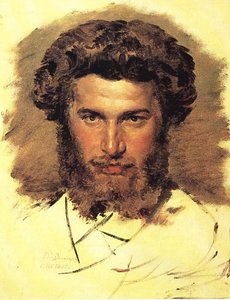
Arkhip Ivanovich Kuindzhi
1842 - 1910 , Russia
Quick Facts
- Artistic Movement Or Style: Realism, Impressionism
- Artists Who Influenced This Artist:
- Ivan Aivazovsky
- Adolf Fessler
- Date Of Birth: January 1842 (or 1841)
- Date Of Death: July 24, 1910
- Full Name: Arkhip Ivanovich Kuindzhi
- Nationality: Russian/Ukrainian/Greek
- Notable Artworks:
- Evening in Ukraine
- Birch Grove
- Night on the Dnepr
- Place Of Birth: Mariupol, Ukraine
Related Articles
Arkhip Kuindzhi: Capturing Light & Romantic Vision in Imperial Russia's Landscapes
Explore the captivating world of Arkhip Kuindzhi, a master of light and Romantic realism in Imperial Russia. Discover his iconic landscapes, artistic techniques, and lasting legacy with ArtsDot.

John Constable's Masterpieces: Explore 25 Iconic Landscapes for Your Home
Journey through John Constable's 25 most celebrated landscapes. Explore Romanticism, Dedham Vale & his masterful use of light in iconic paintings like 'Hay Wain'. Find museum-quality art reproductions and elevate your home decor on ArtsDot.com.

Beyond the Horizon: 10 Landscape Masterpieces for Your Home Decor
Journey through 10 breathtaking landscape paintings by Monet, Van Gogh & more! Explore iconic artworks, artistic techniques & find inspiration for your home decor. Museum-quality reproductions at ArtsDot.com. Discover all masterpieces on ArtsDot.com

Romantic Landscapes: 10 Masterpieces for Your Home | ArtsDot
Journey through 10 Romantic landscape masterpieces by Friedrich, Turner & Cole. Explore emotional art, sublime nature scenes & iconic 19th-century paintings. Find museum-quality reproductions for your home at ArtsDot.com – discover the full collection online!

Evocations of Place: A Historical Journey Through Landscape Art
Explore the rich history of landscape art with ArtsDot. Discover renowned artists, movements like Impressionism & Romanticism, and expert guidance for collecting timeless pieces. Find your perfect serene escape today!