 Preview
 Send
Send Share
Share
 Details

 Download
 Similars
 X-Ray
X-Ray Diaporama
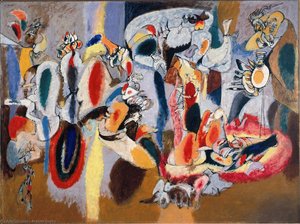
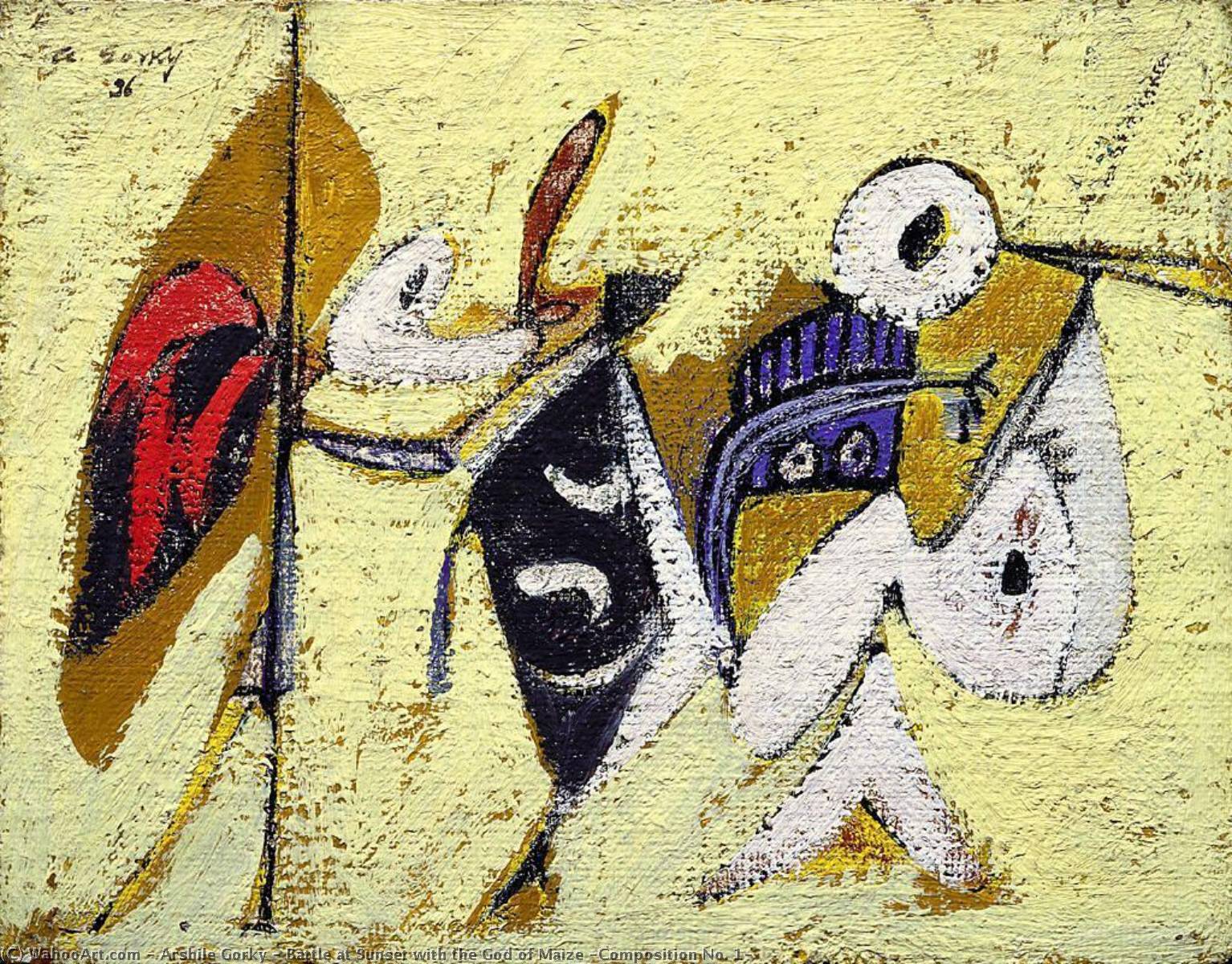
Battle at Sunset with the God of Maize (Composition No. 1)
 Surrealism
 1936
1936- Modern
 20.0 x 26.0 cm
 Read More
Hand Made Oil Reproduction
Hand-painted oil on canvas in your size and frame, made to order by our artists. ( Buy Print Buy Image)




































Pick from our preset sizes that match the artwork's original proportions.

You may enter your own dimensions to fit a specific frame or space. If your selected size does not match the original image's proportions, we will either crop the artwork or extend the painting with additional hand-painted elements. A digital mockup will be sent for your approval before production begins.
Please note that the on-screen preview does not reflect the actual cropping or extension. Only the mockup will accurately show the final composition.
While custom sizes are available, we recommend selecting a dimension from the predefined list to preserve the original proportions.
After order, ArtsDot.com team will email client for instructions and provide a mockup preview
Worldwide Delivery () in 3/4 weeks instead of standard 5 weeks. (16 August). No compromise on quality.

Free Worldwide Express Shipping

High-Quality Linen Canvas

Full Shipping Insurance

Customs Tax Refund Guarantee

True Color Matching Guarantee

60-Day Return Policy (Defects Only)

100% Money-Back Guarantee

Bulk Discount Offer
 Glass option is only available in size under 110 CM

Battle at Sunset with the God of Maize (Composition No. 1)
Reproduction Medium
Reproduction Size
-


Total Price
$ 263
Artwork Description
A Symphony of Chaos and Color
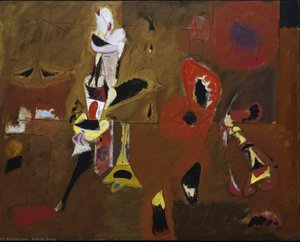
In the evocative masterpiece Battle at Sunset with the God of Maize (Composition No. 1), Arshile Gorky invites the viewer into a dreamscape where reality and abstraction collide. Created in 1936, this work serves as a profound window into the artist's psyche during a period of intense transition. The canvas vibrates with a rhythmic energy, centered around a figure wielding a drum, surrounded by a cast of characters that seem to emerge from a mythic, half-remembered dream. A vibrant yellow background bathes the scene in an otherworldly light, casting a glow that is both celebratory and unsettling. This striking use of color does more than just illuminate the figures; it creates a stage for a cosmic drama, where the boundaries between the human form and the abstract environment begin to dissolve.
The composition is a masterful dance of movement and stillness. As one gazes upon the painting, the eye is led through a complex arrangement of shapes—from the presence of a trumpet player to the enigmatic inclusion of clocks that hint at the relentless passage of time. Gorky’s technique here bridges the gap between the structured logic of Cubism and the fluid, organic spontaneity of Surrealism. The brushwork, though appearing spontaneous, is deeply intentional, building layers of texture that give the figures a biomorphic quality. This sense of life emerging from form is a hallmark of Gorky's style, making each element feel as though it is in a state of constant metamorphosis.
Symbolism and the Weight of History
To understand this work, one must look beneath its colorful surface to the shadows of history that shaped Gorky’s vision. Born into the turmoil of the Armenian Genocide, Gorky’s art often grappled with themes of displacement, memory, and survival. The "Battle" suggested in the title is not merely a physical conflict but an internal struggle—a collision of cultural identity and personal trauma. The God of Maize acts as a powerful symbol of fertility and life, yet within this specific composition, that vitality is juxtaposed against the mechanical, ticking presence of clocks, suggesting a tension between the eternal cycles of nature and the finite nature of human existence.
For the discerning collector or interior designer, this piece offers more than just aesthetic beauty; it provides a profound emotional anchor. The painting’s ability to evoke both nostalgia and dynamism makes it a versatile centerpiece for any sophisticated space. Whether placed in a gallery-style setting or as a focal point in a modern living area, Battle at Sunset with the God of Maize commands attention through its narrative depth. It is an invitation to contemplate the complexities of the human condition, making it an invaluable acquisition for those who seek art that speaks to the soul and stimulates intellectual inquiry.
Related Artworks
Artist Biography
early life and influences
arshile gorky, born vostanik manoug adoian, was a turkish-born armenian-american painter who left an indelible mark on the art world. born on april 15, 1904, in khorgom, van, ottoman empire (now turkey), gorky's life was marked by turmoil and displacement, which would later influence his artistic style.the formative years
gorky's family fled to russian-controlled territory during the armenian genocide in 1915. this pivotal event shaped his worldview and informed his future artistic expressions. in 1920, at the age of 16, gorky reunited with his father in america but struggled to form a close bond.artistic evolution
- landscape in the manner of cézanne (1927) and landscape, staten island (1927–1928) exemplify gorky's early experimentation with cubism and post-impressionism.
- his later works, such as nighttime, enigma, nostalgia (1930–1934), showcase a shift towards surrealism, characterized by complex, abstract forms.
notable works and collaborations
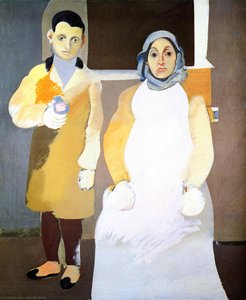
key artworks:- the artist and his mother (ca. 1926–1936), a poignant portrait inspired by a childhood photograph, showcases gorky's innovative style.
- portrait of master bill, initially believed to be a portrait of willem de kooning, is now recognized as a depiction of a swedish carpenter who worked for gorky.
- gorky's association with the works progress administration federal art project (1933) brought him alongside notable artists like alice neel, lee krasner, jackson pollock, and mark rothko.
- his work was also influenced by paul cézanne, as seen in his landscape series.
legacy and museum collections
gorky's impact on abstract expressionism is undeniable. his works can be found in various museums, including the national gallery of art, washington, d.c., and are a testament to his enduring influence.- explore gorky's artwork and other influential artists at ArtsDot.
- delve into the world of art history with ArtsDot's comprehensive timeline: wahoo art timeline.
conclusion
arshile gorky's life, marked by displacement and turmoil, translated into a body of work that would redefine the landscape of abstract expressionism. his legacy continues to inspire artists and art enthusiasts alike, a testament to the transformative power of art. view gorky's artworks on ArtsDot learn more about arshile gorky on wikipedia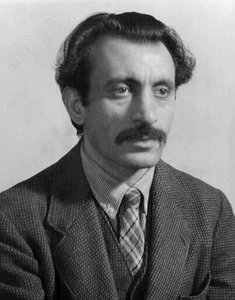
Arshile Gorky
1904 - 1948 , Turkey
Quick Facts
- Artistic Movement Or Style: Abstract Expressionism
- Artists Or Movements Influenced By This Artist: ['Abstract Expressionism']
- Artists Who Influenced This Artist:
- Paul Cézanne
- Joan Miró
- Pablo Picasso
- Date Of Birth: April 15, 1904
- Date Of Death: July 21, 1948
- Full Name: Arshile Gorky
- Nationality: Armenian-American
- Notable Artworks:
- The Artist and His Mother
- Nighttime, Enigma, Nostalgia
- Portrait of Master Bill
- Waterfall
- Composition
- Place Of Birth: Khorgom, Turkey
Related Articles
Kandinsky's Masterpieces: 25 Paintings That Define Abstract Art | ArtsDot
Journey through Wassily Kandinsky's 25 most iconic abstract paintings. Explore his revolutionary use of color, form & spiritual expressionism. Find museum-quality Kandinsky reproductions and elevate your home decor with ArtsDot.com. Discover all masterpieces on ArtsDot.com!

Geometric Abstraction's 10 Defining Masterpieces | Art for Your Home - ArtsDot
Explore 10 defining masterpieces of Geometric Abstraction! Discover Kandinsky, Mondrian & Malevich’s iconic works. Find museum-quality art reproductions and curated decor ideas to elevate your home at ArtsDot.com.

Cézanne's Masterpieces: 25 Iconic Artworks to Transform Your Space
Journey through 25 iconic artworks by Paul Cézanne – a master of Impressionism and Post-Impressionism. Explore his landscapes, still lifes, and the stories behind these timeless masterpieces. Discover museum-quality reproductions & curated decor at ArtsDot.com.
Abstract Expressionism's 10 Defining Masterpieces |
Explore 10 defining Abstract Expressionism masterpieces by Pollock, Rothko & de Kooning. Discover the stories behind these iconic paintings and find museum-quality art reproductions to elevate your home decor on .
Kazimir Malevich: 25 Masterpieces of Suprematism & Abstract Art | ArtsDot
Explore 25 iconic artworks by Kazimir Malevich, pioneer of Suprematism & abstract art. Discover the stories behind 'Black Square' and more! Find museum-quality prints & elevate your home decor with ArtsDot.com.