 Preview
 Send
Send Share
Share
 Details

 Download
 Similars
 X-Ray
X-Ray Diaporama
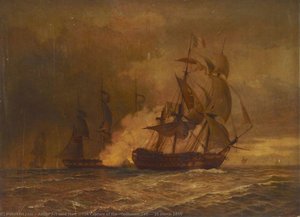
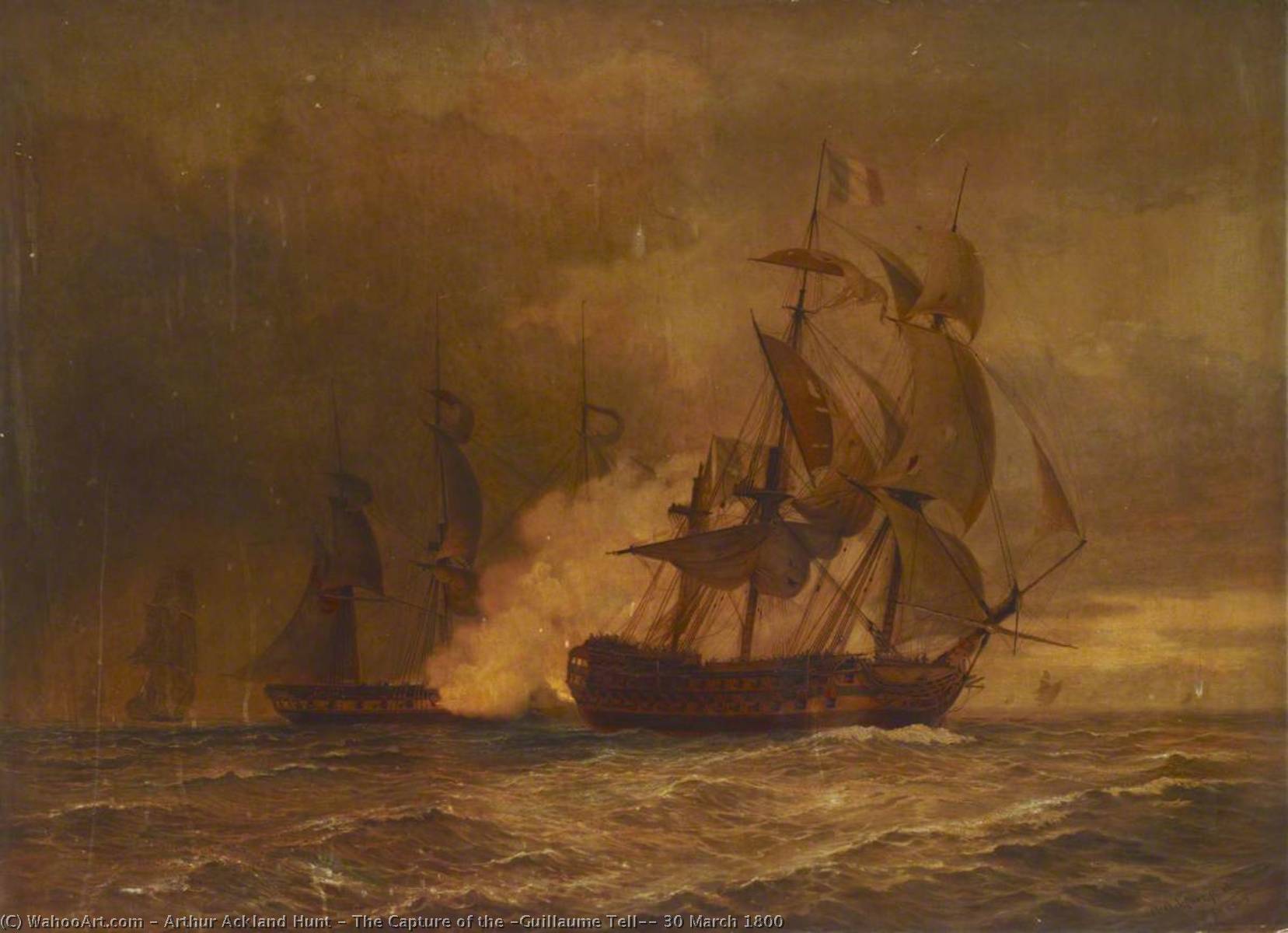
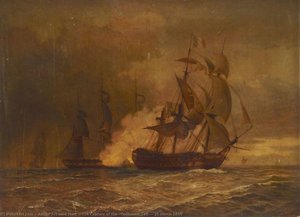
The Capture of the 'Guillaume Tell', 30 March 1800
 1889
1889 112.0 x 153.0 cm
 Read More
Hand Made Oil Reproduction
Hand-painted oil on canvas in your size and frame, made to order by our artists. ( Buy Print Buy Image)




































Pick from our preset sizes that match the artwork's original proportions.

You may enter your own dimensions to fit a specific frame or space. If your selected size does not match the original image's proportions, we will either crop the artwork or extend the painting with additional hand-painted elements. A digital mockup will be sent for your approval before production begins.
Please note that the on-screen preview does not reflect the actual cropping or extension. Only the mockup will accurately show the final composition.
While custom sizes are available, we recommend selecting a dimension from the predefined list to preserve the original proportions.
After order, ArtsDot.com team will email client for instructions and provide a mockup preview
Worldwide Delivery () in 3/4 weeks instead of standard 5 weeks. (5 September). No compromise on quality.

Free Worldwide Express Shipping

High-Quality Linen Canvas

Full Shipping Insurance

Customs Tax Refund Guarantee

True Color Matching Guarantee

60-Day Return Policy (Defects Only)

100% Money-Back Guarantee

Bulk Discount Offer
 Glass option is only available in size under 110 CM

The Capture of the 'Guillaume Tell', 30 March 1800
Reproduction Medium
Reproduction Size
-


Total Price
$ 263
Related Artworks






Artist Biography
The Visionary Realism of Arthur Ackland Hunt
In the grand tapestry of nineteenth-century British art, few threads are woven with as much meticulous detail and narrative depth as those left by Arthur Ackland Hunt. A master of his era, Hunt possessed a rare ability to bridge the gap between the rigid formalities of traditional portraiture and the burgeoning interest in historical and scientific storytelling. Born in 1841, his life spanned a transformative period in the United Kingdom, an age where the precision of the Victorian era met the expanding horizons of global discovery. His work does not merely capture a likeness; it captures a moment frozen in time, imbued with a sense of gravity and profound realism that commands the viewer's attention.
The essence of Hunt’s artistry lies in his remarkable command over light and texture. Whether he was depicting the rugged landscapes of the British Isles or the dignified presence of historical figures, his brushwork served a higher purpose: the pursuit of truth through observation. His compositions often utilized chiaroscuro—the dramatic interplay of light and shadow—to instill his subjects with a psychological depth that transcends the canvas. This technique allowed him to elevate simple scenes into epic narratives, where the flicker of candlelight or the harsh glare of a scientific experiment could signal the weight of human achievement or the quiet solitude of nature.
A Legacy of History and Science
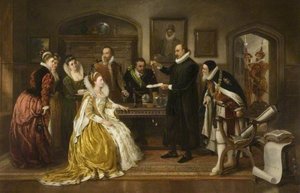
Hunt’s repertoire was as diverse as the interests of the Victorian intelligentsia. He found great inspiration in the intersection of human progress and historical legacy, often turning his gaze toward scenes that celebrated scientific milestones and royal grandeur. One of his most evocative subjects involved the depiction of intellectual pioneers, such as his work featuring Dr. William Gilberd demonstrating the wonders of electricity to the court of Queen Elizabeth. In these pieces, Hunt was more than a painter; he was a visual historian, documenting the spark of innovation and the reverence it commanded within the halls of power.
Beyond the laboratory and the court, his work resonated with the natural world and the pulse of historical events. His ability to render the atmospheric tension of a landscape or the kinetic energy of a historical capture—such as his depiction of the 'Guillaume Tell'—demonstrates a versatility that few of his contemporaries could match. His art often touched upon themes of:
- Royal Portraiture: Capturing the dignity and ceremonial splendor of the British monarchy.
- Scientific Illustration: Bringing the era's most significant physical discoveries to life through dramatic realism.
- Landscape and Nature: Exploring the rugged beauty of locations like Sark and the Lake District with an eye for geological truth.
- Historical Narrative: Reconstructing pivotal moments in European history with cinematic scale.
Artistic Significance and Enduring Influence
The historical significance of Arthur Ackland Hunt extends far beyond the borders of his era. While he was a celebrated figure within the British art scene during his lifetime, his work continues to serve as a vital window into the Victorian psyche. He captured an age that was simultaneously obsessed with the precision of the measurable world and the romanticism of the past. Through his portraits, we see the faces of an empire; through his landscapes, we feel the untamed spirit of the land; and through his historical scenes, we witness the very foundations of modern scientific thought.
Today, as we look back upon his body of work, we find a painter who refused to settle for the superficial. His dedication to detailed realism ensured that his subjects remained vibrant and relevant long after the era of their creation had passed. Hunt’s legacy remains etched in the annals of art history, reminding us that true mastery lies in the ability to make the past breathe with a life that is both hauntingly beautiful and undeniably real.
Quick Facts
- Artistic Movement Or Style: Detailed realism
- Date Of Birth: 1841
- Date Of Death: 1914
- Full Name: Arthur Ackland Hunt
- Nationality: British
- Notable Artworks:
- The Lion Rock, Sark
- The Capture of the 'Guillaume Tell'
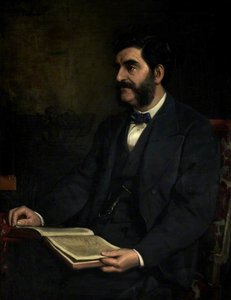
- Hormuzd Rassam
- Dr William Gilberd Showing Experiments