

 Preview
 Send
Send Share
Share
 Details

 Download
 Similars
 X-Ray
X-Ray Diaporama
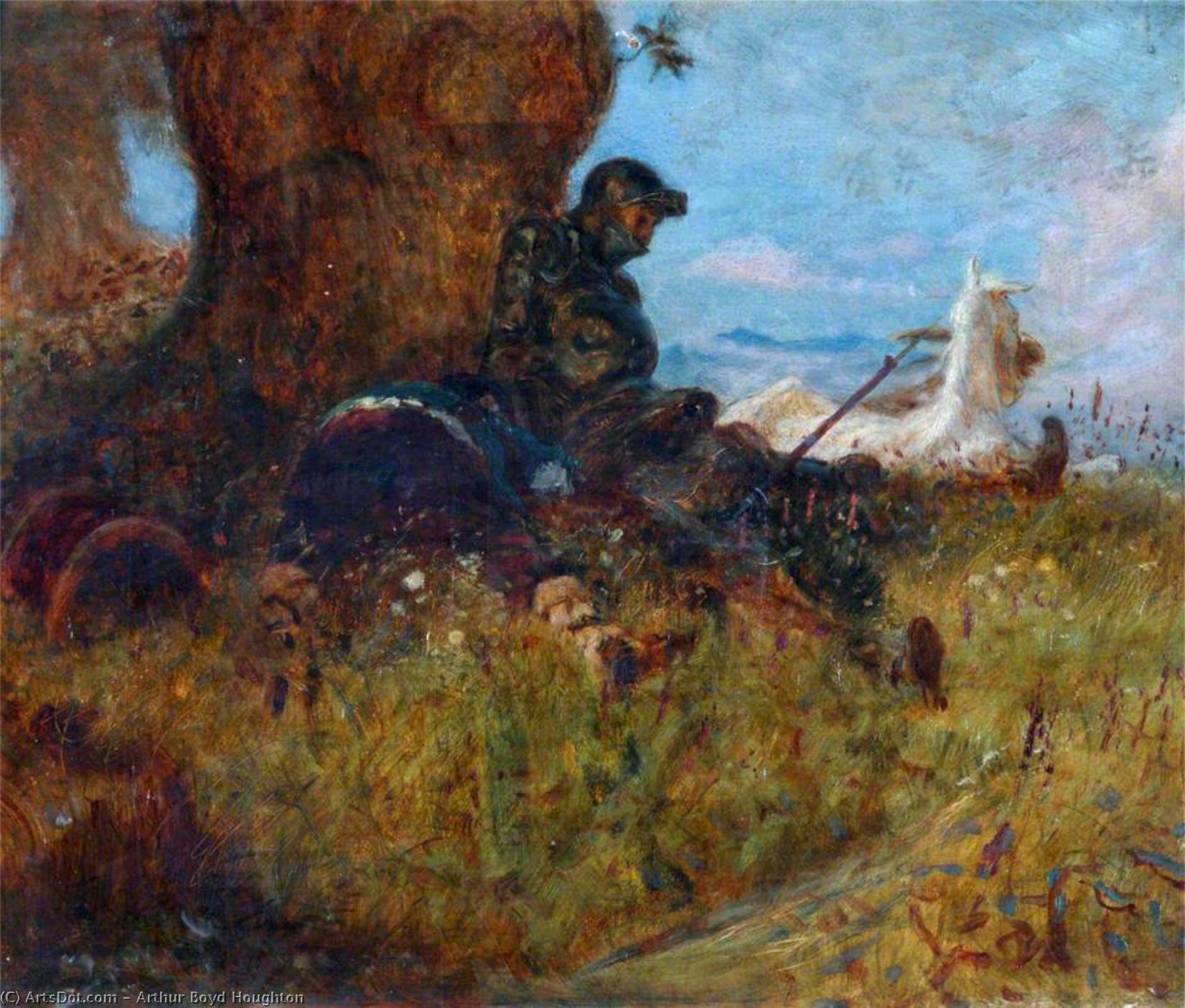
Don Quixote and Rosinante Reposing under a Tree
 Read More
Purchase a high-resolution, enhanced digital image, far superior to the online preview.
Each file is meticulously prepared by our in-house specialists using advanced tools and expert manual retouching. We ensure every image has exceptional clarity, precise color accuracy, and fine detail.
The final file is delivered via email within 72 hours, optimized for immediate use in professional, editorial, and print environments. This is the same quality trusted by top-tier design studios, publishers, and galleries.
Digital Image
Download a high-resolution file for personal display, printing, and creative projects. ( Buy Print Buy Hand Made Painting)
Included in Every Digital Image Order
Expert Digital Delivery, Guaranteed
When you choose ArtsDot.com, you're not just getting an image - you're receiving a professionally enhanced digital artwork, crafted with precision and backed by a satisfaction guarantee. Here's everything that comes with your order, automatically:

Fast Email Delivery
Your high-resolution digital image file will be emailed to you within 72 hours of ordering - ready for immediate use.

AI-Enhanced Digital File
Your artwork is professionally optimized using advanced AI tools and manual editing, ensuring maximum detail, clarity, and color accuracy.

Free Lifetime Re-Delivery
Accidentally deleted or lost your file? No worries - we'll resend it to you anytime, free of charge.

No Import Fees - Ever
Enjoy your artwork instantly with zero customs, duties, or delivery fees - digital downloads are always tax-free.

Color Accuracy Guarantee
We ensure your digital image reflects the original colors as closely as possible using professional tools and color management.

60-Day Satisfaction Guarantee
If you're not satisfied with your digital image, we'll revise it or refund 100% within 60 days - no questions asked.

100% Money-Back Guarantee
Not satisfied? Get a full refund within 60 days of receiving your digital file - no questions asked.

Bulk Order Discounts
Buy 3 images, save 10% - Buy 5, save 15% - Buy 10+, save 20%. Great for creative projects, galleries, and agencies.
Related Artworks
Artist Biography
Winslow Homer: A Master of American Light and Emotion
Winslow Homer (February 24, 1836 – September 29, 1910) stands as a towering figure in the history of American art. More than simply a painter, he was a keen observer of human experience, a masterful recorder of the natural world, and a pivotal voice in shaping the distinctly American visual language of the late 19th century. Born into a New England family steeped in artistic tradition – his mother a gifted watercolorist – Homer’s journey from commercial illustrator to celebrated artist is a testament to his relentless dedication and evolving vision. His legacy rests not just on technical skill, but on his ability to imbue his scenes with profound emotion, capturing the essence of life's struggles and triumphs with remarkable honesty.
Early Years and Artistic Foundations
Homer’s childhood in rural Cambridge, Massachusetts, provided a grounding in observation and a deep connection to the natural world. His mother’s influence was paramount; she instilled in him a love of art and taught him the fundamentals of watercolor painting. Despite his happy upbringing, Homer's father, Charles Homer, was a restless businessman whose frequent absences and pursuit of fortune created an atmosphere of instability. This early experience likely contributed to Homer’s later fascination with themes of resilience and endurance. After graduating from high school, he secured an apprenticeship at the Boston lithographic firm of J.H. Bufford, a demanding environment that initially involved repetitive work producing illustrations for sheet music. However, this period proved crucial, exposing him to the technical aspects of printmaking and sharpening his observational skills.
- Early Commercial Work: Homer’s initial career as an illustrator for periodicals like *Ballou's Pictorial* and *Harper’s Weekly* provided valuable experience in capturing fleeting moments and conveying narratives through visual means.
- First Paintings: His first paintings, exhibited at the National Academy of Design in 1860, marked a significant shift towards his artistic ambitions.
The Civil War Years and Shifting Perspectives
The American Civil War profoundly impacted Homer’s work. Initially assigned to document camp life for *Harper's Weekly*, he moved beyond the conventional depictions of battle, focusing instead on the everyday realities of soldiers – their loneliness, boredom, and quiet moments of reflection. His paintings from this period, such as *After the Battle* (1863) and *The Veteran in a New Field* (1864), are notable for their understated realism and poignant portrayal of human suffering. These works demonstrated a growing awareness of the war’s psychological toll, moving beyond simplistic narratives of heroism to explore the complexities of trauma and loss.
- Documenting Camp Life: Homer's illustrations for *Harper’s Weekly* offered a stark contrast to romanticized depictions of warfare.
- Emotional Depth: Paintings like *The Veteran in a New Field* captured the quiet dignity and disillusionment of returning soldiers.
Mastering Light, Color, and the Sea
Following the Civil War, Homer’s artistic focus shifted dramatically. He spent several years in Paris (1866-1869), an experience that profoundly influenced his style. While he resisted direct influence from the French avant-garde, he absorbed their emphasis on capturing natural light and atmosphere, as well as their interest in depicting everyday life. He returned to America with a renewed commitment to painting outdoors, developing a distinctive technique characterized by loose brushwork, vibrant colors, and an intuitive understanding of how light interacts with form. His seascapes became particularly renowned, capturing the power and beauty of the ocean with remarkable dynamism and emotional intensity. Works like *The Gulf Stream* (1899) exemplify his ability to convey both the physical force of nature and the vulnerability of human beings in its presence.
- Influence of Paris: Homer’s time abroad fostered a greater appreciation for natural light and atmospheric perspective.
- Seascape Mastery: His seascapes, such as *The Gulf Stream*, are celebrated for their dynamic compositions and evocative portrayal of the ocean's power.
Later Years and Enduring Legacy
In his later years, Homer continued to explore themes of rural life, domesticity, and the human condition. He spent a significant period in Prouts Neck, Maine, where he painted scenes of fishermen, women hauling nets, and children at play. These works, imbued with a sense of quiet dignity and understated beauty, reflect his deep empathy for ordinary people. Winslow Homer died in 1910, leaving behind a vast and influential body of work that continues to resonate with audiences today. His paintings are prized for their technical brilliance, emotional depth, and enduring portrayal of the American experience – a testament to his status as one of America’s greatest artists.
Winslow Homer's art remains a powerful reflection of the American spirit, capturing both its triumphs and its struggles with remarkable sensitivity and skill. His legacy endures not only in museums and galleries but also in the hearts of those who connect with his evocative depictions of life, light, and emotion.
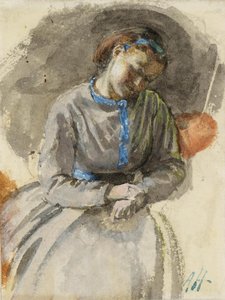
arthur boyd houghton
1836 - 1875 , India
Quick Facts
- Artistic Movement Or Style: Realism, American Realism
- Artists Or Movements Influenced By This Artist:
- French Impressionism
- Japanese art
- Artists Who Influenced This Artist: ['His mother, Henrietta Maria Homer']
- Date Of Birth: February 24, 1836
- Date Of Death: September 29, 1910
- Full Name: Winslow Homer
- Nationality: American
- Notable Artworks:
- Snap the Whip
- The Veteran in a New Field
- Breezing Up (A Fair Wind)
- Homer and his Muse
- Place Of Birth: Boston, Massachusetts

