

 Preview
 Send
Send Share
Share
 Details

 Download
 Similars
 X-Ray
X-Ray Diaporama
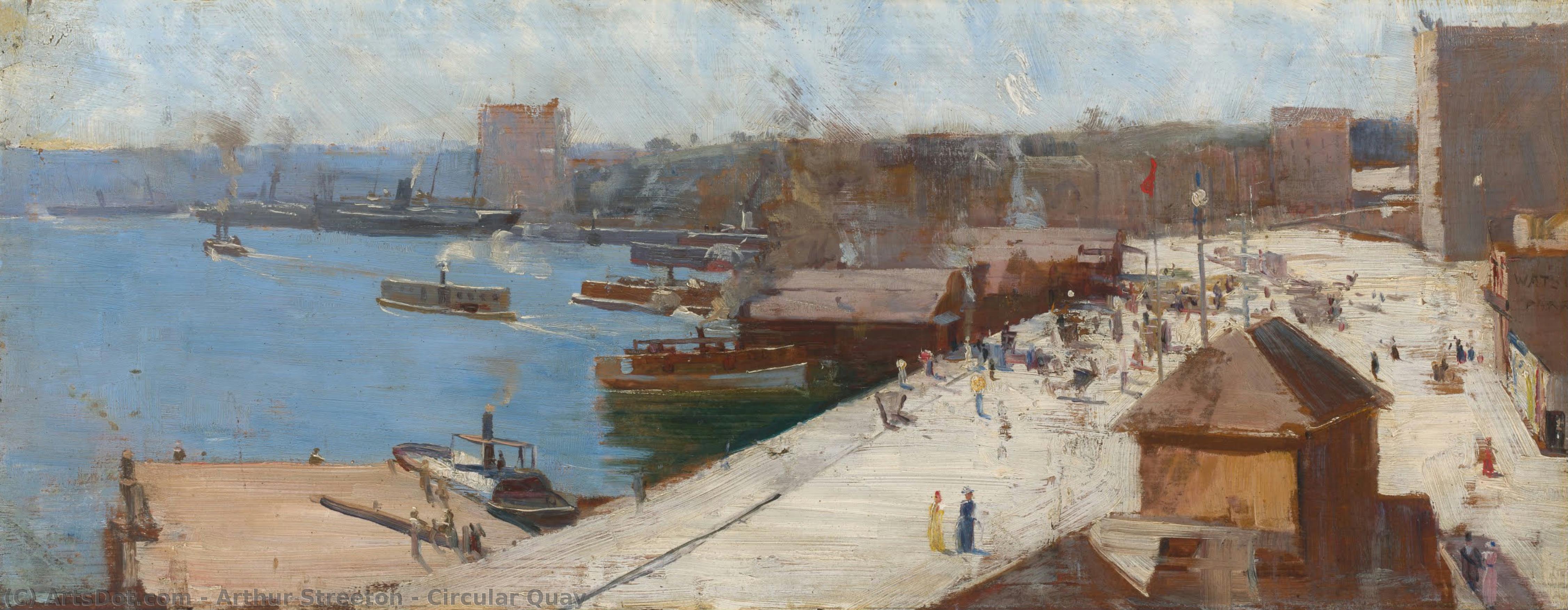
Circular Quay
 Oil On Canvas
- WallArt
- Australian Impressionism
 1892
1892- 19th Century
 476.0 x 193.0 cm
 National Gallery of Australia
 Read More
Purchase a high-resolution, enhanced digital image, far superior to the online preview.
Each file is meticulously prepared by our in-house specialists using advanced tools and expert manual retouching. We ensure every image has exceptional clarity, precise color accuracy, and fine detail.
The final file is delivered via email within 72 hours, optimized for immediate use in professional, editorial, and print environments. This is the same quality trusted by top-tier design studios, publishers, and galleries.
Digital Image
Download a high-resolution file for personal display, printing, and creative projects. ( Buy Print Buy Hand Made Painting)
Included in Every Digital Image Order
Expert Digital Delivery, Guaranteed
When you choose ArtsDot.com, you're not just getting an image - you're receiving a professionally enhanced digital artwork, crafted with precision and backed by a satisfaction guarantee. Here's everything that comes with your order, automatically:

Fast Email Delivery
Your high-resolution digital image file will be emailed to you within 72 hours of ordering - ready for immediate use.

AI-Enhanced Digital File
Your artwork is professionally optimized using advanced AI tools and manual editing, ensuring maximum detail, clarity, and color accuracy.

Free Lifetime Re-Delivery
Accidentally deleted or lost your file? No worries - we'll resend it to you anytime, free of charge.

No Import Fees - Ever
Enjoy your artwork instantly with zero customs, duties, or delivery fees - digital downloads are always tax-free.

Color Accuracy Guarantee
We ensure your digital image reflects the original colors as closely as possible using professional tools and color management.

60-Day Satisfaction Guarantee
If you're not satisfied with your digital image, we'll revise it or refund 100% within 60 days - no questions asked.

100% Money-Back Guarantee
Not satisfied? Get a full refund within 60 days of receiving your digital file - no questions asked.

Bulk Order Discounts
Buy 3 images, save 10% - Buy 5, save 15% - Buy 10+, save 20%. Great for creative projects, galleries, and agencies.
Collectible Description
A Symphony of Light and Motion at Circular Quay
In the vast, shimmering expanse of Arthur Streeton’s 1892 masterpiece, Circular Quay, we are transported to a pivotal moment in Australian history, where the burgeoning energy of Sydney meets the timeless rhythm of the sea. This monumental oil on canvas, stretching an impressive 476 x 193 cm, is far more than a mere maritime landscape; it is a breathtaking window into a world caught between the colonial past and a modernizing future. As one gazes upon the bustling harbor, the eye is immediately drawn to the intricate dance of vessels—ranging from sturdy, working boats to elegant craft—all docked at the pier, their masts creating a rhythmic verticality against the sprawling horizontal expanse of the water.
Streeton, a titan of the Heidelberg School and a pioneer of Australian Impressionism, utilizes his legendary ability to capture the "golden light" to breathe life into this scene. The technique is nothing short of masterful; through fluid, confident brushstrokes, he captures the atmospheric haze and the sparkling reflections of the sun upon the harbor's surface. There is a palpable sense of movement in the air—the gentle sway of boats, the distant bustle of the crowd, and even the quiet presence of a horse amidst the throng, serving as a poignant reminder of an era when animal power still shared the streets with the rising tide of industrial progress.
The Soul of Australian Impressionism
To understand this painting is to understand the very essence of Streeton’s artistic mission. He sought to move away from the muted, somber palettes of European traditions to embrace the brilliant, high-key luminosity unique to the Australian landscape. In Circular Quay, this is achieved through a sophisticated interplay of light and shadow that creates a profound sense of depth and atmosphere. The composition invites the viewer to wander through the scene, moving from the intimate details of the figures near the water's edge to the expansive, sun-drenched horizon, evoking a feeling of boundless possibility and the vibrant spirit of a young nation.
For the discerning collector or interior designer, this artwork offers an unparalleled emotional resonance. It possesses a rare ability to anchor a room with its grand scale and historical gravity, while simultaneously providing a sense of airy, light-filled tranquility. The painting does not merely depict a location; it captures a mood—a nostalgic yet energetic celebration of life in motion. Whether placed in a sophisticated gallery setting or as a centerpiece in a luxurious contemporary residence, this reproduction serves as a profound testament to the enduring beauty of Sydney’s most iconic harbor and the immortal vision of one of Australia's greatest masters.
Related Artworks

Artist Biography
A Pioneer of the Australian Light: The Life and Art of Arthur Streeton
Arthur Ernest Streeton, affectionately known as “Smike” to his contemporaries, stands as a monumental figure in Australian art history. Born on April 8, 1867, at Mount Duneed, Victoria, his life was inextricably linked to the evolving identity of a nation finding its voice through landscape painting. From humble beginnings – his parents were English migrants who met during their voyage to Australia – Streeton’s artistic journey began with studies at the National Gallery School in Melbourne from 1882 to 1887, laying the groundwork for a career that would define Australian Impressionism and the Heidelberg School. These early years weren't merely about technical skill; they were about discovering a way to capture the unique quality of light and atmosphere that characterized the Australian bush – a light unlike anything seen in Europe, and a challenge that captivated Streeton throughout his life. He supplemented his formal training with apprenticeships as a lithographer, experiences which undoubtedly informed his understanding of composition and tonal values.The Heidelberg School and the Eaglemont Camp
Streeton’s artistic maturation coincided with the burgeoning of the Heidelberg School, a group of artists determined to forge an authentically Australian style. His friendships with Tom Roberts and Frederick McCubbin were pivotal; together they embarked on *plein air* painting excursions, seeking to represent the landscape directly from nature. This commitment to working outdoors, inspired by French Impressionism but adapted to the distinctly Australian context, became a hallmark of their work. The establishment of the Eaglemont Camp in 1888 marked a turning point. Sharing a farmhouse on the outskirts of Melbourne with fellow artists, Streeton entered a period of intense creativity. It was here that he produced some of his most iconic works, including Golden Summer, Eaglemont (1889) and Still glides the stream, and shall for ever glide (1890). These paintings weren’t simply depictions of scenery; they were evocations of a feeling – the heat haze shimmering over golden fields, the stillness of a summer afternoon. The camp fostered an environment of shared experimentation and mutual encouragement, solidifying the Heidelberg School's reputation as a force to be reckoned with in the Australian art world. The group’s bold approach culminated in the controversial “9 by 5 Impression Exhibition” in 1889, showcasing small, rapidly executed paintings that challenged conventional artistic norms.Seeking Recognition and Returning Home
Driven by ambition and a desire for wider recognition, Streeton sailed for London on the *Polynesien* in 1897. While he achieved some success exhibiting at the Royal Academy, including representation in 1900, he found it difficult to replicate the acclaim he had enjoyed in Australia. The European art scene was crowded and competitive, and his distinctly Australian vision didn’t always resonate with established tastes. He continued to paint, exploring different subjects – Venetian scenes like Palazzo Labia, Venice (1908) demonstrate a shift in focus but retain his characteristic sensitivity to light and color. The outbreak of World War I saw Streeton attempting to contribute through service as an orderly with the Royal Army Medical Corps, later becoming an official war artist in 1918. His wartime paintings, while documenting the devastation of the Western Front, often focused on the landscape itself, reflecting his enduring fascination with the natural world. He returned to Australia in 1923 a celebrated figure, knighted in 1937 for his contributions to art.Legacy and Lasting Influence
Arthur Streeton’s legacy extends far beyond his individual paintings. He played a crucial role in establishing a uniquely Australian artistic identity, one that celebrated the beauty and vastness of the continent. His work helped to define how Australians saw themselves and their land. His influence can be seen in generations of landscape painters who followed, inspired by his ability to capture the essence of the Australian light and atmosphere. He was a prolific writer and art critic, further shaping the discourse around Australian art. Though he experienced periods of frustration and self-doubt, Streeton remained committed to his artistic vision until his death on September 1, 1943, at Olinda, Victoria. His paintings continue to captivate audiences today, offering a timeless glimpse into the heart and soul of Australia.Key Works & Themes
- Golden Summer, Eaglemont (1889): Perhaps his most famous work, embodying the heat and light of an Australian summer.
- Still glides the stream, and shall for ever glide (1890): A lyrical depiction of the Yarra River, showcasing his mastery of atmospheric perspective.
- Fire’s on (1891): A powerful representation of the Australian bushfire landscape, capturing both its beauty and danger.
- Palazzo Labia, Venice (1908): Demonstrates his ability to adapt his Impressionistic style to European subjects.
- Egyptian Drink Vendor (1897): A vibrant scene reflecting his travels and exploration of different cultures.
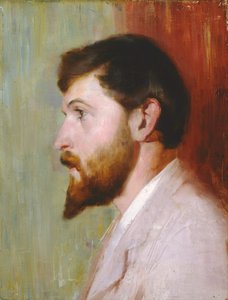
Arthur Streeton
1867 - 1943 , Australia
Quick Facts
- Artistic Movement Or Style: Impressionism, Heidelberg School
- Artists Or Movements Influenced By This Artist: Australian Impressionism
- Artists Who Influenced This Artist:
- Louis Buvelot
- J.M.W. Turner
- Date Of Birth: April 8, 1867
- Date Of Death: September 1, 1943
- Full Name: Arthur Ernest Streeton
- Nationality: Australian
- Notable Artworks:
- Golden Summer, Eaglemont
- Still glides the stream
- Palazzo Labia, Venice
- Egyptian Drink Vendor
- Sirius Cove
- Place Of Birth: Mount Duneed, Australia

