 Preview
 Send
Send Share
Share
 Details

 Download
 Similars
 X-Ray
X-Ray Diaporama
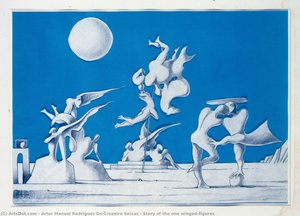
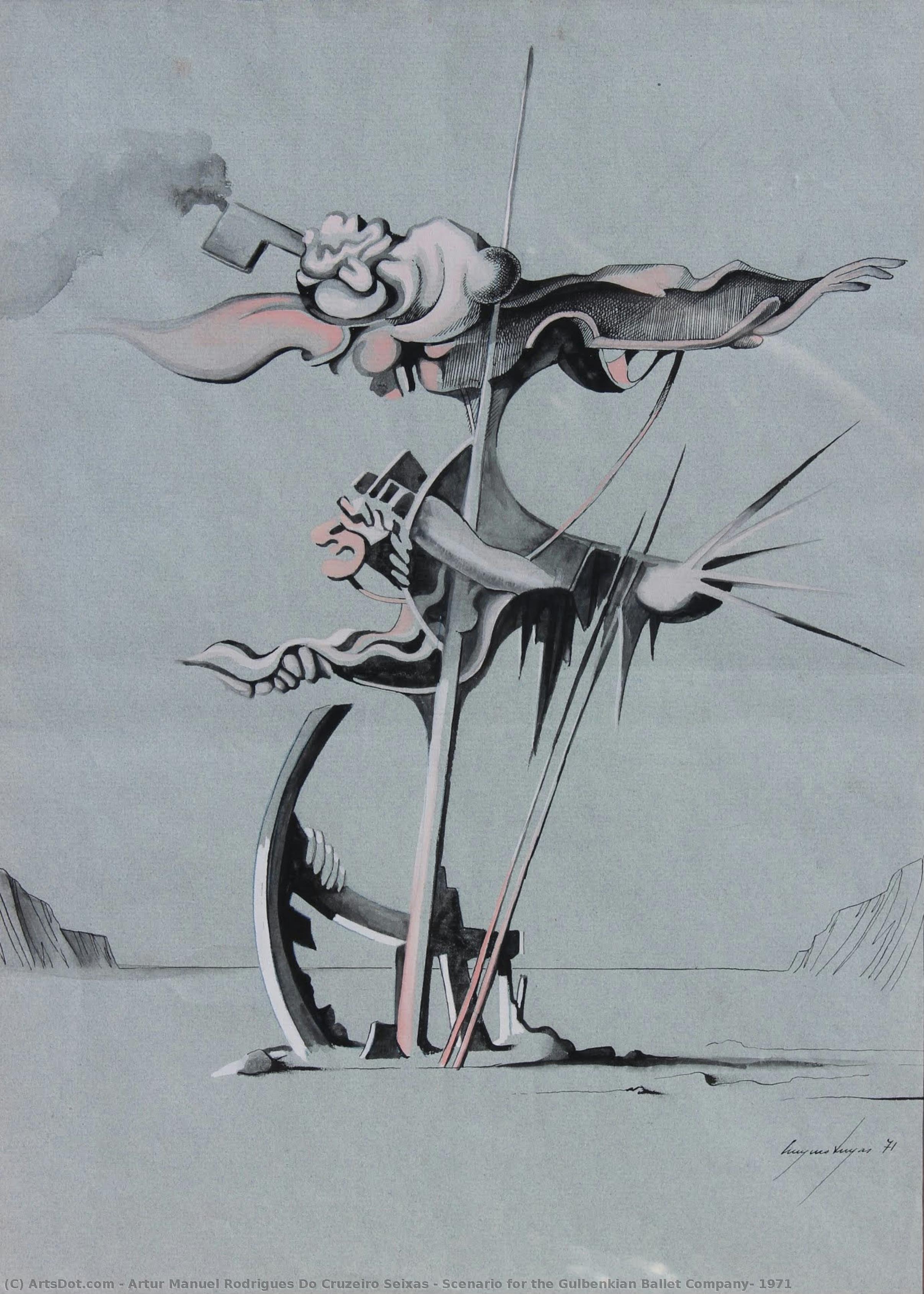
Scenario for the Gulbenkian Ballet Company, 1971
 Mixed Media
- WallArt
- Surrealism
 Modern
 27.0 x 38.0 cm
 Museu da Fundação Dionísio Pinheiro e Alice Cardoso Pinheiro
 Read More
Hand Made Oil Reproduction
Hand-painted oil on canvas in your size and frame, made to order by our artists. ( Buy Print Buy Image)




































Pick from our preset sizes that match the artwork's original proportions.

You may enter your own dimensions to fit a specific frame or space. If your selected size does not match the original image's proportions, we will either crop the artwork or extend the painting with additional hand-painted elements. A digital mockup will be sent for your approval before production begins.
Please note that the on-screen preview does not reflect the actual cropping or extension. Only the mockup will accurately show the final composition.
While custom sizes are available, we recommend selecting a dimension from the predefined list to preserve the original proportions.
After order, ArtsDot.com team will email client for instructions and provide a mockup preview
Worldwide Delivery () in 3/4 weeks instead of standard 5 weeks. (6 September). No compromise on quality.

Free Worldwide Express Shipping

High-Quality Linen Canvas

Full Shipping Insurance

Customs Tax Refund Guarantee

True Color Matching Guarantee

60-Day Return Policy (Defects Only)

100% Money-Back Guarantee

Bulk Discount Offer
 Glass option is only available in size under 110 CM

Scenario for the Gulbenkian Ballet Company, 1971
Reproduction Medium
Reproduction Size
-


Total Price
$ 263
Artwork Description: Scenario for the Gulbenkian Ballet Company, 1971
- Artist: Artur Manuel Rodrigues do Cruzeiro Seixas
- Date: Unknown (circa 1971)
- Size: 27 x 38 cm
- Medium: Likely watercolor or gouache on paper
Subject and Composition
This striking artwork, titled "Scenario for the Gulbenkian Ballet Company, 1971," presents a surrealist vision intended as a study for a ballet scenario. The central figure immediately commands attention – an individual riding a bicycle while wielding what appears to be a weapon. This juxtaposition of everyday objects with a potential threat creates an unsettling and dreamlike atmosphere. The composition is dominated by this central figure, occupying most of the frame. A minimalistic background of muted grey tones provides a stark contrast, hinting at landscape elements like hills or rocks in the lower left corner. The use of dynamic lines contributes to a sense of movement and distortion, particularly around the bicycle wheels and the figure itself.
Style and Technique: Surrealist Expression
"Scenario for the Gulbenkian Ballet Company" is firmly rooted within the Surrealist art movement. Surrealism, known for its illogical juxtapositions, distorted forms, and exploration of the subconscious, is evident in every aspect of this piece. The artist employs a restrained color palette – primarily shades of grey, beige, and muted pinks/reds – to create a flat, dreamlike atmosphere. Lines are used expressively, often appearing jagged or distorted, further enhancing the sense of unease and disorientation characteristic of Surrealist art. The painting appears relatively smooth, suggesting layering and blending of colors achieved through techniques like watercolor or gouache on paper.
Symbolism and Emotional Impact
The symbolism within this artwork is open to interpretation, a hallmark of Surrealism. The figure on the bicycle, armed with a weapon, evokes feelings of tension, anxiety, and potential threat. Is it a commentary on societal anxieties? A representation of a character's internal conflict within the ballet scenario? The surreal setting and distorted forms amplify these emotions, contributing to an overall sense of disorientation and dreamlike strangeness. The artist’s choice of muted colors reinforces this unsettling mood, preventing any bright or cheerful interpretations.
Historical Context and the Artist
Artur Manuel Rodrigues do Cruzeiro Seixas (1920-2020), also known as Cruzeiro Seixas, was a Portuguese painter and poet deeply involved in the Surrealist movement. He collaborated with prominent surrealists like Mário Cesariny and was part of the Surrealist Group of Lisbon. This artwork reflects his engagement with themes of dreamlike imagery and literary expression. The piece's creation for the Gulbenkian Ballet Company suggests an exploration of narrative through visual means, demonstrating Seixas’ ability to translate abstract concepts into compelling artistic form. His work often explored unsettling imagery and challenged conventional perspectives, making this piece a representative example of his unique artistic vision.
Related Artworks
Artist Biography
A Life Immersed in Surrealism: The World of Cruzeiro Seixas
Artur Manuel Rodrigues do Cruzeiro Seixas, known simply as Cruzeiro Seixas, was a figure who resisted easy categorization—a “man who paints,” as he preferred to be called rather than a painter, and a profoundly influential Portuguese poet. Born in Amadora, Portugal, in 1920, and passing away in Lisbon in 2020 at the remarkable age of 99, Seixas’s long life was deeply interwoven with the evolution of surrealism, not merely as an artistic style but as a philosophical stance against convention and a passionate exploration of the subconscious. His work is characterized by dreamlike imagery, literary allusions, and a unique visual language that often evokes both unsettling mystery and playful delight.Early Influences and the Lisbon Surrealist Group
Seixas’s artistic journey began in the fertile intellectual environment of António Arroio School, where he forged lasting friendships with key figures who would shape Portugal's cultural landscape: Mário Cesariny, Marcelino Vespeira, Júlio Pomar, and Fernando Azevedo. This circle became the nucleus of what would emerge as the Surrealist Group of Lisbon in the mid-1940s, born from a schism within the broader Portuguese surrealist movement. Initially drawn to neorealism, Seixas quickly gravitated towards the liberating principles of surrealism—a rejection of rational thought and an embrace of the irrational, the fantastical, and the power of free association. The 1949 exhibition of the group marked a pivotal moment, establishing their presence and challenging the prevailing artistic norms. This period was crucial in defining Seixas’s aesthetic trajectory, fostering his commitment to exploring the depths of human consciousness through visual expression.A Journey Beyond Borders: Africa, Asia, and Poetic Beginnings
The 1950s saw Seixas embark on a transformative journey that would profoundly impact both his artistic vision and his poetic voice. Enlisting in the Merchant Navy, he traveled extensively throughout Africa, India, and Asia—experiences that broadened his horizons and infused his work with new perspectives and symbolic resonances. His time in Angola, beginning in 1951, proved particularly significant; he worked at the Luanda Museum while simultaneously developing his poetic production. This period marked the genesis of a powerful literary voice alongside his increasingly distinctive visual style. Early exhibitions during this time sparked considerable debate, demonstrating Seixas’s willingness to challenge expectations and provoke thought through unconventional imagery and object-based works.Collaboration, Recognition, and a Unique Artistic Vision
Upon returning to Portugal in 1964, Seixas continued to push the boundaries of artistic expression. His collaboration with Natália Correia on the renowned “Anthology of Erotic and Satirical Portuguese Poetry” in 1966 showcased his ability to seamlessly blend visual art with literary themes. The late 1960s brought further recognition, including a scholarship from the Calouste Gulbenkian Foundation, which allowed him to dedicate himself fully to his artistic pursuits. Retrospective exhibitions and solo shows at galleries like Buchholz and Divulgação solidified his position within the Portuguese art world. Throughout his career, Seixas maintained a steadfast commitment to surrealism, engaging with international colleagues and contributing to magazines dedicated to the movement. His work is characterized by a “broken world” where dreamlike elements coexist with unsettling violence and a playful exploration of artistic history—a unique synthesis that defies easy categorization.Legacy and Historical Significance
Cruzeiro Seixas’s enduring legacy lies in his unwavering dedication to surrealism as a means of exploring the complexities of human experience. He wasn't simply replicating a style; he was using it as a vehicle for profound introspection, literary engagement, and social commentary. His paintings, often imbued with symbolic figures and haunting imagery, invite viewers into a realm where logic is suspended and the subconscious takes center stage. The recognition bestowed upon him—including the rank of Grand Officer of the Ancient, Nobilíssimo and Enlightened Military Order of Santiago da Espada—underscores his significant contribution to Portuguese culture. He remained a vital force in the art world until his death, continuing to challenge conventions and inspire generations of artists with his unique vision and unwavering commitment to the power of imagination. His work stands as a testament to the enduring relevance of surrealism and its capacity to illuminate the hidden depths of the human psyche.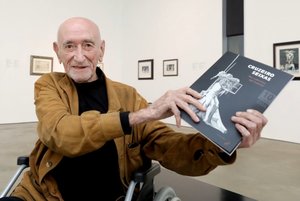
artur manuel rodrigues do cruzeiro seixas
1920 - 2020 , Portugal
Quick Facts
- Artistic Movement Or Style: 1920s Art Deco
- Artists Or Movements Influenced By This Artist:
- Dada
- Surrealism
- Expressionism
- Artists Who Influenced This Artist: ['Marcel Duchamp']
- Date Of Death: 2020
- Place Of Birth: WahooArt
Related Articles
Surrealism's Greatest Hits: 10 Masterpieces for Your Home |
Journey into the dreamlike world of Surrealism! Explore 10 masterpieces by Dali, Magritte & Miró. Discover the stories behind these iconic paintings and find museum-quality art reproductions for your home at .
Salvador Dalí's Masterpieces: 25 Surrealist Visions for Your Home | ArtsDot
Journey into the surreal world of Salvador Dalí! Explore 25 iconic paintings—from 'The Persistence of Memory' to his boldest creations. Discover the stories behind these masterpieces & find museum-quality art reproductions for your home at ArtsDot.com.

Beyond Reality: A Beginner's Guide to the Magic of Surrealism for the Modern Collector
Embark on a visual journey into Surrealism. Discover the magic of dreamlike landscapes, iconic masters like Dalí, and expert tips for collecting surrealist masterpieces to transform your home with intrigue and wonder.
Dreamscapes & Disrupted Realities: Exploring Surrealism's Enduring Influence
Explore the fascinating world of Surrealism! Discover its origins, key artists like Dalí & Magritte, and enduring influence on art & culture. Expert insights & high-quality reproductions at ArtsDot.
Pop Surrealism: A Collision of Culture, Dreams & the Subconscious in Post-War Art
Explore the captivating world of Pop Surrealism with ArtsDot. Discover key artists like George Condo & Robert Williams, investment potential, and the movement's cultural impact. Expert insights for collectors.