

 Preview
 Send
Send Share
Share
 Details

 Download
 Similars
 X-Ray
X-Ray Diaporama
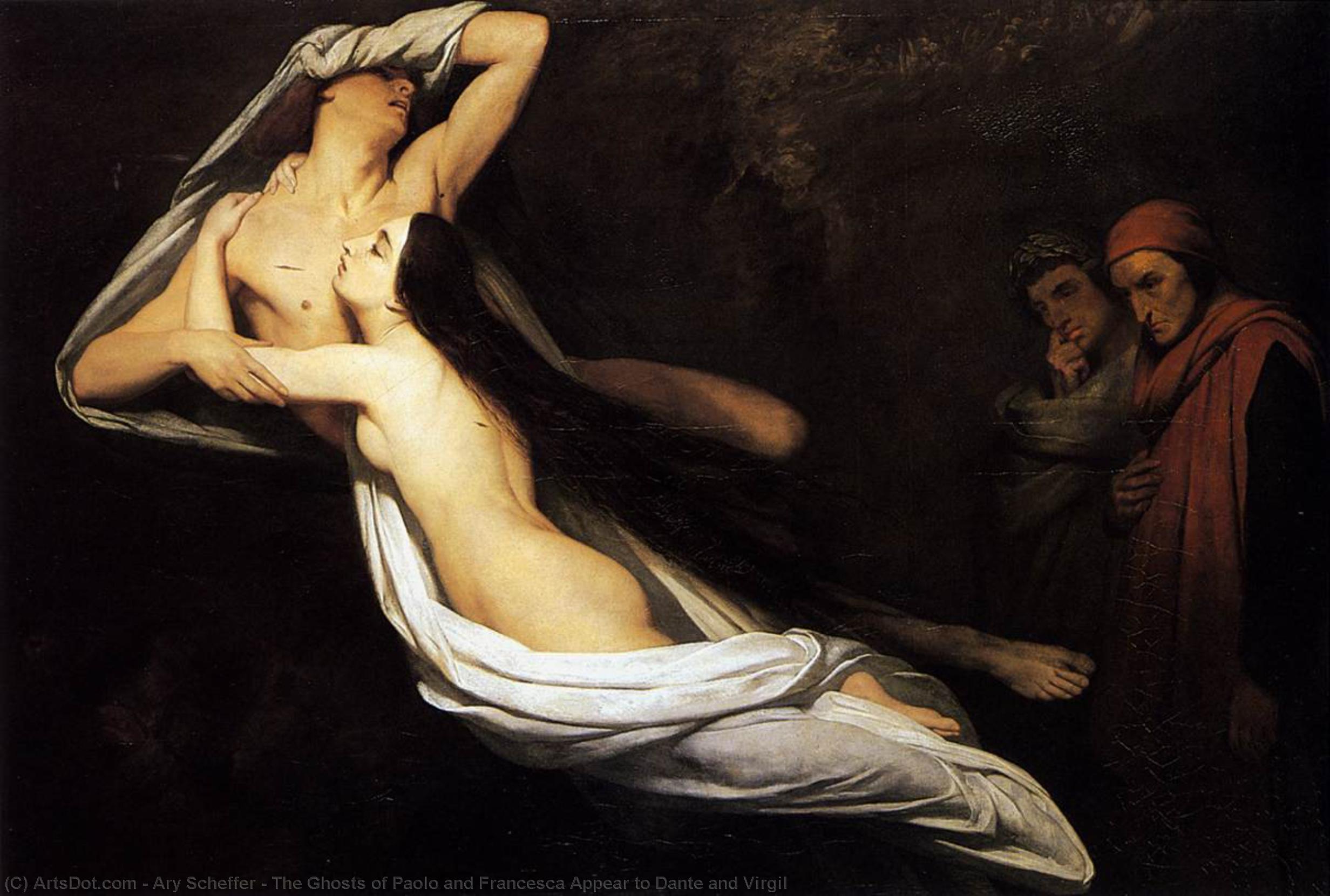
The Ghosts of Paolo and Francesca Appear to Dante and Virgil
 Oil On Canvas
- WallArt
- Romanticism
 1835
1835- 19th Century
 167.0 x 234.0 cm
 Wallace Collection
 Read More
Purchase a high-resolution, enhanced digital image, far superior to the online preview.
Each file is meticulously prepared by our in-house specialists using advanced tools and expert manual retouching. We ensure every image has exceptional clarity, precise color accuracy, and fine detail.
The final file is delivered via email within 72 hours, optimized for immediate use in professional, editorial, and print environments. This is the same quality trusted by top-tier design studios, publishers, and galleries.
Digital Image
Download a high-resolution file for personal display, printing, and creative projects. ( Buy Print Buy Hand Made Painting)
Included in Every Digital Image Order
Expert Digital Delivery, Guaranteed
When you choose ArtsDot.com, you're not just getting an image - you're receiving a professionally enhanced digital artwork, crafted with precision and backed by a satisfaction guarantee. Here's everything that comes with your order, automatically:

Fast Email Delivery
Your high-resolution digital image file will be emailed to you within 72 hours of ordering - ready for immediate use.

AI-Enhanced Digital File
Your artwork is professionally optimized using advanced AI tools and manual editing, ensuring maximum detail, clarity, and color accuracy.

Free Lifetime Re-Delivery
Accidentally deleted or lost your file? No worries - we'll resend it to you anytime, free of charge.

No Import Fees - Ever
Enjoy your artwork instantly with zero customs, duties, or delivery fees - digital downloads are always tax-free.

Color Accuracy Guarantee
We ensure your digital image reflects the original colors as closely as possible using professional tools and color management.

60-Day Satisfaction Guarantee
If you're not satisfied with your digital image, we'll revise it or refund 100% within 60 days - no questions asked.

100% Money-Back Guarantee
Not satisfied? Get a full refund within 60 days of receiving your digital file - no questions asked.

Bulk Order Discounts
Buy 3 images, save 10% - Buy 5, save 15% - Buy 10+, save 20%. Great for creative projects, galleries, and agencies.
Collectible Description
A Descent into Romantic Tragedy
In the hauntingly beautiful oil on canvas, The Ghosts of Paolo and Francesca Appear to Dante and Virgil, Ary Scheffer invites viewers into the profound depths of the Inferno. Created in 1835, this masterpiece serves as a visceral window into one of the most poignant episodes of Dante Alighieri’s Divine Comedy. The painting captures a moment of suspended animation where the boundaries between the living and the dead, the earthly and the divine, become perilously thin. As the souls of Paolo and Francesca emerge from the shadows of their eternal punishment, they are met by the watchful, contemplative eyes of Dante and Virgil. It is a scene that transcends mere illustration, becoming instead a profound meditation on the enduring nature of human passion and the heavy weight of moral consequence.
Scheffer’s mastery of the Romantic style is on full display through his deliberate use of dramatic lighting and a rich, emotive palette. The composition is anchored by the central figures of the doomed lovers, whose intertwined forms suggest both an eternal embrace and a state of perpetual vulnerability. Through the soft, almost ethereal glow that illuminates their skin against the surrounding gloom, Scheffer achieves a sense of chiaroscuro that heightens the theatricality of the encounter. The artist utilizes bold colors to direct the viewer's gaze, ensuring that the emotional turbulence written across the faces of the subjects remains the focal point of this monumental work.
Symbolism and the Weight of Eternal Memory
Beyond its narrative surface, the painting is a complex tapestry of symbolism designed to provoke deep introspection. The nudity of Paolo and Francesca is not merely an aesthetic choice but a powerful symbol of their raw, stripped-down humanity and the inescapable truth of their sin. In their state of exposure, they represent the vulnerability of the soul when confronted by divine judgment. The presence of Dante and Virgil provides the necessary literary and philosophical framework, acting as the bridge between the viewer's world and the metaphysical realm of the afterlife. Their stoic presence serves as a silent witness to the cycle of love, loss, and the agonizing pursuit of redemption.
For the discerning collector or interior designer, this artwork offers more than just visual splendor; it provides a narrative anchor for any sophisticated space. The interplay of light and shadow creates a sense of movement and depth that can transform a room, offering a focal point that invites long periods of contemplation. Whether placed in a grand library or a contemporary gallery setting, the painting’s ability to evoke empathy and awe makes it an incomparable piece of fine art. It is a work that does not merely decorate a wall but breathes life and history into an environment, making it a timeless choice for those who appreciate the intersection of classical literature and emotive painting.
Related Artworks

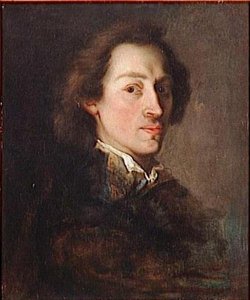

Artist Biography
A Life Bridging Worlds: The Romantic Vision of Ary Scheffer
Ary Scheffer, a name perhaps less immediately recognized than some of his contemporaries like Delacroix or Géricault, nevertheless occupies a significant and fascinating position within the landscape of 19th-century European art. Born in Dordrecht, Netherlands, in 1795, he was a figure deeply shaped by both Dutch artistic traditions and the burgeoning Romantic movement taking hold in France. His story is one of migration – not just geographically from Holland to Paris with his mother following his father’s death in 1809 – but also artistically, navigating between the meticulous detail inherited from his parents, both painters themselves, and the emotional intensity that defined the new aesthetic sensibility sweeping across Europe. His father, Johan Bernard Scheffer, was a portraitist, while his mother, Cornelia Lamme, specialized in miniature portraits; this early exposure instilled in Ary a foundational respect for technical skill and precise representation. However, it was in Paris, studying under Pierre-Narcisse Guérin at the École des Beaux-Arts, that Scheffer truly found his artistic voice, absorbing the influences of Xavier Sigalon, Eugène Delacroix, and Théodore Géricault while forging a style uniquely his own – often described as “frigidly classical,” a seeming paradox that hints at the core tension within his work.The Literary Canvas: Themes and Artistic Development
Scheffer’s career unfolded across several decades, marked by a consistent exploration of themes drawn from literature, mythology, religion, and portraiture. He wasn't merely illustrating stories; he was attempting to *visualize* the emotional core of these narratives, translating complex psychological states onto canvas. This is particularly evident in his recurring depictions of Dante’s Francesca da Rimini, a tragic tale of forbidden love, which he revisited multiple times throughout his career. Each iteration offered a nuanced exploration of sorrow, passion, and despair. Equally compelling are his paintings inspired by Goethe's *Wilhelm Meister*, specifically the character of Mignon, whose longing for home and heaven resonated deeply with Scheffer’s own sense of displacement and spiritual yearning. Christus Consolator, a powerful work demonstrating his engagement with religious themes, showcases a mystical quality that further distinguishes his style. He wasn't simply depicting biblical scenes; he was seeking to convey the profound emotional and spiritual experience of faith. Beyond these literary and religious subjects, Scheffer also enjoyed considerable success as a portraitist, capturing the likenesses of royalty and prominent figures in French society, demonstrating a versatility that contributed to his widespread popularity. His 1837 painting, The Shepherds Led by the Star, exemplifies his ability to imbue traditional religious iconography with a Romantic sensibility.A Style Defined by Nuance: Blending Classicism and Romanticism
Defining Scheffer’s style is not straightforward; it exists in a fascinating interplay between seemingly opposing forces. While undeniably influenced by the emotional fervor of Romanticism, his work consistently retains a formality and classical structure that sets him apart from more overtly dramatic painters like Delacroix. His compositions are meticulously crafted, demonstrating a refined technique and an evocative use of light and shadow to create atmosphere and depth. He possessed a remarkable attention to detail, particularly in the rendering of costumes and settings, which adds a layer of historical authenticity to his paintings. However, this meticulousness never feels cold or sterile; it serves to heighten the emotional impact of the scene. A distinctive characteristic of Scheffer’s work is its tendency towards sentimental and even melodramatic depictions of literary and religious themes. He wasn't afraid to embrace emotion, but he often presented it through a lens of restraint and refinement. His preference for subdued color palettes further contributes to this sense of controlled emotionality, creating paintings that are both visually striking and emotionally resonant.Legacy and Enduring Appeal
Although Scheffer’s popularity waned somewhat in the 20th century, his influence on subsequent generations of artists remains undeniable. His unique blend of Romanticism and Classicism offered a compelling alternative to the more radical approaches of some of his contemporaries. Today, his works are held in museums worldwide, including the Dordrecht Museum – a testament to his Dutch roots – and the Museum of Fine Arts, Boston, demonstrating his international recognition. The Musée de la Vie Romantique in Paris holds a special collection dedicated to Scheffer and George Sand, highlighting his significance within the Romantic era’s intellectual and artistic circles. The accessibility of his masterpieces through handmade oil painting replicas, as offered by platforms like ArtsDot, ensures that his art continues to inspire and captivate audiences today. Ary Scheffer's legacy lies not just in the beauty of his paintings but also in his ability to bridge worlds – between tradition and innovation, between reason and emotion, and between the Dutch artistic heritage and the vibrant cultural landscape of 19th-century France. He remains a compelling figure for anyone seeking to understand the complexities and nuances of Romantic art.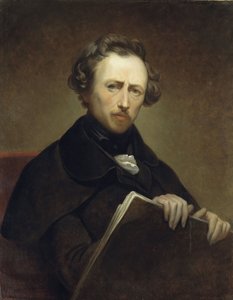
Ary Scheffer
1795 - 1858 , Netherlands
Quick Facts
- Artistic Movement Or Style: Romanticism & Classicism
- Artists Or Movements Influenced By This Artist: Subsequent generations
- Artists Who Influenced This Artist:
- Guérin
- Delacroix
- Géricault
- Sigalon
- Date Of Birth: February 10, 1795
- Date Of Death: June 15, 1858
- Full Name: Ary Scheffer
- Nationality: Dutch-French
- Notable Artworks:
- Francesca da Rimini
- Mignon
- Christus Consolator
- Shepherds Led by Star
- Place Of Birth: Dordrecht, Netherlands

