 Send
Send Share
Share
 Details

 Download
 Similars
 Diaporama
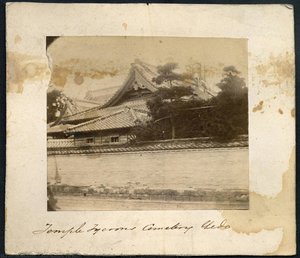
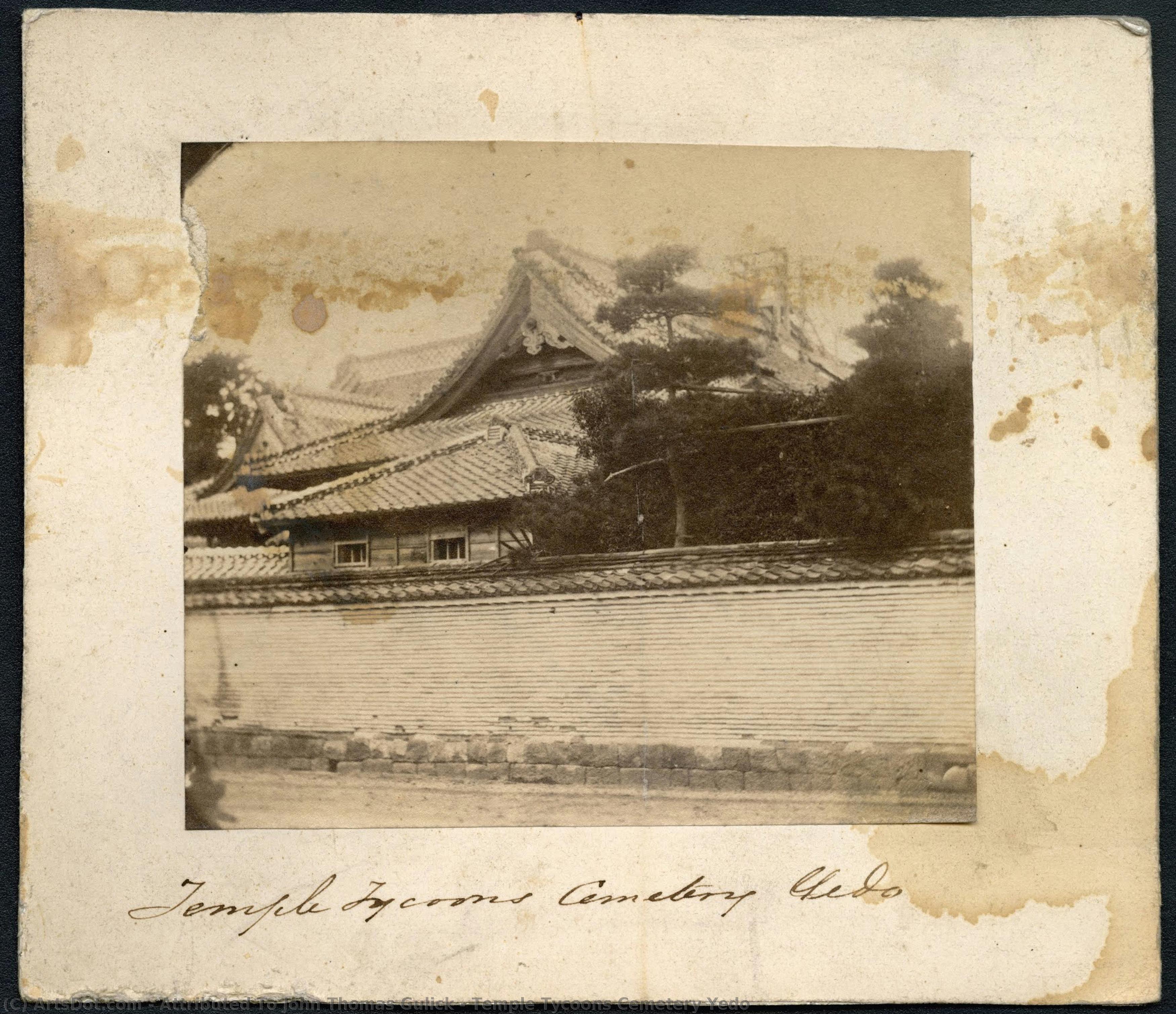
Temple Tycoons Cemetery Yedo


 Read More
Hand Made Oil Reproduction
Hand-painted oil on canvas in your size and frame, made to order by our artists. ( Buy Print Buy Image)




































Pick from our preset sizes that match the artwork's original proportions.

You may enter your own dimensions to fit a specific frame or space. If your selected size does not match the original image's proportions, we will either crop the artwork or extend the painting with additional hand-painted elements. A digital mockup will be sent for your approval before production begins.
Please note that the on-screen preview does not reflect the actual cropping or extension. Only the mockup will accurately show the final composition.
While custom sizes are available, we recommend selecting a dimension from the predefined list to preserve the original proportions.
After order, ArtsDot.com team will email client for instructions and provide a mockup preview
Worldwide Delivery () in 3/4 weeks instead of standard 5 weeks. (17 August). No compromise on quality.

Free Worldwide Express Shipping

High-Quality Linen Canvas

Full Shipping Insurance

Customs Tax Refund Guarantee

True Color Matching Guarantee

60-Day Return Policy (Defects Only)

100% Money-Back Guarantee

Bulk Discount Offer
 Glass option is only available in size under 110 CM

Temple Tycoons Cemetery Yedo
Reproduction Medium
Reproduction Size
-


Total Price
$ 263
Artwork Description
A Window into the Past: The Ethereal Stillness of Yedo
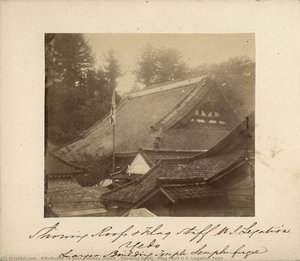
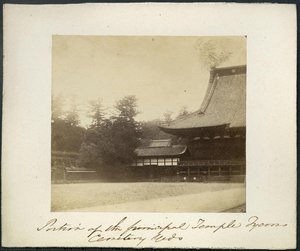
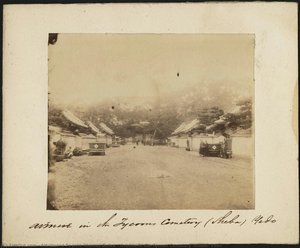
In the hauntingly beautiful monochrome of Temple Tycoons Cemetery Yedo, we are transported back to 1862, a time when the world felt both vast and intimately captured through the lens of early photography. Attributed to the enigmatic John Thomas Gulick, this evocative piece serves as more than just a visual record; it is a profound meditation on life, death, and the enduring presence of tradition. The composition centers on a majestic temple, its heavy stone or brick architecture anchoring the frame with a sense of permanence that contrasts sharply with the fleeting nature of the figures scattered throughout the scene. As the eye wanders from the grand roofline to the quiet cemetery in the background, one feels the weight of history pressing against the present moment.
The artistry lies in the masterful use of light and shadow, a hallmark of 19th-century photographic technique that lends the image a dreamlike, almost spectral quality. The absence of color forces the viewer to focus on texture and form—the ruggedness of the temple walls, the soft silhouettes of distant figures, and the delicate presence of birds caught in mid-flight. These small, organic details—a bird near the upper corner, another drifting toward the bottom—act as subtle symbols of life’s continuity amidst a landscape dedicated to memory. The interplay of light creates a rhythmic movement across the frame, guiding the observer through a narrative of quiet reverence and historical depth.
A Masterpiece for the Discerning Collector
For the art enthusiast or the interior designer, this reproduction offers an unparalleled opportunity to introduce a sense of timeless sophistication into a contemporary space. The stark, monochromatic palette of Temple Tycoons Cemetery Yedo provides a neutral yet emotionally resonant focal point that complements both minimalist modern decor and more ornate, classical interiors. It is a piece that invites conversation, prompting guests to contemplate the historical context of the Edo period and the delicate balance between the monumental and the mortal.
Owning a high-quality hand-painted reproduction of this work means preserving a fragment of 19th-century soul. The texture of the brushwork can be used to replicate the grain of early photographic plates, adding a tactile dimension to your walls. Whether placed in a quiet study, a grand hallway, or a curated gallery wall, this artwork brings an atmosphere of contemplative elegance and scholarly depth, making it an essential acquisition for those who seek to surround themselves with art that tells a story far beyond the frame.
Related Artworks


Artist Biography
The Enigmatic Brush of John Thomas Gulick
Attributed to John Thomas Gulick, a name whispered among collectors and art historians, represents a fascinating puzzle within the landscape of 19th-century American illustration and genre painting. While definitive biographical details remain elusive – a testament to the often-overlooked artists who fueled the burgeoning print culture of their time – his work speaks volumes, revealing a keen eye for narrative detail, a mastery of light and shadow, and a distinctly sentimental vision of domestic life. Gulick’s paintings, primarily circulated as engravings after his original works, captured the hearts of a rapidly expanding middle class eager to adorn their homes with scenes reflecting idealized American values. He wasn't creating art for galleries; he was crafting images for the parlor, for the family circle, and in doing so, became an important chronicler – albeit one shrouded in mystery – of Victorian-era sensibilities. The scarcity of documented facts only adds to the allure surrounding his oeuvre, prompting ongoing research and speculation about his life and artistic journey.A Life Veiled in Shadow
The frustrating lack of concrete information regarding John Thomas Gulick’s early life contributes significantly to the intrigue surrounding him. Records suggest he was born sometime in the first half of the 19th century, though precise dates remain unconfirmed. What *is* known is gleaned primarily from his artistic output and scattered mentions within period publications relating to engraving firms. He appears to have been active predominantly between the 1850s and 1880s, a period marked by significant social and technological change in America. The rise of illustrated periodicals like Harper’s Weekly and Frank Leslie’s Illustrated Newspaper created an unprecedented demand for artists capable of producing compelling imagery suitable for mass reproduction. Gulick seems to have thrived within this environment, establishing a reputation for scenes depicting children, family life, and rural Americana. He likely worked in New York City, the epicenter of American publishing at the time, though details about his studio, training, or personal relationships remain largely unknown. The absence of a formal biography suggests he may not have actively sought public recognition, preferring instead to focus on fulfilling commissions for engravers who then disseminated his work under their own imprints.The Hallmark of Sentiment: Style and Subject Matter
Gulick’s artistic style is characterized by a remarkable attention to detail and a soft, romantic aesthetic. His compositions are carefully constructed, often featuring intimate scenes bathed in warm, inviting light. He possessed an exceptional ability to capture the innocence and vulnerability of childhood, portraying children engaged in playful activities or tender moments with their families. His paintings frequently depict idyllic rural settings, evoking a sense of nostalgia for a simpler way of life – a theme particularly resonant during a period of rapid industrialization and urbanization. While not groundbreaking in terms of technique, Gulick’s work is distinguished by its emotional depth and narrative clarity. He wasn't striving for high art; he was aiming to connect with viewers on a personal level, offering them glimpses into scenes they could relate to and aspire to. The influence of earlier genre painters like William Hogarth and sentimental illustrators such as George Cruikshank can be detected in his work, though Gulick developed a distinctly American voice characterized by its optimism and focus on domestic harmony.Engravings and the Dissemination of an Image
The vast majority of works attributed to John Thomas Gulick are known not through original paintings but through engravings based upon them. This is crucial to understanding his legacy. He rarely, if ever, exhibited his work independently; instead, he collaborated with prominent engraving firms who then reproduced his images for a wide audience. Firms like Peterson’s Magazine, and others specialized in providing illustrations for periodicals and gift books. The process involved Gulick creating an oil painting or detailed drawing, which was then meticulously transferred to a steel plate by skilled engravers. This allowed for the mass production of his images, bringing his art into countless homes across America and beyond. While this method meant that many viewers experienced Gulick’s work through reproduction rather than firsthand, it also ensured its widespread popularity and enduring appeal.- The engravings often enhanced the detail and clarity of his original compositions.
- They allowed for a broader reach than traditional gallery exhibitions.
- The collaborative nature of this process makes attribution challenging.
A Lasting Echo: Historical Significance
Despite the ambiguities surrounding his life, John Thomas Gulick’s contribution to American visual culture is undeniable. His paintings – and more accurately, the engravings derived from them – played a significant role in shaping Victorian-era perceptions of family life, childhood, and rural Americana. He captured a specific moment in time, reflecting the values and aspirations of a rapidly changing society. His work serves as a valuable historical document, offering insights into the domestic ideals and sentimental sensibilities that characterized the 19th century. While his name may not be widely recognized today, Gulick’s images continue to resonate with viewers, evoking a sense of nostalgia for a bygone era and reminding us of the enduring power of art to connect us to the past. The ongoing efforts to uncover more information about his life and artistic journey underscore the importance of recognizing and celebrating the contributions of all artists – even those whose stories remain partially obscured by the passage of time.
Quick Facts
- Artistic Movement Or Style: American Genre Painting
- Date Of Death: Living
- Full Name: John Thomas Gulick
- Nationality: American
- Notable Artworks:
- Plate 1: The Old Stage Coach
- Plate 2: The Homestead
- Plate 3: The Harvest Home
Related Articles

White on Canvas: 10 Masterpieces & Timeless Elegance for Your Home Decor
Explore 10 iconic white paintings by Monet, Whistler & Rothko! Discover the stories behind these serene masterpieces and their impact on art history. Find museum-quality reproductions for your home decor at .

Beyond the Horizon: 10 Landscape Masterpieces for Your Home Decor
Journey through 10 breathtaking landscape paintings by Monet, Van Gogh & more! Explore iconic artworks, artistic techniques & find inspiration for your home decor. Museum-quality reproductions at ArtsDot.com. Discover all masterpieces on ArtsDot.com

Dark Masterpieces: 10 Iconic Paintings Dominated by Black Tones |
Explore 10 iconic paintings dominated by black tones, from Rembrandt’s chiaroscuro to Goya's dark expressions. Discover the stories behind these masterpieces & find museum-quality art reproductions for your home at .

Romantic Landscapes: 10 Masterpieces for Your Home | ArtsDot
Journey through 10 Romantic landscape masterpieces by Friedrich, Turner & Cole. Explore emotional art, sublime nature scenes & iconic 19th-century paintings. Find museum-quality reproductions for your home at ArtsDot.com – discover the full collection online!

John Constable's Masterpieces: Explore 25 Iconic Landscapes for Your Home
Journey through John Constable's 25 most celebrated landscapes. Explore Romanticism, Dedham Vale & his masterful use of light in iconic paintings like 'Hay Wain'. Find museum-quality art reproductions and elevate your home decor on ArtsDot.com.