 Preview
 Send
Send Share
Share
 Details

 Download
 Similars
 X-Ray
X-Ray Diaporama
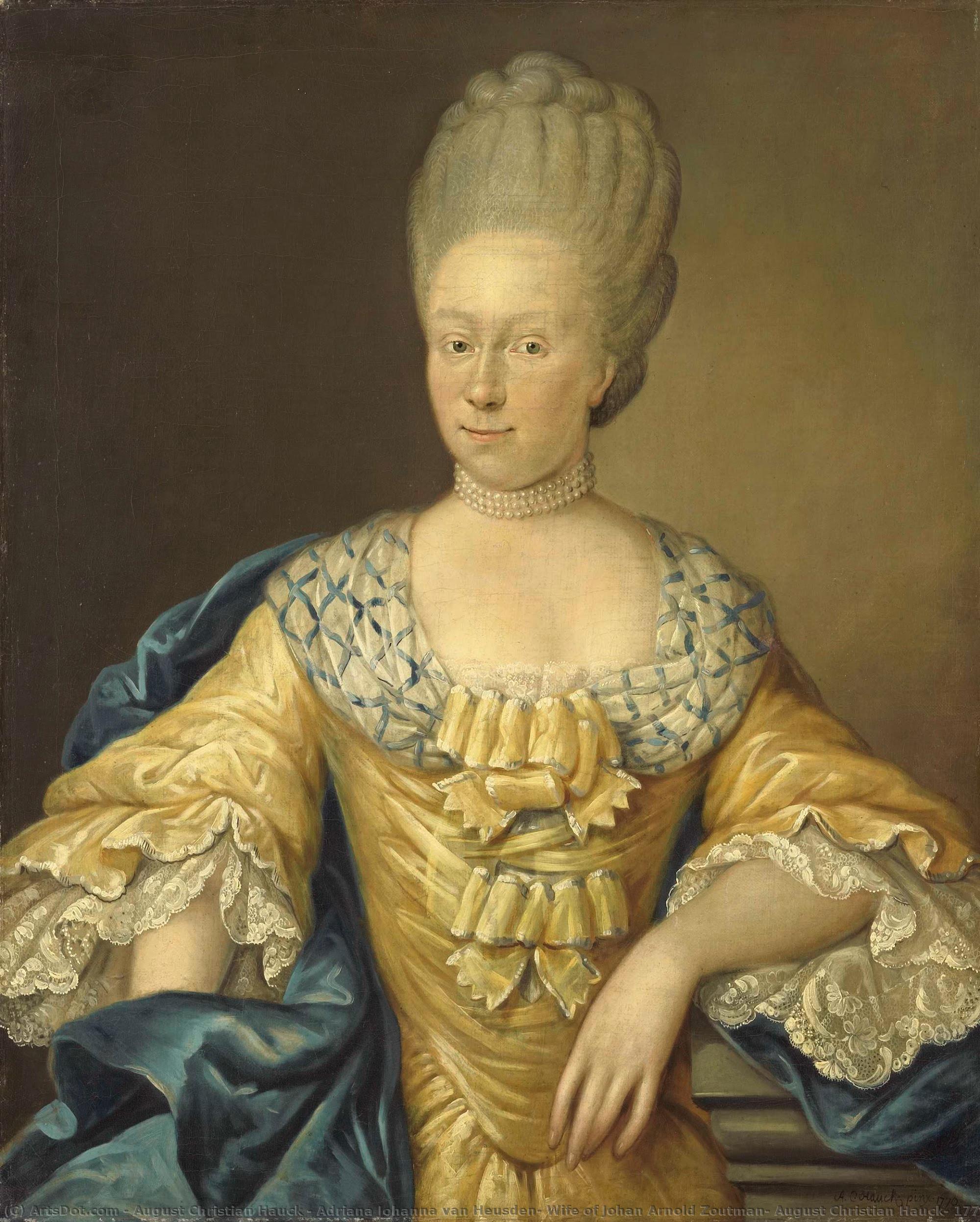
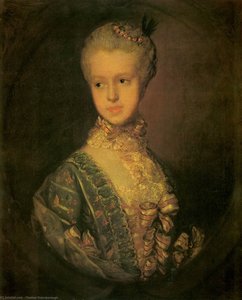
Adriana Johanna van Heusden, Wife of Johan Arnold Zoutman, August Christian Hauck, 1770
 1770
1770 85.0 x 69.0 cm
 Read More
Hand Made Oil Reproduction
Hand-painted oil on canvas in your size and frame, made to order by our artists. ( Buy Print Buy Image)




































Pick from our preset sizes that match the artwork's original proportions.

You may enter your own dimensions to fit a specific frame or space. If your selected size does not match the original image's proportions, we will either crop the artwork or extend the painting with additional hand-painted elements. A digital mockup will be sent for your approval before production begins.
Please note that the on-screen preview does not reflect the actual cropping or extension. Only the mockup will accurately show the final composition.
While custom sizes are available, we recommend selecting a dimension from the predefined list to preserve the original proportions.
After order, ArtsDot.com team will email client for instructions and provide a mockup preview
Worldwide Delivery () in 3/4 weeks instead of standard 5 weeks. (6 September). No compromise on quality.

Free Worldwide Express Shipping

High-Quality Linen Canvas

Full Shipping Insurance

Customs Tax Refund Guarantee

True Color Matching Guarantee

100-Day Return Policy (Defects Only)

100% Money-Back Guarantee

Bulk Discount Offer
 Glass option is only available in size under 110 CM

Adriana Johanna van Heusden, Wife of Johan Arnold Zoutman, August Christian Hauck, 1770
Reproduction Medium
Reproduction Size
-


Total Price
$ 263
Related Artworks








Artist Biography
The Quiet Legacy of August Christian Hauck
In the tapestry of late eighteenth-century art, few names evoke the intimate elegance of the Dutch Golden Age's twilight as subtly as August Christian Hauck. Born on March 3, 1742, Hauck emerged during a transformative era when the rigid structures of classical portraiture began to soften under the influence of burgeoning Romantic sensibilities. Though often remembered in historical records as a teacher, his true vocation lay within the delicate application of pigment to canvas, capturing the essence of an era defined by both maritime prestige and domestic grace. His life, which concluded on January 28, 1801, spanned a period of profound transition, and his work remains a window into the refined social fabric of the Netherlands.
Hauck’s artistic identity was deeply intertwined with the cultural landscape of his time. While some historical accounts suggest a German Romantic lineage, much of the evidence points to his role as a Dutch painter and educator, a man whose hands were as skilled at guiding students as they were at rendering the fine textures of lace and skin. His technique possessed a remarkable ability to balance formal dignity with a sense of living presence. This is perhaps most evident in his portraiture, where he moved beyond mere likeness to capture the psychological weight of his subjects, imbuing them with a quiet, enduring vitality that transcends the centuries.
Mastery of Portraiture and Narrative Detail
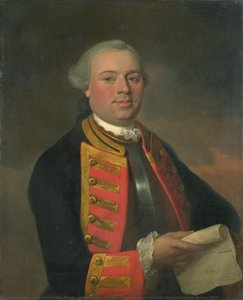
The brilliance of Hauck’s oeuvre lies in his meticulous attention to detail and his ability to weave narrative elements into the very fabric of his compositions. He was a master of the pendant—the creation of paired portraits that spoke to one another across the space of a room. His works, such as the poignant depictions of Johan Arnold Zoutman and his wife, Adriana Johanna van Heusden, serve as profound studies in companionship and status. In these pieces, Hauck does not merely paint faces; he paints legacies.
Through his brush, one can observe the following hallmarks of his mastery:
- Textural Realism: An extraordinary command over the rendering of diverse materials, from the heavy, authoritative folds of naval uniforms to the delicate, translucent quality of fine linens.
- Symbolic Depth: The use of subtle props—such as a roll of paper depicting ships off a coast—to communicate the maritime triumphs and professional identities of his subjects.
- Atmospheric Light: A sophisticated use of light that creates a sense of three-dimensional space, pulling the viewer into the intimate settings of the Dutch elite.
His ability to integrate these elements allowed him to elevate portraiture from simple documentation to a form of visual storytelling. When he painted the high-ranking officials or the refined ladies of his era, he was documenting not just their physical forms, but the very atmosphere of prestige and stability that characterized the late 18th century.
Historical Significance and Enduring Impression
Though the passage of time often obscures the names of artists who worked outside the most radical avant-garde movements, the historical significance of August Christian Hauck remains anchored in his contribution to the continuity of European portrait traditions. He acted as a bridge between the formalist traditions of the mid-century and the more emotive, atmospheric approaches that would eventually define the Romantic movement. His work provided a sense of permanence during a period of immense political and social upheaval across Europe.
Today, the legacy of Hauck is preserved through significant collections, including the British Museum and various Dutch archives, where his ability to capture the human spirit continues to resonate. To look upon a Hauck painting is to experience a moment of stillness; it is an invitation to contemplate the dignity of the individual and the quiet beauty of a world captured in the amber of oil and canvas. His life’s work remains a testament to the power of the observant eye and the enduring allure of classical grace.