

 Preview
 Send
Send Share
Share
 Details

 Download
 Similars
 X-Ray
X-Ray Diaporama
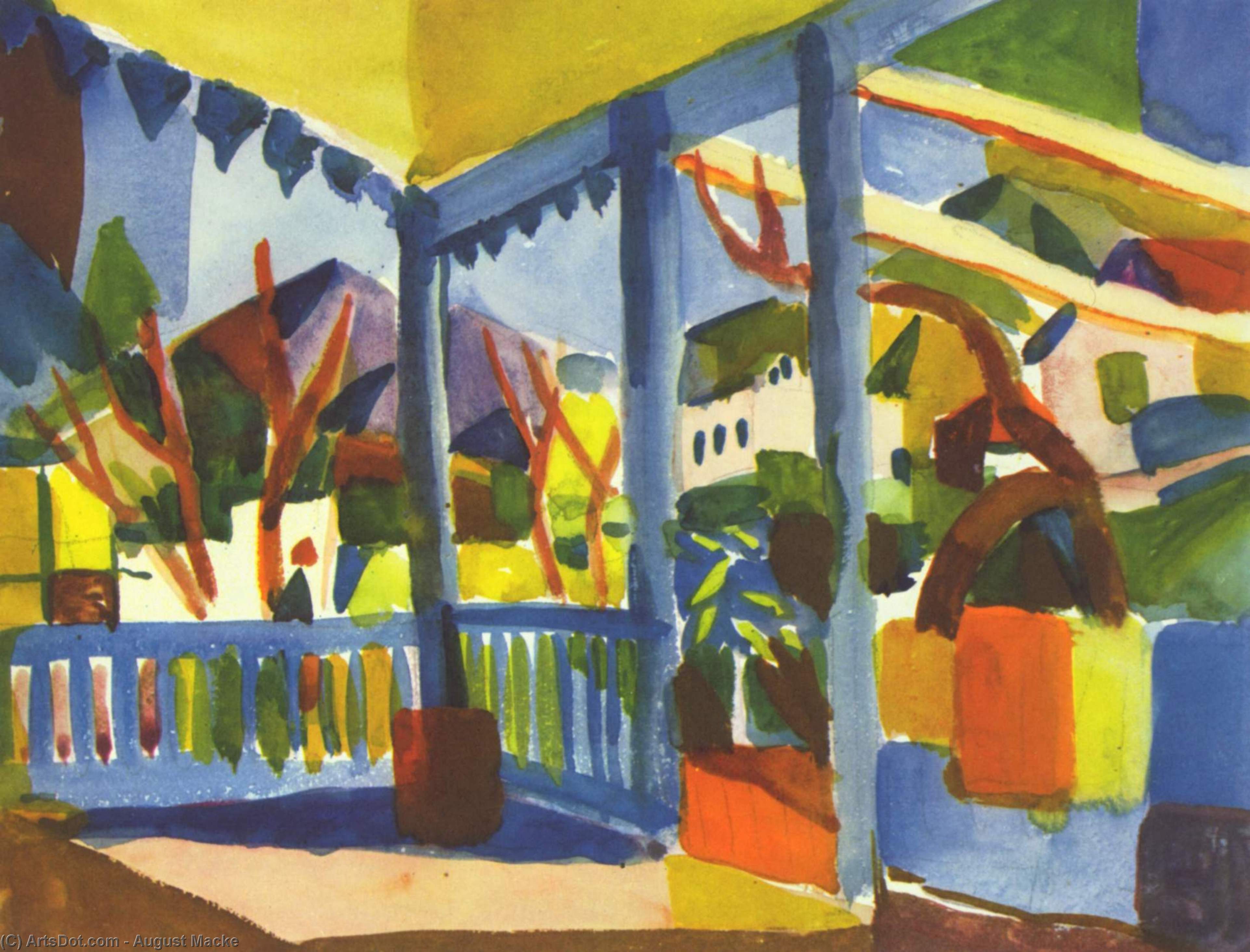
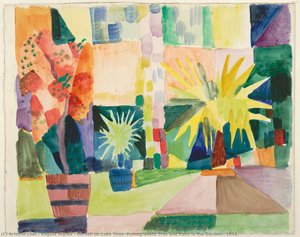
Terrace of the country house in St. Germain
 Watercolor
- WallArt
- Early 20th Century Painting
 1914
1914 28.0 x 22.0 cm
 Read More
Purchase a high-resolution, enhanced digital image, far superior to the online preview.
Each file is meticulously prepared by our in-house specialists using advanced tools and expert manual retouching. We ensure every image has exceptional clarity, precise color accuracy, and fine detail.
The final file is delivered via email within 72 hours, optimized for immediate use in professional, editorial, and print environments. This is the same quality trusted by top-tier design studios, publishers, and galleries.
Digital Image
Download a high-resolution file for personal display, printing, and creative projects. ( Buy Print Buy Hand Made Painting)
Included in Every Digital Image Order
Expert Digital Delivery, Guaranteed
When you choose ArtsDot.com, you're not just getting an image - you're receiving a professionally enhanced digital artwork, crafted with precision and backed by a satisfaction guarantee. Here's everything that comes with your order, automatically:

Fast Email Delivery
Your high-resolution digital image file will be emailed to you within 72 hours of ordering - ready for immediate use.

AI-Enhanced Digital File
Your artwork is professionally optimized using advanced AI tools and manual editing, ensuring maximum detail, clarity, and color accuracy.

Free Lifetime Re-Delivery
Accidentally deleted or lost your file? No worries - we'll resend it to you anytime, free of charge.

No Import Fees - Ever
Enjoy your artwork instantly with zero customs, duties, or delivery fees - digital downloads are always tax-free.

Color Accuracy Guarantee
We ensure your digital image reflects the original colors as closely as possible using professional tools and color management.

60-Day Satisfaction Guarantee
If you're not satisfied with your digital image, we'll revise it or refund 100% within 60 days - no questions asked.

100% Money-Back Guarantee
Not satisfied? Get a full refund within 60 days of receiving your digital file - no questions asked.

Bulk Order Discounts
Buy 3 images, save 10% - Buy 5, save 15% - Buy 10+, save 20%. Great for creative projects, galleries, and agencies.
Collectible Description
A Moment Suspended in St. Germain
August Macke’s watercolor, Terrace of the Country House in St. Germain, invites the viewer into a breathlessly beautiful tableau—a moment seemingly suspended between languid afternoon light and quiet contemplation. The scene unfolds upon an elegant terrace, sheltered beneath a vibrant blue awning that immediately draws the eye. It is more than just a depiction of architecture; it is an immersion into a specific atmosphere of pastoral serenity, characteristic of the idyllic life suggested by the French countryside.
The composition guides us gently over the wrought-iron railing and down toward the town nestled below. Here, the interplay between the intimate space of the terrace and the expansive view beyond creates a wonderful sense of depth and perspective. The presence of potted plants scattered across the porch adds touches of life and careful cultivation, grounding the scene in tangible beauty.
The Whisper of Impressionism Meets Modernity
Technically, this piece showcases Macke’s mastery of watercolor, a medium that allows for an exquisite delicacy of tone and light. While his career touched upon the bolder strokes associated with German Expressionism, here we find a softer resonance—a lingering echo of Impressionist concerns filtered through a modern sensibility. The application of color is luminous; the blues of the awning contrast beautifully with the warm tones of the stuccoed house and the distant rooftops. Macke captures light not as a static element, but as an active participant in the scene, diffusing across the surfaces.
The figures within the painting—the man standing contemplatively on the porch, and another figure visible further back—are rendered with a gentle immediacy. They are observers as much as they are subjects, allowing the viewer to project their own sense of peace or narrative onto the quiet drama unfolding before them.
Historical Echoes and Emotional Resonance
Painted in 1914, this work carries an undeniable weight of historical context. Macke’s life was tragically cut short by the outbreak of the First World War, a conflict that cast a long shadow over the vibrant artistic movements of his time. Viewing this piece now, one senses a profound yearning for the tranquility it portrays—a desire to inhabit a moment untouched by global turmoil. The scene feels like an idealized memory, a perfect encapsulation of leisure and beauty before the storm.
For the collector or designer, this painting offers more than mere decoration; it offers an emotional anchor. It speaks to the enduring human need for respite, for that quiet corner where one can simply watch the world unfold from a place of cultivated comfort.
Bringing the Riviera Home
Reproducing such a delicate watercolor requires an understanding of its subtle gradations and airy quality. A high-quality reproduction allows this vision of St. Germain to grace your walls, transforming any room into a sun-drenched retreat. Whether placed in a bright living area or a sophisticated study, the artwork introduces a palette of serene blues and earthy tones that evoke Mediterranean breezes and leisurely afternoons. It is an instant infusion of cultured calm.
Related Artworks
Artist Biography
A Life Cut Short: The Vibrant World of August Macke
August Robert Ludwig Macke, a name synonymous with German Expressionism’s brief but incandescent flowering, lived a life tragically curtailed by the outbreak of the First World War. Born in 1887 in Meschede, Westphalia, his artistic journey was one of rapid evolution and fervent exploration, marked by an insatiable curiosity for new styles and a deep desire to capture the essence of modern experience. Macke’s early life saw a move to Bonn with his family, where he received his initial education and began to nurture his burgeoning talent. Though formally trained at the Düsseldorf Art Academy from 1904-1906, under Adolf Maennchen, it was through independent study and travel that his artistic voice truly began to emerge. These formative years were characterized by an absorption of Impressionist and Post-Impressionist techniques, laying a foundation for the bolder expressions to come. He supplemented his income with stage design work, honing his compositional skills and developing a keen sense of color.Influences and Artistic Development
Macke’s artistic trajectory was profoundly shaped by encounters with key figures and movements of the early 20th century. A pivotal moment arrived in Paris in 1912, where he met Robert Delaunay, a leading proponent of Orphism – a branch of Cubism focused on pure abstraction and vibrant color harmonies. This encounter proved transformative, introducing Macke to the concept of simultaneous contrast and influencing his work towards a more dynamic and non-representational approach. He began experimenting with broken planes of color and abstracted forms, seeking to convey not just what he saw, but how he *felt* about what he saw. Simultaneously, his close friendship with Franz Marc, a fellow artist and member of the influential group Der Blaue Reiter (The Blue Rider), drew him into the orbit of Wassily Kandinsky and other avant-garde thinkers. While Macke’s style remained distinct from Kandinsky's more purely abstract explorations, he embraced the group’s spirit of artistic freedom and spiritual inquiry. His paintings began to reflect a growing interest in depicting the emotional resonance of landscapes and everyday life, imbued with a sense of joy and optimism.The Blue Rider and Beyond: A Unique Expressionist Vision
As an integral member of Der Blaue Reiter, Macke contributed significantly to the group’s exhibitions and publications, helping to disseminate its radical ideas about art and spirituality. However, he wasn't simply a follower; he forged his own unique path within the movement. Unlike some of his colleagues who leaned towards darker, more angst-ridden themes, Macke consistently sought to portray beauty and harmony in the world around him. His paintings, such as Bathing Girls with Town in the Background, exemplify this approach – vibrant colors, simplified forms, and a sense of idyllic tranquility characterize his work. He masterfully blended elements of Fauvism, Cubism, and Futurism into a distinctly personal style, creating compositions that are both visually striking and emotionally resonant. Woman in a Green Jacket, painted in 1913, is another prime example – a portrait radiating warmth and vitality through its bold color palette and confident brushwork. His later works, like Türkisches Café, demonstrate his luminist approach, capturing the play of light and shadow with remarkable sensitivity.A Tragic End and Lasting Legacy
The outbreak of World War I brought a sudden and devastating end to Macke’s promising career. Driven by patriotic fervor, he volunteered for military service in 1914. Tragically, he was killed in action just weeks later, on September 26th, at the front near Champagne, France, at the young age of 27. His final painting, Farewell, poignantly captures the somber mood that descended upon Europe as war engulfed the continent. Though his life was tragically short, August Macke left behind a body of work that continues to captivate and inspire. He remains a significant figure in the history of Expressionism, celebrated for his vibrant colors, dynamic compositions, and optimistic vision. His paintings offer a glimpse into a world on the cusp of change, imbued with a sense of beauty and hope amidst growing uncertainty.Exploring Macke’s World Today
Today, August Macke's works are held in prominent collections worldwide, including the Staatsgalerie Moderner Kunst in Munich, the Museum Ludwig in Cologne, and the Kunsthaus Zürich. Several museums dedicated to Expressionism feature his paintings prominently, offering visitors a chance to experience the power of his art firsthand. The Westfälisches Landesmuseum Münster and the Kunstmuseum Bonn are particularly noteworthy for their holdings of Macke’s work. His influence can be seen in the continued exploration of color and emotion by contemporary artists. For those seeking to delve deeper into his world, resources like Artnet and Wikipedia provide valuable biographical information and insights into his artistic development. Exploring his paintings through online databases such as ArtsDot allows for a closer examination of his technique and subject matter, revealing the enduring appeal of this remarkable artist whose life was tragically cut short but whose legacy continues to shine brightly.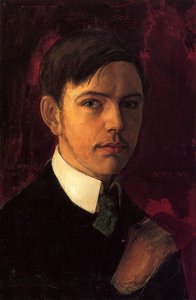
August Macke
1887 - 1914 , Germany
Quick Facts
- Artistic Movement Or Style: Expressionism
- Artists Or Movements Influenced By This Artist: ['Der Blaue Reiter']
- Artists Who Influenced This Artist:
- Robert Delaunay
- Franz Marc
- Date Of Birth: January 3, 1887
- Date Of Death: September 26, 1914
- Full Name: August Robert Ludwig Macke
- Nationality: German
- Notable Artworks:
- Woman in a Green Jacket
- Bathing Girls with Town
- Türkisches Café
- Gartentor
- Landscape with Cows
- Place Of Birth: Meschede, Germany

