

 Preview
 Send
Send Share
Share
 Details

 Download
 Similars
 X-Ray
X-Ray Diaporama
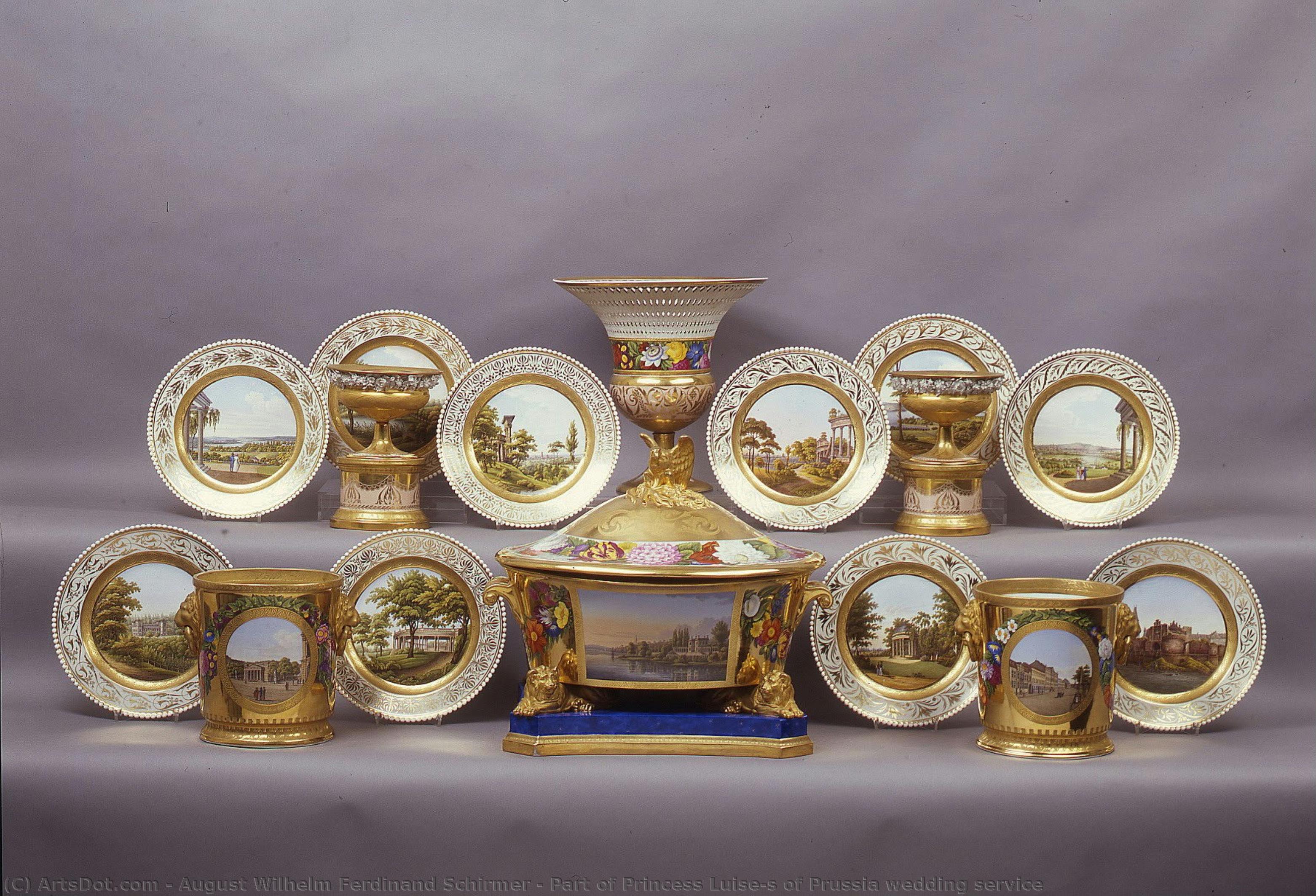
Part of Princess Luise’s of Prussia wedding service


 Read More
Purchase a high-resolution, enhanced digital image, far superior to the online preview.
Each file is meticulously prepared by our in-house specialists using advanced tools and expert manual retouching. We ensure every image has exceptional clarity, precise color accuracy, and fine detail.
The final file is delivered via email within 72 hours, optimized for immediate use in professional, editorial, and print environments. This is the same quality trusted by top-tier design studios, publishers, and galleries.
Digital Image
Download a high-resolution file for personal display, printing, and creative projects. ( Buy Print Buy Hand Made Painting)
Included in Every Digital Image Order
Expert Digital Delivery, Guaranteed
When you choose ArtsDot.com, you're not just getting an image - you're receiving a professionally enhanced digital artwork, crafted with precision and backed by a satisfaction guarantee. Here's everything that comes with your order, automatically:

Fast Email Delivery
Your high-resolution digital image file will be emailed to you within 72 hours of ordering - ready for immediate use.

AI-Enhanced Digital File
Your artwork is professionally optimized using advanced AI tools and manual editing, ensuring maximum detail, clarity, and color accuracy.

Free Lifetime Re-Delivery
Accidentally deleted or lost your file? No worries - we'll resend it to you anytime, free of charge.

No Import Fees - Ever
Enjoy your artwork instantly with zero customs, duties, or delivery fees - digital downloads are always tax-free.

Color Accuracy Guarantee
We ensure your digital image reflects the original colors as closely as possible using professional tools and color management.

60-Day Satisfaction Guarantee
If you're not satisfied with your digital image, we'll revise it or refund 100% within 60 days - no questions asked.

100% Money-Back Guarantee
Not satisfied? Get a full refund within 60 days of receiving your digital file - no questions asked.

Bulk Order Discounts
Buy 3 images, save 10% - Buy 5, save 15% - Buy 10+, save 20%. Great for creative projects, galleries, and agencies.
A Glimpse into Royal Life: The Porcelain Depiction of a Prussian Ceremony
August Wilhelm Ferdinand Schirmer's "Part of Princess Luise’s of Prussia wedding service" is more than just a still life; it’s a meticulously crafted window into the opulent world of 18th-century Prussian aristocracy. Painted in 1825, this work captures a pivotal moment – the presentation of porcelain services to the young princess as she prepared for her marriage to Prince Frederick of the Netherlands. The painting isn't merely decorative; it’s a carefully orchestrated tableau reflecting social status, familial bonds, and the burgeoning artistic sensibilities of the era.
Schirmer, a prominent figure in Berlin’s art scene, skillfully blends Neoclassical influences with Romantic elements. His meticulous attention to detail—the delicate curves of the porcelain, the subtle variations in glaze, the precise arrangement of each piece—demonstrates his technical mastery. Yet, beyond the surface realism lies an underlying sense of narrative and emotional resonance. The composition isn’t chaotic; instead, it exudes a quiet elegance, suggesting a scene of restrained formality and understated beauty.
The Porcelain Service: A Symbol of Status and Heritage
The significance of the porcelain service itself cannot be overstated. In 18th-century Prussia, such sets were not simply tableware; they represented a family’s wealth, lineage, and connection to the Royal manufactory at Meißen. Each piece was imbued with symbolic meaning – the delicate floral patterns referencing Prussian heraldry, the intricate designs reflecting the artistic traditions of the time. The inclusion of vases, salad bowls, baskets, and figurines within the service highlights its comprehensive nature and underscores the princess’s elevated position within society.
Crucially, this particular set was created specifically for Princess Louise, daughter of Queen Louise and King Frederick William III. The fact that it featured views of Potsdam—her childhood home—transforms the painting into a poignant reminder of her origins and a tangible link to her past. It’s a deliberate gesture of comfort and connection, offering a visual respite from the formality of court life.
Schirmer's Artistic Context: Bridging Neoclassicism and Romanticism
August Wilhelm Ferdinand Schirmer’s artistic development was shaped by his early work at the royal porcelain factory, where he honed his skills in detail and color. However, his formal training at the Berlin Academy of Arts under Friedrich Wilhelm Schadow exposed him to neoclassical principles, emphasizing clarity, order, and idealized forms. His subsequent travels to Italy proved transformative, introducing him to the vibrant colors and dramatic landscapes favored by J.M.W. Turner and fostering a more expressive approach to painting.
Schirmer’s ability to synthesize these diverse influences is evident in "Part of Princess Luise’s of Prussia wedding service." The work retains a sense of classical restraint while simultaneously embracing the Romantic emphasis on emotion, atmosphere, and the sublime beauty of nature. The soft lighting, the subtle gradations of color, and the carefully rendered details all contribute to a feeling of quiet contemplation and understated grandeur.
A Legacy in Porcelain: Reproduction and Artistic Appreciation
Today, "Part of Princess Luise’s of Prussia wedding service" stands as a testament to Schirmer's artistic skill and his ability to capture the essence of a bygone era. Reproductions offer an accessible way to experience this remarkable work, allowing art lovers to bring its beauty into their homes or offices. When selecting a reproduction, consider the level of detail and accuracy—a high-quality print will faithfully recreate Schirmer’s masterful rendering of porcelain and his evocative portrayal of Prussian aristocratic life.
Related Artworks


Artist Biography
Early Life and Education
- Born: Berlin, Germany, May 6, 1802
- Died: Nyon, Switzerland, June 8, 1866
- August Wilhelm Ferdinand Schirmer began his artistic journey early in life. He initially worked painting flowers at the royal porcelain factory, demonstrating an innate talent for detail and color.
- He later became a student of Friedrich Wilhelm Schadow at the Berlin Academy of Arts, receiving formal training in art techniques and principles.
- While influenced by Schadow's teachings, Schirmer’s artistic development was significantly shaped by his travels to Italy.
Italian Sojourn and Artistic Development
- In 1827, Schirmer embarked on a pivotal journey to Italy, spending three years immersed in the Italian landscape and art scene.
- He studied under Joseph Koch, who encouraged him to interpret nature poetically and historically.
- Schirmer was influenced by both J.M.W. Turner's dramatic style and the neoclassical approach of his earlier tutors.
- During this period, he became involved in various artistic societies in Rome, including the Deutsche Künstlervereinigung and the Ponte Molle Society, fostering connections with other artists.
Style and Major Works
- Schirmer’s style is characterized by a blend of romanticism and historical awareness. He sought to depict landscapes not merely as scenic views but as settings imbued with history and poetic significance.
- He was known for his ability to integrate architectural elements, particularly Roman ruins and bridges, into his landscape compositions.
- Notable works include sketches made during his Italian sojourn, which served as the basis for larger-scale paintings commissioned by the Prussian royal family. One such work was a large-format painting titled *Landscape with Monte Soratte, viewed between Narni and Otricoli*, though it has not survived.
- He also created murals for the Berlin Museum of Antiquities depicting classical sites and temples to complement the museum's collections.
Later Career and Legacy
- In 1835, Schirmer became a member of the Berlin Academy and later served as professor of landscape from 1839 to 1865.
- He was court painter to Crown Prince Friedrich Wilhelm, who would become King of Prussia.
- Schirmer’s influence extended beyond his direct students; he helped shape the development of landscape painting in Berlin and contributed significantly to the revival of historical landscape art.
- His emphasis on integrating history and poetry into landscapes set him apart from many of his contemporaries, establishing a unique artistic vision.
Historical Significance
- Schirmer is recognized as one of the most important and influential Berlin landscape painters of his time.
- He bridged the gap between Neoclassicism and Romanticism in German art, incorporating elements of both styles into his work.
- His murals for the Berlin Museum of Antiquities demonstrated his ability to combine artistic skill with historical understanding.
- Schirmer’s legacy lies in his contribution to the development of a distinctly German approach to landscape painting that valued both aesthetic beauty and historical context.
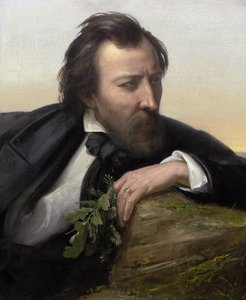
august wilhelm ferdinand schirmer
1802 - 1866 , Germany
Quick Facts
- Artistic Movement Or Style: Nazarene movement
- Artists Who Influenced This Artist:
- Joseph Anton Koch
- Johann Christian Reinhart
- J. M. W. Turner
- Date Of Birth: May 6, 1802
- Date Of Death: June 8, 1866
- Full Name: August Wilhelm Ferdinand Schirmer
- Nationality: German
- Notable Artworks:
- Part of Princess Luise’s wedding service
- The Coronation of the Emperor and Empress
- Place Of Birth: Berlin, Germany

